Quick Answer: Is Egypt Wheelchair Friendly in 2027?
Yes, wheelchair users can travel to Egypt in 2027, but Egypt should be considered a destination with improving accessibility rather than a completely accessible country.
The easiest experience comes from using:
Private accessible transportation
Carefully selected wheelchair-accessible hotels
Private sightseeing rather than large group tours
Professional guides familiar with mobility requirements
Attractions with ramps, lifts, paved paths, or close vehicle access
A Nile cruise that has been specifically checked for wheelchair access
Flexible itineraries that allow extra time and assistance
Cairo and the Grand Egyptian Museum can provide relatively strong accessibility options. The Giza Pyramids are visitable by wheelchair users, but the archaeological environment includes uneven and sandy areas. Luxor has several accessible or manageable attractions, but the Valley of the Kings and some ancient tombs can be challenging. Nile cruises vary dramatically, so the specific ship matters.
The most important rule is simple: do not book an Egypt trip based only on the words “wheelchair accessible.” Ask for the exact details of the room, vehicle, bathroom, cruise, entrances, ramps, elevators, and sightseeing routes before confirming the itinerary.
Egypt can be wheelchair friendly in 2027, but it is not uniformly wheelchair accessible. The difference depends heavily on where you go, which hotels and transportation you choose, how your itinerary is designed, and whether your tour operator confirms accessibility in advance.
For wheelchair users, some parts of Egypt are considerably easier than others. Modern hotels, major museums, private vehicles, and carefully selected Nile cruise options can provide a comfortable experience. Historic archaeological sites are more variable: some have accessible paths and transportation assistance, while others contain sand, uneven stone, stairs, narrow passages, or steep terrain.
The best way to experience Egypt with a wheelchair is therefore not to rely on a standard group tour. A private, accessibility-focused itinerary allows transportation, hotels, sightseeing schedules, guides, and cruise arrangements to be matched to the traveler’s actual mobility requirements.
This guide explains what wheelchair users can realistically expect in Cairo, Giza, Luxor, Aswan, Abu Simbel, and on the Nile; how to choose an accessible hotel and cruise; what transportation works best; which attractions are easier or more challenging; and how to plan an accessible Egypt holiday for 2027.
11 Day Spiritual Egypt Tour – Egypt Chakra & Sacred Sites Journey
7 Day Spiritual Egypt Tour – Sacred Sites, Pyramids, Abydos & Dendera

10 Days Holy Family Tour Egypt – Christian Pilgrimage

8 Days Luxury Tours to Cairo, Luxor & Hurghada

2 Day Luxor and Aswan Tour From Cairo

2 Day Cairo and Alexandria Tour Package
What Does “Wheelchair Accessible Egypt” Actually Mean?
Wheelchair accessibility can mean very different things to different travelers.
A hotel may advertise itself as wheelchair accessible because it has an elevator and one accessible room. That does not necessarily mean the bathroom is suitable for every wheelchair user.
Likewise, an archaeological site may have an accessible entrance while some of its monuments remain difficult or impossible to enter.
For this reason, accessibility planning should be based on the individual traveler rather than a simple yes-or-no label.
Before traveling, consider:
-
Manual or powered wheelchair
-
Wheelchair width
-
Wheelchair weight
-
Whether the traveler can transfer independently
-
Whether stairs are possible with assistance
-
Whether a shower needs to be roll-in
-
Required bathroom grab bars
-
Required bed height
-
Maximum comfortable walking distance
-
Ability to handle uneven surfaces
-
Need for an accessible vehicle ramp or lift
-
Need for assistance boarding boats
-
Battery charging requirements for powered wheelchairs
A traveler who can walk a few steps and transfer from a wheelchair may have considerably more options than someone who must remain in the wheelchair continuously.
That distinction should be communicated to the tour operator before the trip.
Is Egypt Accessible for Wheelchair Users?
Egypt is partially accessible for wheelchair users, with the strongest accessibility generally found in newer hotels, major museums, private transportation, and selected tourist facilities.
The country’s ancient archaeological environment creates many of the biggest challenges.
Egypt’s most famous attractions were built thousands of years before modern accessibility standards existed. Ancient temples, tombs, pyramids, desert plateaus, and historic streets can involve:
-
Uneven stone
-
Sand
-
Steps
-
Narrow corridors
-
Sloping ground
-
Rough surfaces
-
Limited handrails
-
Long distances
-
Crowds
-
Heat and direct sun
This does not mean wheelchair users cannot visit these places.
It means the itinerary needs to be designed around what is realistically accessible.
For many travelers, the goal should not be “make every single monument accessible.” A better goal is to create an itinerary that provides access to the most important experiences while minimizing unnecessary physical barriers.
Can Wheelchair Users Travel to Egypt?
Yes. Wheelchair users can travel to Egypt, including Cairo, Giza, Luxor, Aswan, and Abu Simbel, when the trip is planned appropriately.
A private Egypt tour is usually the most practical option because transportation and sightseeing can be adjusted around the traveler’s mobility needs.
A typical accessible itinerary might include:
-
Airport assistance and private transfer
-
Accessible hotel in Cairo or Giza
-
Private visit to the Giza Pyramids
-
Visit to the Grand Egyptian Museum
-
Cairo sightseeing with private transportation
-
Flight or accessible private transfer to Luxor
-
Carefully selected Luxor temples
-
Accessible or mobility-suitable Nile cruise
-
Aswan sightseeing
-
Abu Simbel with appropriate transportation planning
The exact itinerary should be adjusted according to the traveler’s abilities.
Is Cairo Wheelchair Accessible?
Cairo is not uniformly wheelchair accessible, but it offers enough accessible facilities and private-tour options for wheelchair users to have a successful visit.
The main challenge in Cairo is not necessarily the attractions themselves. It is the surrounding urban environment.
Sidewalks can be uneven, streets can be crowded, curbs may be difficult to navigate, and pedestrian movement can be unpredictable. Public transportation may also be difficult for travelers who require step-free access.
For wheelchair users, private transportation is generally much easier.
The Best Way to Explore Cairo in a Wheelchair
A private vehicle allows the itinerary to be organized around close drop-off points.
Instead of expecting a wheelchair user to navigate long distances between a parking area and an attraction, the guide and driver can coordinate the closest practical drop-off and pick-up locations.
This is particularly useful during:
-
Pyramids visits
-
Egypt Museums visits
-
Old Cairo sightseeing
-
Citadel visits
-
Khan el-Khalili visits
-
Airport transfers
-
Hotel changes
A private itinerary also allows the traveler to take breaks whenever necessary.
Is the Grand Egyptian Museum Wheelchair Accessible?
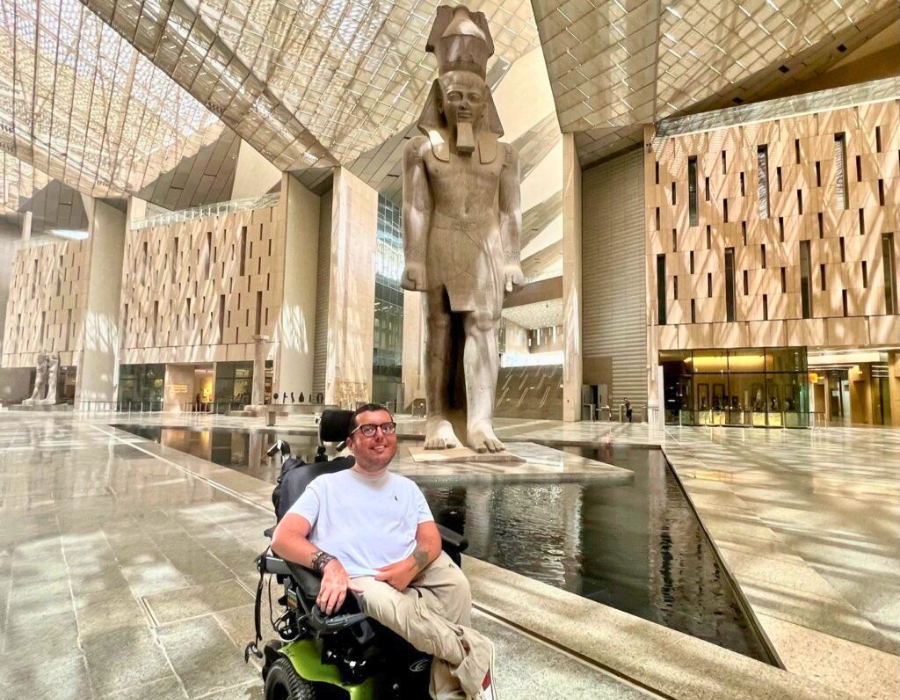
Yes. The Grand Egyptian Museum is designed to accommodate wheelchair users and visitors with disabilities.
The museum states that accessibility provisions include ramps, lifts, wide pathways, accessible restrooms, seating, wheelchairs, and golf carts to assist with mobility. Visitors requiring assistance can contact the Information Desk.
This makes the Grand Egyptian Museum one of the strongest choices for wheelchair-accessible cultural sightseeing in Egypt.
The museum also provides accessibility-related facilities intended to make the experience more inclusive.
Because museum policies and visitor services can change, travelers should still confirm arrangements before their 2027 visit.
Why the Grand Egyptian Museum Is a Good Choice
Compared with many ancient archaeological sites, a modern museum can provide a much more predictable environment.
The Grand Egyptian Museum offers:
-
Wide visitor pathways
-
Elevators
-
Ramps
-
Accessible restrooms
-
Seating
-
Mobility assistance
-
Golf carts
-
Information-desk assistance
For a wheelchair traveler visiting Cairo, the museum can therefore be an important part of an accessible itinerary.
Is the Egyptian Museum in Cairo Wheelchair Accessible?
The Egyptian Museum in Tahrir Square has accessibility provisions and provides free entry for Egyptian visitors with special needs according to the Ministry of Tourism and Antiquities.
However, travelers should distinguish between accessibility at the museum and accessibility throughout the surrounding urban environment.
A private vehicle and guide can make the visit significantly easier by reducing walking and helping with entrances and navigation.
For travelers with significant mobility limitations, the Grand Egyptian Museum may offer a more predictable modern environment.
Are the Pyramids Wheelchair Accessible?
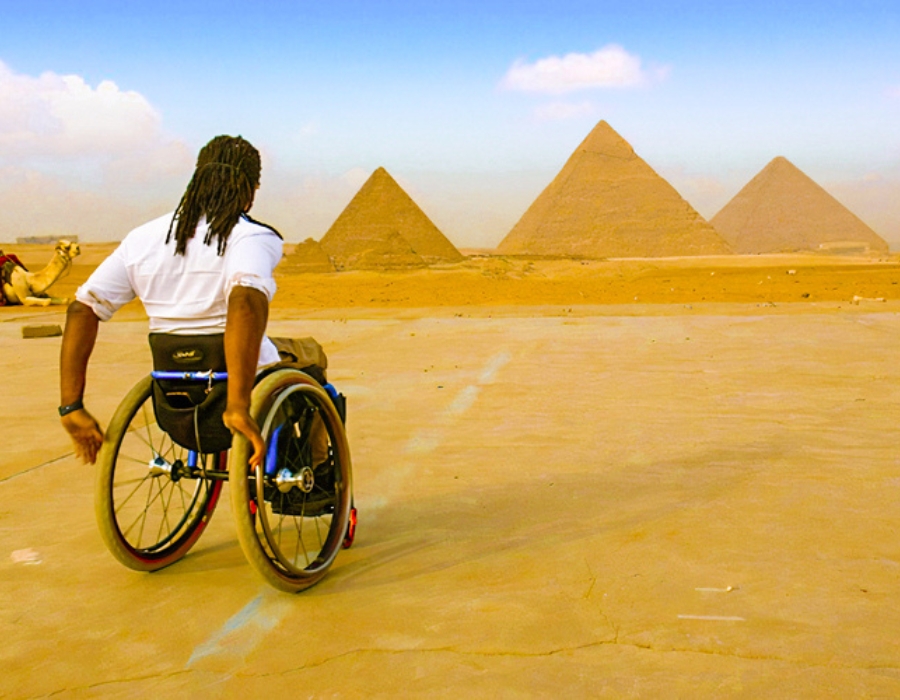
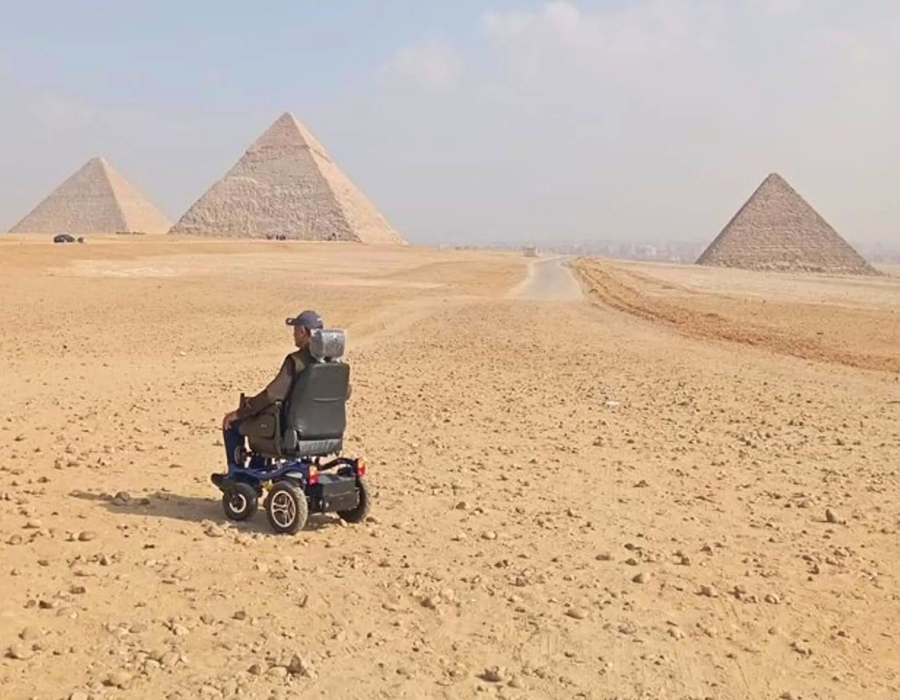
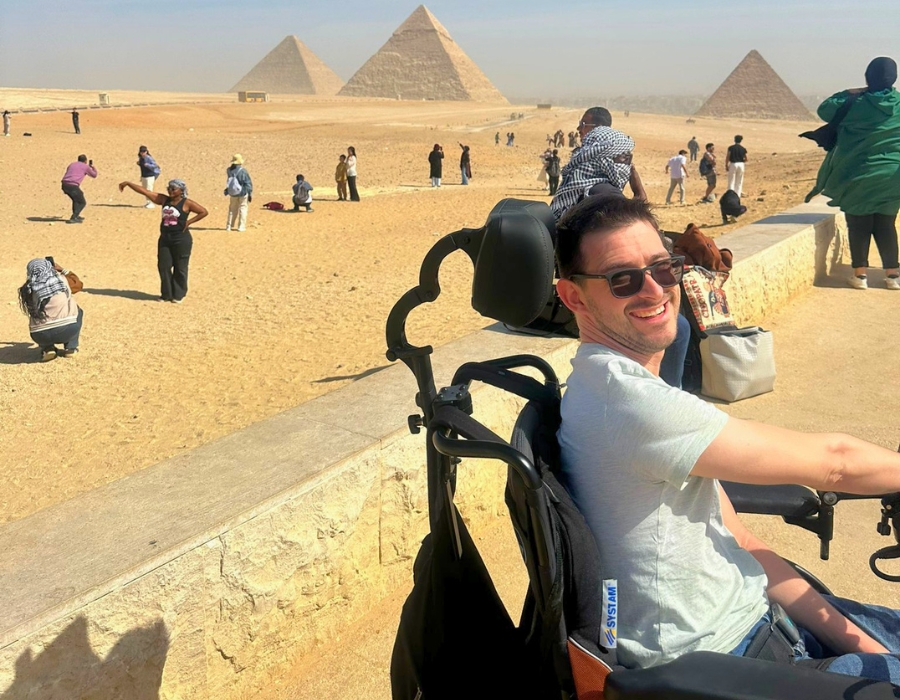
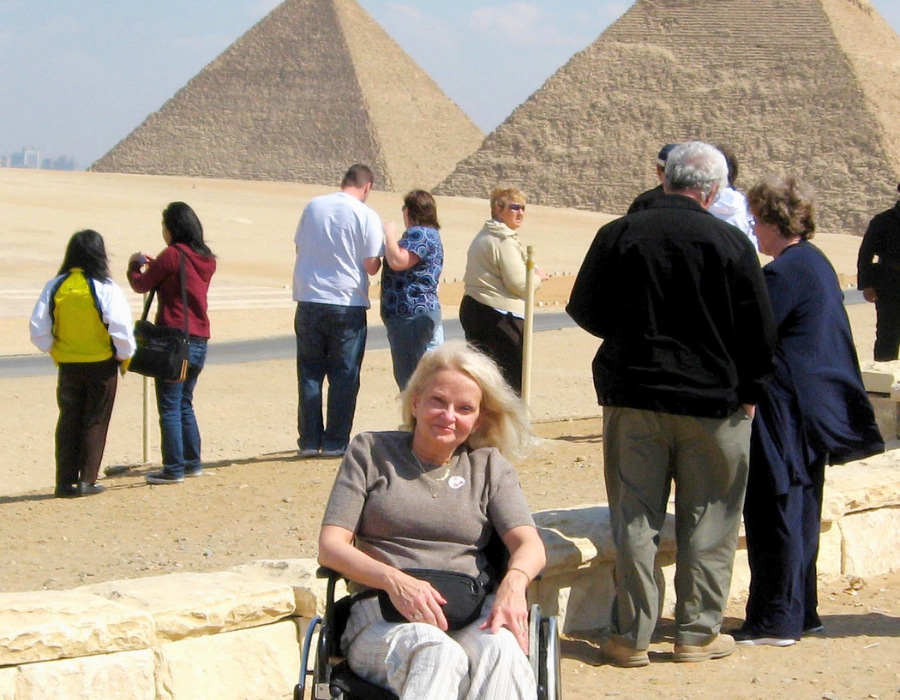
Wheelchair users can visit the Giza Pyramids, but the Giza Plateau should not be described as completely wheelchair accessible.
The pyramids are located in a large archaeological landscape where terrain can include sand, uneven surfaces, slopes, and long distances.
The most practical approach is to use private transportation and coordinate vehicle access as close as possible to the sightseeing points.
The experience can then focus on accessible viewpoints and areas around the pyramids rather than attempting to enter every structure.
Can Wheelchair Users Visit the Pyramids?
Yes. Wheelchair users can visit the Giza Plateau and enjoy views of the Great Pyramid, Khafre, Menkaure, and the Sphinx.
However, entering the interior of a pyramid is a different question.
The interior passages of some pyramids involve narrow corridors, steep sections, stairs, or confined spaces. These are not suitable for many wheelchair users.
Therefore, an accessible Pyramids tour should usually prioritize:
-
Exterior views
-
Accessible viewpoints
-
The Sphinx area where practical
-
Photography stops
-
Close vehicle drop-offs
-
Comfortable pacing
A traveler should not feel that they have missed Egypt simply because they cannot enter a pyramid.
The exterior monument, plateau, surrounding landscape, and Sphinx remain major parts of the experience.
Is the Sphinx Wheelchair Accessible?
The Sphinx area can be incorporated into a wheelchair-friendly Giza itinerary, but exact access depends on the route, current site conditions, and the traveler’s wheelchair.
The best strategy is to have the guide assess the easiest practical route on the day of the visit.
Because archaeological-site conditions can change, an accessible tour should avoid promising a specific route without checking current conditions.
Wheelchair Accessibility at Luxor
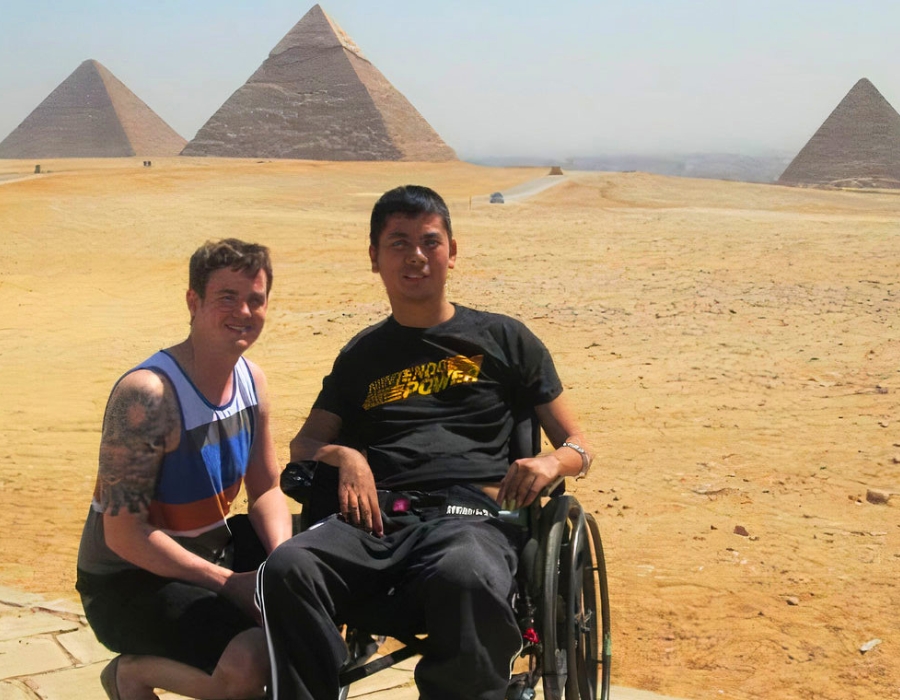
Luxor is one of the most important destinations in Egypt for wheelchair travelers, but it requires more careful planning than Cairo.
The city is divided by the Nile into the East Bank and West Bank.
The East Bank contains attractions such as:
-
Hotels
-
Restaurants
-
Nile waterfront areas
The West Bank contains:
-
Valley of the Kings
-
Other archaeological sites
The East Bank is generally easier for travelers with mobility limitations because many areas have more manageable surfaces and modern infrastructure.
Is Karnak Temple Wheelchair Accessible?
Karnak Temple can be included in an accessible Luxor itinerary, although visitors should expect uneven archaeological surfaces and some areas that may require assistance.
The large scale of the site means that the amount of walking can also become a concern.
For a wheelchair traveler, the goal should be to identify the most accessible route and prioritize the most important areas rather than attempting to cover every section.
A private guide can adjust the visit according to energy level and mobility.
Is Luxor Temple Wheelchair Friendly?
Luxor Temple is one of the more practical ancient attractions for a wheelchair-focused Luxor itinerary.
Much of the experience can be organized around relatively manageable surfaces and close vehicle access.
Visiting later in the day can also be more comfortable in hot weather, although operating hours and seasonal conditions should be checked before travel.
Is the Valley of the Kings Wheelchair Accessible?
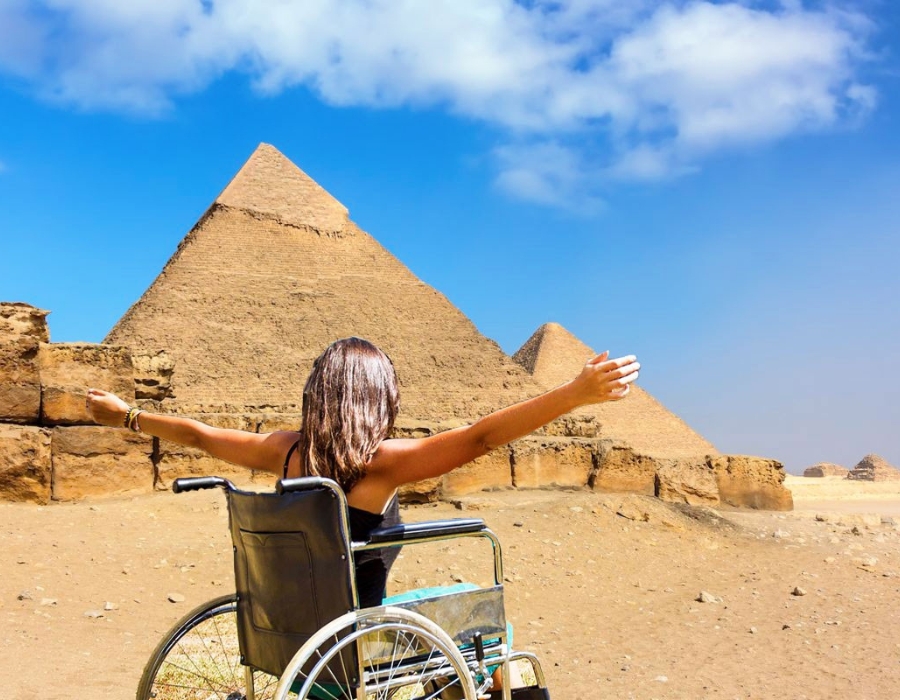
The Valley of the Kings is possible for some wheelchair users but should be considered a challenging attraction rather than a fully wheelchair-accessible site.
The main difficulties include:
-
Uneven terrain
-
Slopes
-
Tomb entrances
-
Steps
-
Narrow passages
-
Interior descents
-
Heat
Some tombs are significantly easier than others.
The visitor should not assume that every tomb can be entered in a wheelchair.
A specialist guide can help determine which tombs are the most practical based on current conditions and the traveler’s abilities.
Should Wheelchair Users Visit the Valley of the Kings?
Yes, if the traveler is comfortable with some assistance and understands that access inside individual tombs may be limited.
Even when entering a particular tomb is not possible, the Valley of the Kings remains an important part of Luxor’s landscape and archaeological experience.
A good itinerary should provide alternatives rather than treating the trip as unsuccessful if a particular tomb cannot be entered.
Is Hatshepsut Temple Wheelchair Accessible?
Hatshepsut Temple offers some accessible routes, but the upper levels can be more difficult for wheelchair users.
The temple’s architectural design includes terraces and ramps, but the full experience can still require assistance depending on the wheelchair and the traveler’s mobility.
A private vehicle and guide can make the visit easier by minimizing unnecessary walking.
Are the Colossi of Memnon Wheelchair Accessible?
The Colossi of Memnon are among the easiest West Bank stops to incorporate into a wheelchair-friendly itinerary.
The monuments are positioned in an open area where visitors can generally get relatively close without navigating the type of narrow interior passage found inside some tombs.
This makes the Colossi a useful stop when building a lower-effort Luxor day.
Is Aswan Wheelchair Friendly?
Aswan can work well for wheelchair travelers when transportation and activities are selected carefully.
The city combines modern areas with archaeological sites, islands, river transportation, and uneven historic environments.
Accessible sightseeing can include selected land-based attractions and carefully planned private transportation.
Potential experiences include:
-
Nubian cultural experiences
-
Nile views
-
Selected island visits
Not every boat or landing point should be assumed to be wheelchair accessible.
The boat itself, boarding ramp, dock, and destination all need to be considered.
Is Abu Simbel Accessible for Wheelchair Users?
Abu Simbel can be included in a wheelchair-friendly Egypt itinerary, but transportation and site conditions should be checked in advance.
The archaeological complex includes large outdoor areas and monument entrances that may present challenges for some wheelchair users.
A private tour allows the schedule to be adjusted around heat, rest requirements, and transportation needs.
For travelers who cannot manage stairs or narrow passages, the exterior experience can still be valuable even if every interior area cannot be accessed.
Is a Nile Cruise Wheelchair Accessible?
Some Nile cruises can accommodate wheelchair users, but there is no single accessibility standard across the Nile cruise fleet.
This is one of the most important areas where travelers need to ask specific questions before booking.
A cruise ship may have an elevator but still have:
-
Narrow cabin doors
-
Inaccessible bathrooms
-
Steps at boarding points
-
Narrow corridors
-
Limited turning space
-
Uneven gangways
-
Difficult access to the sun deck
Therefore, “the boat has an elevator” is not enough information.
What Should You Ask About an Accessible Nile Cruise?
Before confirming a cruise, ask:
-
Is there an elevator between the passenger decks?
-
Does the elevator accommodate the wheelchair?
-
Is there an adapted cabin?
-
What is the cabin door width?
-
Is the bathroom wheelchair accessible?
-
Is there a roll-in shower?
-
Are grab bars available?
-
Is there enough turning space?
-
How is boarding handled?
-
Are there steps between the dock and the ship?
-
Can the traveler remain in the wheelchair during boarding?
-
Can the wheelchair be stored safely?
-
Are accessible shore excursions available?
-
How much walking is expected at each stop?
These questions are more useful than simply asking whether the cruise is “wheelchair friendly.”
Which Nile Cruise Is Best for Wheelchair Travelers?
The best Nile cruise for a wheelchair user is the ship that matches the traveler’s actual mobility requirements.
Some ships are specifically designed or modified for accessibility, while others may only be able to accommodate travelers who can transfer and manage some stairs.
One current example is the MS Acamar, which is marketed specifically around wheelchair accessibility and includes lifts and adapted facilities. Availability and operating arrangements for 2027 should be confirmed before booking.
Traditional dahabiyas require particular caution because many are multi-level boats connected by stairs and do not have elevators.
If a traveler cannot use stairs, a traditional dahabiya may therefore be unsuitable even if the operator is willing to provide assistance.
Wheelchair-Friendly Nile Cruise vs. Standard Nile Cruise
| Feature | Wheelchair-focused cruise | Standard Nile cruise |
|---|---|---|
| Elevator | More likely | Varies |
| Accessible cabin | May be available | Not guaranteed |
| Accessible bathroom | Specifically selected | Varies |
| Boarding | Planned around mobility | May involve steps |
| Shore excursions | Can be customized | Usually standard |
| Best for | Travelers requiring predictable access | Travelers with moderate mobility |
| Advance verification | Essential | Essential |
The cruise should be selected based on the passenger’s physical requirements rather than the ship’s star rating alone.
Wheelchair Accessible Hotels in Egypt
Hotels are one of the most important parts of an accessible Egypt vacation.
A hotel can advertise wheelchair access while still presenting problems inside the guest room.
For example, a room may have a wide entrance but a bathroom that does not allow a wheelchair to turn comfortably.
For this reason, accessible accommodation should be confirmed directly.
What to Confirm With an Accessible Hotel
Ask the hotel or tour operator to confirm:
-
Step-free entrance
-
Elevator access
-
Accessible bedroom
-
Door width
-
Bathroom door width
-
Roll-in shower
-
Grab bars
-
Toilet height
-
Shower seat
-
Bed height
-
Space beside the bed
-
Accessible public areas
-
Accessible restaurant
-
Pool access if relevant
-
Emergency procedures
If the traveler uses a powered wheelchair, also confirm whether the hotel has an appropriate place and electrical setup for charging.
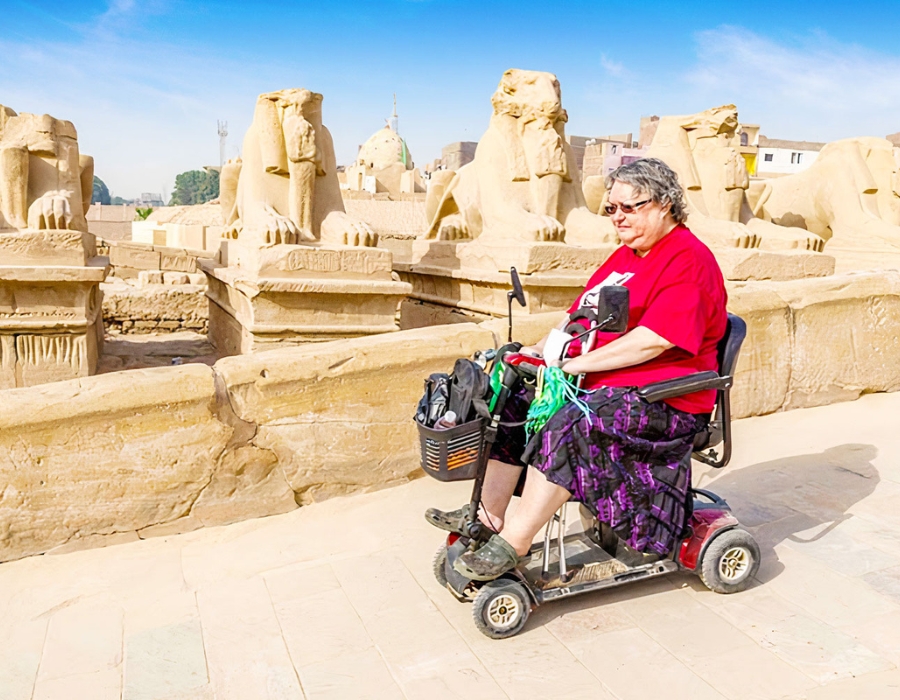
Examples of Accessible Hotels in Cairo
Several major international hotel brands in Cairo publish accessibility information.
For example, Sofitel Cairo Nile El Gezirah identifies the property as wheelchair accessible and lists rooms for guests with reduced mobility.
Novotel Cairo El Borg also lists wheelchair accessibility and rooms for guests with reduced mobility.
InterContinental properties in Cairo publish detailed accessibility information covering accessible rooms, ramps, bathrooms, elevators, and other facilities.
However, availability of a particular accessible room can vary by date.
For a 2027 booking, accessibility should be confirmed rather than assumed from a hotel website’s general accessibility label.
Accessible Transportation in Egypt
Transportation is often the difference between a difficult Egypt vacation and a comfortable one.
For wheelchair travelers, private transportation is usually the most flexible option.
A private vehicle can provide:
-
Direct hotel pickup
-
Close attraction drop-offs
-
Flexible departure times
-
Air conditioning
-
Space for mobility equipment
-
Breaks when needed
-
Reduced waiting time
-
Personalized sightseeing
Are Egypt’s Public Transportation Options Wheelchair Friendly?
Public transportation should not be the foundation of an accessibility-focused Egypt itinerary unless the traveler has independently confirmed that the specific route and vehicle meet their needs.
Cairo is a large, busy city, and navigating public transport with a wheelchair can introduce unnecessary challenges.
Private transportation allows the trip to focus on sightseeing rather than solving transportation barriers.
What Is the Best Way to Travel Around Egypt in a Wheelchair?
For most wheelchair travelers, the most practical approach is a combination of:
-
Private accessible or mobility-suitable vehicle
-
Domestic flights where appropriate
-
Carefully selected Nile cruise
-
Accessible hotel
-
Private guide
-
Pre-arranged transfers
This is usually more reliable than trying to build an independent itinerary around public transportation.
The key is not simply having a vehicle.
The vehicle must have enough space for the wheelchair and passenger configuration, and the transfer method must be appropriate for the traveler.
Should You Use a Wheelchair Lift?
If the traveler cannot transfer from the wheelchair into a normal vehicle seat, a lift or ramp-equipped vehicle may be required.
This must be arranged in advance.
Do not assume that an ordinary tourist van can transport a large powered wheelchair.
The tour operator should know:
-
Wheelchair type
-
Approximate dimensions
-
Weight
-
Folding/non-folding status
-
Whether the traveler can transfer
-
Whether a ramp or lift is required
Accessible Egypt Tours vs. Standard Group Tours
A standard group tour can be difficult for wheelchair users because it normally follows a fixed timetable.
The group may need to:
-
Leave the hotel at a fixed time
-
Walk between multiple locations
-
Use standard coaches
-
Follow the guide at a fixed pace
-
Visit attractions regardless of individual energy levels
A private accessible Egypt tour offers much more flexibility.
| Private accessible tour | Standard group tour |
|---|---|
| Flexible schedule | Fixed schedule |
| Private vehicle | Shared transportation |
| Individual pacing | Group pacing |
| Accessible hotel can be selected | Hotel may be predetermined |
| Sites can be prioritized | Full group itinerary |
| Easier to take breaks | Less flexibility |
| Accessibility requirements planned in advance | Accessibility may be limited |
For travelers with significant mobility needs, private touring is usually the safer planning model.
How Many Days Are Needed for an Accessible Egypt Trip?
A comfortable accessible Egypt itinerary generally benefits from allowing more time than a fast-paced standard itinerary.
A 7-day trip can cover major highlights, but a longer itinerary may be more comfortable.
Example 7-Day Accessible Egypt Itinerary
Day 1 — Arrival in Cairo
-
Airport assistance
-
Private transfer
-
Accessible hotel check-in
-
Rest
Day 2 — Giza Pyramids and Sphinx
-
Great Pyramid exterior
-
Accessible viewpoints
-
Sphinx
-
Private vehicle
-
Flexible sightseeing
Day 3 — Grand Egyptian Museum
-
Museum visit
-
Accessible pathways
-
Golf cart assistance if appropriate
-
Relaxed afternoon
Day 4 — Cairo
Possible attractions include:
-
Egyptian Museum
-
Citadel area where practical
-
Selected Old Cairo attractions
-
Nile views
Day 5 — Cairo to Luxor
Travel by flight or another pre-arranged suitable option.
Day 6 — Luxor
Possible attractions:
-
Karnak Temple
-
Luxor Temple
-
Colossi of Memnon
-
Selected West Bank sites
Day 7 — Departure or extension
Travelers with additional time can continue toward:
-
Aswan
-
Abu Simbel
-
Additional Cairo sightseeing
Is Egypt Suitable for Disabled Travelers?
Egypt can be suitable for disabled travelers, but suitability depends on the type and severity of the disability.
Wheelchair users are only one group within accessible travel.
Travelers may also have:
-
Limited walking ability
-
Visual impairments
-
Hearing impairments
-
Balance limitations
-
Need for mobility assistance
-
Other accessibility requirements
The planning process should therefore focus on individual needs.
For example, a traveler with hearing difficulties may need a different type of support than a traveler who uses a powered wheelchair.
Best Time to Visit Egypt With a Wheelchair
The best time depends on the traveler’s tolerance for heat, but cooler months are generally easier for extensive sightseeing.
For many visitors, autumn, winter, and early spring provide more comfortable conditions than the hottest part of summer.
This is particularly relevant in:
-
Giza
-
Luxor
-
Aswan
-
Abu Simbel
-
Open-air archaeological sites
Heat can increase fatigue and make outdoor sightseeing more difficult.
A wheelchair traveler should therefore consider both weather and itinerary intensity.
Why Temperature Matters
Ancient sites often provide limited shade.
A traveler may spend significant time outdoors even when the distance traveled is not particularly long.
Planning visits earlier in the day can help reduce heat exposure.
A private tour also makes it easier to return to the vehicle for air conditioning and rest.
What Should Wheelchair Travelers Pack for Egypt?
A practical accessibility packing list may include:
-
Wheelchair repair kit
-
Spare tire or essential wheelchair parts
-
Portable tire pump if applicable
-
Battery charger
-
Power adapter
-
Backup charging equipment
-
Transfer board if normally used
-
Cushion
-
Sun protection
-
Water bottle
-
Lightweight clothing
-
Comfortable gloves if needed
-
Medication and medical supplies
-
Copies of equipment specifications
-
Emergency contact information
For powered wheelchair users, carrying charger information and battery specifications can be particularly useful when flying.
Air Travel to Egypt With a Wheelchair
Before flying to Egypt, travelers should contact their airline to confirm wheelchair assistance and procedures for mobility equipment.
Important information may include:
-
Whether the wheelchair can be used to the aircraft door
-
How the wheelchair is checked
-
Battery requirements
-
Whether the battery is removable
-
Dimensions and weight
-
Airport assistance
-
Connection procedures
The tour operator should also know the arrival details so airport transfer arrangements can match the wheelchair requirements.
Common Accessibility Mistakes When Traveling to Egypt
Mistake 1: Assuming “Accessible” Means Fully Accessible
This is probably the most common mistake.
An accessible hotel may still have a bathroom that does not work for a particular wheelchair.
An accessible museum may still require assistance in some areas.
Always ask for specifics.
Mistake 2: Booking a Standard Nile Cruise
Cruise accessibility varies considerably.
Confirm the ship before paying.
Mistake 3: Trying to See Too Much in One Day
Egypt has enormous archaeological sites.
A wheelchair traveler may need additional time for:
-
Transfers
-
Boarding
-
Bathroom breaks
-
Rest
-
Heat
-
Photography
-
Navigating uneven terrain
A slower itinerary can be a better itinerary.
Mistake 4: Assuming Every Pyramid Can Be Entered
The exterior experience is much more accessible than the interior of many ancient structures.
Do not make the entire trip dependent on entering a pyramid.
Mistake 5: Ignoring Wheelchair Dimensions
Vehicle and hotel accessibility can depend on the dimensions of the equipment.
Provide exact measurements whenever possible.
Mistake 6: Booking Too Late
Accessible hotel rooms and suitable cruise cabins are limited.
For a 2027 trip, advance planning is strongly recommended, especially during high-demand travel periods.
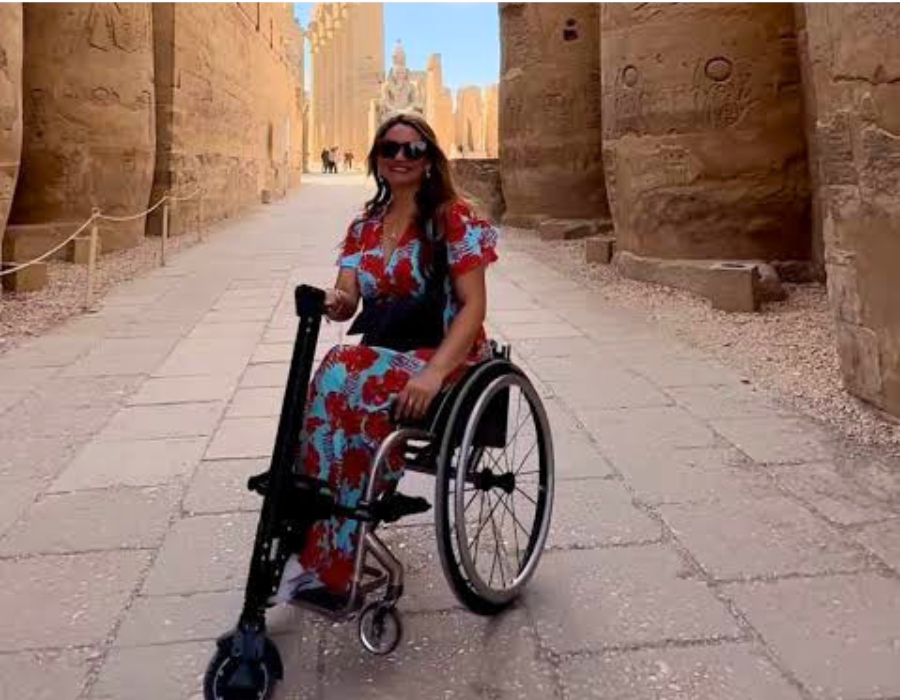
How to Plan a Wheelchair Accessible Egypt Tour
A successful accessible Egypt holiday should be planned in stages.
Step 1: Describe the Traveler’s Mobility Needs
Explain whether the traveler:
-
Uses a manual wheelchair
-
Uses a powered wheelchair
-
Can walk short distances
-
Can transfer independently
-
Can climb stairs
-
Needs a roll-in shower
-
Needs a wheelchair lift
Step 2: Select the Destinations
Choose destinations based on priorities.
For a first trip, Cairo/Giza and Luxor are usually the most important cultural areas.
Aswan and Abu Simbel can be added when the traveler wants a longer itinerary.
Step 3: Select Accessible Hotels
Do not choose hotels based only on star rating.
Verify the exact accessible room and bathroom configuration.
Step 4: Confirm Transportation
Confirm:
-
Vehicle type
-
Wheelchair storage
-
Ramp/lift
-
Transfer arrangements
-
Airport assistance
Step 5: Confirm the Nile Cruise
Ask for:
-
Elevator details
-
Adapted cabin
-
Bathroom configuration
-
Boarding process
-
Shore excursion arrangements
Step 6: Design Accessible Sightseeing
For every attraction, ask:
-
How far is the drop-off point?
-
Is the path paved?
-
Are there stairs?
-
Is there an accessible restroom?
-
Is assistance available?
-
Can the traveler return to the vehicle easily?
Step 7: Build in Flexibility
Do not fill every hour of the day.
Allow time for rest and unexpected delays.
Which Egypt Destinations Are Best for Wheelchair Users?
| Destination | Accessibility outlook | Main consideration |
|---|---|---|
| Cairo | Good with planning | Busy streets and sidewalks |
| Grand Egyptian Museum | Strong | Modern accessible facilities |
| Giza Pyramids | Moderate | Sand and uneven archaeological terrain |
| Luxor East Bank | Moderate to good at selected sites | Ancient surfaces |
| Valley of the Kings | Challenging | Tomb entrances and uneven terrain |
| Aswan | Moderate | Boats and archaeological sites |
| Abu Simbel | Moderate | Outdoor terrain and monument access |
| Nile cruise | Varies greatly | Ship design is critical |
| Red Sea resorts | Often easier | Hotel and beach access must be verified |
| Old Cairo | Variable | Historic streets and uneven surfaces |
This table should be viewed as a planning guide, not a guarantee of access at every individual location.
What Makes an Egypt Tour Truly Wheelchair Friendly?
A genuinely wheelchair-focused Egypt tour should coordinate several parts of the journey.
It is not enough to provide an accessible hotel.
The entire chain of travel needs to work:
Airport → Vehicle → Hotel → Attraction → Restaurant → Cruise → Attraction → Hotel → Airport.
If one link fails, the traveler’s experience can become unnecessarily difficult.
This is why accessibility should be treated as an itinerary-wide requirement.
How Egypt Time Travel Can Plan an Accessible Egypt Holiday
Egypt Time Travel can structure private Egypt itineraries around the traveler’s actual mobility requirements rather than simply adding a wheelchair note to a standard tour.
A properly planned accessible itinerary can coordinate:
-
Airport transfers
-
Accessible or mobility-suitable vehicles
-
Accessible hotel rooms
-
Private guides
-
Pyramids visits
-
Grand Egyptian Museum visits
-
Luxor sightseeing
-
Nile cruise arrangements
-
Aswan tours
-
Abu Simbel visits
-
Rest periods
-
Flexible sightseeing schedules
The exact arrangements should be confirmed before booking because accessibility requirements differ from one traveler to another.
What Information Should You Give Your Tour Consultant?
When requesting an accessible Egypt tour, provide as much practical information as possible.
For example:
“My mother uses a manual wheelchair. She can transfer from the wheelchair to a car seat but cannot climb stairs. She needs a roll-in shower and can walk approximately 20 meters with assistance.”
This is far more useful than simply saying:
“We need an accessible tour.”
The more specific the information, the more accurately the itinerary can be designed.
Sample Accessible Egypt Tour Packages
7-Day Accessible Cairo and Nile Experience
A shorter itinerary could combine:
-
Cairo
-
Giza
-
Grand Egyptian Museum
-
Luxor
-
Selected Nile cruise experience
Best for travelers who want the major highlights without a long trip.
9-Day Accessible Cairo, Luxor and Aswan
A longer program could include:
-
Cairo
-
Giza
-
Grand Egyptian Museum
-
Luxor
-
Nile cruise
-
Aswan
This gives more time for rest and allows the itinerary to move at a more comfortable pace.
11–12-Day Accessible Egypt Holiday
For travelers who want a more relaxed experience, an extended itinerary can include:
-
Cairo
-
Giza
-
Grand Egyptian Museum
-
Luxor
-
Nile cruise
-
Aswan
-
Abu Simbel
-
Optional Red Sea extension
The extra days can make a major difference because sightseeing does not have to be compressed.
Is Egypt Worth Visiting in a Wheelchair?
Yes.
A wheelchair should not automatically prevent a traveler from experiencing Egypt’s major attractions.
The key is to separate the idea of “perfect accessibility” from “meaningful accessibility.”
Egypt has genuine accessibility challenges, particularly around ancient archaeological sites and everyday urban infrastructure.
At the same time, wheelchair users can experience major parts of the country with appropriate planning.
You can see the Pyramids.
You can visit major museums.
You can explore selected temples.
You can cruise the Nile on an appropriate vessel.
You can visit Luxor and Aswan.
You can experience Egyptian culture, food, landscapes, and hospitality.
The itinerary simply needs to be built around realistic mobility requirements.
Frequently Asked Questions About Wheelchair Accessible Egypt
Can disabled travelers visit Egypt?
Yes. Egypt can be visited by travelers with different disabilities, but arrangements should be tailored to individual needs. Mobility, hearing, visual, and other accessibility requirements may require different forms of support.
Are Egypt tours suitable for wheelchair users?
Private Egypt tours can be suitable for wheelchair users when the itinerary, transportation, hotels, attractions, and cruise are specifically planned around accessibility requirements.
What are the best accessible tours in Egypt?
The best Egypt accessible tours are generally private itineraries that combine Cairo and Giza with selected Luxor and Nile experiences. The exact itinerary should be chosen according to the traveler’s mobility level rather than following a standard package.
Final Takeaway: Is Egypt Wheelchair Friendly in 2027?
Egypt can be a rewarding destination for wheelchair users in 2027, but it should be planned as an accessible trip rather than treated as a conventional vacation.
The strongest accessibility options are generally found in modern hotels, the Grand Egyptian Museum, private transportation, and carefully selected tourist facilities. The greatest challenges tend to occur at ancient archaeological sites, uneven terrain, tomb interiors, boarding points, and some Nile cruise ships.
The most important principle is to plan around the traveler, not simply around the destination.
Before booking, confirm the exact requirements for the wheelchair, hotel bathroom, transportation, sightseeing routes, and cruise.
For travelers who want to visit the Pyramids, Cairo, Luxor, Aswan, and the Nile without having to solve accessibility problems along the way, a private accessible Egypt itinerary can provide a much more controlled and comfortable experience.
For a 2027 trip, the best next step is to share the traveler’s mobility requirements, preferred destinations, travel dates, and approximate trip length so the itinerary can be checked attraction by attraction before booking.