
Quick Answer: What is the Aswan High Dam in Egypt?
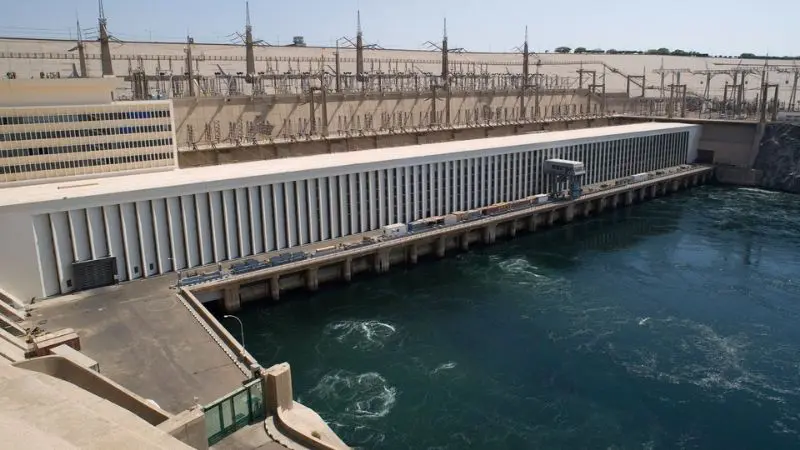
The Aswan High Dam is a massive rock-fill dam across the Nile River near Aswan in southern Egypt. Built between 1960 and 1970 and officially inaugurated in 1971, it controls Nile flooding, stores water for irrigation, and generates hydroelectric power. The dam created Lake Nasser, one of the world’s largest artificial reservoirs, while transforming Egyptian agriculture, Nubian communities, and the preservation of ancient monuments.
The Aswan High Dam is approximately 111 meters (364 feet) high and 3,830 meters (12,566 feet) long. It is one of Egypt’s most significant modern engineering achievements, but its importance extends far beyond its dimensions.
Before the High Dam, Egyptians depended heavily on the Nile’s unpredictable seasonal floods. Today, the dam plays a central role in regulating water supplies for a country where most of the population lives along the Nile Valley and Delta.
For travelers visiting Aswan in 2027, the site provides a different perspective on Egyptian history. Instead of ancient temples and royal tombs, visitors encounter the infrastructure that helped shape modern Egypt—and discover why building it led to one of the largest archaeological rescue campaigns of the twentieth century.
What Is the Aswan High Dam?
The Aswan High Dam is a large embankment dam constructed across the Nile River south of Aswan. Its principal purposes are water storage, flood regulation, irrigation support, and hydroelectric electricity generation.
Unlike a narrow concrete dam, the Aswan High Dam uses an enormous structure of compacted rock and other materials to hold back water.
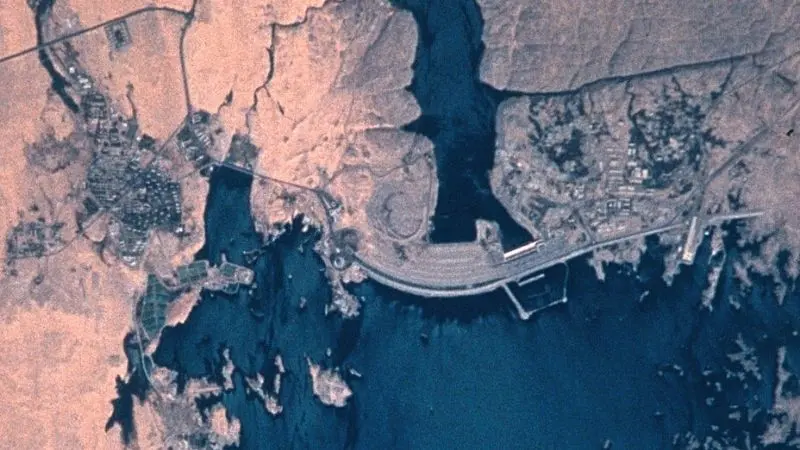
The dam separates two contrasting landscapes. On its upstream side lies the vast reservoir known as Lake Nasser. Downstream, the Nile continues north through Aswan toward Luxor, Cairo, and the Mediterranean Sea.
The project is sometimes called the High Dam of Egypt, the High Aswan Dam, or simply the Aswan Dam. However, visitors should distinguish it from the older Aswan Low Dam, which was completed in 1902.
Aswan High Dam Facts at a Glance
|
Feature |
Information |
|---|---|
|
Official name |
Aswan High Dam |
|
Arabic name |
السد العالي (El Sadd El Aali) |
|
Country |
Egypt |
|
Location |
Aswan, Upper Egypt |
|
River |
Nile River |
|
Construction began |
January 9, 1960 |
|
Main structure completed |
July 1970 |
|
Official inauguration |
January 15, 1971 |
|
Dam type |
Rock-fill embankment |
|
Height |
Approximately 111 meters (364 feet) |
|
Length |
Approximately 3,830 meters (12,566 feet) |
|
Crest width |
Approximately 40 meters (131 feet) |
|
Reservoir |
Lake Nasser |
|
Maximum design reservoir capacity |
Approximately 169 billion cubic meters |
|
Installed hydroelectric capacity |
Approximately 2,100 megawatts |
|
Principal functions |
Water storage, irrigation, flood regulation, electricity generation |
The dimensions above describe the Aswan High Dam rather than the Old Aswan Dam.
Its reservoir figures also refer to design capacity. They should not be confused with the amount of water stored on any particular day, which changes over time.
Where Is the Aswan High Dam Located?
The Aswan High Dam is located on the Nile River in southern Egypt, approximately 13 kilometers south of central Aswan by commonly described location references. Actual road distances depend on the starting point and route.
Aswan is the southernmost major Egyptian city along the Nile and an important gateway to Nubia and the monuments surrounding Lake Nasser.
The High Dam lies upstream from the historic city center and the older Aswan Dam.
Travelers exploring the city of Aswan can usually include the High Dam in a half-day sightseeing route alongside nearby archaeological attractions.
Where is the Aswan High Dam on a map?

Geographical context: the High Dam holds back Lake Nasser to the south while the Nile continues north toward Aswan.
The dam is positioned between two major water features:
-
North of the dam: The regulated Nile River flows toward Aswan, Luxor, and Cairo.
-
South of the dam: Lake Nasser extends through southern Egypt and across the border into Sudan, where the reservoir section is generally called Lake Nubia.
The direction can seem confusing because the Nile flows from south to north. Although Upper Egypt sounds geographically northern, it actually refers to the upstream, southern part of the Nile Valley.
How far is the dam from other Aswan attractions?
|
Location |
Relationship to the High Dam |
Planning advice |
|---|---|---|
|
Central Aswan |
North of the dam |
Use a taxi or private vehicle |
|
Old Aswan Dam |
Downstream of the High Dam |
Useful historical comparison |
|
Philae Temple boat departure area |
In the area between central Aswan and the High Dam |
Combine into one outing |
|
Kalabsha Temple |
Near Lake Nasser and the High Dam |
Requires appropriate boat arrangements |
|
Unfinished Obelisk |
Within Aswan city |
Add for an engineering-themed itinerary |
|
Nubian Museum |
Central Aswan |
Best for understanding cultural consequences |
|
Abu Simbel |
Much farther south, beside Lake Nasser |
Plan as a separate major excursion |
The High Dam can be combined with nearby attractions, but Abu Simbel should not be treated as a quick stop beside it.
Why Was the Aswan High Dam Built?
The Aswan High Dam was built to regulate the Nile’s unpredictable flow, store water for dry periods, reduce destructive flooding, support agricultural irrigation, and produce electricity for Egypt’s growing economy.
Before its construction, the country faced two opposing water-related risks: too much water during extreme floods and too little water during years of weak rainfall in the Nile Basin.
The problem of unpredictable Nile floods
For thousands of years, the Nile’s annual flood shaped agriculture and settlement in Egypt.
The river carried water and fertile sediments from upstream regions, replenishing floodplains and supporting agricultural production.
However, the volume of the flood varied considerably.
A relatively low flood could leave farmland without sufficient water. An unusually high flood could damage homes, fields, and infrastructure.
The Nile was essential to Egyptian civilization, but its variability created a persistent challenge.
The importance of these seasonal floods becomes clearer when examining why the Nile River was essential to ancient Egypt.
The limits of the Old Aswan Dam
Egypt had already attempted to control the river with the Old Aswan Dam.
Completed in 1902, the earlier structure increased water storage and supported irrigation during periods of lower flow.
It was subsequently raised twice to improve its capacity.
Even after these modifications, the older dam could not store enough water to protect Egypt adequately against major variations between wet and dry years.
A much larger reservoir was needed.
Agricultural development
Egypt’s agricultural land is concentrated along the Nile Valley and Delta, making dependable irrigation critical.
The High Dam allowed water to be retained during high-flow periods and released when needed.
This supported more consistent irrigation and reduced dependence on the old seasonal flooding cycle.
It also helped provide water for additional agricultural development, although the benefits differed across regions and farming systems.
Electricity and industrialization
The dam was also part of Egypt’s modernization program.
Its hydroelectric power station provided electricity for cities, factories, homes, and infrastructure.
During its early operating years, the power station represented a particularly important contribution to national electricity production.
Today, the High Dam remains a significant generating facility, although Egypt’s much larger and more diversified electricity system means the dam supplies a smaller share of national electricity than it did in its early decades.
When Was the Aswan High Dam Built?
Construction of the Aswan High Dam began on January 9, 1960. Its principal structure was completed in July 1970, and the dam was officially inaugurated on January 15, 1971.
These three dates explain why different historical accounts sometimes give different answers to the question of when the dam was completed.
The engineering work extended across approximately a decade, with water diversion, reservoir filling, and power generation beginning at different stages.
Aswan High Dam Construction Timeline
|
Year |
Historical milestone |
|---|---|
|
1902 |
Old Aswan Dam completed |
|
1952 |
Egyptian Revolution; plans for a larger dam gained momentum |
|
1954 |
Major design proposals and technical evaluations advanced |
|
1956 |
International financing dispute became part of the broader Suez Crisis |
|
1958 |
Egypt and the Soviet Union concluded a financing agreement |
|
1960 |
Construction began on January 9 |
|
1964 |
Nile diversion and major river closure works advanced |
|
1967 |
First electricity generation began |
|
1968 |
Major reservoir storage operations continued |
|
1970 |
Main dam structure completed |
|
1971 |
Official inauguration on January 15 |
The distinction between construction, operation, and inauguration is useful for historical accuracy.
Who built the Aswan High Dam?
The Aswan High Dam was built by Egypt with substantial Soviet financing and technical assistance.
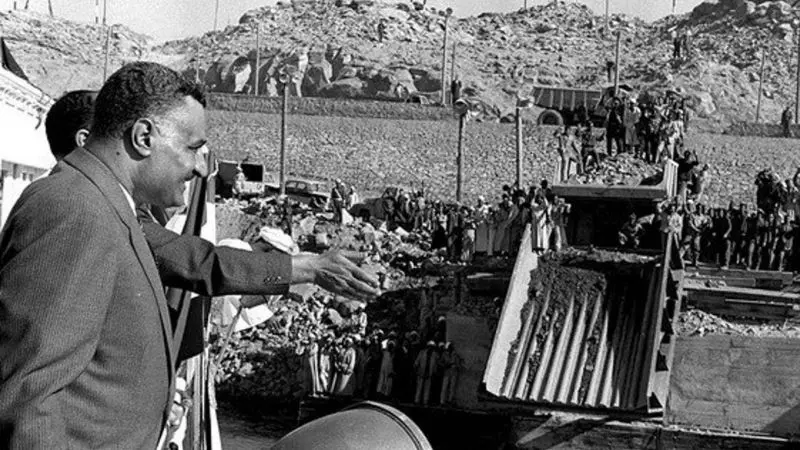
The project was closely associated with President Gamal Abdel Nasser and the country’s post-1952 development strategy.
Egyptian engineers, construction workers, and government institutions played central roles, working with Soviet specialists who contributed engineering expertise, equipment, and technical support.
The project became both a national infrastructure investment and a symbol of Egypt’s political independence.
Why did the Soviet Union help Egypt build the dam?
The Soviet Union supported the project after efforts to obtain Western-backed financing collapsed during the 1950s.
This happened during the Cold War, when both Western powers and the Soviet Union sought political influence across the Middle East.
The financing controversy was closely connected with the Suez Crisis of 1956, when President Nasser nationalized the Suez Canal Company.
The dam’s development therefore became linked with international politics, state-led industrialization, and Egyptian sovereignty.
For readers exploring other major modern infrastructure projects, the history of the Suez Canal provides a related perspective on Egypt’s economic geography.
How Was the Aswan High Dam Constructed?
The High Dam was constructed by combining extensive earthworks, rock-fill embankment engineering, water diversion structures, tunnels, and a hydroelectric power station.
The project required engineers to control the Nile’s flow while building a structure capable of resisting the pressure of a massive reservoir.
Preparing the construction site
Before the main dam could be completed, workers had to prepare foundations, organize construction routes, and create systems for diverting the river.
These works required substantial excavation and the placement of large quantities of construction materials.
Diverting the Nile
River diversion was one of the most important engineering stages.
Rather than simply stopping the Nile, engineers constructed channels and tunnels that allowed water to pass while essential portions of the dam were built.
Major diversion works culminated in 1964, marking an important milestone in the construction process.
Building the rock-fill embankment
The dam’s main body was assembled from enormous quantities of rock, sand, and other engineered materials.
Its broad base and sloping form distribute water pressure across a large structure.
This distinguishes it from narrow concrete arch dams commonly associated with steep mountain valleys.
Installing the power station
The hydroelectric station was designed to convert the energy of moving water into electricity.
Tunnels and water-control equipment channel water toward turbines.
Mechanical rotation drives generators that produce electric power.
Electricity generation began before the entire project was formally inaugurated.
Why was construction so difficult?
The engineers faced several major challenges:
-
Maintaining controlled water flow during construction.
-
Building an exceptionally large embankment.
-
Integrating flood-control infrastructure with power generation.
-
Managing enormous amounts of construction material.
-
Coordinating complex international engineering and financing arrangements.
-
Preparing for the effects of a rapidly expanding reservoir.
The final challenge extended beyond engineering. As the reservoir filled, entire Nubian settlements and important archaeological sites faced inundation.
How Big Is the Aswan High Dam?
The Aswan High Dam measures approximately 3.83 kilometers long and 111 meters high above the Nile riverbed.
Its crest is about 40 meters wide.
The total structure is considerably wider near its base, reflecting the mass required to contain the reservoir.
These figures make the High Dam one of Egypt’s most substantial engineering landmarks.
111 m
Height
3,830 m
Length
40 m
Crest width
How much water can the Aswan High Dam hold?
The reservoir was designed for a maximum storage capacity of approximately 169 billion cubic meters at its specified maximum design water level.
That total capacity is divided into different functions, including long-term sediment storage, usable storage, and flood protection.
|
Reservoir storage category |
Approximate design volume |
|---|---|
|
Sediment or dead storage |
31.6 billion m³ |
|
Active or operational storage |
89.7 billion m³ |
|
Flood protection storage |
47.7 billion m³ |
|
Total |
169 billion m³ |
These figures describe the design allocation of the reservoir. They do not mean Lake Nasser always contains that amount of water.
The actual stored volume depends on reservoir elevation, inflows, releases, evaporation, and long-term sediment accumulation.
Is the Aswan High Dam the biggest dam in Africa?
The Aswan High Dam is among Africa’s most important large dams, but calling it the continent’s largest without specifying a measurement would be misleading.
Dams can be compared by height, length, reservoir capacity, installed hydroelectric power, or the volume of construction materials.
Different dams lead different categories.
The Aswan High Dam is particularly notable for its water-storage role, enormous embankment, and influence on the Nile’s downstream flow.
How Does the Aswan High Dam Work?
The Aswan High Dam works by storing Nile water in Lake Nasser and controlling how much water is released downstream.
Water entering the reservoir can be retained during periods of high river flow and released according to operational requirements.
Some released water passes through the hydroelectric power station, where turbines generate electricity.
Simplified water-management process
Conceptual diagram showing the dam’s main roles. Not a technical cross-section.
Step 1: Water enters Lake Nasser
The Nile carries water north through Sudan into southern Egypt.
As the river approaches the dam, water accumulates in the reservoir.
Lake Nasser provides storage across seasons and, when conditions allow, across years.
Step 2: The reservoir buffers variable river flow
The reservoir reduces the immediate effect of unusually high or low flows on downstream Egypt.
During wetter periods, water can be stored.
During drier periods, previously stored water can help maintain downstream supplies.
This does not create new water, and storage cannot fully eliminate the effects of a prolonged regional drought.
Step 3: Controlled releases supply downstream areas
Water is released through the dam’s operating infrastructure.
These releases support downstream irrigation and other uses while taking account of reservoir conditions and operating requirements.
Step 4: Water generates electricity
Water directed through the hydroelectric system turns turbines connected to generators.
The station’s installed capacity is approximately 2,100 megawatts, traditionally associated with 12 generating units.
Installed capacity represents the maximum rated generating capability under suitable conditions. Actual electricity production varies with water availability, operational conditions, and system demand.
Step 5: Water continues north
After leaving the dam, water continues through the Nile toward Luxor, Cairo, and the Delta.
This regulation means the river’s downstream flow differs substantially from the historical seasonal flood cycle.
What Is Lake Nasser, and How Was It Created?
As the dam began holding back Nile water, the river flooded a large section of the former Nubian valley.
The resulting reservoir extends for approximately 500 kilometers across southern Egypt and into northern Sudan, although reported measurements vary according to boundaries and water levels.
The Egyptian portion is known as Lake Nasser, while the Sudanese portion is commonly called Lake Nubia.
Why is it called Lake Nasser?
The reservoir is named after Gamal Abdel Nasser, the Egyptian president most closely associated with the High Dam project.
For Egypt, the lake became both a strategic water reserve and a visible symbol of the country’s modernization.
Is Lake Nasser natural or artificial?
Lake Nasser is an artificial lake created by damming the Nile.
It did not exist in its modern form before the High Dam.
The water now covers landscapes that once contained Nubian villages, archaeological remains, agricultural areas, and historic routes along the river.
Its creation transformed the relationship between people and the surrounding desert.
Can travelers explore Lake Nasser?
Yes. Depending on available itineraries, parts of Lake Nasser can be visited through organized excursions, boat journeys, and cruises.
A Lake Nasser travel guide can help travelers understand the reservoir’s setting, while dedicated Lake Nasser cruises offer a different experience from conventional Nile cruises.
Lake Nasser journeys are particularly interesting for travelers seeking quieter landscapes and archaeological sites away from the busiest mainstream cruise routes.
Travel arrangements, sailing permissions, and access to individual monuments should always be confirmed before booking.
How Did the Aswan High Dam Change Egypt?
The Aswan High Dam changed Egypt by enabling large-scale control of the Nile’s seasonal flow.
Its effects reached agriculture, electricity production, flood protection, settlement patterns, the natural environment, and cultural heritage.
However, these changes were not uniformly positive or negative.
The dam created major economic and water-management benefits while also producing long-term environmental and social costs.
More predictable irrigation
Water regulation allowed agricultural systems to depend less heavily on the timing of the annual Nile flood.
Farmers could access irrigation water through controlled infrastructure rather than waiting for seasonal inundation.
This supported year-round cultivation in many areas.
It also changed farming practices that had developed over centuries.
Protection from extreme floods
The reservoir provides space to retain large quantities of floodwater.
This reduces the severity of many downstream high-flow events.
Flood protection remains one of the central reasons for operating the High Dam.
However, no dam can provide unlimited protection in every conceivable hydrological situation.
Protection against some drought impacts
The ability to store water from wetter years allows Egypt to buffer some periods of lower Nile inflow.
This is especially important in a country where rainfall contributes relatively little to irrigation supplies across most agricultural areas.
Nevertheless, reservoir storage is finite.
Prolonged droughts and complex upstream water conditions still require careful management.
Hydroelectric power
Electricity from the dam supported Egypt’s industrial and infrastructure development.
The power station also demonstrated how river regulation could serve multiple national purposes.
Hydropower generation does not require burning fossil fuels at the point of generation, although dam construction and reservoir ecosystems can still have environmental impacts.
Changes in everyday life
The dam affected far more than agricultural production.
Its construction contributed to the development of roads, electrical networks, construction industries, and new residential areas.
At the same time, families living in areas designated for flooding faced relocation.
For those communities, the transformation of Egypt’s water system had deeply personal consequences.
What Are the Advantages and Disadvantages of the Aswan High Dam?
The main advantages of the Aswan High Dam are water storage, flood protection, irrigation support, and hydroelectric power. Its main disadvantages include disrupted sediment movement, evaporation losses, environmental changes, and the displacement of Nubian communities.
|
Advantages |
Disadvantages and trade-offs |
|---|---|
|
Stores water from high-flow periods |
Reservoir water is lost through evaporation |
|
Reduces many downstream flood risks |
Alters natural flood patterns |
|
Supports more reliable irrigation |
Traps sediment that once moved downstream |
|
Generates hydroelectricity |
Changes river and reservoir ecosystems |
|
Provides strategic water reserves |
Creates reservoir-management responsibilities |
|
Supports wider economic development |
Required the relocation of Nubian settlements |
|
Can support tourism around Lake Nasser |
Threatened archaeological sites, requiring costly rescue efforts |
Why is sediment retention a problem?
Before the High Dam, the Nile transported sediment from upstream regions into the floodplains and Delta.
These sediments helped maintain agricultural soils and contributed to the natural replenishment of downstream landscapes.
The reservoir now traps much of the incoming sediment.
This changes sediment availability downstream and contributes to broader issues involving erosion and agricultural management.
Modern irrigation systems also affect how water and sediments move through the landscape, so the dam should not be presented as the only cause of every environmental change in the Nile Delta.
Why does evaporation matter?
Lake Nasser lies in an extremely hot, dry region.
Open-water evaporation removes some of the water stored in the reservoir.
The amount varies according to weather, reservoir surface area, temperature, wind, and other conditions.
Evaporation is therefore an important part of the reservoir’s water balance.
Did the dam affect Egypt’s environment?
Yes. The dam changed the river’s natural flow regime and created an extensive reservoir ecosystem where a river valley previously existed.
These changes affected habitats, sediment transport, aquatic species, and land use.
Some areas gained new aquatic environments, while other habitats were submerged or altered.
Environmental effects also differ between Lake Nasser and the downstream Nile.
Was the High Dam worth building?
This question cannot be answered by engineering capacity alone.
From a water-security perspective, the dam gave Egypt greater ability to manage changing Nile flows.
From an environmental and cultural perspective, it imposed costs that require recognition.
A balanced assessment must consider benefits to national water management alongside the experiences of displaced communities and long-term ecological change.
How Did the High Dam Affect Nubian Communities?
The construction of the Aswan High Dam and the formation of Lake Nasser flooded extensive areas of historic Nubia, requiring large numbers of residents in Egypt and Sudan to relocate.
Nubia is a historically and culturally important region stretching across southern Egypt and northern Sudan.
It has its own languages, artistic traditions, architecture, and long history of interaction with ancient Egyptian kingdoms.
For many Nubian families, the High Dam meant the loss of ancestral villages and significant changes to community life.
Why were Nubian villages moved?
As the reservoir expanded, settlements on land that would be submerged could no longer remain in their original locations.
Resettlement programs moved residents into new communities.
In Egypt, many displaced Nubians were relocated to settlements in the Kom Ombo area and elsewhere.
These moves affected access to the river, traditional livelihoods, family networks, and cultural landscapes.
What was lost?
The losses cannot be measured only in land area.
They included homes, familiar agricultural environments, village layouts, burial places, and connections to ancestral locations.
Although new housing and infrastructure were established, relocation did not recreate every aspect of community life.
The experiences of displaced families varied, and the history of Nubian resettlement remains an important subject in discussions of heritage, development, and identity.
How can travelers understand Nubian history respectfully?
A visit to the Nubian Museum in Aswan offers important historical and cultural context.
The museum presents archaeological material and cultural heritage associated with Nubia across different periods.
Visitors can also explore Nubian communities and cultural experiences when these are organized respectfully and benefit local residents.
The key is to recognize Nubian culture as living heritage—not merely as a colorful addition to a sightseeing itinerary.
The dam’s history becomes much more meaningful when the engineering achievement and the experiences of affected communities are considered together.
How Did the Aswan High Dam Lead to the Rescue of Ancient Temples?

In response, Egypt, Sudan, UNESCO, and international partners organized a major archaeological rescue program.
The campaign became one of the most remarkable heritage-preservation efforts of the twentieth century.
The international Nubian monuments campaign
In 1959, Egypt and Sudan requested international assistance to protect monuments threatened by the planned reservoir.
UNESCO launched its International Campaign to Save the Monuments of Nubia in 1960.
The campaign continued until 1980.
Archaeologists, architects, engineers, conservation specialists, and construction teams worked to document threatened sites and relocate selected monuments.
The effort did not save every archaeological location.
Some sites were recorded before flooding, others were relocated, and many landscapes and remains could not be preserved in their original condition.
Abu Simbel: Moving temples to higher ground
The Abu Simbel Temples are the best-known example of the rescue campaign.
The two monumental temples were originally carved into rock during the reign of Ramesses II in the thirteenth century BCE.
The larger temple features four enormous seated statues of the pharaoh.
As Lake Nasser rose, the original temple location faced inundation.
Engineers and conservation specialists cut the temples into carefully planned blocks, moved them to higher ground, and reconstructed them inside an artificial hill.
The relocation was completed in 1968.
The process preserved the monuments’ architectural appearance and much of their original spatial character, although the temples no longer stand in their original physical location.
For visitors, Abu Simbel demonstrates how the construction of one modern engineering project prompted another extraordinary engineering undertaking.
Philae Temple: A sanctuary moved to another island
The Temple of Philae is another important example.
The sanctuary complex, dedicated principally to the goddess Isis, originally stood on Philae Island.
Water-level changes associated with earlier dam operations had already affected the site before the High Dam was constructed.
During the international rescue campaign, the principal monuments were dismantled and reconstructed on the nearby island of Agilkia.
Today, visitors reach the relocated temple complex by boat.
The temples are often associated with their original island name, even though the structures now stand on a different island.
This distinction is particularly interesting for travelers comparing historical maps with the modern site.
Kalabsha Temple: A major monument near the dam
The Kalabsha Temple was also relocated to protect it from the reservoir.
Its principal structure dates to the Roman period and is associated with the Nubian deity Mandulis.
The temple now stands near the High Dam, making it geographically relevant to visitors interested in both the engineering project and the archaeological rescue.
Access differs from simply stopping at the dam viewpoint, so a visit requires separate transportation and appropriate arrangements.
Other monuments affected by the reservoir
The rescue campaign also addressed numerous other temples and archaeological sites.
These included:
-
Amada Temple
-
Wadi El Seboua Temple
-
Temple of Dakka
-
Beit El Wali Temple
-
Other monuments across Egyptian and Sudanese Nubia
For a broader understanding of the region, travelers can explore the histories of the Temple of Amada, Wadi El Seboua, and Beit El Wali.
Not every rescued monument remains beside its former location. Some were reconstructed elsewhere in Egypt, while a small number were presented to foreign countries that supported the preservation effort.
Why the rescue campaign matters today
The campaign demonstrated that international cooperation could protect important cultural heritage during major infrastructure development.
The rescued Nubian monuments became part of the UNESCO World Heritage property known as Nubian Monuments from Abu Simbel to Philae, inscribed in 1979.
Importantly, the dam itself is not the same thing as the UNESCO-listed monuments.
Visitors should distinguish the modern High Dam from the cultural heritage sites associated with the rescue campaign.
What Is the Difference Between the Old Aswan Dam and the Aswan High Dam?
Egypt has two major structures commonly associated with the name Aswan Dam: the Old Aswan Dam, completed in 1902, and the Aswan High Dam, completed in 1970.
They were built in different historical periods, use different structural designs, and provide different levels of water storage.
|
Feature |
Old Aswan Dam |
Aswan High Dam |
|---|---|---|
|
Also called |
Aswan Low Dam |
High Dam |
|
Initial completion |
1902 |
1970 |
|
Main historical period |
British occupation of Egypt |
Nasser-era Egypt |
|
Basic structure |
Masonry gravity dam |
Rock-fill embankment dam |
|
Approximate length |
1.95 km |
3.83 km |
|
Main historical function |
Seasonal regulation and irrigation support |
Large-scale storage, flood regulation, irrigation, and electricity |
|
Reservoir relationship |
Older upstream water-control system |
Creates Lake Nasser |
|
Historical significance |
Early major modern Nile engineering |
Transformative national development project |
Why was a second dam necessary?
The Old Aswan Dam could store a limited amount of water.
It was raised twice as Egypt’s irrigation requirements increased.
However, its capacity remained insufficient for the long-term storage strategy envisioned during the mid-twentieth century.
The High Dam was therefore designed on a much larger scale.
Can you visit both dams?
Travelers may encounter both structures during sightseeing around southern Aswan, depending on the routes and access arrangements available.
However, the visitor experience is different.
The Old Dam is a historic engineering structure, while the High Dam is usually visited for its scale, reservoir views, and modern historical significance.
If your schedule is limited, the High Dam is generally the more useful dedicated sightseeing stop.
For travelers interested in the development of modern Egypt, comparing the two offers a clear illustration of how water-management ambitions changed over approximately seventy years.
Is the Aswan High Dam Worth Visiting in 2027?
Yes, the Aswan High Dam is worth visiting for travelers interested in modern Egyptian history, engineering, Nile geography, and the creation of Lake Nasser.
However, it is usually best treated as a short sightseeing stop rather than a full-day attraction.
The dam is not an ancient monument, a conventional museum, or an extensive visitor complex with numerous exhibits.
Its appeal comes from understanding the scale of the structure and what it changed.
What can you actually see at the High Dam?

Depending on current access arrangements, visitors may see:
-
Views toward Lake Nasser.
-
Parts of the dam’s enormous embankment.
-
The contrast between the reservoir and the downstream Nile landscape.
-
The High Dam’s commemorative or informational features.
-
Nearby infrastructure from public visitor areas.
Visitors should not assume that the interior of the hydroelectric power station, engineering control facilities, or restricted operational structures are open for ordinary tourist visits.
Those facilities may require separate official authorization, if access is available at all.
How long do you need at the dam?
For most travelers, approximately 20–40 minutes at the main visitor area is sufficient.
This is a planning recommendation rather than an official visiting duration.
An additional allowance may be useful for photography, listening to an explanation from a guide, or delays at security checkpoints.
The full excursion takes longer once travel from central Aswan is included.
Who will enjoy the visit most?
The High Dam is especially suitable for:
-
Travelers interested in engineering and infrastructure.
-
Visitors studying modern Egyptian history.
-
Families with older children who enjoy geography and science.
-
People interested in the relationship between the Nile and Egyptian agriculture.
-
Travelers visiting Philae Temple who want another nearby stop.
-
Visitors planning to explore Lake Nasser or Nubian monuments.
Who might prefer to skip it?
The dam may be less rewarding for travelers who have very limited time in Aswan and primarily want ancient monuments, markets, river scenery, or traditional architecture.
If your visit lasts only a few hours, Philae Temple or a short Nile boat experience may be a higher priority.
This does not diminish the High Dam’s historical significance; it simply reflects the difference between an important engineering landmark and a visually detailed archaeological attraction.
How to Visit the Aswan High Dam in 2027
The easiest way to visit the Aswan High Dam is by private car, organized sightseeing excursion, or taxi from Aswan.
The dam is outside the main central sightseeing area, so walking there from a city-center hotel is not practical for most visitors.
How do you get to the High Dam from Aswan?
Private vehicle or guided excursion
A private vehicle is usually the most convenient choice, especially if you want to combine the dam with Philae Temple or the Unfinished Obelisk.
An organized tour can also explain the dam’s historical background, which makes the relatively brief site visit more rewarding.
Taxi
A taxi can be a practical option if you prefer a short independent excursion.
Agree on the route, return transportation, waiting arrangements, and fare before departure.
Aswan sightseeing tour
For first-time visitors, a guided Aswan day tour can combine several attractions without requiring separate transport arrangements.
The exact itinerary should confirm whether the High Dam entrance and relevant admission charges are included.
How much does it cost to visit the Aswan High Dam?
Visitor admission, vehicle charges, and tour prices can change.
A reliable, confirmed High Dam admission schedule specifically for 2027 was not established during this research. For that reason, a fixed entry-ticket price is not provided here.
Travelers should distinguish between the individual entrance charge and the overall cost of an excursion.
|
Expense |
What to check |
|---|---|
|
High Dam admission |
Current official visitor price |
|
Vehicle charge |
Whether a separate vehicle fee applies |
|
Taxi or private transfer |
Round-trip cost and waiting time |
|
Tour guide |
Whether guiding is included |
|
Combined sightseeing tour |
Which attractions and entrance fees are covered |
|
Optional nearby boat visit |
Boat cost and passenger arrangements |
For budgeting, request a complete quotation rather than relying on an isolated ticket price found in an older travel blog.
What are the High Dam opening hours?
Opening arrangements should be reconfirmed for your actual travel date.
The site is working national infrastructure, so security procedures and permitted public access can differ from those at an ordinary museum or archaeological attraction.
Do not assume access is available at all hours or that visitors can enter restricted areas.
Morning visits are often preferable from a comfort and itinerary perspective, especially during warmer months.
Is photography allowed?
Photography from permitted public visitor locations is generally part of the sightseeing experience.
However, the High Dam is also sensitive infrastructure.
Visitors must follow on-site signs and security instructions, especially regarding restricted installations, equipment, drones, or professional filming.
Do not use a drone unless the necessary Egyptian permissions have been obtained.
Is the dam wheelchair accessible?
The main sightseeing experience is generally more limited in scope than visiting a large archaeological complex, but current step-free routes, parking arrangements, surfaces, and toilet accessibility require confirmation.
A paved observation area should not automatically be described as fully wheelchair accessible.
Visitors with mobility requirements should ask their operator about vehicle proximity, walking distances, surfaces, and available assistance.
For broader trip preparation, Egypt Time Travel has a guide to wheelchair-accessible travel in Egypt.
What Is the Best Time to Visit the Aswan High Dam?
The most comfortable time to visit the Aswan High Dam is generally between October and April, when southern Egypt experiences milder conditions than during the peak summer months.
Aswan has a hot desert climate, with very little rainfall and exceptionally strong sunshine.
The exposed setting of the dam can feel hotter than the temperature alone suggests.
Seasonal visiting guide
|
Season |
General conditions |
Visitor recommendation |
|---|---|---|
|
December–February |
Mild days, cooler mornings and evenings |
Excellent for sightseeing |
|
March–April |
Warmer temperatures, generally manageable |
Favor morning visits |
|
May–September |
Very hot, especially during midday |
Keep outdoor stops brief |
|
October–November |
Cooling conditions after summer |
Good for combined sightseeing |
Visiting in winter
Winter is particularly suitable for travelers who want to combine the dam with Philae Temple and other outdoor attractions.
Daytime sunshine can still be strong, but the air is usually more comfortable for standing outside and taking photographs.
A light extra layer can be useful early in the morning or during cooler evenings.
Visiting in summer
Summer temperatures in Aswan can be intense.
If you visit between June and August, try to arrange the dam stop early in the day and minimize unnecessary time exposed to direct sun.
Bring drinking water, a hat, sunglasses, and sun protection.
For additional seasonal information, consult Egypt Time Travel’s monthly Egypt weather guide.
What time of day is best for photographs?
Morning often provides a practical balance between daylight and manageable temperatures.
The best lighting angle depends on which publicly accessible viewpoint is open and what you want to photograph.
Visitors should avoid planning their visit around an assumed sunset viewpoint without confirming closing times.
What Should You Bring When Visiting the High Dam?
The High Dam is usually a short outdoor stop, so travelers do not need specialist equipment.
However, the desert location and exposed viewing areas make basic preparation worthwhile.
Keep your belongings manageable and avoid carrying unnecessary equipment during a short viewpoint stop.
Large professional photography equipment may be subject to additional rules, so confirm permissions when relevant.
What Are the Best Attractions Near the Aswan High Dam?
The High Dam is most rewarding when visited as part of a wider Aswan itinerary.
Nearby historical sites reveal different aspects of Egypt’s relationship with the Nile, from ancient stoneworking and religious architecture to Nubian history and modern engineering.
1. Philae Temple
A major ancient sanctuary dedicated to Isis, relocated to Agilkia Island during the Nubian monuments rescue campaign.
Why combine it: Philae directly illustrates the archaeological consequences of dam construction.
2. Unfinished Obelisk
A monumental unfinished granite obelisk that reveals how ancient Egyptian stoneworkers shaped massive monuments.
Why combine it: It creates an interesting comparison between ancient and modern engineering.
See the Unfinished Obelisk guide.
3. Nubian Museum
A museum exploring Nubia’s archaeology, culture, languages, and historical development.
Why combine it: Provides essential human context for the communities affected by the reservoir.
Explore the Nubian Museum in Aswan.
4. Kalabsha Temple
A major relocated Nubian temple near Lake Nasser.
Why combine it: Offers a quieter archaeological connection to the High Dam, subject to boat access and available arrangements.
5. Elephantine Island
An important ancient settlement and archaeological site in the Nile near Aswan.
Why combine it: Shows how the river shaped settlement and trade long before modern dams.
Read about Elephantine Island’s history.
The attractions do not all have identical access requirements. Some involve boats, separate ticketing, or additional travel time.
How to Combine the High Dam with Other Aswan Attractions
The most efficient itinerary depends on how much time you have and whether ancient history, modern engineering, or river scenery interests you most.
Option 1: Short visit — approximately two hours
Best for travelers with a limited sightseeing window.
Suggested sequence: Travel from Aswan to the High Dam, spend 20–40 minutes at the permitted observation area, and return to the city.
Allow additional time for vehicle access, traffic, and security procedures.
This option works well if you want to understand the dam without sacrificing a larger part of your day.
Option 2: Half-day history and engineering tour
Best for first-time visitors.
|
Stop |
Suggested activity |
Approximate on-site time |
|---|---|---|
|
High Dam |
View the reservoir and understand the structure |
20–40 minutes |
|
Philae Temple |
Boat crossing and temple exploration |
90–120 minutes |
|
Unfinished Obelisk |
Examine ancient quarrying techniques |
30–45 minutes |
This itinerary often requires around four to five hours overall, depending on transport, boat availability, security, and the depth of guiding.
Its greatest advantage is thematic coherence.
Visitors see the modern dam, a temple rescued because of the reservoir, and an ancient monument that reveals earlier Egyptian engineering methods.
Option 3: Full-day Aswan cultural experience
Best for travelers who want a more complete introduction to the area.
Combine the High Dam and Philae Temple with the Nubian Museum, allowing time for lunch and unhurried exploration.
If time permits, include a Nile boat experience or another city attraction.
A full-day itinerary should not attempt to include every major Aswan site. Travel time and midday heat make it better to select a smaller number of meaningful stops.
For more ideas, see things to do in Aswan.
Option 4: Lake Nasser and Nubian archaeology
Best for travelers especially interested in Nubian history and less-visited temples.
Use the High Dam as an introduction to the creation of the reservoir, then explore nearby Lake Nasser monuments through an appropriately arranged boat excursion or separate journey.
Some archaeological locations require specialized transport and cannot realistically be added to a standard short Aswan tour.
Can you visit the High Dam and Abu Simbel on the same day?
It is possible to plan a long journey from Aswan toward Abu Simbel that includes a dam stop, depending on transportation and timing.
However, this is not necessarily the best use of the day.
Abu Simbel lies approximately 280 kilometers south of Aswan and requires substantial travel time.
For travelers who want to enjoy Abu Simbel without rushing, it is usually better to treat the temples as the main focus of that excursion.
If you have multiple days in Upper Egypt, a well-paced Luxor and Aswan itinerary can distribute these experiences more comfortably.
Aswan High Dam vs. Philae Temple: Which Should You Visit First?
The answer depends on your interests and available time.
Philae Temple is generally the stronger single attraction for travelers interested in ancient Egyptian architecture, while the High Dam is particularly valuable for understanding modern Egypt and the transformation of the Nile.
|
Factor |
Aswan High Dam |
Philae Temple |
|---|---|---|
|
Main appeal |
Modern engineering and Nile water management |
Ancient Egyptian religious architecture |
|
Historical period |
Twentieth century |
Mainly Ptolemaic and Roman remains |
|
Typical visit |
Short viewpoint stop |
Longer archaeological visit |
|
Photography |
Reservoir and infrastructure landscapes |
Columns, reliefs, temple architecture |
|
Access |
Vehicle-based excursion |
Vehicle transfer plus boat crossing |
|
Ideal for |
Engineering and modern history |
Archaeology and cultural tourism |
|
Connection between sites |
Created the reservoir that threatened monuments |
Relocated during the Nubian rescue campaign |
For most first-time visitors, combining both is preferable to treating them as competing attractions.
Philae provides the architectural detail. The dam explains an important part of the temple’s modern preservation story.
Can You See the High Dam on a Nile Cruise?
Travelers joining a traditional Nile cruise between Luxor and Aswan do not normally pass through the Aswan High Dam into Lake Nasser.
Standard Luxor–Aswan cruise itineraries operate on the Nile downstream of the High Dam.
Lake Nasser cruises are separate travel experiences.
What is the difference between the two?
Traditional Nile cruises usually focus on monuments along the stretch between Luxor and Aswan, such as Karnak, Edfu, and Kom Ombo, depending on the itinerary.
Lake Nasser cruises explore a different geographical and archaeological area, often associated with Nubian monuments and the reservoir’s desert landscape.
Travelers comparing the experiences can explore Nile cruise holidays in Egypt alongside the Lake Nasser travel options mentioned earlier.
Can the High Dam be included before or after a cruise?
Yes. A High Dam sightseeing visit can often be arranged during a stay in Aswan before embarkation or after disembarkation, subject to the cruise schedule and transport arrangements.
It is sensible to leave adequate time for hotel transfers, luggage handling, and any scheduled boat departure.
Do not assume that every cruise automatically includes the dam in its shore-excursion program.
Common Misconceptions About the Aswan High Dam
Misconception 1: The High Dam is an ancient Egyptian monument
The Aswan High Dam is a twentieth-century engineering project.
Although its purpose relates to the Nile’s long importance in Egyptian civilization, it was not constructed by the pharaohs.
Misconception 2: The High Dam and Old Aswan Dam are the same structure
They are separate dams.
The Old Aswan Dam was completed in 1902, while the High Dam’s main structure was completed in 1970.
Their designs, sizes, and storage capacities differ.
Misconception 3: Lake Nasser existed in ancient Egypt
Lake Nasser is an artificial reservoir formed during the construction and operation of the High Dam.
The ancient Nubian valley previously occupied much of the area now covered by water.
Misconception 4: All ancient temples were lost beneath the reservoir
Many important temples were rescued and relocated through the international Nubian monuments campaign.
However, not every archaeological site could be moved or preserved.
Misconception 5: The dam produces all of Egypt’s electricity
The High Dam remains an important hydroelectric facility, but Egypt’s electricity system includes multiple generation technologies and power stations.
It does not produce all of the country’s electricity.
Misconception 6: The dam completely solved Egypt’s water challenges
The dam provides major storage and regulation capabilities.
Nevertheless, Egypt still faces water-management challenges involving population, agriculture, evaporation, water quality, climate variability, and transboundary Nile resources.
Misconception 7: Visitors can explore the entire dam
Ordinary tourism is limited to authorized areas.
The hydroelectric station and other operational facilities should not be assumed open to visitors.
The Aswan High Dam and Egypt’s Water Future
The Aswan High Dam remains central to Egypt’s water-management system.
Its importance comes not only from its original construction but also from the continuing need to manage a river shared by multiple countries.
Egypt is highly dependent on Nile water.
The Nile Basin extends across a large part of northeastern and eastern Africa, and water-management decisions throughout the region influence long-term planning.
Why the dam still matters in 2027
The dam continues to serve several important purposes.
It stores water, provides downstream regulation, supports irrigation, and generates electricity.
Its reservoir also offers strategic storage capacity during periods of variable river inflow.
At the same time, long-term reservoir management must account for changing hydrological conditions, evaporation, sedimentation, and competing demands for water.
Does the Grand Ethiopian Renaissance Dam affect the Aswan High Dam?
The Grand Ethiopian Renaissance Dam, commonly abbreviated GERD, is a major hydroelectric dam on the Blue Nile in Ethiopia.
The Blue Nile is one of the principal tributaries of the Nile system.
Because water flows from the Blue Nile through Sudan toward Egypt, reservoir operations upstream are relevant to the wider Nile Basin’s water-management discussions.
However, the relationship between GERD and the Aswan High Dam depends on hydrology, reservoir levels, operating decisions, and other conditions.
It would be inaccurate to claim that any single upstream action always produces the same downstream result.
Water policy and operating arrangements are also subject to diplomatic and technical developments, so travelers and readers should not treat older headlines as permanent descriptions of current conditions.
Is the Aswan High Dam still safe and operating?
The Aswan High Dam continues to function as a major part of Egypt’s water and electricity infrastructure.
However, a travel guide cannot independently certify its structural condition or predict future operational circumstances.
Questions about structural inspections, reservoir management, and official safety assessments belong to the relevant Egyptian authorities.
For ordinary visitors, the practical concern is to follow authorized access routes and current local security instructions.
Why the Aswan High Dam Is Important to Egyptian History
The dam represents a major transition in how Egypt manages its relationship with the Nile.
Ancient Egyptians adapted agricultural calendars, settlement patterns, and irrigation practices to seasonal flooding.
Modern Egypt developed infrastructure capable of regulating much of that natural variability.
The High Dam is therefore more than a large barrier across a river. It marks a fundamental change in the country’s environmental and economic history.
Ancient water management and modern engineering
Ancient Egyptian society depended on understanding the seasonal Nile flood.
Farmers, administrators, and rulers developed methods for measuring water levels, distributing irrigation, and managing agricultural production.
Their engineering achievements included canals, basins, and other water-management systems.
The High Dam represents a different technological approach: storing very large amounts of water for controlled use.
This comparison connects modern infrastructure with the broader story of Egyptian history.
A symbol of national development
The dam was associated with the political ambitions of the Nasser era.
Its construction represented industrialization, infrastructure expansion, and the aspiration to strengthen national control over essential resources.
For many Egyptians, it became a symbol of national achievement.
A reminder of development’s costs
The same project also transformed Nubian communities and landscapes, interrupted natural river processes, and threatened archaeological heritage.
Its history illustrates a continuing challenge faced by countries worldwide: how to balance infrastructure development with environmental protection and cultural preservation.
For visitors, acknowledging both sides leads to a more complete understanding than either simple celebration or condemnation.
15 Interesting Facts About the Aswan High Dam
1. The Aswan High Dam was built across the Nile River in southern Egypt. It lies upstream from the city of Aswan.
2. Construction began in 1960. The main structure was completed in 1970, followed by the official inauguration in January 1971.
3. The dam is approximately 111 meters high. Its crest extends for about 3.83 kilometers.
4. It is a rock-fill embankment dam. It is not a narrow concrete arch dam.
5. It created Lake Nasser. The reservoir extends across southern Egypt and into northern Sudan.
6. Lake Nasser is named after Gamal Abdel Nasser. The Egyptian president was closely identified with the project.
7. The dam supports flood regulation. Its storage capacity helps protect downstream areas from many extreme high-flow events.
8. It provides water for irrigation. Controlled releases help maintain supplies outside the traditional flood season.
9. It generates hydroelectric power. The station has approximately 2,100 megawatts of installed capacity.
10. The Soviet Union helped finance and engineer the project. Its role reflected both technical cooperation and Cold War politics.
11. Egypt already had an older Aswan Dam. The earlier structure was completed in 1902.
12. The dam changed Nubian geography. Historic settlements and landscapes were submerged by the reservoir.
13. Its construction threatened ancient monuments. Several major temples were moved to higher ground.
14. Abu Simbel was relocated during the rescue campaign. The temples were reconstructed above their original location.
15. The High Dam remains operational. Its role in water storage and regulation continues to be relevant to Egypt’s development.
These facts provide the foundation for understanding the dam, but its real importance emerges when the engineering, cultural, and environmental stories are considered together.
Frequently Asked Questions About the Aswan High Dam
Is there a lake behind the Aswan High Dam?
Yes. Lake Nasser is the artificial reservoir located upstream of the Aswan High Dam. It extends south through Egyptian Nubia and into northern Sudan, where the Sudanese part is generally called Lake Nubia. The reservoir stores Nile water for downstream regulation, irrigation, and other uses.
Does the Aswan High Dam stop the Nile from flowing?
No. The Aswan High Dam regulates the Nile’s flow rather than permanently stopping it. Water is stored in Lake Nasser and released downstream through operating infrastructure, including the hydroelectric system. The dam changes the timing and volume of downstream flows compared with the river’s historical natural flood cycle.
Is the Aswan High Dam in Aswan or Luxor?
The Aswan High Dam is in Aswan Governorate in southern Egypt, not Luxor. Luxor lies farther north along the Nile. Travelers staying in Aswan can visit the dam by road, while those in Luxor generally need to travel to Aswan before including it in a sightseeing itinerary.
Can tourists walk across the Aswan High Dam?
Visitors may be able to access designated viewing and roadway areas, but unrestricted walking across operational sections should not be assumed. Permitted routes depend on current security and site-management instructions. Travelers should follow official signs and the directions of authorized staff.
Can you visit the hydroelectric power station?
The hydroelectric power station is operational infrastructure and should not be treated as an ordinary public attraction. Standard sightseeing generally focuses on exterior views of the dam and reservoir. Any specialist facility visit would require confirmation of separate official authorization and access arrangements.
Why is Lake Nasser important to Egypt?
Lake Nasser provides large-scale water storage that helps Egypt manage variations in Nile flow. It supports irrigation, flood protection, and the operation of the High Dam. The lake also has environmental, fishing, and tourism-related roles, although it causes evaporation losses and covers former Nubian landscapes.
Are the Aswan High Dam and the GERD the same dam?
No. The Aswan High Dam is located on the Nile in southern Egypt. The Grand Ethiopian Renaissance Dam, or GERD, is in Ethiopia on the Blue Nile. They are separate projects in different countries, with different primary functions and different positions within the Nile Basin.
Can you combine a High Dam visit with a Nile felucca ride?
Yes. You can arrange a High Dam visit by road and enjoy a separate felucca sailing experience on the Nile near central Aswan. They are distinct activities in different parts of the local travel area, so transportation and timing should be planned accordingly.
Is the Aswan High Dam suitable for children?
The High Dam can be interesting for children who enjoy geography, science, engineering, and large structures. However, its exposed setting, strong sunshine, and relatively limited sightseeing activities may make it less engaging for younger children. A short guided explanation can help make the visit more meaningful.
What is the main difference between the Aswan High Dam and Hoover Dam?
Both are major hydroengineering projects, but they differ in location, structure, and historical context. The Aswan High Dam is a rock-fill embankment across the Nile in Egypt, while Hoover Dam is a concrete arch-gravity dam on the Colorado River in the United States. Comparisons should specify whether they concern height, storage, generating capacity, or another measure.
Final Thoughts: Should You Include the Aswan High Dam in Your Egypt Itinerary?
The Aswan High Dam is one of the most significant landmarks of modern Egypt.
Its construction changed the Nile’s seasonal behavior, strengthened national water-storage capacity, supported irrigation, and created Lake Nasser.
It also reshaped Nubian communities, affected river environments, and led to an extraordinary international effort to preserve ancient monuments.
For travelers visiting Aswan in 2027, the High Dam is most worthwhile as a short, thoughtfully explained stop combined with Philae Temple, the Nubian Museum, or the Unfinished Obelisk.
The real value of the visit comes not simply from seeing the embankment but from understanding the relationship between Egypt’s ancient river civilization and its modern infrastructure.
If you would prefer a private itinerary combining these landmarks with comfortable transportation and appropriate guiding, Egypt Time Travel can help arrange tailor-made Egypt trips around your interests and travel dates.
