
Quick Answer: When does winter start in Egypt, and is it a good time to visit in 2027?
Winter in Egypt generally runs from December through February, although cooler weather begins in November and can continue into March. It is one of the best seasons for visiting the Pyramids, exploring Luxor and Aswan, and enjoying Nile cruises. Daytime temperatures are often around 18–26°C (64–79°F), depending on the destination, while Red Sea resorts offer sunshine, mild beach weather, and opportunities for snorkeling and diving.
Imagine spending a December afternoon exploring the Pyramids of Giza without the exhausting heat of summer, sailing along the Nile beneath a clear January sky, or enjoying a February beach holiday while much of Europe and North America is still experiencing freezing temperatures.
That is the appeal of Egypt in winter.
However, Egypt’s winter weather is not the same everywhere. Cairo can feel cool after sunset, Luxor and Aswan enjoy warmer afternoons, and Hurghada or Sharm El Sheikh may be sunny but windy. Choosing the right destination matters just as much as choosing the right month.
For 2027, travelers should also consider Christmas and New Year demand, Coptic Christmas on January 7, and Ramadan, which is expected to begin around February 8–9, subject to official confirmation.
This guide explains where winter sunshine is most enjoyable, which places are best for sightseeing, how to plan a realistic itinerary, and what to expect from Egypt’s winter temperatures.
When Does Winter Start in Egypt in 2027?
Winter in Egypt officially falls within the Northern Hemisphere’s winter season. For practical travel planning, December, January, and February are the three main winter months. Cooler weather usually becomes noticeable in November, particularly at night, while pleasant sightseeing temperatures can continue through March.
There are two useful ways to define the season:
-
Meteorological winter: December 1 through the end of February.
-
Astronomical winter: Approximately December 21–22 through March 20, depending on the year.
-
Egypt’s wider cool-weather travel season: Generally November through March, sometimes extending into April in parts of the country.
Egypt’s Winter Calendar for 2027
|
Period |
Seasonal conditions |
Travel planning significance |
|---|---|---|
|
December 2026 |
Beginning of the 2026–27 winter |
Christmas and New Year travel |
|
January 2027 |
Middle of winter |
Usually the coolest month; excellent sightseeing |
|
February 2027 |
Late winter |
Increasing daytime warmth; Ramadan expected to begin |
|
March 2027 |
Transition into spring |
Warmer conditions, especially in Upper Egypt |
|
December 2027 |
Beginning of the 2027–28 winter |
Another Christmas and winter-sun holiday season |
This distinction is important because people searching for winter in Egypt 2027 may be planning either January–February 2027 or December 2027. Both are winter travel periods, but December 2027 belongs to the following winter season.
Is It Winter in Egypt Now?
As of October 2026, winter has not yet started in Egypt. October is part of the autumn travel season, although temperatures begin to become more comfortable after the hottest summer months.
The next meteorological winter starts on December 1, 2026.
If you are traveling during October or November, expect warmer conditions than the typical January averages described below.
What Is the Weather Like in Egypt During Winter?
Egypt in winter is generally mild, sunny, and dry, but temperatures vary substantially by region.
Cairo has comfortable afternoons and cool nights. Luxor and Aswan are warmer during the day, although early mornings can be cold. Red Sea destinations offer winter sunshine, while Alexandria and the Mediterranean coast experience cooler, wetter conditions.
The biggest misconception is that Egypt has one consistent winter temperature.
It does not.
A traveler walking around Karnak Temple at midday may feel comfortable in a T-shirt, while someone boarding a boat on the Red Sea can need a windproof jacket at the same time of year.
Average Winter Temperatures in Egypt by Destination
The figures below are rounded, indicative daytime highs and nighttime lows based on historical climate patterns. They are not forecasts for winter 2027.
|
Destination |
December day/night |
January day/night |
February day/night |
|---|---|---|---|
|
Cairo & Giza |
21°C / 11°C |
19°C / 9°C |
21°C / 10°C |
|
Luxor |
24°C / 9°C |
23°C / 7°C |
25°C / 9°C |
|
Aswan |
24°C / 12°C |
23°C / 9°C |
26°C / 11°C |
|
Hurghada |
24°C / 13°C |
22°C / 12°C |
23°C / 12°C |
|
Sharm El Sheikh |
24°C / 15°C |
22°C / 14°C |
23°C / 14°C |
|
Alexandria |
20°C / 11°C |
18°C / 9°C |
19°C / 9°C |
Temperatures are approximate long-term climate benchmarks, rounded to the nearest degree Celsius. Actual daily temperatures can be higher or lower, and values vary by weather station and location.
Rounded historical planning averages, °C; not a 2027 forecast.
Typical Winter Daytime Highs by Destination
Average daytime high temperatures in Egypt during December, January and February (°C).
Note: Temperatures are rounded, illustrative historical climate averages, not forecasts for winter 2027. Actual temperatures vary by day and location. The chart's vertical scale starts at 15°C.
For a broader comparison across all twelve months, consult Egypt Time Travel’s Egypt weather by month guide.
Why the Same Temperature Can Feel Different in Egypt
An afternoon temperature of 22°C can feel quite warm under direct sunshine at an archaeological site. The same temperature may feel noticeably cooler on a moving boat or an exposed beach with a strong breeze.
Four conditions influence how winter weather feels:
Sun exposure: Direct desert sunshine can make midday sightseeing feel warmer than the thermometer suggests.
Wind: Coastal winds influence comfort in Hurghada, Sharm El Sheikh, Marsa Alam, and Dahab. Boat decks can feel particularly cool.
Time of day: Winter mornings and evenings are often considerably colder than afternoons, especially in Luxor and Aswan.
Location: A sheltered resort garden, exposed desert plateau, and riverside terrace can offer different experiences even when they share the same forecast.
For this reason, travelers should choose clothing and activities according to the location rather than relying only on the city’s average temperature.
Egypt in December, January or February: Which Month Is Best?
December, January, and February are all good months for Egypt holidays, but they suit slightly different travelers.
December is best for festive trips and a combination of sightseeing and sunshine. January is particularly good for archaeological exploration. February offers comfortable sightseeing with gradually warmer afternoons, especially in southern Egypt.
Egypt in December: Mild Days and Festive Holidays
December is a popular month for travelers escaping cold winter weather at home.
Cairo usually has pleasant daytime temperatures, making it comfortable to visit the Pyramids, museums, and historic neighborhoods. In Luxor and Aswan, afternoons are typically warmer and dry enough for extended outdoor sightseeing.
Red Sea resorts remain attractive for winter sun, especially early in December when conditions are often a little warmer than in January.
The main consideration is the holiday period.
Travel demand can increase around Christmas and New Year, particularly for well-known Nile cruises, popular resorts, and centrally located hotels.
December is especially suitable for:
-
Families traveling during school holidays.
-
Couples planning Christmas or New Year trips.
-
Visitors combining Cairo with Luxor and Aswan.
-
Travelers seeking a mix of cultural sightseeing and Red Sea relaxation.
If you are traveling around Christmas, reserve essential transport and accommodation before finalizing less important activities.
For more detailed monthly planning, see Egypt in December.
Egypt in January: Cooler Weather for Longer Sightseeing Days
January is generally Egypt’s coolest month, but it is also one of the most comfortable periods for sightseeing.
At the Giza Pyramids, daytime conditions are usually pleasant for exploring the plateau. Luxor’s archaeological sites become easier to experience without the high temperatures common in summer.
Aswan is particularly attractive for visitors seeking sunny afternoons, Nile views, and excursions to temples.
However, mornings can be surprisingly cold.
Travelers preparing for a sunrise balloon flight in Luxor or an early departure to Abu Simbel should bring warmer clothing than they might expect to need in Egypt.
January is most suitable for:
-
First-time Egypt visitors.
-
Archaeology and history enthusiasts.
-
Nile cruise passengers.
-
Senior travelers who prefer milder sightseeing temperatures.
-
Photographers interested in winter light.
-
Travelers who want to avoid extreme summer heat.
The disadvantage is that January is part of the main cultural sightseeing season, so major attractions and popular cruises can be busy.
Find additional advice in the dedicated Egypt in January guide.
Egypt in February: Sunny Afternoons and Cultural Experiences
February is an excellent month for travelers who want mild winter weather with a gradual increase in daytime warmth.
Luxor and Aswan often become slightly warmer than in January, making it enjoyable to spend time around the Nile, visit temples, and explore southern Egypt.
Red Sea destinations also begin moving toward spring temperatures, although wind can still affect swimming and boat excursions.
February 2027 has an additional cultural consideration: Ramadan is expected to begin in early February. The final start date depends on religious calendar confirmation.
During Ramadan, travelers can enjoy Egypt’s cultural atmosphere, but some businesses, attractions, and services may operate different schedules.
February is particularly suitable for:
-
History-focused travelers.
-
Couples planning cultural holidays.
-
Visitors exploring Upper Egypt.
-
Travelers interested in Egyptian traditions.
-
Tourists combining archaeological sites with resorts.
For a closer look at this month, explore Egypt in February.
Which Winter Month Should You Choose?
|
Travel priority |
Recommended month |
Why |
|---|---|---|
|
Comfortable archaeological sightseeing |
January or February |
Usually mild and dry |
|
Christmas and New Year celebrations |
December |
Festive atmosphere |
|
Nile cruise holidays |
December–February |
Comfortable temple visits |
|
Winter sunshine at the Red Sea |
December or February |
Generally a little warmer than January |
|
Photography in Luxor and Aswan |
January–February |
Pleasant outdoor conditions |
|
Visiting during Ramadan |
February 2027 |
Cultural experiences, with schedule adjustments |
|
Avoiding the coldest winter nights |
December or late February |
Generally milder nighttime conditions |
|
Long desert walks |
January–February |
Cooler daytime weather |
There is no universally perfect month. The best choice depends on whether your priority is sightseeing, swimming, cultural experiences, or a combination.
What Are the Best Places to Visit in Egypt in Winter?
The best places to visit in Egypt during winter are Cairo and Giza, Luxor, Aswan, Abu Simbel, Hurghada, Sharm El Sheikh, Marsa Alam, Dahab, and selected Western Desert destinations.
Each offers a different winter experience.
Cairo and Giza — Best for first-time visitors
Mild weather makes sightseeing at the Pyramids, museums, Islamic Cairo, and Coptic Cairo much more comfortable than during summer.
Luxor — Best for ancient Egyptian history
Excellent daytime conditions for the Valley of the Kings, Karnak Temple, Luxor Temple, and West Bank monuments.
Aswan — Best for warm winter sightseeing
Sunny Nile scenery, boat excursions, Nubian culture, and temples in a generally relaxed southern setting.
Hurghada — Best for accessible winter resort holidays
A wide choice of beach hotels, snorkeling excursions, family facilities, and options for combining beach time with Luxor.
Sharm El Sheikh — Best for diving and resort sunshine
Coral reefs, boat trips, sheltered resort areas, and opportunities to explore South Sinai.
Western Desert — Best for winter adventure
Cooler weather is helpful for desert excursions, unusual landscapes, and overnight camping, although nighttime conditions can be very cold.
Cairo and Giza: Explore the Pyramids Without Summer Heat
Cairo is one of the strongest destinations for a winter trip to Egypt.
The capital offers museums, mosques, traditional markets, Nile views, and access to the country’s best-known pyramids. Winter temperatures make it possible to combine several outdoor experiences without the intense midday heat of summer.
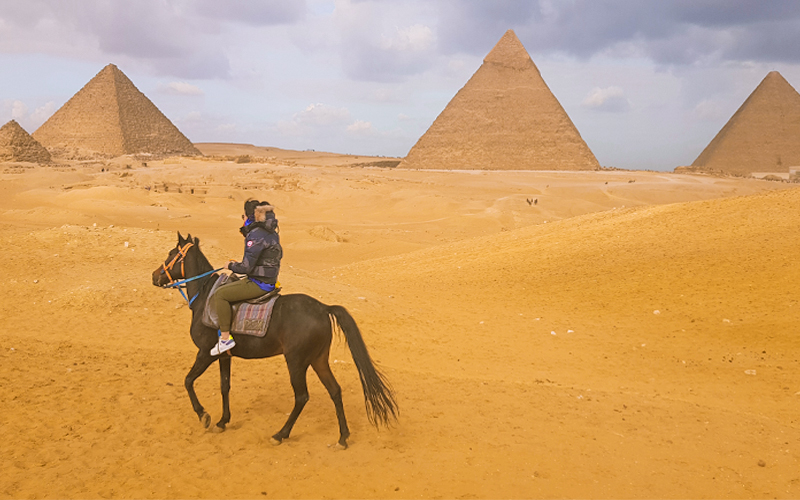
The Giza Necropolis is particularly enjoyable during winter afternoons.
Visitors can explore the Great Pyramid of Khufu, the Pyramid of Khafre, the Pyramid of Menkaure, and the Great Sphinx.
A realistic Giza visit often requires three to five hours, depending on whether you enter a pyramid, visit additional viewpoints, and spend time with a guide.
Allow additional time if you want to combine Giza with nearby Saqqara or Dahshur.
Winter does not eliminate crowds, and mornings can occasionally be hazy. Starting reasonably early remains useful, particularly during holidays.
Cairo also rewards travelers who want more than a single day of pyramids.
In Islamic Cairo, historic streets and architectural landmarks provide an opportunity to explore another period of Egyptian history. Coptic Cairo contains churches and religious sites associated with centuries of Christian heritage.
For museum planning, compare the Egyptian Museum in Cairo and the Grand Egyptian Museum before deciding how to divide your time.
Recommended stay: Three to four days.
Best for: First-time visitors, families, architecture enthusiasts, and cultural travelers.
Winter planning tip: Bring a light jacket for early departures and evenings. Do not plan your entire day around the midday temperature.
Luxor: Ancient Temples and Tombs in Comfortable Weather
Luxor is arguably the strongest winter destination for travelers interested in ancient Egyptian history.
Located in Upper Egypt along the Nile River, Luxor contains some of the country’s most important surviving temples, tombs, and monuments.
During summer, temperatures can make extensive sightseeing challenging. Winter gives visitors more flexibility to explore at a comfortable pace.
The Karnak Temple complex is one of Luxor’s major attractions. Its monumental columns, courts, obelisks, and sacred spaces reflect centuries of religious development associated especially with the god Amun.
Allow at least two hours to explore the principal areas, and longer if you enjoy architecture or photography.
On the Nile’s West Bank, the Valley of the Kings contains royal tombs decorated with scenes from ancient Egyptian religious traditions.
Some tombs require separate tickets, and available access can change. Check current arrangements when planning your visit.
Other important sites include the Temple of Hatshepsut, the Colossi of Memnon, Luxor Temple, Medinet Habu, and the Ramesseum.
Winter also creates opportunities for enjoyable outdoor experiences beyond the monuments.
You can take a felucca ride, spend time beside the Nile, or consider a sunrise hot-air balloon experience when conditions allow.
Hot-air balloon flights are weather-dependent and can be canceled because of wind or visibility. If this activity is important, schedule it before your final morning in Luxor so that rescheduling may be possible.
Recommended stay: Three days for the main archaeological attractions; four days for a more relaxed itinerary.
Best for: History lovers, photographers, archaeology enthusiasts, couples, and mature travelers.
Winter planning tip: The difference between a warm afternoon and a cold sunrise can be substantial. Bring layers for early activities.
Aswan: One of Egypt’s Most Pleasant Winter Destinations
Aswan is located farther south than Luxor, making it one of Egypt’s most appealing winter sightseeing destinations.
The city is known for its Nile islands, granite landscapes, Nubian cultural heritage, and archaeological sites.
Winter afternoons are often sunny and comfortable.
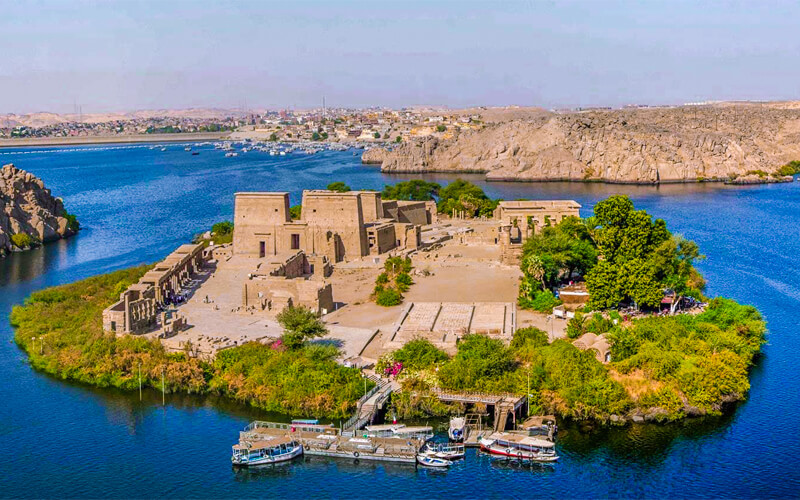
One of Aswan’s most important monuments is Philae Temple, a sanctuary primarily associated with the goddess Isis. The temple complex was relocated to Agilkia Island during the international campaign to protect monuments threatened by the construction of the Aswan High Dam.
Visitors reach the complex by boat, adding a scenic element to the archaeological experience.
Other Aswan attractions include the Unfinished Obelisk, Nubian Museum, Elephantine Island, and river excursions.
A traditional felucca trip is particularly attractive in winter, but a jacket is useful when sailing after sunset.
Aswan is also a good base for learning about Nubian history and exploring the relationship between Egypt, the Nile, and ancient trade routes.
Recommended stay: Two to three days, excluding any dedicated cruise schedule.
Best for: Relaxed sightseeing, couples, cultural travelers, river experiences, and photography.
Winter planning tip: Consider a hotel with outdoor seating overlooking the Nile, but check whether terraces and pools are comfortable or heated during cooler weather.
Abu Simbel: A Major Winter Excursion from Aswan
Abu Simbel is located south of Aswan near Lake Nasser and is one of Egypt’s most significant archaeological attractions.
The site contains two rock-cut temples commissioned by Ramesses II during the New Kingdom.
The larger temple is famous for its monumental seated statues of the king. The smaller temple honors Queen Nefertari and Hathor.
The temples were relocated during the twentieth century as part of the international effort to save Nubian monuments from rising water associated with the High Dam.
Winter is an excellent season to visit because the cooler temperatures make outdoor exploration more comfortable.
However, Abu Simbel often involves an early departure from Aswan when visited by road.
Travelers should expect a long excursion rather than a short sightseeing stop. Road journeys generally take around three to four hours each way, depending on arrangements and conditions.
For a more detailed understanding of the monuments, explore the Abu Simbel Temple guide.
Recommended time: A full excursion day from Aswan, unless using alternative arrangements.
Best for: Travelers interested in ancient Egyptian architecture and Ramesses II.
Winter planning tip: Bring a jacket for the early departure even if the daytime forecast for Abu Simbel looks warm.
Hurghada: A Popular Destination for Winter Sun Holidays
Hurghada is located along Egypt’s Red Sea coast and is one of the country’s main resort destinations.
It is particularly attractive to visitors from the UK, Europe, and other colder regions who want a sunny holiday during the northern winter.
The main appeal is a combination of resort accommodation, beach access, marine activities, and opportunities for excursions.
Hurghada offers a broad choice of hotels, including family-oriented resorts, adults-focused properties, and all-inclusive accommodation.
Winter temperatures are generally mild and sunny, making it enjoyable to relax outdoors, walk beside the sea, and take part in selected water activities.
However, winter sunshine does not mean hot summer conditions.
Wind can make beaches and boat trips feel cooler, especially in January.
Travelers planning a relaxing resort holiday should confirm whether the hotel has a heated swimming pool and whether their preferred beach area is sheltered.
For destination-specific advice, explore Hurghada.
Recommended stay: Four to seven nights for a resort holiday, or two to three nights as part of a wider Egypt itinerary.
Best for: Families, couples, winter-sun travelers, and visitors who want an easy beach holiday.
Winter planning tip: When comparing hotels, prioritize sheltered beach areas and heated pools rather than choosing only by the advertised air temperature.
Sharm El Sheikh: Coral Reefs and Winter Sunshine
Sharm El Sheikh is situated at the southern end of the Sinai Peninsula and is particularly well known for its marine environment, resort facilities, and diving opportunities.
The surrounding Red Sea offers coral reefs and marine life that attract visitors throughout the year.
Popular areas include Naama Bay, Sharks Bay, Hadaba, and Nabq. Each has different characteristics in terms of atmosphere, accommodation, and exposure to wind.
Winter temperatures are usually comfortable for relaxing in the sunshine, especially during calm afternoons.
However, swimming comfort varies depending on personal tolerance, water conditions, and the exact location.
Travelers visiting in January or February should not automatically assume that every beach day will be hot.
For sightseeing and activities, Sharm El Sheikh offers access to boat excursions, snorkeling, diving, and selected desert experiences.
The nearby Ras Mohammed National Park is especially important for marine tourism.
Explore the wider destination in this Sharm El Sheikh travel guide.
Recommended stay: Five to seven nights for a dedicated holiday.
Best for: Divers, snorkelers, couples, resort travelers, and families.
Winter planning tip: Ask about reef access, wind exposure, swimming conditions, and the distance between the hotel and the beach.
Marsa Alam: A Quieter Red Sea Experience
Marsa Alam is situated farther south along the Red Sea coast and is associated with marine tourism, coral reefs, and resort-focused holidays.
It is an appealing option for travelers who prefer less urbanized surroundings than those found in larger resort cities.
The area’s main activities include snorkeling, diving, beach relaxation, and exploring coastal environments.
Winter is generally pleasant, but wind and sea conditions still affect comfort and the availability of boat excursions.
Some resorts are remote from major towns and services. This can be attractive for travelers seeking a peaceful holiday, but it also makes hotel selection important.
Check the distance from the arrival airport, the availability of medical services, and what is included in the hotel package.
Marsa Alam may be particularly suitable for couples, experienced divers, and travelers seeking a quieter holiday.
Explore the area’s attractions and travel considerations in the Marsa Alam destination guide.
Recommended stay: Five to seven nights.
Winter planning tip: Choose the hotel based on reef access, sheltered swimming opportunities, and facilities rather than assuming all Marsa Alam resorts offer identical conditions.
Dahab: A Different Kind of Winter Escape
Dahab lies on the Gulf of Aqaba, northeast of Sharm El Sheikh.
The town is popular with travelers seeking a more relaxed coastal atmosphere, diving, snorkeling, wind-based sports, and mountain scenery.
Winter in Dahab differs from a traditional all-inclusive resort experience.
Instead of spending the entire holiday within one hotel complex, visitors can enjoy small restaurants, coastal walks, diving centers, and excursions.
Daytime sunshine can be pleasant, but strong winds and cold evenings are important considerations.
Dahab is not necessarily the best destination for travelers seeking guaranteed warm swimming conditions in January.
It is better suited to visitors who enjoy outdoor activities, independent travel, and a quieter coastal setting.
Learn more about the town in the Dahab travel guide.
Recommended stay: Three to five nights.
Winter planning tip: Pack windproof clothing and choose accommodation that is comfortable during cooler nights.
The Western Desert: Extraordinary Landscapes and Cold Nights
Winter is one of the best seasons for exploring Egypt’s Western Desert because daytime temperatures are generally much more manageable than in summer.
The desert contains very different landscapes, from oases and sand dunes to dramatic limestone formations.
The White Desert is especially famous for its unusual chalk formations, which have been shaped by erosion over long periods.
Visitors commonly explore the area through organized excursions from the Bahariya Oasis region.
Winter days can be comfortable for sightseeing, walking, and photography.
However, temperatures may fall sharply after sunset.
Camping in the desert during January or February requires proper sleeping arrangements and thermal clothing. A warm afternoon does not indicate a warm night.
Travelers should also check current travel advisories, protected-area access rules, permits, and route conditions. Remote desert journeys require experienced operators and suitable vehicles.
Recommended stay: One to three days, depending on the route and permitted activities.
Best for: Adventure travelers, landscape photographers, and visitors interested in geology and desert environments.
Winter planning tip: Choose a reputable operator with appropriate equipment, emergency arrangements, and experience operating in remote areas.
Siwa Oasis: Winter Travel Beyond the Main Tourist Route
Siwa Oasis is located in Egypt’s Western Desert near the Libyan border.
The oasis is known for its distinctive cultural traditions, palm groves, salt lakes, historic settlements, and desert landscapes.
Winter is often a comfortable season for exploring Siwa during the day.
Visitors may enjoy the Temple of the Oracle, the remains of Shali, palm-lined landscapes, and selected local excursions.
However, Siwa is remote from Cairo and requires considerable travel time.
Road access, travel advisories, and permissions should be checked before planning the journey. Some nearby desert areas may be restricted or unsuitable for independent exploration.
Winter nights can also be very cold, especially outside well-insulated accommodation.
For additional information, see the Siwa Oasis guide.
Recommended stay: Three to four nights, plus travel time.
Best for: Experienced travelers, cultural explorers, and visitors seeking a slower itinerary.
Winter planning tip: Do not combine Siwa with too many other distant destinations unless you have sufficient time for overland travel.
Alexandria: A Different Side of Egyptian Winter
Alexandria, on Egypt’s Mediterranean coast, experiences more recognizably Mediterranean winter weather than Luxor or Aswan.
January and February can bring cloudy skies, cooler temperatures, wind, and rain.
This makes Alexandria less suitable for a traditional winter beach holiday.
However, the city remains interesting for travelers who enjoy museums, history, coastal architecture, and urban exploration.
Popular attractions include the Bibliotheca Alexandrina, the Citadel of Qaitbay, and the Catacombs of Kom El Shoqafa.
A winter visit can be worthwhile as a cultural extension from Cairo, especially if you have flexibility to adjust outdoor sightseeing around the weather.
Explore further options in Alexandria attractions.
Recommended stay: One to two nights.
Best for: History enthusiasts and visitors interested in Mediterranean Egyptian culture.
Winter planning tip: Pack a rain-resistant jacket and check the forecast before scheduling long outdoor coastal walks.
Is Egypt Good for Winter Sun Holidays?
Yes. Egypt is a popular winter-sun destination, especially along the Red Sea, where sunny days, mild temperatures, and year-round resort operations make it attractive during Europe’s colder months.
However, winter sun in Egypt means mild to pleasantly warm sunshine, not guaranteed tropical heat.
That distinction is essential when choosing between beach destinations.
Someone hoping to relax outdoors, read beside a pool, and enjoy occasional snorkeling may find January suitable.
A traveler who wants very warm seawater, hot evenings, and long swimming sessions may prefer another season.
Where Is the Best Winter Sun in Egypt?
|
Destination |
Winter holiday character |
Main advantage |
Main limitation |
|---|---|---|---|
|
Hurghada |
Large resort destination |
Wide accommodation choice |
Wind exposure varies |
|
Sharm El Sheikh |
Resorts and marine activities |
Reefs, diving, coastal scenery |
Some beaches are exposed |
|
Marsa Alam |
Quieter coastal resorts |
Marine environment and relaxation |
Remote locations; wind |
|
Dahab |
Independent coastal travel |
Diving and local atmosphere |
Cooler evenings and wind |
|
Aswan |
Sunshine with culture |
Pleasant afternoons and Nile scenery |
Not a beach destination |
|
Luxor |
History-focused winter escape |
Excellent archaeological sightseeing |
Cold early mornings |
Hurghada vs Sharm El Sheikh in Winter
Choose Hurghada if your priorities include a broad selection of resort hotels, family-friendly accommodation, and the option of including a Luxor excursion.
Choose Sharm El Sheikh if your priorities include snorkeling, diving, reef scenery, and the South Sinai coastal environment.
Both destinations can offer enjoyable sunshine.
Neither guarantees perfect swimming weather every day.
For families with young children, a heated pool and sheltered outdoor facilities may matter more than a small difference in average temperature.
For divers, the quality and suitability of marine activities may be more important than swimming-pool temperatures.
For travelers combining archaeology with the beach, Hurghada can be geographically convenient because Luxor is accessible by road, although journey times must be considered.
Can You Swim in the Red Sea During Winter?
Yes. Swimming, snorkeling, and diving take place in the Red Sea throughout winter, but conditions vary.
Sea temperatures are commonly around 21–25°C (70–77°F) across the winter period, depending on the month and coastal location.
Some visitors find this comfortable. Others consider the water cool, especially in January.
The strongest practical consideration is often what happens after leaving the water.
Wind on an exposed beach or boat can make visitors feel much colder.
If swimming is a priority, consider:
-
A hotel with a heated pool.
-
A sheltered beach or bay.
-
A wetsuit for longer snorkeling or diving sessions.
-
Flexible excursion arrangements.
-
A resort with comfortable alternatives if the weather is windy.
The best conditions for a specific activity depend on wind, waves, visibility, operator assessments, and individual ability.
For travelers prioritizing marine experiences, the guide to snorkeling in Egypt explains the country’s major snorkeling opportunities.
Why Winter Is One of the Best Seasons for a Nile Cruise
Winter is one of the strongest periods for a Nile cruise because the weather generally supports comfortable sightseeing at temples and archaeological sites between Luxor and Aswan.
Nile cruises offer an efficient way to explore several historic destinations while using the same vessel as accommodation.
Common cruise routes connect Luxor and Aswan and may include stops associated with Edfu and Kom Ombo.
Typical river cruises take several days, although exact schedules vary by vessel, direction, and operating arrangements.
What Makes a Winter Nile Cruise Different?
The main benefit is the combination of sightseeing weather and time on the river.
During the hotter months, open-air temple visits can become physically demanding. In winter, visitors can generally spend more time exploring without the same level of heat exposure.
Onboard, passengers may enjoy open decks, Nile scenery, dining, and opportunities to relax between visits.
However, winter evenings can be cold on deck.
Travelers should bring a jacket rather than assuming the entire journey will feel warm.
It is also important to recognize that cruise sightseeing often starts early. A winter cruise itinerary may involve leaving the vessel before the day has warmed up.
What Can You See on a Typical Nile Cruise?
Many itineraries feature important monuments such as:
-
Karnak Temple and Luxor Temple.
-
The Valley of the Kings and the West Bank.
-
The Temple of Edfu.
-
The Temple of Kom Ombo.
-
Philae Temple and attractions in Aswan.
Not every cruise includes all these visits within its standard price or schedule.
Travelers should confirm the sightseeing program, entrance fees, guide services, transportation, and any optional excursions before booking.
To compare journey styles, explore Egypt tours with Nile cruises.
Standard Nile Cruise or Dahabiya in Winter?
A standard Nile cruise ship generally offers more shared facilities, a larger number of cabins, and a structured sightseeing schedule.
A dahabiya is a smaller sailing-style vessel that may provide a more intimate experience and a different pace, depending on the itinerary.
Neither is automatically better.
A large vessel may suit families or visitors who want familiar hotel-style facilities.
A dahabiya may appeal to couples and travelers who prefer a quieter atmosphere.
For both, check heating and cooling arrangements, cabin layout, deck facilities, and what happens if weather or river conditions affect the itinerary.
A practical clothing guide is available in what to pack for a Nile cruise.
When Should You Book a Winter Nile Cruise?
Winter is a popular season, and holiday-period departures can be particularly sought after.
There is no universal booking deadline.
Availability depends on the cruise category, cabin type, exact dates, and whether you need a specific route or boat.
If your dates are fixed around Christmas, New Year, or a school holiday, it is sensible to compare options several months in advance.
Travelers with flexible dates can assess availability closer to departure, but they should not assume a preferred vessel or cabin category will remain available.
What Makes Winter in Egypt Special Beyond the Weather?
Winter changes the way travelers can experience Egypt.
The cooler temperatures are important, but the real advantage is that visitors can spend more time exploring, walking, photographing, and enjoying outdoor experiences.
Longer Visits to Archaeological Sites
Egypt’s archaeological destinations often cover large outdoor areas.
The Giza Plateau, Karnak Temple, Saqqara, and Luxor’s West Bank require walking, standing, and moving between monuments.
During winter, visitors can generally explore these areas more comfortably than during periods of extreme heat.
This is especially helpful for travelers who want to understand archaeological sites rather than simply photograph their entrances.
You can spend more time examining carvings, listening to explanations, and exploring architectural details.
However, winter is also a popular sightseeing season. Comfortable temperatures do not necessarily mean fewer visitors.
More Comfortable Outdoor Dining and Nile Evenings
In Cairo, Luxor, and Aswan, winter afternoons can be ideal for outdoor cafés, Nile-side dining, and riverside walks.
Aswan is particularly appealing for travelers who enjoy sitting beside the river and watching traditional sailboats.
Evenings can be cooler, so restaurants with sheltered terraces or indoor seating may be preferable in January.
In Cairo, daytime walks through historic neighborhoods can be especially rewarding when the weather is mild.
Opportunities for Desert Exploration
Desert adventures are another reason travelers choose winter.
Activities can include guided desert walks, visits to unusual geological formations, and selected overnight experiences.
Cooler daytime weather is a significant advantage.
However, safe desert travel requires more than a comfortable temperature forecast.
Remote destinations may involve restricted access, difficult road conditions, limited communications, and substantial differences between daytime and nighttime temperatures.
Use authorized routes and experienced operators, and check current security guidance.
Winter Photography in Egypt
Winter can be a rewarding season for photographers because the lower sun angle creates opportunities for warm morning and late-afternoon light.
At Luxor’s temples, sunlight can emphasize the texture of sandstone surfaces.
Along the Nile, the contrast between palm trees, river water, and desert landscapes creates strong compositions.
At Abu Simbel, the monumental façades are particularly impressive in changing daylight.
However, Egypt does not guarantee cloudless visibility. Cairo sometimes experiences haze, and desert dust or coastal wind can affect photography.
For strong results, allow some flexibility rather than scheduling every major photograph for a single hour.
A Chance to Experience Different Egyptian Traditions
A winter holiday may include Christmas, New Year, Coptic Christmas, or Ramadan, depending on travel dates.
These occasions provide a different perspective on Egyptian society beyond archaeological attractions.
Historic churches, mosques, markets, family gatherings, seasonal foods, and evening streetscapes can all become part of the experience.
Visitors should approach religious celebrations respectfully, remembering that many events are community and worship occasions rather than tourist performances.
Christmas, New Year and Ramadan: What Should Travelers Know About Winter 2027?
Winter 2027 includes several important cultural dates that can affect travel plans, accommodation demand, and daily schedules.
Christmas in Egypt: December 25 and January 7
Christmas is observed in Egypt in more than one way.
December 25 is celebrated by some Christian communities and is a familiar festive date at international hotels and resorts.
Coptic Orthodox Christmas is celebrated on January 7, and it is a national public holiday.
For winter 2027, January 7 falls on a Thursday.
Visitors spending Christmas in Egypt may notice decorations and seasonal activities in certain hotels, shopping districts, and Christian neighborhoods.
However, celebrations vary by location.
A Red Sea resort may offer an international-style Christmas dinner, while a visit to Coptic Cairo provides opportunities to learn about Egypt’s Christian heritage.
Do not assume that every hotel offers a Christmas program or that religious services are open to casual tourism.
For more cultural background, see Christmas in Egypt.
New Year in Egypt: December 31 and January 1
New Year’s Eve is a popular period for holiday travel in Cairo, Luxor, Aswan, and Red Sea destinations.
Hotels and some restaurants may organize special dinners or celebrations.
The type of experience varies substantially.
In Cairo, travelers may prefer a hotel celebration or a Nile-side dinner.
In Luxor or Aswan, a Nile cruise can provide a relaxed setting for the holiday.
At Red Sea resorts, special entertainment packages may be available.
Do not assume that a New Year’s Eve gala dinner is included in the standard hotel rate. Some properties sell or require a separate festive package.
Travelers should confirm the final inclusions and cancellation conditions before booking.
Explore seasonal ideas in New Year in Egypt.
Ramadan 2027: Expected to Begin in February
Ramadan is expected to begin around February 8–9, 2027, although the final date depends on the official lunar calendar announcement.
This is particularly relevant because Ramadan will overlap with Egypt’s late-winter travel season.
During Ramadan, Muslims fast from dawn until sunset and devote additional time to prayer, reflection, and charitable activities.
Travelers can generally continue visiting major tourism destinations, but the daily rhythm may change.
Some attractions, offices, restaurants, and services may operate different schedules. Others, particularly tourist-focused hotels and businesses, may continue serving visitors during the day.
After sunset, many neighborhoods become lively with family meals, gatherings, and evening activities.
The meal that breaks the fast is called iftar.
Visitors do not need to participate in fasting, but respectful behavior is appreciated.
For practical planning:
-
Confirm attraction opening hours during Ramadan.
-
Allow additional travel time around the evening iftar period.
-
Be considerate when eating or drinking in public near people who are fasting.
-
Do not assume every restaurant or shop follows the same schedule.
-
Confirm domestic transportation and guided-tour arrangements in advance.
Ramadan is not inherently a reason to avoid Egypt.
For culturally curious travelers, it can provide an opportunity to observe important traditions and experience a different atmosphere.
Abu Simbel’s February Sun Alignment
Abu Simbel is associated with a remarkable solar alignment traditionally observed around February 22 and October 22.
On these occasions, sunlight penetrates the Great Temple’s interior and illuminates statues in the sanctuary.
The phenomenon reflects the relationship between ancient Egyptian architecture, religious symbolism, and solar observation.
For travelers visiting in February 2027, it is a potentially interesting cultural and archaeological experience.
However, viewing arrangements can be affected by weather, crowd management, and site-specific rules. Any official event program should be checked closer to the date.
Visitors should not expect unrestricted access or guaranteed visibility.
If the timing is important, arrange accommodation and transportation carefully and allow sufficient time for the journey.
How Many Days Do You Need for Egypt in Winter?
The ideal length of an Egypt winter holiday depends on the number of regions you want to visit.
A short break can work well for Cairo or a single Red Sea resort.
However, combining Cairo, Luxor, Aswan, and the Red Sea requires a longer itinerary because these destinations are separated by significant distances.
|
Trip length |
Recommended destinations |
Best for |
|---|---|---|
|
4–5 days |
Cairo and Giza, or one resort |
Short breaks |
|
7 days |
Cairo + Luxor, or Cairo + Red Sea |
First-time visitors with limited time |
|
10 days |
Cairo + Luxor + Aswan |
Classic cultural holiday |
|
12–14 days |
Cairo + Nile cruise + Red Sea |
Balanced sightseeing and relaxation |
|
15+ days |
Main historic destinations + desert or additional coastal stay |
Slower, more extensive exploration |
Travelers should avoid choosing an itinerary solely by the number of famous sites it includes.
A good winter itinerary accounts for travel time, available daylight, accommodation changes, physical energy, and the activities that matter most.
A 5-Day Egypt Winter Itinerary: Cairo and Giza
This itinerary is designed for travelers who want to experience Egypt’s capital and major archaeological attractions without spending much of the holiday changing cities.
|
Day |
Recommended plan |
Practical advice |
|---|---|---|
|
1 |
Arrive in Cairo |
Transfer to hotel and rest |
|
2 |
Giza Pyramids and Great Sphinx |
Allow ample time for the plateau |
|
3 |
Egyptian museums |
Select museums based on interests and current access |
|
4 |
Islamic Cairo and Coptic Cairo |
Group nearby attractions geographically |
|
5 |
Departure |
Avoid major sightseeing commitments before an early flight |
For travelers with an additional day, Saqqara and Dahshur make a useful archaeological excursion.
This schedule works especially well in January when the mild weather supports extended outdoor visits.
A five-day trip is less suitable for travelers who want to include both Luxor and Aswan without rushing.
A 7-Day Egypt Winter Itinerary: Cairo and Luxor
Seven days is sufficient for a focused first-time trip combining Cairo and Luxor.
Days 1–3: Cairo and Giza
Arrive in Cairo and allow time for the Pyramids, major museums, and selected historic districts.
Avoid planning a full day of sightseeing immediately after a long international overnight flight.
Day 4: Travel to Luxor
Travel from Cairo to Luxor by a suitable domestic flight or rail service, depending on availability and preferences.
Use the remaining time for a relaxed visit to Luxor Temple or the riverside.
Day 5: Luxor’s East Bank
Visit Karnak Temple and other attractions according to your interests.
Allow time to understand the history of the monuments rather than rushing through several sites.
Day 6: Luxor’s West Bank
Explore the Valley of the Kings, the Temple of Hatshepsut, and selected nearby monuments.
A private guide or organized transport can help reduce travel inefficiencies between sites.
Day 7: Departure
Travel onward or return to Cairo depending on international flight arrangements.
This itinerary works particularly well for travelers focused on ancient Egyptian history.
It is less appropriate for a relaxed beach holiday because it does not include the Red Sea.
A 10-Day Egypt Winter Itinerary: Cairo, Luxor and Aswan
Ten days is a strong option for international travelers seeking a classic Egypt experience.
|
Day |
Destination |
Suggested experience |
|---|---|---|
|
1 |
Cairo |
Arrival and hotel transfer |
|
2 |
Giza |
Pyramids and Great Sphinx |
|
3 |
Cairo |
Museum visit and historic neighborhoods |
|
4 |
Luxor |
Transfer to Luxor; East Bank sightseeing |
|
5 |
Luxor |
Valley of the Kings and West Bank |
|
6 |
Luxor–Aswan |
Transfer south; allow for sightseeing en route |
|
7 |
Aswan |
Philae Temple and Nile scenery |
|
8 |
Aswan |
Abu Simbel excursion |
|
9 |
Cairo or Aswan |
Flexible sightseeing and return connection |
|
10 |
Departure |
International flight |
This is a land-based itinerary rather than a full Nile cruise itinerary.
If traveling overland between Luxor and Aswan, Edfu and Kom Ombo may be incorporated when transport, time, and attraction arrangements permit.
Travelers who prefer a Nile cruise should replace the relevant Luxor–Aswan days with the vessel’s actual sailing program rather than adding a cruise on top of the schedule.
A 14-Day Egypt Winter Itinerary: History, Nile Cruise and Red Sea
For travelers who want a complete combination of cultural sightseeing and winter sunshine, approximately two weeks provides much greater flexibility.
Days 1–3
Cairo and Giza
Visit the pyramids, explore your preferred museums, and spend time in historic Cairo.
Days 4–5
Luxor
Explore the East Bank and West Bank before or during the start of your cruise program.
Days 6–8
Nile cruise and Aswan
Visit riverside temples and enjoy Aswan’s scenery, adjusting the order to match the confirmed vessel schedule.
Days 9–12
Red Sea
Transfer to your chosen resort destination for beach relaxation, snorkeling, or diving.
Days 13–14
Return and departure
Allow time for the appropriate onward connection and international departure.
The sequence must be adjusted to confirmed flights and cruise schedules. An actual Luxor–Aswan cruise may take longer than the days allocated in this illustration, so reduce other activities rather than compressing the cruise.
Hurghada is often a practical beach choice for travelers finishing a land-based itinerary in Luxor because of the road connection between the two destinations.
Visitors ending in Aswan may need a different combination of flights and road transfers.
The main advantage of the two-week itinerary is that it balances active sightseeing with recovery time.
It is particularly suitable for couples, families, and travelers arriving after long international flights.
How Do You Travel Between Egypt’s Winter Destinations?
Egypt’s most popular winter destinations are spread across different regions.
Cairo and Giza lie in northern Egypt. Luxor and Aswan are farther south along the Nile. Hurghada is on the Red Sea coast, while Sharm El Sheikh and Dahab are on the Sinai Peninsula.
These geographic relationships affect itinerary planning.
The most common mistake is assuming that destinations appearing close together on a promotional map are quick to reach.
Domestic Flights
Domestic flights can reduce travel time between Cairo and major destinations such as Luxor, Aswan, Hurghada, and Sharm El Sheikh.
A flight between Cairo and Luxor takes approximately one hour in the air, but airport transfers, security checks, baggage collection, and waiting time increase the total journey.
Flight schedules and availability vary.
Some journeys between regional cities may require a connection rather than operating as a convenient nonstop flight.
Travelers should check the full travel time, not just the advertised flight duration.
Trains
Rail travel can be a useful option for journeys between Cairo, Luxor, and Aswan.
Depending on the service, trains allow travelers to experience the Nile Valley without taking a domestic flight.
Overnight rail travel may be attractive for people who want to reduce daytime transfers, although sleep quality, comfort, and available accommodation categories vary.
Do not assume every service has the same seating or sleeper arrangements.
Allow sufficient time for stations, luggage, and onward hotel transfers.
Private Road Transfers
Private transfers are useful when traveling between destinations connected by practical road routes.
They can provide flexibility for luggage, rest stops, and hotel-to-hotel travel.
However, long-distance road journeys can be tiring.
The road transfer between Luxor and Hurghada, for example, generally requires several hours, and actual travel time depends on the route, traffic, checkpoints, and transport arrangements.
For families and older travelers, a comfortable vehicle and realistic departure time may matter more than minimizing the journey by a small amount.
Planning Around Winter Daylight
Egypt has fewer daylight hours in winter than in summer.
In Cairo, sunset occurs around late afternoon or early evening during December and January, with exact timing varying by date.
This matters when scheduling outdoor activities.
A full-day itinerary should not assume that all attractions can be photographed in daylight after several hours of driving.
If a destination is particularly important, schedule it earlier in the day.
For combined sightseeing, avoid overloading afternoons with distant monuments.
A helpful approach is to plan one main morning attraction, one complementary afternoon activity, and optional evening experiences.
How Much Does an Egypt Winter Holiday Cost?
Egypt winter holiday costs vary considerably by accommodation category, travel dates, destination, itinerary, and service level.
There is no single reliable price for a winter trip covering Cairo, Luxor, Aswan, and the Red Sea.
Christmas and New Year departures may cost more than comparable dates outside the festive period, while a private guided itinerary generally has a different pricing structure from an independent resort stay.
For a 2027 holiday, request current quotations rather than relying on outdated prices.
What Influences Winter Travel Costs?
|
Cost component |
Main price factors |
How to control costs |
|---|---|---|
|
International flights |
Departure country, dates, route, baggage |
Compare nearby travel dates and connection options |
|
Hotels |
Star category, location, room type, holiday dates |
Compare total costs and inclusions |
|
Nile cruises |
Vessel category, cabin, route, excursions |
Check exactly what the fare includes |
|
Domestic transport |
Flight, train, private vehicle, group size |
Build an efficient route |
|
Attraction tickets |
Sites visited and separate-entry areas |
Plan around your strongest interests |
|
Guides |
Private or shared service, language, duration |
Combine nearby attractions logically |
|
Red Sea resorts |
Hotel location, meal plan, facilities |
Compare beachfront access and heated pools |
|
Desert excursions |
Duration, permits, vehicle, equipment |
Avoid choosing only by the lowest quote |
Are Egypt Winter Holidays More Expensive Than Summer Trips?
Winter is a popular sightseeing season, so accommodation and cruise demand can be strong.
However, prices depend on the specific dates and destinations.
The Christmas–New Year period is different from a regular week in January or February.
Likewise, a luxury Nile cruise has a different cost structure from a budget-friendly Cairo hotel.
Travelers should compare like-for-like packages rather than relying on claims that a particular month is always the cheapest.
Is an All-Inclusive Winter Holiday Worth It?
An all-inclusive resort can be convenient for travelers who want predictable hotel dining costs and a relaxed beach holiday.
However, an all-inclusive package is not automatically the best option for a trip dominated by sightseeing.
If you plan to spend most days away from the hotel, paying for extensive resort facilities and meals may offer less value.
For a combined cultural and beach itinerary, consider using centrally located hotels in Cairo, Luxor, and Aswan, followed by an all-inclusive stay at the Red Sea.
The most useful comparison is the total cost of the actual holiday you want, including transportation, attractions, guides, meals, and excursions.
What Should You Pack for Egypt in Winter?
Packing for Egypt in winter requires a combination of lightweight daytime clothing and warmer layers for evenings.
Travelers should not pack as though they are visiting a permanently hot beach destination.
The best approach is to choose clothing that can be adjusted throughout the day.
Essential Winter Packing Checklist
|
Item |
Why you need it |
|---|---|
|
Lightweight shirts and trousers |
Comfortable daytime sightseeing |
|
Fleece, sweater, or warm layer |
Cool mornings and evenings |
|
Windproof jacket |
Red Sea boat trips and exposed areas |
|
Comfortable walking shoes |
Archaeological sites and city exploration |
|
Sunglasses and sun protection |
Strong daylight even in winter |
|
Hat |
Protection during outdoor visits |
|
Scarf or shawl |
Warmth and modest coverage where needed |
|
Swimsuit |
Resorts, pools, and marine activities |
|
Suitable snorkeling or diving protection |
Cooler water and wind exposure |
|
Small daypack |
Water, layers, and personal essentials |
|
Portable charger |
Long sightseeing days |
|
Personal medication |
Continuity of medical needs during travel |
What to Wear in Cairo During Winter
Cairo usually requires comfortable daytime clothing with a jacket or sweater available.
A long-sleeved shirt, trousers, and walking shoes work well for most sightseeing days.
For mosque visits and some other religious sites, clothing should be respectful and meet the site’s requirements.
Women may need a scarf for particular religious locations, although requirements vary.
Cooler evenings make a jacket useful, especially for outdoor dining or Nile-side walks.
What to Wear in Luxor and Aswan
Luxor and Aswan often have pleasantly warm afternoons.
Lightweight, breathable clothing is generally suitable during the main sightseeing hours.
However, a warm layer is important for early morning temple visits, sunrise balloon activities, and boat trips.
Comfortable footwear matters because archaeological sites can include uneven surfaces, sand, steps, and extensive walking.
For desert or remote excursions, stronger footwear and additional warm clothing may be appropriate.
What to Wear in Hurghada and Sharm El Sheikh
For Red Sea winter holidays, bring normal resort clothing together with a windproof jacket and an additional layer for evenings.
If you plan to snorkel or dive, ask your operator about suitable wetsuits and other equipment.
Travelers using a resort pool should confirm whether it is heated.
A beach towel and dry clothing are useful after water-based activities, especially on windy days.
For a broader seasonal packing guide, consult what to pack for Egypt.
Is Egypt Too Cold in Winter?
Egypt is not generally too cold for winter sightseeing, but travelers can experience genuinely cold conditions in some locations and at certain times of day.
January often brings the coolest temperatures.
A traveler visiting Cairo may experience daytime temperatures around 19°C, while Luxor and Aswan can be warmer in direct sunshine.
At night, temperatures can fall into single digits in some inland areas.
The country’s desert environment contributes to the large difference between day and night temperatures.
Cold weather is particularly relevant for:
-
Overnight desert camping.
-
Sunrise balloon departures.
-
Early-morning transfers.
-
Outdoor seating on Nile cruises.
-
Exposed mountain areas of Sinai.
-
Windy Red Sea boat excursions.
Does It Snow in Egypt During Winter?
Snow is uncommon across most of Egypt’s popular tourist destinations.
Cairo, Luxor, Aswan, and the Red Sea resorts generally do not experience regular snowfall.
However, snow can occur in high-altitude parts of the Sinai mountains during sufficiently cold weather conditions.
The mountains around Saint Catherine experience a very different winter climate from the coastal resorts of South Sinai.
Travelers considering mountain hiking should check specialist weather forecasts, local access rules, and appropriate safety arrangements.
Do not assume that sunny weather in Sharm El Sheikh means nearby mountain conditions will be warm.
Is Egypt in Winter Suitable for Families, Couples and Senior Travelers?
Winter is suitable for many different types of travelers, but the ideal itinerary should reflect mobility, interests, and comfort.
Families With Children
Winter can be a good time for families because outdoor sightseeing is generally less affected by extreme heat.
Children may find the Pyramids, ancient temples, Nile boats, and selected museums especially engaging.
However, archaeological sites still involve significant walking, standing, and occasional uneven ground.
Families should avoid scheduling several long sightseeing days without breaks.
For resort holidays, confirm that heated pools, children’s facilities, and age-appropriate activities are available during the exact dates of travel.
A balanced family itinerary might include three days in Cairo, several days along the Nile, and a relaxed Red Sea stay.
Couples and Honeymooners
Winter offers opportunities for cultural experiences and relaxed resort time.
Couples may enjoy a smaller Nile cruise vessel, hotels with Nile views, private guided sightseeing, and a Red Sea resort.
The main consideration is matching expectations.
A winter beach stay can be sunny and pleasant without offering the consistently hot weather some travelers associate with tropical honeymoons.
For couples who want warm weather above all else, autumn or spring may be worth comparing.
Senior Travelers
Egypt’s winter temperatures can be more comfortable for mature travelers than the hotter months.
However, pleasant weather does not automatically make archaeological sites accessible.
Some temples and tombs involve steps, uneven surfaces, long walking routes, and limited seating or shade.
A practical itinerary should allow shorter sightseeing sessions, rest breaks, comfortable transportation, and appropriate accommodation.
Travelers with mobility concerns should verify the accessibility of each attraction individually rather than relying on general descriptions.
Solo Travelers
Solo travelers can enjoy Egypt in winter through independent city breaks, guided experiences, organized group tours, and resort stays.
A structured itinerary may be especially helpful for remote destinations or travelers unfamiliar with local transport arrangements.
Choose licensed or reputable providers, confirm pickup locations, and check transport plans before late-night or early-morning journeys.
Common Mistakes to Avoid When Visiting Egypt in Winter
Winter can be a very rewarding season, but several planning mistakes can reduce the quality of a holiday.
Assuming Every Destination Has the Same Weather
Cairo, Luxor, Alexandria, and Hurghada do not experience identical winter conditions.
Pack for the full itinerary rather than the warmest destination.
Booking a Beach Resort Without Checking Heated Pools
A sunny January afternoon does not guarantee warm swimming-pool water.
Confirm exactly which pools are heated and whether heating is available during your travel dates.
Underestimating Cold Desert Nights
Desert temperatures can fall substantially after sunset.
If camping, confirm the sleeping equipment, insulation, and emergency arrangements provided by the operator.
Trying to Visit Too Many Cities
Egypt is a large country.
A seven-day trip covering Cairo, Alexandria, Luxor, Aswan, Abu Simbel, and Sharm El Sheikh would involve considerable transit time.
Choose fewer destinations and explore them properly.
Treating Every Nile Cruise as Identical
Cruises differ in vessel size, cabin standard, route, included excursions, and departure days.
Compare actual itineraries, not simply the number of nights.
Ignoring Holiday Demand
Christmas and New Year can be busy travel periods.
If your dates are fixed, secure essential accommodation, cruise arrangements, and key transport connections before filling in optional activities.
Scheduling Long Excursions Without Considering Daylight
Winter days are shorter.
Long transfers and delayed departures can affect sightseeing and photography.
Build the itinerary around realistic daylight rather than assuming summer-style schedules.
Expecting Guaranteed Swimming Weather
The Red Sea remains attractive in winter, but sea temperatures, wind, and wave conditions vary.
Plan alternative activities for days when boating or extended swimming is less comfortable.
Forgetting to Check Current Travel Requirements
Visa rules, airline schedules, transport arrangements, attraction access, and regional safety guidance can change.
Review official requirements before departure rather than relying on older travel articles.
For additional practical advice, see Egypt travel tips.
What Should International Travelers Know Before Visiting Egypt in Winter 2027?
International visitors should prepare for Egypt’s entry procedures, seasonal accommodation demand, internal transportation, and local travel conditions.
Passport and Visa Requirements
Visa requirements depend on the traveler’s nationality, passport type, entry location, and purpose of travel.
Some travelers may qualify for Egypt’s electronic visa system, while others may need a visa through an embassy or consulate.
Certain entry arrangements may apply specifically to eligible visitors entering parts of South Sinai, but travelers should not assume these arrangements authorize travel throughout Egypt.
Egypt’s official electronic visa portal currently advises eligible applicants to submit an application at least seven days before departure.
Requirements may change before 2027, so verify them again before traveling.
For a practical overview, read the entry to Egypt guide.
Airports and International Connections
Cairo is a common arrival point for visitors planning a classic archaeological tour.
Hurghada and Sharm El Sheikh are important gateways for Red Sea resort holidays.
Luxor and Aswan can also be part of international or domestic flight arrangements, depending on the available schedules.
Travelers arriving from the USA, Canada, Australia, and other long-haul markets may need connecting flights.
Plan the first full sightseeing day around actual arrival times.
If you arrive late at night, a slower first morning is usually more comfortable than an immediate long excursion.
Health and Physical Comfort
Winter reduces the risk of extreme summer heat exposure, but travelers should still pay attention to hydration, sun protection, and physical fatigue.
Outdoor archaeological visits can involve several hours of walking.
Bring necessary medication, arrange appropriate travel insurance, and discuss individual medical or accessibility needs with qualified providers before departure.
For diving, choose a properly qualified operator and follow medical and safety requirements.
Current Safety and Regional Restrictions
Travel conditions vary across Egypt.
Popular tourism areas and remote border or desert regions should not be treated as having identical travel considerations.
International travelers should review current government travel advisories covering their planned destinations.
This is particularly important for certain parts of Sinai, remote Western Desert routes, and border areas.
Travel restrictions and access requirements may change before the winter season.
Accommodation Quality in Winter
Hotels can differ significantly in winter comfort.
When comparing accommodation, check:
-
Room heating or climate control.
-
Availability of warm bedding.
-
Whether outdoor pools are heated.
-
The location of restaurants and indoor lounges.
-
Beach exposure to wind.
-
Accessibility and elevator availability.
-
Transport distance from major attractions.
A hotel that is excellent in August is not necessarily the best choice for a January stay if most of its facilities are outdoors.
Is Winter Really the Best Time to Travel to Egypt?
Winter is among the best seasons for cultural sightseeing in Egypt, but the ideal travel period depends on individual priorities.
For visitors whose main interests are the Pyramids, temples, tombs, and Nile cruises, winter offers strong advantages.
For travelers prioritizing warm seawater and hot resort weather, autumn or late spring may be more suitable.
Egypt Winter vs Spring vs Summer vs Autumn
|
Season |
Main advantages |
Potential disadvantages |
|---|---|---|
|
Winter: December–February |
Mild sightseeing weather; attractive Nile cruises |
Cold nights, holiday demand, cooler swimming conditions |
|
Spring: March–May |
Warmer weather and long outdoor days |
Increasing heat; occasional dust or sandstorms |
|
Summer: June–August |
Long daylight hours; hot beach weather |
Extreme heat in many archaeological destinations |
|
Autumn: September–November |
Warm sea temperatures and improving sightseeing weather |
Early autumn can remain hot |
Winter is particularly valuable for first-time visitors because it offers a comfortable introduction to Egypt’s major cultural destinations.
However, travelers should avoid making decisions based only on the season.
The choice between Cairo, Luxor, Aswan, Hurghada, and Sharm El Sheikh matters just as much as the month.
How to Choose Your Perfect Egypt Winter Holiday
The most useful way to choose a winter itinerary is to start with the experience you want rather than the destinations advertised in a package.
|
If your main priority is… |
Choose… |
Suggested duration |
|---|---|---|
|
Ancient Egyptian history |
Cairo, Luxor, Aswan |
9–12 days |
|
Pyramids and museums |
Cairo and Giza |
4–5 days |
|
Nile scenery and temples |
Luxor–Aswan cruise |
Around 5–8 days including surrounding visits |
|
Sunshine and relaxation |
Hurghada or Sharm El Sheikh |
5–7 nights |
|
Diving and marine life |
Sharm El Sheikh or Marsa Alam |
5–7 nights |
|
Independent coastal travel |
Dahab |
3–5 nights |
|
Desert landscapes |
Western Desert excursions |
Allow several days and extra travel time |
|
Culture and beach combined |
Cairo, Nile Valley, Red Sea |
12–14 days |
For most first-time international visitors, a Cairo–Luxor–Aswan route is the strongest cultural introduction.
For families who want more relaxation, a shorter sightseeing itinerary followed by several Red Sea nights may be preferable.
For returning visitors, winter provides an opportunity to explore more focused destinations such as Siwa or lesser-visited archaeological sites, subject to current access arrangements.
If you would prefer an itinerary designed around your travel dates, accommodation preferences, and sightseeing priorities, Egypt Time Travel can help arrange tailor-made Egypt holidays.
Frequently Asked Questions About Egypt in Winter 2027
Does Egypt Have Four Seasons?
Yes. Egypt experiences spring, summer, autumn, and winter, but the seasonal changes are different from those in many European or North American countries. Most of Egypt has a desert climate, which means generally dry weather and significant differences between summer and winter temperatures. The Mediterranean coast experiences more seasonal rainfall, while southern destinations remain comparatively warm during winter afternoons.
How Many Hours of Daylight Does Egypt Get in Winter?
Cairo generally has around ten to eleven hours of daylight during the winter months, with slight regional and monthly differences. Winter daylight is shorter than in summer, so travelers should schedule major outdoor attractions earlier in the day. Exact sunrise and sunset times depend on the date and destination. This is particularly important for photography, desert excursions, and journeys involving several hours of road travel.
Does It Rain in Cairo in December?
Rain is possible in Cairo during December, although the city is considerably drier than many Mediterranean and European winter destinations. Most travelers can expect a mixture of mild temperatures and generally dry sightseeing conditions, but occasional showers, clouds, or haze can occur. Pack a light rain-resistant layer if the forecast indicates unsettled weather and keep museum visits as an alternative for less pleasant days.
Can You Get a Sunburn in Egypt During Winter?
Yes. Winter temperatures may feel mild, but ultraviolet exposure remains possible, especially during long days outdoors. Visitors can experience sunburn while exploring archaeological sites, sailing, or relaxing at the Red Sea. Sunscreen, sunglasses, and a hat remain useful throughout the year. Cooler air temperatures should not be treated as evidence that sun protection is unnecessary.
Is Air Conditioning Needed in Egypt in January?
Most travelers do not need intensive cooling during January, although comfort depends on the destination, room exposure, and individual preferences. In some hotels, room heating or adequate bedding may be more important during cold nights. Choose accommodation with suitable climate control and confirm winter facilities when booking, particularly in desert locations and older buildings.
Are Egypt’s Archaeological Sites Open Throughout Winter?
Many major archaeological sites operate throughout winter, but opening hours, access conditions, and ticket arrangements can change. Some locations have separate rules for tomb interiors, special exhibitions, photography, or individual monuments. Public holidays and Ramadan may also affect schedules. Travelers should check current arrangements before visiting rather than assuming every site follows the same daily timetable.
Can You Visit Egypt in Winter Without Booking a Guided Tour?
Yes. Travelers can organize independent trips to many major destinations using flights, trains, hotels, and local transport. However, guided experiences may be useful at complex archaeological sites or when traveling between several destinations. A knowledgeable guide can explain historical context, while organized transportation can reduce logistical difficulties. The best choice depends on budget, travel experience, and preferred independence.
Is Egypt in Winter a Good Choice for a Honeymoon?
Yes. Egypt can be an attractive winter honeymoon destination for couples interested in ancient history, Nile scenery, cultural experiences, and Red Sea relaxation. Popular combinations include Cairo with a Nile cruise followed by a coastal resort. However, couples seeking consistently hot beach temperatures should compare winter with autumn or spring. Choose accommodation based on privacy, comfort, activities, and seasonal facilities.
Can You Combine a Nile Cruise and a Red Sea Holiday in One Week?
It is possible, but one week is restrictive if you also want to explore Cairo. A Nile cruise may occupy several days, while reaching the Red Sea requires additional transportation. A seven-day cruise-and-beach trip is most realistic when you limit sightseeing elsewhere. For a more balanced holiday that also includes the Pyramids, consider approximately ten to fourteen days.
Should You Book Egypt Winter Holidays Several Months in Advance?
Booking early is useful when you have fixed dates, specific accommodation requirements, or a preferred Nile cruise. This is particularly relevant around Christmas, New Year, and major school holidays. Flexible travelers may find options closer to departure, but availability and prices can change. Compare confirmed inclusions, payment conditions, cancellation terms, and transportation arrangements rather than relying solely on the headline price.
Are Beaches in Egypt Crowded During Winter?
Crowd levels vary by destination, resort, beach, and holiday period. Popular hotel areas can be busy around Christmas and New Year, while some quieter destinations attract fewer visitors. Winter does not mean the Red Sea coast is empty. If privacy matters, compare resort size, beach layout, guest capacity, and access arrangements rather than assuming every coastal destination offers the same atmosphere.
Is Egypt Suitable for a Winter Trip With Limited Mobility?
Egypt can be suitable for travelers with limited mobility when the itinerary and accommodation are planned around individual needs. However, archaeological accessibility varies considerably. Uneven ground, stairs, steep entrances, and limited access inside tombs can present challenges. Travelers should confirm transport, accommodation, site conditions, and any assistance arrangements in advance. Cooler winter temperatures may improve comfort, but they do not remove physical accessibility barriers.
Final Thoughts: Is Egypt Worth Visiting in Winter 2027?
Egypt in winter 2027 is an excellent choice for travelers who want to explore ancient monuments, enjoy Nile scenery, and experience mild winter sunshine. December, January, and February offer some of the country’s most comfortable conditions for visiting Cairo, Luxor, and Aswan.
For travelers seeking winter-sun holidays, Hurghada, Sharm El Sheikh, and Marsa Alam provide attractive options, although swimming conditions and coastal winds should be considered.
The most successful winter trip balances weather with geography, realistic journey times, cultural experiences, and individual travel priorities.
If it is your first visit, prioritize Cairo, Luxor, and Aswan. If relaxation matters equally, add several days at the Red Sea.
Above all, remember that the best Egyptian winter holiday is not necessarily the one with the most destinations. It is the one that gives you enough time to experience the places you came to see.
