

Quick Answer: Who was King Khufu, and why is he famous?
King Khufu, also known as Cheops, was an ancient Egyptian pharaoh of the Fourth Dynasty who ruled around 2589–2566 BC. He is best known for commissioning the Great Pyramid of Giza, the largest Egyptian pyramid and the only surviving Wonder of the Ancient World. His reign represents a peak of Old Kingdom engineering, royal power, and architectural achievement.
Few rulers in history are remembered through a monument as recognizable as the Great Pyramid. Yet the man responsible for it remains surprisingly difficult to understand.
Khufu commanded the resources needed to build a pyramid originally standing approximately 146.5 meters (481 feet) high. His workers organized massive limestone deliveries, constructed chambers deep within the monument, and created a royal funerary complex that transformed the Giza Plateau.
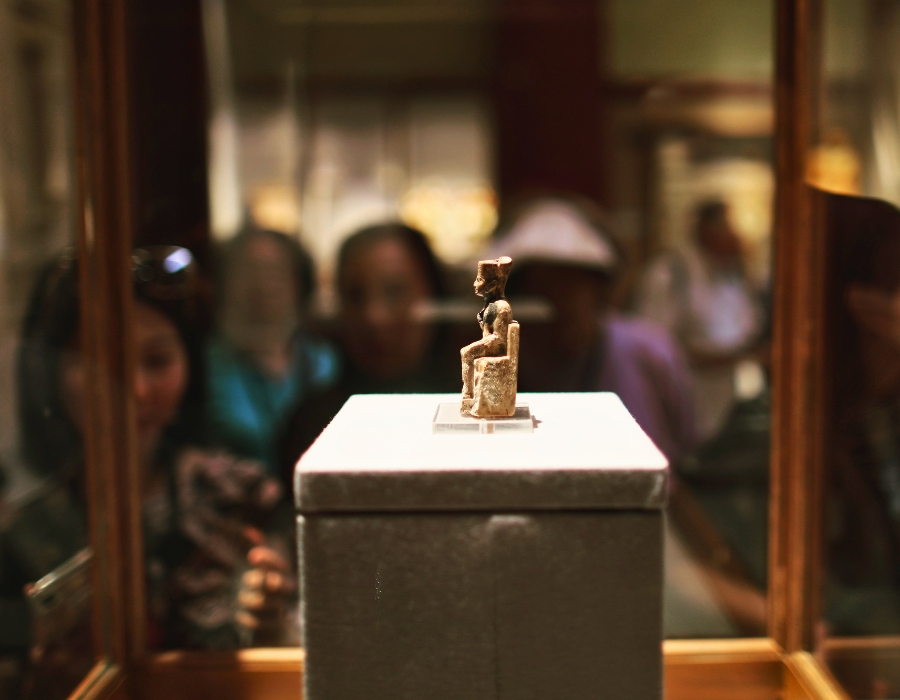
And yet one of the clearest surviving representations of the king himself is an ivory statuette measuring just 7.5 centimeters.
That contrast makes Khufu’s story especially interesting. Archaeologists know extraordinary details about his building project, but relatively little about his personality, childhood, or death.
Today, travelers can explore his pyramid at Giza, see a royal ship associated with his burial complex at the Grand Egyptian Museum, and examine the small statue that preserves his image at the Egyptian Museum in Cairo.
This guide explains what history tells us about King Khufu, which mysteries remain unresolved, and how to experience his legacy during a visit to Egypt in 2027.
King Khufu Facts at a Glance
|
Fact |
Information |
|---|---|
|
Full royal name |
Khnum-Khufu |
|
Common name |
Khufu |
|
Greek name |
Cheops |
|
Historical period |
Old Kingdom |
|
Dynasty |
Fourth Dynasty |
|
Approximate reign |
2589–2566 BC in one widely used chronology |
|
Father |
Generally identified as Pharaoh Sneferu |
|
Mother |
Queen Hetepheres I |
|
Known royal successors |
Djedefre, followed by Khafre |
|
Most famous achievement |
Great Pyramid of Giza |
|
Ancient pyramid name |
Akhet Khufu, meaning Horizon of Khufu |
|
Original pyramid height |
Approximately 146.5 meters |
|
Current pyramid height |
Approximately 138.5 meters |
|
Burial site |
Great Pyramid, Giza Plateau |
|
Royal boat |
A reconstructed wooden vessel measuring 42.32 meters |
|
Surviving representation |
Small ivory seated statuette discovered at Abydos |
|
Main places to visit |
Giza Plateau, Grand Egyptian Museum, Egyptian Museum in Cairo |
Historical dates are approximate. Egyptologists use different chronological systems, and some details of Khufu’s family and reign remain debated.
Who Was King Khufu in Ancient Egypt?
King Khufu was a pharaoh of Egypt’s Fourth Dynasty during the Old Kingdom, a period when centralized royal government, monumental architecture, and organized agricultural resources supported the construction of enormous pyramids.
He ruled more than 4,500 years ago, at a time when Memphis was an important center of Egyptian royal administration.
Khufu inherited a kingdom that already possessed considerable experience in building large stone monuments. His father, Sneferu, is associated with major pyramid developments at Meidum and Dahshur.
Instead of simply repeating those designs, Khufu commissioned a monument of unprecedented scale at Giza.
His pyramid became the largest ever built in ancient Egypt.
What does the name Khufu mean?
Khufu is the shortened form of the ancient Egyptian name Khnum-Khufu, commonly interpreted as “Khnum protects me.”
Khnum was an Egyptian creator god associated with pottery, craftsmanship, and the formation of living beings.
The name therefore reflects the religious language surrounding Egyptian kingship.
Greek writers later referred to the pharaoh as Cheops. Consequently, the names Khufu and Cheops identify the same historical ruler.
Travelers may encounter both names in museum descriptions, guidebooks, historical documentaries, and older archaeological publications.
What was Egypt like during Khufu’s reign?
Egypt during Khufu’s lifetime was an agricultural civilization centered on the Nile Valley and Delta.
The Nile supported farming, trade, transportation, and communication between settlements. Government officials collected resources, maintained records, and organized labor for royal projects.
The pharaoh stood at the center of this system.
Royal authority combined political administration with religious ideology. Pharaohs were responsible for maintaining maat, the ancient Egyptian ideal of proper order, justice, and balance.
The construction of the Great Pyramid required these institutions to operate on an exceptional scale.
Officials needed to coordinate workers, transport stone, distribute supplies, and manage skilled craftsmen.
To understand this wider historical setting, explore the Old Kingdom of Egypt, when pyramid building became one of the most visible expressions of royal authority.
Was Khufu the first pharaoh of Egypt?
No. Khufu ruled many centuries after the formation of the ancient Egyptian kingdom.
Egyptian kingship existed long before the Fourth Dynasty, and earlier rulers had already developed tomb architecture, royal religious traditions, and centralized administrative systems.
Khufu’s historical importance does not come from founding Egypt.
It comes from commissioning its largest pyramid and overseeing a building program that demonstrated the extraordinary capabilities of the Old Kingdom state.

When Was King Khufu Born and When Did He Die?
King Khufu’s exact birth date is unknown. His death is generally placed in the 26th century BC, often around 2566 BC, although ancient Egyptian chronological reconstructions differ.
There is no surviving contemporary record that securely identifies the day or year of his birth.
Likewise, historians cannot establish his exact age at death.
When was King Khufu born?
Khufu was probably born before the beginning of his reign, during the period associated with Sneferu’s rule, but an exact year cannot be established.
Some popular biographies provide a specific birth year. Such dates should be treated cautiously unless the author explains the underlying chronology.
The problem is not unique to Khufu.
For many Old Kingdom rulers, surviving records document royal names, monuments, administrative activities, and religious institutions more clearly than personal events.
A modern biography can reconstruct the historical environment surrounding Khufu, but it cannot supply childhood details that were never recorded.
How long did King Khufu rule Egypt?
Khufu’s reign is commonly placed at approximately 23 years under the chronology used by Egypt’s Ministry of Tourism and Antiquities.
However, interpretations of ancient cattle-count records and other evidence have led some researchers to propose a reign extending into the later twenties.
For general historical understanding, it is safest to describe Khufu as ruling for roughly two to three decades.
The distinction matters because the Great Pyramid required many years of planning, construction, and resource management.
A longer reign potentially changes how historians reconstruct its building schedule.
When did King Khufu die?
A frequently used date for Khufu’s death is approximately 2566 BC.
This represents a historical reconstruction rather than a recorded death certificate or precisely dated contemporary event.
After Khufu’s reign, Djedefre occupied the throne, followed by Khafre.
Their monuments help archaeologists reconstruct the sequence of the Fourth Dynasty.
How did King Khufu die?
The cause of King Khufu’s death is unknown.
No reliable surviving ancient record describes his final illness, an accident, assassination, or another specific cause.
His mummy has not been securely identified, and therefore modern medical analysis cannot establish how he died.
Claims that Khufu was murdered, poisoned, or killed while building his pyramid are speculative unless supported by genuine archaeological evidence.
The available evidence allows historians to discuss his burial arrangements and royal succession, but not the medical circumstances of his death.
Who Were King Khufu’s Parents, Wives and Children?
Khufu belonged to the royal family of Egypt’s Fourth Dynasty. He is traditionally identified as the son of Sneferu and Hetepheres I, and several later rulers and important royal family members were connected to his household.
However, the precise relationships between some individuals remain uncertain.
Who was King Khufu’s father?
Pharaoh Sneferu is generally identified as Khufu’s father.
Sneferu was one of the most important pyramid-building kings before Khufu.
His reign is associated with major architectural developments, including the Bent Pyramid and Red Pyramid at Dahshur.
These projects helped Egyptian builders develop the engineering experience needed for a large, smooth-sided pyramid.
Khufu inherited this architectural tradition and extended it.
The Great Pyramid was not an isolated technical achievement. It represented the result of generations of experimentation with stone construction, structural stability, and monument design.
Who was King Khufu’s mother?
Queen Hetepheres I is widely identified as Khufu’s mother.
Her burial equipment was discovered near the Great Pyramid in 1925.
The objects associated with her include remarkable examples of Old Kingdom furniture and royal craftsmanship.
Her burial also provides valuable evidence about the wealth and ceremonial traditions of Egypt’s royal family.
Although she is commonly described as Sneferu’s wife, certain details of her royal titles and family relationship remain subjects of scholarly discussion.
Who were King Khufu’s wives?
Meritites I is generally recognized as an important royal wife associated with Khufu.
Henutsen is also traditionally identified as a wife, although the evidence supporting some details of her relationship to the king is less secure.
Royal marriages in ancient Egypt were closely connected to succession, political legitimacy, and the continuation of the royal household.
Unfortunately, surviving evidence is insufficient to reconstruct Khufu’s domestic life in the way historians can document some much later Egyptian royal families.
Did King Khufu have children?
Yes. Khufu had several children who appear in the archaeological and historical record.
Among the most important are:
-
Djedefre: A son who became pharaoh after Khufu.
-
Khafre: A later Fourth Dynasty ruler traditionally identified as Khufu’s son.
-
Kawab: An important prince associated with Khufu’s royal family.
-
Hetepheres II: A royal daughter connected with several prominent Fourth Dynasty family members.
-
Khufukhaf: A prince known through the Giza necropolis.
The complete family tree remains complicated because surviving inscriptions do not always establish maternity, exact ages, or succession relationships.
Was King Khufu related to King Tutankhamun?
Khufu and Tutankhamun belonged to completely different periods of ancient Egyptian history.
Khufu ruled during the Fourth Dynasty of the Old Kingdom, whereas Tutankhamun ruled during the Eighteenth Dynasty of the New Kingdom.
Their reigns were separated by more than a thousand years.
Both were pharaohs, but they are famous for different archaeological reasons.
Khufu is remembered for the enormous pyramid he commissioned. Tutankhamun is especially famous for the remarkable objects recovered from his tomb in the Valley of the Kings.
What Kind of Pharaoh Was King Khufu?
Khufu was a powerful ruler whose government commanded extensive resources, skilled labor, and sophisticated administrative systems.
However, historians cannot confidently describe his individual personality.
Ancient Greek accounts present a different image of Khufu from the impression created by contemporary Egyptian archaeological evidence.
Was King Khufu a cruel ruler?
Some later ancient writers described Khufu negatively.
The Greek historian Herodotus, writing approximately two thousand years after Khufu, portrayed Cheops as a harsh ruler who imposed heavy burdens on his people.
These stories contributed to the popular image of the Great Pyramid as a monument built through extreme suffering.
However, Herodotus lived long after the Fourth Dynasty.
His narrative cannot be treated as an eyewitness account of Khufu’s reign.
Modern archaeology provides a more complex picture.
Evidence of organized workers, food production, administrative records, and settlements demonstrates that pyramid building depended on sophisticated state planning.
This does not mean ancient labor conditions were always comfortable or freely chosen. It means that the familiar image of slaves continuously driven by whips is not an adequate explanation of the evidence.
Why do we know so little about Khufu’s personality?
The surviving records from Khufu’s reign are primarily administrative, architectural, and religious.
They tell us what the king commissioned and how some activities were organized.
They rarely describe private emotions, political debates, or everyday conversations.
Much of what we know about later pharaohs comes from extensive temple inscriptions, royal correspondence, decorated tombs, and narrative texts.
Comparable personal documentation is much more limited for Khufu.
As a result, historians can identify the scale of his achievements much more confidently than his temperament or motivations.
What were Khufu’s greatest achievements?
Khufu’s most important achievements include commissioning the Great Pyramid, developing its surrounding funerary complex, and overseeing a kingdom capable of supporting exceptionally large construction operations.
His reign also provides evidence of organized quarrying, river transport, administration, and royal activity beyond Giza.
The Wadi al-Jarf papyri offer a particularly valuable glimpse into how materials were transported during his reign.
These surviving records establish a connection between the royal building project and the people responsible for supplying it.
Why Did King Khufu Build the Great Pyramid of Giza?
Khufu commissioned the Great Pyramid primarily as his royal tomb and as the central monument of a larger funerary complex.
Ancient Egyptians believed that death did not necessarily end a person’s existence.
Royal burial architecture, ritual offerings, religious symbolism, and the preservation of the body all contributed to preparations for the afterlife.
The Great Pyramid represented these beliefs on a monumental scale.
Was the Great Pyramid built as a tomb?
Yes. The archaeological context identifies the Great Pyramid as the tomb built for Pharaoh Khufu.
It contains the King’s Chamber, a surviving granite sarcophagus, and architectural features associated with royal funerary design.
The pyramid also formed part of a larger complex containing temples, subsidiary pyramids, boat pits, and surrounding tombs.
This combination of features strongly supports its funerary purpose.
The absence of Khufu’s mummy does not invalidate that interpretation.
Many ancient Egyptian royal tombs were disturbed or robbed, and the original burial contents of the Great Pyramid have not survived.
For a closer look at the monument itself, see the Pyramid of Cheops and its ancient architecture.
What did the pyramid symbolize?
The pyramid expressed the pharaoh’s relationship with the gods, the afterlife, and the order of the universe.
Its enormous scale also communicated royal power.
The ancient Egyptian king was not simply a political leader. Royal ideology connected kingship with divine authority and the maintenance of cosmic balance.
Pyramids formed part of a funerary tradition intended to support the king’s continued existence after death.
Some interpretations connect the pyramid’s rising form with solar symbolism and ideas of ascent toward the sky.
Nevertheless, the exact symbolic meaning of every architectural feature cannot be established with certainty.
Why did Khufu choose Giza?
Khufu built his pyramid on the Giza Plateau, west of the Nile near ancient Memphis.
The area offered a substantial limestone plateau suitable for a monumental stone structure.
It also occupied a position overlooking the Nile Valley.
The river and associated waterways were important for moving construction supplies.
Giza’s elevation and broad landscape made the pyramid highly visible.
Although scholars can identify these practical advantages, no surviving document provides Khufu’s complete explanation for selecting the site.
The broader Giza Necropolis later became the location of additional royal pyramids, temples, and elite tombs.

How Big Is the Great Pyramid of Khufu?
The Great Pyramid originally stood approximately 146.5 meters (481 feet) tall and had a square base measuring about 230 meters (755 feet) along each side.
It remains the largest of the three principal pyramids at Giza.
Its size was extraordinary for the ancient world, particularly considering the materials and construction technologies available during the Fourth Dynasty.
Great Pyramid of Khufu: Measurements and Facts
|
Feature |
Approximate measurement or description |
|---|---|
|
Original height |
146.5 meters / 481 feet |
|
Present height |
Around 138.5 meters / 454 feet |
|
Original base length |
Around 230 meters / 755 feet per side |
|
Base shape |
Nearly square |
|
Main building material |
Limestone |
|
Important internal material |
Granite |
|
Estimated stone blocks |
Often estimated at approximately 2.3 million |
|
Estimated construction period |
Frequently estimated at 10–20 years |
|
Main internal chambers |
Three principal chambers |
|
Ancient name |
Akhet Khufu |
|
Historical distinction |
Only surviving Wonder of the Ancient World |
The number of blocks and construction duration are estimates, not ancient construction records. Measurements can vary slightly by survey method and the reference points used.
How tall is Khufu’s pyramid today?
The Great Pyramid is approximately 138.5 meters tall today.
Its reduced height reflects the loss of its original uppermost structure and much of the fine limestone casing that once covered its exterior.
When completed, the pyramid presented a smoother appearance than it does now.
Rather than the exposed stepped stone courses visible today, much of the monument would have appeared as a continuous sloping surface.
Why did the pyramid lose its smooth exterior?
The original exterior included carefully fitted limestone casing blocks, many of which have disappeared over time.
Weathering, damage, and the reuse of stone contributed to changes in the monument’s appearance.
A few surviving casing stones near the base help visitors understand the pyramid’s original finish.
These remains are particularly useful because they show the difference between the rougher structural masonry and the smoother exterior facing.
Is Khufu’s pyramid the largest pyramid in the world?
The Great Pyramid is the largest ancient Egyptian pyramid and is often described as the largest pyramid by conventional height and monumental volume comparisons.
However, the phrase “largest pyramid in the world” needs qualification because some pyramid-shaped structures elsewhere have larger overall volumes despite being much lower.
For Egyptian travel and history, the important fact is straightforward:
Khufu built the tallest and most massive of the three main pyramids at Giza.
The monument was also the tallest human-made structure for approximately 3,800 years, according to Egypt’s Ministry of Tourism and Antiquities.
Why is the Great Pyramid one of the Seven Wonders?
Ancient writers included the Great Pyramid among the celebrated Seven Wonders of the Ancient World because of its immense scale and remarkable construction.
Unlike the other six traditional wonders, the Great Pyramid survives today.
That makes a visit to Giza different from reading about most ancient monuments on the list.
Visitors can stand beside a structure that ancient observers already regarded as an exceptional achievement.
Giza is also part of the UNESCO World Heritage property known as Memphis and its Necropolis, which includes important pyramid fields extending toward Dahshur.
How Was King Khufu’s Great Pyramid Built?
The Great Pyramid was constructed through a combination of stone quarrying, river transport, skilled craftsmanship, large-scale labor organization, and precise planning.
Archaeologists understand many important parts of this process.
However, they have not established one universally accepted reconstruction of every stage of construction.
The central question is no longer whether ancient Egyptians possessed the capability to build the pyramid. Archaeological evidence clearly demonstrates that they did.
The remaining debate concerns the precise engineering techniques used to position enormous quantities of stone at increasing heights.
Where did the building stones come from?
Much of the limestone used in the Great Pyramid came from the Giza Plateau and nearby quarries.
Higher-quality white limestone used for exterior casing was transported from the Tura quarry area on the eastern side of the Nile.
Granite used in parts of the interior came from the Aswan region in southern Egypt.
These materials had different purposes.
Local limestone supplied the main body of the pyramid.
Fine casing limestone produced its finished external appearance.
Granite provided strong structural material in important internal areas, including the King’s Chamber.
How did workers move limestone to Giza?
Water transportation played an important role in the construction project.
Boats could carry heavy supplies along the Nile and connected waterways.
The strongest documentary evidence comes from the Diary of Merer, which records the movement of limestone during Khufu’s reign.
The records describe crews transporting stone from Tura toward the construction project known as Akhet Khufu.
This evidence confirms that organized water transport formed part of the pyramid’s supply system.
It does not, by itself, explain every technique used to move stone blocks from the delivery point to their final positions.
What is the Diary of Merer?
The Diary of Merer is an ancient Egyptian administrative document discovered among papyri at Wadi al-Jarf, a Red Sea port site.
It dates to the period of Khufu’s reign and records activities involving an official named Merer and his working crew.
The document includes information about transporting limestone for the Great Pyramid project.
Its historical importance is substantial.
Instead of presenting a legend written centuries after construction, it preserves details of actual administrative activities from the period when the pyramid was being built.
Merer’s records reveal that the project relied on organized teams, named officials, transportation schedules, and coordinated deliveries.
For travelers, this gives a human dimension to the Great Pyramid.
The monument was not only the achievement of a pharaoh. It was also the result of thousands of practical decisions made by people transporting supplies, preparing stone, managing teams, and maintaining the construction operation.
Who was Hemiunu?
Hemiunu was an important Fourth Dynasty official often associated with the management of Khufu’s building program.
He held senior administrative titles and is frequently identified as a key figure in organizing the construction of the Great Pyramid.
However, describing him as the single architect who personally designed every part of the monument goes beyond what surviving evidence can conclusively establish.
Large royal building projects required many administrators, specialists, and craftsmen.
Hemiunu is valuable to the story because he represents the powerful officials who helped translate royal ambitions into physical monuments.
Were ramps used to build the Great Pyramid?
Ramps are among the principal methods archaeologists investigate when explaining how ancient Egyptians raised building stones.
Possible systems include straight ramps, angled ramps, combinations of ramps, and other arrangements using levers or staged lifting methods.
Evidence from ancient Egyptian quarrying and construction supports the use of ramps in various contexts.
The difficulty is identifying the exact ramp arrangement used at every height of Khufu’s pyramid.
Some proposals are plausible engineering reconstructions, but not established historical facts.
No single surviving construction manual resolves the question.
Did the builders use modern technology?
No credible archaeological evidence demonstrates that the Great Pyramid required modern machinery, extraterrestrial technology, or a lost industrial civilization.
Ancient Egyptians possessed sophisticated surveying knowledge, practical stoneworking experience, organized transport systems, and the ability to coordinate large groups of workers.
Those capabilities developed over generations.
The Great Pyramid is remarkable precisely because its builders achieved so much using the materials and technologies available in their own historical period.
How did builders achieve such accurate alignment?
The Great Pyramid is closely aligned with the cardinal directions.
Its builders clearly possessed advanced practical surveying skills.
Researchers have suggested several methods involving astronomical observation, shadows, and geometric techniques.
However, the exact surveying procedure used to establish the pyramid’s orientation has not been definitively demonstrated.
The safest conclusion is that the monument displays highly developed Egyptian planning and measurement, without claiming a single proven technique.
Who Built Khufu’s Pyramid: Slaves or Skilled Workers?
The Great Pyramid was built by an organized ancient Egyptian labor force that included skilled workers, specialists, administrators, and people performing physically demanding tasks.
The widespread image of enslaved foreigners building the pyramid under constant punishment is not supported as a complete explanation by modern archaeological evidence.
Excavations at Giza have revealed remains of settlements, food production facilities, administrative structures, and workers’ burials.
These discoveries have helped researchers understand the people behind the monuments.
What did archaeologists discover about pyramid workers?
Archaeologists studying the Giza Plateau have investigated a settlement known as Heit el-Ghurab, often called the Lost City of the Pyramid Builders.
It contains evidence of organized residential and administrative areas.
Important discoveries include:
-
Buildings associated with accommodation and administration.
-
Bakeries and food-production facilities.
-
Storage areas.
-
Animal bones revealing substantial food provisioning.
-
Clay seal impressions connected with administration.
-
Evidence of workshops and specialized activities.
The main excavated settlement is especially associated with the reigns of Khafre and Menkaure, while some underlying remains may extend back toward Khufu’s period.
This chronological distinction matters.
Evidence from the settlement helps explain the broader Fourth Dynasty pyramid-building system, but not every excavated building can automatically be assigned to Khufu’s reign.
Did workers receive food and medical care?
Archaeological evidence indicates that the pyramid-building labor system included organized food distribution and that some workers received care.
Animal remains show that substantial quantities of meat formed part of the food supply.
Workers’ burials and skeletal evidence provide additional information about physical labor and health.
Nevertheless, historians should not romanticize ancient construction work.
Building a pyramid involved heavy lifting, repetitive tasks, exposure to the elements, and the possibility of injury.
The precise legal status, working obligations, and compensation arrangements of every group remain difficult to reconstruct.
The most useful conclusion is that large pyramid construction depended on an organized state-supported workforce rather than an undifferentiated mass of anonymous slaves.
Why does this change how we understand King Khufu?
It shifts the focus from the pyramid as an isolated engineering mystery to the pyramid as the product of an entire civilization.
The Great Pyramid required more than stonecutters.
It needed agricultural production, transportation, officials, record keepers, craftsmen, and people preparing food and equipment.
Khufu’s monument therefore demonstrates the capacity of the Old Kingdom government to mobilize resources across different regions.
It is a record of how ancient Egyptian society operated, not merely how ancient Egyptians stacked stones.
What Does “Horizon of Khufu” Mean?
The ancient Egyptian name of the Great Pyramid was Akhet Khufu, commonly translated as “Horizon of Khufu.”
The name connected the pyramid with the king and religious ideas associated with the horizon.
In Egyptian belief, the horizon could symbolize transitions between the visible world and the divine realm.
The rising and setting sun offered powerful imagery for renewal and continued existence.
Khufu’s pyramid name therefore had a religious meaning beyond identifying a building.
Why was the horizon important in Egyptian religion?
The horizon occupied an important place in ancient Egyptian ideas about the sun, creation, rebirth, and the afterlife.
The sun’s daily movement offered a visible cycle of disappearance and return.
Egyptian religious traditions used such natural cycles to express ideas about renewal and continued existence.
The term akhet was associated with the horizon, where the sun appeared or disappeared.
This symbolic setting helps explain why Akhet Khufu was a meaningful name for a royal funerary monument.
For further background on the connections between kingship, religion, and symbols, see the guide to ancient Egyptian culture.
Was the Great Pyramid designed to imitate the sun?
Solar associations form part of scholarly discussions about pyramid symbolism, but reducing the entire monument to a representation of the sun would oversimplify its religious context.
Egyptian royal funerary beliefs developed over time.
They involved the king, the gods, the sky, the afterlife, and the maintenance of cosmic order.
The pyramid’s form, name, orientation, and associated temples may express several interconnected ideas.
Not every proposed astronomical or religious interpretation is equally well supported.
What Is Inside the Great Pyramid of Khufu?
Inside the Great Pyramid of Khufu are a series of passages, three principal chambers, and architectural features that continue to interest researchers.
The most famous spaces are the King’s Chamber, the Queen’s Chamber, the Grand Gallery, and the subterranean chamber.
Only designated parts of the interior are open to ordinary visitors.
Unlike many decorated tombs from later Egyptian history, the accessible interior of the Great Pyramid has largely undecorated stone walls.
There are no colorful royal burial scenes, elaborate painted ceilings, or displays of golden treasures along the standard visitor route.
The main attraction is the architecture itself.
The descending passage
The descending passage begins from the pyramid’s northern side and leads downward toward the subterranean chamber.
It represents one of the original internal routes.
Its narrow dimensions demonstrate the physical challenges involved in creating spaces within such a massive stone monument.
Most visitors entering the Great Pyramid today use a modern access opening leading toward the ascending route, rather than beginning at the original elevated entrance.
The accessible route and any temporary restrictions must be confirmed before visiting.
The subterranean chamber
The subterranean chamber is carved into the bedrock beneath the pyramid.
Its rougher appearance has encouraged discussion about changes to the original building plans.
However, scholars have not reached a definitive explanation for every stage of its construction.
Some theories propose that the original burial plan changed as building progressed.
Others interpret the chamber differently within the overall design.
Ordinary visitors should not assume that a standard Great Pyramid ticket includes access to this lower chamber.
The Queen’s Chamber
The Queen’s Chamber is located above the pyramid’s base level.
Despite its traditional name, there is no reliable evidence that it served as a burial chamber for one of Khufu’s queens.
The name was applied long after the monument was built.
Its architectural features include a distinctive pointed ceiling.
The chamber’s original intended function remains debated.
This is a good example of why modern room names inside ancient monuments should not always be interpreted literally.
The Grand Gallery
The Grand Gallery is one of the Great Pyramid’s most impressive internal spaces.
It is a tall, steeply ascending passage with a corbelled ceiling.
The stonework demonstrates careful planning and a sophisticated understanding of how to construct an open space within a massive stone structure.
The gallery leads toward the King’s Chamber.
For many visitors, this passage is more memorable than the burial chamber because its scale contrasts dramatically with the narrow access corridors.
The King’s Chamber
The King’s Chamber is the upper principal chamber inside the Great Pyramid.
It is constructed with substantial granite blocks and contains a granite sarcophagus traditionally associated with Khufu’s burial.
The sarcophagus is empty.
Visitors expecting a preserved mummy, wall paintings, or elaborate furniture will not find them.
The historical value lies in standing inside a chamber created for one of Egypt’s earliest monumental royal tombs.
What can visitors actually see inside?
|
Interior feature |
What makes it important |
What visitors should expect |
|---|---|---|
|
Ascending passage |
Part of the internal circulation system |
Narrow, steep movement |
|
Grand Gallery |
Large corbelled stone passage |
Impressive architecture and an uphill route |
|
King’s Chamber |
Principal royal burial chamber |
Granite walls and an empty sarcophagus |
|
Queen’s Chamber |
Important chamber with disputed original purpose |
Not necessarily included in the public route |
|
Subterranean chamber |
Chamber cut into bedrock |
Usually not part of the standard visitor experience |
|
Hidden research spaces |
Subjects of archaeological investigation |
Not accessible to ordinary tourists |
The accessible route can change for conservation, maintenance, or operational reasons.
Before purchasing an interior ticket, travelers should confirm which spaces are included.
For more practical advice, see what to expect when going inside Egypt’s pyramids.
Is King Khufu Actually Buried Inside the Great Pyramid?
The Great Pyramid was built as Khufu’s tomb, but his mummy and original funerary treasures have not been recovered from it.
The empty sarcophagus in the King’s Chamber is an important surviving feature of the burial monument.
However, the original contents of the royal burial are missing.
Where is King Khufu’s tomb?
King Khufu’s tomb is the Great Pyramid on the Giza Plateau.
The King’s Chamber is the room traditionally identified as his burial chamber.
The pyramid is not simply a large geometric monument.
It stands at the center of a funerary landscape designed around the deceased ruler.
Its surrounding structures supported the ceremonies, offerings, and religious activities associated with royal burial.
Has Khufu’s mummy ever been found?
No securely identified mummy of King Khufu has been discovered.
This means researchers cannot study his body to determine his age, health, injuries, or cause of death.
It also means claims about his physical appearance remain uncertain.
The absence of his mummy is one reason a small surviving statue carries such historical significance.
Was Khufu’s tomb robbed?
The Great Pyramid’s original burial equipment is missing, and ancient or later intrusion is generally considered a major explanation.
However, it is difficult to reconstruct precisely when the burial was disturbed or what objects were originally removed.
The pyramid has been entered and investigated at different periods throughout its history.
Ancient accounts, later visitors, and archaeological exploration all form part of that story.
There is no reliable basis for claiming that a complete, untouched royal treasure chamber remains undiscovered.
Does the empty sarcophagus prove Khufu was never buried there?
No.
A missing mummy does not prove that a tomb was never used.
Many Egyptian burials were disturbed, emptied, or altered over thousands of years.
Archaeologists identify the Great Pyramid as Khufu’s tomb through the combined evidence of its royal funerary complex, historical context, inscriptions associated with the structure, and burial architecture.
The sarcophagus is one element of that larger archaeological interpretation.
What Have Archaeologists Discovered Inside Khufu’s Pyramid?
Modern investigations have identified previously unknown spaces within the Great Pyramid.
Among the most important are the ScanPyramids Big Void announced in 2017 and a corridor-shaped space near the pyramid’s northern side documented in 2023.
These findings have improved researchers’ understanding of the monument’s internal structure.
However, their exact original functions remain uncertain.
What is the ScanPyramids project?
ScanPyramids is a scientific research initiative that investigates Egyptian pyramids using techniques that can reveal internal features without large-scale destructive excavation.
One important method is muon imaging.
Muons are particles produced through interactions involving cosmic rays.
Because they pass through stone differently depending on the density and thickness of the material, detectors can help scientists identify areas that may contain empty spaces.
This method allows researchers to investigate massive structures while limiting physical disturbance.
What was discovered in 2017?
In 2017, researchers reported a large previously unknown void above the Great Pyramid’s Grand Gallery.
The feature is commonly known as the ScanPyramids Big Void.
The evidence indicated an internal space at least approximately 30 meters long.
Its detection was important because it provided a new understanding of the pyramid’s internal geometry.
However, the discovery did not establish that the space was a burial chamber, treasure room, or secret passage to Khufu’s mummy.
Its purpose remains unresolved.
What was discovered in 2023?
Researchers documented a corridor-shaped space near the original entrance on the northern face of the pyramid.
The corridor is approximately 9 meters long.
Scientific investigations used non-destructive techniques to confirm important details of its structure.
One possible explanation is that the space helped manage structural loads around the entrance area.
Other interpretations remain under discussion.
The confirmed discovery is an internal corridor-shaped feature.
Claims about unknown treasures or secret royal chambers beyond it require additional evidence.
Can tourists enter the newly identified spaces?
No ordinary tourist access to these research spaces should be assumed.
The public visitor route follows designated passages and chambers.
A scientific announcement does not automatically mean a newly investigated space has opened to the public.
For 2027 travel planning, distinguish between three things:
-
A structure identified by scientific research.
-
A structure physically investigated by authorized specialists.
-
A structure officially opened for public access.
These are separate developments.
Will archaeologists discover more rooms in Khufu’s pyramid?
Further discoveries are possible because non-invasive imaging and archaeological research continue to improve.
However, future findings cannot be predicted reliably.
The monument still presents unanswered engineering and historical questions.
That makes continued research valuable, but it does not justify describing every unidentified space as a hidden tomb.
What Is King Khufu’s Solar Boat?
King Khufu’s Solar Boat is a reconstructed ancient wooden vessel discovered in a sealed pit beside the Great Pyramid in 1954.
The reconstructed boat measures approximately 42.32 meters (139 feet) long.
It is one of the most important surviving examples of ancient Egyptian boatbuilding.
Its construction provides evidence of advanced woodworking, joining techniques, and royal funerary traditions more than 4,500 years ago.
Who discovered King Khufu’s boat?
In 1954, Egyptian archaeologist Kamal el-Mallakh discovered evidence of sealed boat pits near the southern side of the Great Pyramid.
The first pit contained the dismantled components of a large wooden vessel.
The discovery was extraordinary because the wooden parts had survived for thousands of years.
The vessel was not buried as a complete assembled ship.
Its components had been carefully arranged within the pit.
Specialists then faced the difficult task of identifying the pieces and reconstructing the original design.
How was Khufu’s ship reconstructed?
The reconstruction required extensive conservation and detailed study of the wooden components.
Egyptian conservator Ahmed Youssef Moustafa played a central role in the project.
The work involved understanding the ancient shipbuilding techniques used to connect the wooden elements.
One remarkable feature was the extensive use of rope lashings.
Instead of relying on the metal-fastening systems familiar from many modern boats, the builders employed carefully designed wooden joints and bindings.
The reconstruction revealed an impressive understanding of wooden hull construction.
The process took more than a decade.
Was Khufu’s boat intended to sail?
The original purpose of the vessel remains debated.
Researchers have considered whether it was used during the king’s funeral, served as a ceremonial vessel, had a role during his lifetime, or was intended symbolically for the afterlife.
The boat’s construction demonstrates that it was a sophisticated vessel.
However, determining its precise history of use is more difficult.
It is therefore misleading to state with certainty that Khufu personally sailed in it.
Why is it called a solar boat?
The term “solar boat” reflects religious interpretations connecting royal boats with the Egyptian sun god Ra and the journey of the deceased king.
In Egyptian religious thought, divine boats could symbolize journeys across the sky or through the afterlife.
Such ideas provide a meaningful context for a vessel buried beside a royal pyramid.
However, the term solar boat is a modern descriptive label.
The precise original purpose of the surviving boat remains uncertain.
Where is King Khufu’s Solar Boat now?
Khufu’s reconstructed royal boat is at the Grand Egyptian Museum in Giza, not in the former boat museum beside the Great Pyramid.
The vessel was moved to the Grand Egyptian Museum in August 2021.
The relocation required extensive conservation planning and specialized transport equipment.
The museum now provides a dedicated setting for the boat.
This is an important distinction for anyone researching the old Khufu Boat Museum or planning a 2027 visit.
Visitors should not expect to find the reconstructed boat inside the former exhibition building beside the Great Pyramid.
For background on the discovery and relocation, see the history of Khufu’s Solar Boat Museum.
What happened to the second Khufu boat?
A second dismantled boat was discovered in another pit near the first vessel.
Its wooden elements were subsequently excavated, conserved, and transferred to the Grand Egyptian Museum.
The museum has developed a public conservation and reconstruction presentation associated with this second boat.
The official museum information available in October 2026 describes visitors being able to observe aspects of the conservation and reconstruction process.
The exact stage of the work and the presentation arrangements should be checked for 2027.
King Khufu’s Two Boats Compared
|
Feature |
First Khufu Boat |
Second Khufu Boat |
|---|---|---|
|
Discovery |
1954 |
1954 |
|
Discovery location |
Southern side of Great Pyramid |
Adjacent boat pit |
|
Condition when found |
Dismantled wooden components |
Dismantled wooden components |
|
Conservation history |
Reconstructed over many years |
Excavated and conserved through a later project |
|
Museum relocation |
August 2021 |
Components transferred to the GEM |
|
Public presentation |
Reconstructed royal vessel |
Conservation and reconstruction presentation |
|
Historical function |
Debated |
Debated |
Are Khufu’s boats included in the Grand Egyptian Museum ticket?
According to the official museum ticketing information available in October 2026, admission includes access to Khufu’s Boats Museum.
That is useful for travelers planning to combine the Great Pyramid with a museum visit.
However, exhibition arrangements, access rules, ticket inclusions, and opening hours should be checked again before traveling in 2027.
The boat exhibition deserves time of its own.
It allows visitors to understand how the funerary world of the pyramid was connected to the technology of ancient Egyptian river transport.
What Did King Khufu Look Like?
King Khufu’s physical appearance is not known with certainty.
One of the most important surviving representations is a small seated ivory statuette discovered at Abydos.
The statuette is approximately 7.5 centimeters high.
It is displayed at the Egyptian Museum in Cairo.
The contrast between its size and the Great Pyramid’s enormous scale makes it one of the most interesting artifacts associated with the king.
Where was the King Khufu statue discovered?
The ivory statuette was found in 1903 during excavations associated with British archaeologist Flinders Petrie at Abydos in Upper Egypt.
It was discovered in the area of Kom el-Sultan, associated with the ancient religious landscape of Abydos.
The statue depicts Khufu seated on a throne.
He wears a damaged crown associated with Lower Egypt and holds a royal flail.
The king’s name appears on the side of the throne.
This inscription is particularly important because it supports the identification of the figure.
Why is King Khufu’s statue so small?
The reason for the statuette’s small scale is not definitively known.
Ancient Egyptian statues could serve different religious, commemorative, or ceremonial purposes.
They were not all intended to be colossal.
The surviving ivory figure demonstrates that a ruler associated with Egypt’s largest pyramid could also be represented in a miniature work of craftsmanship.
The size does not reflect Khufu’s physical stature or the political importance of his reign.
Is the statue a realistic portrait of Khufu?
Not necessarily.
Ancient Egyptian royal art often followed established conventions.
A seated king, royal crown, throne, and ceremonial objects communicated authority and identity.
Such artistic conventions do not always reproduce an individual’s facial features with modern portrait accuracy.
The statuette is valuable evidence of Khufu’s royal representation, but it cannot provide a scientifically reliable reconstruction of his face.
Where can travelers see pictures and images of King Khufu?
The most useful images fall into several categories.
|
Image type |
What it shows |
Best use |
|---|---|---|
|
Khufu ivory statuette |
Surviving royal representation |
Understanding how the king was depicted |
|
Great Pyramid photographs |
Khufu’s monumental achievement |
Appreciating scale and architecture |
|
Interior photographs |
Grand Gallery and King’s Chamber |
Understanding the burial structure |
|
Royal boat photographs |
Wooden vessel associated with Khufu |
Exploring shipbuilding and funerary traditions |
|
Ancient inscriptions |
Khufu’s name and administrative evidence |
Understanding historical identification |
|
Archaeological diagrams |
Pyramid chambers and associated structures |
Understanding the monument’s organization |
When viewing a dramatic modern illustration of Khufu wearing elaborate gold jewelry or commanding workers, remember that it may be an artistic reconstruction.
A reconstruction is not a photograph of the historical person.
Travelers can explore the statuette and other important collections through the Egyptian Museum in Cairo.
The museum’s published collection information places Khufu’s statuette in Gallery 37 on the ground floor, although display locations should be reconfirmed before visiting.
How Is King Khufu Written in Hieroglyphics?
King Khufu’s name was written in ancient Egyptian hieroglyphs, often within a cartouche identifying him as a ruler.
A cartouche is an elongated oval enclosure used around certain royal names.
Khufu’s full name is commonly transliterated as Khnum-Khufu.
Hieroglyphic writing represented sounds, words, and concepts through a structured system of signs.
It should not be understood as a simple decorative alphabet.
What does Khufu’s cartouche represent?
The royal cartouche marks the enclosed name as belonging to a king.
In Egyptian royal inscriptions, cartouches helped distinguish important royal names from surrounding text.
The precise arrangement of signs could vary according to the writing context.
Khufu’s name appears in several important archaeological contexts, including inscriptions associated with his monuments.
Are there hieroglyphics inside the Great Pyramid?
The standard public route inside the Great Pyramid does not contain the extensive decorated hieroglyphic texts found in many later Egyptian tombs.
However, inscriptions associated with construction crews survive in parts of the pyramid that are not on the ordinary tourist route.
These markings are historically important because they include references connected with Khufu and the building work.
There is therefore a difference between saying that the tourist-accessible chambers are undecorated and claiming that no writing associated with Khufu exists within the monument.
Why are Khufu’s names important to archaeologists?
Names in inscriptions help researchers connect monuments, artifacts, royal officials, and administrative records with particular rulers.
Khufu’s name on the ivory statuette supports the identification of that object.
References to Khufu in construction-related inscriptions strengthen the historical connection between the king and the Great Pyramid.
Administrative documents from his reign provide additional context.
Together, these records create a much stronger body of evidence than a single name or a later legend could provide.
King Khufu vs Khafre and Menkaure: What’s the Difference?
Khufu, Khafre, and Menkaure were Fourth Dynasty pharaohs associated with the three main pyramids at Giza.
Their monuments stand close together, but they were built during different reigns.
Understanding the relationship between the kings makes the Giza Plateau easier to interpret.
Comparing the Three Main Giza Pyramids
|
Feature |
Khufu |
Khafre |
Menkaure |
|---|---|---|---|
|
Greek name |
Cheops |
Chephren |
Mykerinos |
|
Dynasty |
Fourth |
Fourth |
Fourth |
|
Relationship |
Earlier royal ruler |
Traditionally Khufu’s son |
Traditionally Khafre’s son |
|
Pyramid size |
Largest at Giza |
Second largest |
Smallest of the three principal pyramids |
|
Original height |
Approximately 146.5 m |
Approximately 143.5 m |
Approximately 65 m |
|
Important association |
Great Pyramid and royal boats |
Great Sphinx and major temple complex |
Extensive use of granite in parts of the complex |
|
Main visitor interest |
Scale, interior, engineering |
Elevated appearance and funerary complex |
Smaller pyramid and construction details |
Why does Khafre’s pyramid sometimes look taller?
The Pyramid of Khafre stands on higher ground than Khufu’s pyramid.
This difference in elevation can make Khafre’s pyramid appear taller from certain viewpoints.
Its surviving upper casing stones also give it a distinctive appearance.
However, Khufu’s pyramid was originally taller and is the larger monument.
Visitors interested in the second royal pyramid can compare its architecture through the Pyramid of Khafre.
Did Khufu build the Great Sphinx?
The Great Sphinx is generally associated with Khafre’s reign, not Khufu’s.
The monument lies near Khafre’s pyramid complex and is widely interpreted within that archaeological context.
Some details concerning its original construction and interpretation remain debated, but attributing it directly to Khufu as an established fact would be misleading.
The Great Sphinx of Giza is nevertheless an essential stop on a visit to the wider plateau.
Why is Menkaure’s pyramid much smaller?
The Pyramid of Menkaure is substantially smaller than those of Khufu and Khafre.
However, pyramid size alone should not be treated as a precise measurement of a ruler’s wealth or political influence.
Royal building priorities changed across the Fourth Dynasty.
Menkaure’s complex also demonstrates investment in other elements, including the use of granite and associated temple architecture.
The Pyramid of Menkaure helps visitors see how royal funerary design developed after Khufu.
What Can You See at King Khufu’s Pyramid in 2027?
Visitors to the Giza Plateau can see the Great Pyramid’s exterior, surviving casing stones, parts of its surrounding funerary complex, nearby smaller pyramids, and important features of the wider archaeological landscape.
Interior access requires a separate ticket and is subject to operational conditions.
The reconstructed Khufu boat is displayed at the Grand Egyptian Museum, not beside the pyramid.
The Great Pyramid’s exterior
The exterior is the most important experience for first-time visitors.
Its huge stone courses reveal the monument’s scale.
From a distance, the pyramid looks like a simple geometric form.
At close range, the individual stones become much more apparent.
The original base area and surrounding landscape help visitors understand why construction required such extensive planning.
Allow enough time to view the pyramid from more than one angle.
Surviving casing stones
Look for surviving sections of the original smooth exterior casing near the base.
These stones provide a visual reference for the pyramid’s original appearance.
They also help explain why the Great Pyramid looked different when completed.
The exposed stepped masonry visible today represents the structural core after much of the casing disappeared.
Visitors should observe the surviving stones without climbing on protected parts of the monument.
The surrounding royal funerary complex
Khufu’s pyramid was not constructed as a completely isolated monument.
Its surrounding landscape included structures connected with royal burial and religious ceremonies.
These elements help explain how the pyramid functioned as part of a wider funerary environment.
Although much of the original complex has not survived intact, archaeological remains still allow visitors to understand its organization.
Boat pits near the pyramid
The boat pits are important archaeological features associated with Khufu’s funerary complex.
They are separate from the reconstructed boat now housed at the Grand Egyptian Museum.
Some features can be understood through their archaeological location and surviving structures, although visibility and public access are subject to site arrangements.
Do not plan on entering the original pits unless a specific visitor experience is officially available.
Queens’ pyramids and nearby tombs
Smaller pyramids and elite tombs surround Khufu’s main monument.
These structures show that the Giza Plateau was also a royal and elite cemetery.
They help place Khufu within the social and religious world of the Fourth Dynasty.
Some tombs may require separate tickets or may not be open during a particular visit.
A guide familiar with the archaeological layout can help identify features that casual visitors might otherwise overlook.
Panoramic viewpoints
The Giza Plateau provides viewpoints from which travelers can see the relationship between the three main pyramids.
These views are particularly useful for understanding the different sizes and positions of the royal monuments.
They also create strong photography opportunities.
The exact locations accessible to visitors and the available transport arrangements should be checked when planning the day.
Where Else Can You Explore King Khufu’s History in Egypt?
Khufu’s story extends beyond the Great Pyramid.
Two museums are especially relevant: the Grand Egyptian Museum and the Egyptian Museum in central Cairo.
They offer different experiences.
The Giza Plateau presents Khufu’s monumental architecture.
The Grand Egyptian Museum provides access to his reconstructed boat.
The Egyptian Museum preserves an important representation of the king himself.
Grand Egyptian Museum: The royal boats
The Grand Egyptian Museum is an important destination for anyone interested in Khufu’s funerary traditions and ancient Egyptian boatbuilding.
The reconstructed royal boat makes it possible to study details that cannot easily be understood from the empty boat pits at Giza.
Its scale is particularly striking.
The presentation also provides a valuable connection between the pyramid, the Nile, the transport of materials, and religious ideas about the afterlife.
The museum’s wider collections place Khufu within thousands of years of Egyptian history.
For travelers whose main interest is museum-based exploration, Grand Egyptian Museum tours provide a relevant planning option.
Egyptian Museum in Tahrir: Khufu’s ivory statue
The Egyptian Museum in central Cairo offers a different perspective on Khufu.
Instead of the immense scale of his pyramid or royal boat, the ivory statuette presents the king through a miniature artistic object.
Its historical value is connected with its identification, materials, discovery, and royal representation.
Seeing the statue can help visitors understand how limited the surviving portrait evidence for Khufu really is.
The statue should not be confused with the reconstructed boat at the Grand Egyptian Museum.
These are different collections at different locations.
Which museum should you visit first?
|
Your main interest |
Recommended location |
Why |
|---|---|---|
|
Khufu’s monument |
Giza Plateau |
The Great Pyramid is the central surviving achievement |
|
Royal shipbuilding |
Grand Egyptian Museum |
Houses the reconstructed Khufu boat |
|
Khufu’s surviving likeness |
Egyptian Museum in Tahrir |
Contains his ivory statuette |
|
Broader Old Kingdom context |
Both museums |
Different collections help explain the civilization |
|
Limited time |
Giza Plateau, with GEM if practical |
Most direct combination of monument and associated artifact |
For a broader comparison, see the guide to the Egyptian Museum and Grand Egyptian Museum.
King Khufu Pyramid Tickets and Entrance Fees for 2027
Visiting the Great Pyramid involves two separate admission decisions: entering the Giza Plateau and purchasing additional access to the pyramid’s interior.
A general Giza Plateau ticket does not automatically include entry into the King’s Chamber.
Visitors who only want exterior views can usually experience the principal monuments without purchasing an interior ticket.
What do tickets cost?
The Egyptian Ministry of Tourism and Antiquities publishes separate admission information for the Giza Plateau and the Great Pyramid.
The following figures were displayed in official information checked in October 2026. They are reference prices, not confirmed 2027 rates.
|
Ticket |
Foreign adult |
Foreign student |
What it covers |
|---|---|---|---|
|
Giza Plateau general admission |
EGP 700 |
EGP 350 |
General archaeological-site access |
|
Great Pyramid interior |
EGP 1,000 |
EGP 500 |
Designated public interior route; requires plateau admission |
|
Combined cost for both |
EGP 1,700 |
EGP 850 |
General plateau access plus the Great Pyramid interior |
Student eligibility and documentation requirements may apply.
Published rates, currency amounts, booking procedures, and ticket categories can change before or during 2027.
The official ticketing information should be checked again shortly before travel.
Is it worth paying extra to go inside Khufu’s pyramid?
That depends on what you want from the visit.
The interior is worthwhile for travelers particularly interested in architecture, ancient engineering, and the experience of entering an original royal monument.
However, it may be less rewarding for people expecting colorful decorations or large collections of artifacts.
There is no requirement to go inside to appreciate the pyramid.
For many visitors, walking around the exterior and understanding the wider Giza landscape provides an equally important historical experience.
Does the Grand Egyptian Museum require another ticket?
Yes. The Grand Egyptian Museum is a separate attraction with its own admission system.
Its ticket should not be confused with the Giza Plateau ticket.
As of October 2026, official GEM ticketing information listed Khufu’s Boats Museum among the areas included with standard museum admission.
The museum also requires advance online booking with a selected arrival slot according to its published guidance.
For 2027, confirm ticket inclusions, prices, and available entry times before making final arrangements.
Can you buy Great Pyramid tickets on the day?
Ticket purchasing methods can change.
Digital ticketing and visitor-management systems have become increasingly important at Egyptian archaeological sites and museums.
Do not assume that every ticket category will always be available at a physical window or that popular interior access can be purchased without advance planning.
Check the current official ticketing process before leaving your accommodation.
A private guide or travel company can help explain the available ticket categories, but the validity of admission remains subject to the relevant attraction’s rules.
How Do You Get to King Khufu’s Pyramid?
The Great Pyramid is located on the Giza Plateau, southwest of central Cairo.
Most international travelers visit from accommodation in Cairo or Giza.
The area can be reached by private transport, taxi, ride-hailing arrangements, or an organized excursion.
Actual journey times depend heavily on traffic and the starting location.
Traveling from central Cairo
A private car or reliable taxi is a practical option for many first-time visitors.
The main advantage is direct transport between accommodation and the archaeological site.
Traffic can be heavy, particularly during commuting hours.
A journey that appears relatively short on a map can take considerably longer.
Leave extra time if you have a scheduled museum entry later in the day.
Traveling from Giza accommodation
Hotels near the pyramids may reduce the journey required to reach the plateau.
However, proximity alone does not guarantee convenient access to the relevant entrance.
Road layout, pedestrian restrictions, and official visitor routes can affect how travelers enter the site.
Confirm the current entrance and drop-off arrangement rather than relying solely on the distance shown by a map.
Traveling from Cairo International Airport
Travelers arriving at Cairo International Airport can continue to Giza by private transfer or other road transportation.
The airport is on the eastern side of the Cairo metropolitan area, while the pyramids are southwest of the city center.
For visitors with a short layover, this cross-city journey deserves careful planning.
Airport arrival procedures, traffic, and the time required to return for a departing flight may make a very short stop unrealistic.
What about transport inside the Giza Plateau?
The archaeological site covers a substantial area.
Visitor-management arrangements have included designated transportation services and controlled routes.
These arrangements may change.
For 2027, check which shuttle services are operating, where they stop, and whether separate transport charges apply.
A vehicle service can reduce walking between distant viewpoints, but some areas may still require walking across uneven surfaces.
What Is the Best Time to Visit Khufu’s Pyramid?
The most comfortable months for visiting the Great Pyramid are generally from October through April, when Cairo and Giza usually experience milder daytime conditions than in summer.
Early morning is often preferable for avoiding the strongest heat and managing a full sightseeing schedule.
However, winter and major holiday periods may also attract substantial visitor numbers.
Visiting King Khufu’s pyramid by season
|
Season |
Typical conditions |
Main advantage |
Main consideration |
|---|---|---|---|
|
December–February |
Mild days, potentially cool mornings and evenings |
Comfortable outdoor sightseeing |
Popular travel period |
|
March–April |
Generally pleasant to increasingly warm |
Good for exploring several sites |
Wind and occasional dust |
|
May–September |
Hotter conditions, especially in summer |
Potentially quieter periods |
Significant heat and sun exposure |
|
October–November |
Generally warm to mild |
Good balance for outdoor visits |
Visitor demand can be high |
Weather varies from day to day.
Dusty or windy conditions can affect visibility and comfort.
For a more complete seasonal comparison, use the Egypt weather-by-month guide.
Is sunrise the best time to photograph Khufu’s pyramid?
Early morning can produce attractive light and more comfortable temperatures.
However, visitors should distinguish between photographing the pyramids from legally accessible external locations and entering the archaeological site itself.
The plateau has official opening hours.
A sunrise photograph outside the site does not mean the interior or archaeological grounds are open at sunrise.
Photography plans should be based on permitted access and actual lighting conditions.
Is it worth visiting in summer?
Yes, but outdoor sightseeing requires more care.
Summer temperatures can make prolonged walking unpleasant, especially around exposed stone monuments.
If traveling in June, July, or August, prioritize an early start, hydration, sun protection, and realistic sightseeing durations.
An air-conditioned vehicle and a schedule with indoor breaks can improve comfort.
Do not assume the pyramid interior will be cool simply because it is enclosed by stone.
The passages can feel warm, humid, and poorly ventilated.
Can Children, Seniors and Travelers With Disabilities Visit Khufu’s Pyramid?
Many families, older travelers, and visitors with mobility limitations can enjoy views of the Great Pyramid and parts of the Giza Plateau.
However, entering the pyramid itself is a different physical experience.
The interior includes narrow passages, steep sections, and restricted movement.
It is not a conventional accessible museum environment.
Is the Great Pyramid wheelchair accessible?
The standard interior route is not suitable for wheelchair users because of the narrow and steep passages.
The wider Giza Plateau offers exterior viewing opportunities, although uneven ground, sand, steps, distances, and transport arrangements may create barriers.
Accessibility should be planned according to the exact route rather than described as a simple yes-or-no feature of the entire site.
For visitors requiring adapted transport, suitable itineraries, and specific mobility arrangements, see wheelchair-accessible Egypt tours.
Should travelers with claustrophobia go inside?
Travelers with claustrophobia may find the Great Pyramid’s passages uncomfortable.
Some sections require moving through narrow, sloping spaces.
The sensation of enclosure can be more challenging than the physical distance suggests.
If enclosed spaces cause significant anxiety, the exterior may be a better choice.
The historical value of the site does not depend on completing the interior route.
Is the interior suitable for children?
Older children who are comfortable with stairs, confined spaces, and warm conditions may enjoy the experience.
Younger children may find the passages difficult or frightening.
Parents should consider each child’s mobility, comfort, and patience.
There is little benefit in purchasing an interior ticket if the child is likely to become distressed.
A family visit can instead focus on the pyramid’s exterior, its scale, and the story of the ancient builders.
What should seniors consider?
Age alone does not determine whether someone can enter the Great Pyramid.
Mobility, balance, stamina, knee comfort, and tolerance for confined spaces are more useful criteria.
Visitors should assess the physical demands before purchasing interior admission.
The wider plateau offers alternatives for people who prefer to remain outside.
How Much Time Do You Need to Explore King Khufu’s Legacy?
Allow approximately two to four hours for a focused visit to the Giza Plateau, depending on whether you enter the Great Pyramid and how many additional monuments you explore.
A deeper experience combining the Great Pyramid and Grand Egyptian Museum can occupy most of a day.
Adding the Egyptian Museum in central Cairo may work better as a separate visit.
Suggested visit durations
|
Experience |
Suggested time |
Best suited for |
|---|---|---|
|
Great Pyramid exterior and immediate surroundings |
60–90 minutes |
Short visits and photography |
|
Great Pyramid interior plus exterior |
Around 1.5–2.5 hours |
Architecture-focused visitors |
|
Main Giza Plateau monuments |
3–4 hours or more |
First-time visitors |
|
Giza Plateau and Grand Egyptian Museum |
Most of a day |
Travelers interested in Khufu’s full legacy |
|
Giza, GEM and Egyptian Museum |
Preferably spread over two days |
Dedicated history enthusiasts |
These durations are planning estimates, not official visit lengths.
Queues, transport, breaks, accessibility needs, and personal interests can change the schedule.
Suggested 2027 Itinerary: One Day Exploring King Khufu
The most practical one-day itinerary combines the Great Pyramid of Giza with the Grand Egyptian Museum.
This allows travelers to experience Khufu’s monumental burial architecture and the reconstructed royal boat associated with his funerary complex.
Stop 1 — Great Pyramid of Khufu
Suggested: 90–120 minutes
Begin with the exterior, surviving casing stones, and the main pyramid. Add the interior only if you have the appropriate ticket and are comfortable with the physical route.
Stop 2 — Wider Giza Plateau
Suggested: 60–90 minutes
Compare the three royal pyramids, appreciate their positions in the landscape, and include the Great Sphinx if your schedule permits.
Stop 3 — Grand Egyptian Museum
Suggested: 2–3 hours or longer
Explore Khufu’s Boats Museum and selected galleries that explain the broader civilization responsible for the Great Pyramid.
Why this itinerary works
It connects Khufu’s architectural achievement with one of the most remarkable artifacts discovered beside his pyramid.
It also keeps the main archaeological and museum experiences within the Giza area.
That is generally more geographically efficient than adding central Cairo to an already busy schedule.
The Grand Egyptian Museum requires a separate admission booking. Confirm the chosen entry slot before finalizing your morning plans.
Travelers spending more time in the capital can adapt the schedule using the Cairo itinerary guide.
A Two-Day King Khufu and Pyramid History Itinerary
Travelers with two days can explore the historical development of Egyptian pyramid architecture rather than viewing the Great Pyramid as an isolated monument.
This is especially worthwhile for archaeology enthusiasts.
Day 1: Giza’s royal monuments and the Grand Egyptian Museum
Begin at the Great Pyramid.
Take time to examine the stonework and understand the organization of Khufu’s complex.
Continue through the wider Giza Plateau to compare his pyramid with those of Khafre and Menkaure.
In the afternoon, visit the Grand Egyptian Museum and devote time to the royal boats.
This day explains the peak of Fourth Dynasty pyramid construction.
Day 2: Saqqara and Dahshur
Visit Saqqara Necropolis to understand earlier stages in the development of monumental stone architecture.
The Step Pyramid of Djoser demonstrates a very different pyramid form.
Continue to Dahshur Necropolis, where Sneferu’s pyramid projects provide important context for Khufu’s achievement.
The Bent Pyramid and Red Pyramid reveal developments in pyramid design that preceded the Great Pyramid.
This creates a coherent historical sequence:
Djoser’s Step Pyramid → Sneferu’s pyramid experiments → Khufu’s Great Pyramid.
The exact combination depends on site hours, transport, and available interior access.
A two-day archaeological itinerary can be more satisfying than trying to visit every pyramid field in a single hurried day.
Is a Guided Tour of King Khufu’s Pyramid Worth It?
A knowledgeable Egyptologist guide can add significant value to a visit to the Great Pyramid, particularly for travelers interested in the Fourth Dynasty, funerary beliefs, and archaeological evidence.
Without explanation, many visitors see little more than enormous stone monuments.
A guide can connect those monuments with the people, religious ideas, and construction systems behind them.
What does a guide add?
A good guide should help visitors understand:
-
The relationship between Khufu, Sneferu, Khafre, and Menkaure.
-
Why the Great Pyramid was built.
-
How the funerary complex was organized.
-
What the surviving boat pits tell us.
-
Which construction theories have evidence behind them.
-
The difference between confirmed discoveries and speculative claims.
-
How the main monuments fit together geographically.
For a visitor primarily interested in exterior photography, independent exploration may be sufficient.
For someone interested in historical interpretation, a guide can make the experience considerably more informative.
Should you choose a private or shared experience?
Private tours provide greater control over timing, walking pace, and historical interests.
They can be particularly useful for families, seniors, photographers, and visitors combining multiple attractions.
Shared experiences may be more economical, but the schedule is usually less flexible.
Compare the actual inclusions rather than choosing solely on price.
A tour description should clarify whether it includes transportation, a qualified guide, entrance tickets, interior pyramid access, and museum admission.
Travelers can compare relevant Egypt pyramid tours before selecting an experience.
15 Fascinating Facts About King Khufu
These facts summarize some of the most remarkable features of Khufu’s history without relying on unsupported legends.
-
Khufu is also known as Cheops. The names refer to the same Fourth Dynasty pharaoh.
-
He ruled around 4,500 years ago. His reign belongs to Egypt’s Old Kingdom, long before Tutankhamun and Ramesses II.
-
His pyramid was originally about 146.5 meters tall. It remained an exceptional achievement for thousands of years.
-
The Great Pyramid is the only surviving Ancient Wonder. The other traditional Wonders of the Ancient World no longer survive in their original monumental forms.
-
Khufu’s mother is identified as Hetepheres I. Her burial equipment provides important evidence about Fourth Dynasty royal life.
-
His father was probably Sneferu. Sneferu’s pyramid projects helped establish the architectural tradition Khufu inherited.
-
The pyramid’s ancient name was Akhet Khufu. It is commonly translated as Horizon of Khufu.
-
Khufu’s surviving ivory statuette is only 7.5 centimeters high. It is preserved at the Egyptian Museum in Cairo.
-
The reconstructed royal boat measures 42.32 meters long. It was discovered dismantled beside the pyramid.
-
The first Khufu boat moved to the Grand Egyptian Museum in 2021. Its former location at Giza is no longer where visitors see the reconstructed vessel.
-
The Diary of Merer records limestone transport. These ancient administrative papyri provide direct evidence of construction-era logistics.
-
The standard public interior route is largely undecorated. Its value comes from original architecture rather than elaborate paintings.
-
No securely identified mummy of Khufu has been found. His precise cause of death therefore remains unknown.
-
Scientific investigations identified previously unknown spaces. Important ScanPyramids findings were reported in 2017 and 2023.
-
Khufu’s pyramid remains central to modern archaeological research. Its construction, internal features, and funerary landscape continue to raise important questions.
Common Misconceptions About King Khufu
Some of the most persistent claims about Khufu come from later legends, old popular interpretations, or modern sensational stories.
The following distinctions help readers identify what is established and what remains uncertain.
|
Popular claim |
More accurate explanation |
|---|---|
|
Khufu built the pyramids using aliens. |
Archaeological evidence demonstrates advanced ancient Egyptian engineering and organization. |
|
Khufu’s mummy is displayed in a museum. |
No securely identified mummy of Khufu has been recovered. |
|
The Great Pyramid contains his treasures today. |
The original royal burial contents are missing. |
|
The Queen’s Chamber definitely held his queen. |
The chamber’s traditional name does not prove its original purpose. |
|
The Great Pyramid was built entirely by slaves. |
Evidence points to an organized and varied labor system; the complete workforce structure remains debated. |
|
The solar boat is still beside the pyramid. |
The reconstructed vessel moved to the Grand Egyptian Museum in 2021. |
|
All newly discovered voids are secret tombs. |
Their functions remain unknown and cannot be assumed to be burial chambers. |
|
Khufu and Cheops were different kings. |
Cheops is the Greek name for Khufu. |
|
Khufu’s exact birth and death circumstances are known. |
His birth date, age, and cause of death remain uncertain. |
|
The Great Pyramid was always rough and stepped. |
Its exterior originally included smooth limestone casing. |
What Should You Know Before Visiting King Khufu’s Pyramid?
The biggest mistake visitors make is treating Giza as a single attraction where every monument and interior space is included in one ticket.
The plateau is a large archaeological landscape with separate admission categories, considerable walking distances, and important operational rules.
Prepare for outdoor conditions
Much of the Giza Plateau is exposed to the sun.
Bring water, sun protection, comfortable shoes, and clothing appropriate for the weather.
Expect a combination of paved routes, stone surfaces, uneven ground, and potentially sandy sections.
Be realistic about pyramid interiors
The Great Pyramid is not suitable for everyone.
The enclosed passages can feel physically demanding, particularly for visitors with limited mobility or discomfort in confined spaces.
Consider the physical requirements before purchasing admission.
Check photography rules
Personal photography is generally possible in many designated areas, but restrictions can apply to specific spaces and equipment.
Rules involving flash, tripods, drones, commercial photography, and museum collections can differ.
Do not assume that a permission applicable to outdoor photography also applies inside a monument or museum gallery.
Confirm what your tour includes
Before booking an organized visit, confirm whether the package covers Giza Plateau admission, the Great Pyramid’s interior ticket, transport, guide services, and museum admission.
A tour may include the pyramid exterior without including interior access.
That distinction can make a substantial difference to the final experience.
Avoid scheduling too many attractions
Giza and Cairo offer enough archaeology to fill several days.
Trying to combine Giza, the Grand Egyptian Museum, Saqqara, Dahshur, and the Egyptian Museum in one day usually leaves insufficient time at each location.
Prioritize the sites that matter most to your interests.
Respect protected areas
Do not climb the outside of the Great Pyramid, enter restricted archaeological spaces, or touch sensitive artifacts.
Follow the site’s marked routes and staff directions.
Conservation rules exist to protect monuments that have already survived for thousands of years.
For additional local ideas, explore things to do in Giza.
Who Will Enjoy Exploring King Khufu’s History Most?
Khufu’s story appeals to different travelers for different reasons.
The ideal experience depends on whether you are most interested in monumental architecture, historical evidence, archaeology, or visual travel experiences.
|
Traveler type |
Recommended experience |
|---|---|
|
First-time Egypt visitor |
Great Pyramid exterior, wider Giza Plateau, and Sphinx |
|
Archaeology enthusiast |
Great Pyramid, royal complex, GEM boats, Saqqara, and Dahshur |
|
Family with children |
Pyramid exterior, scale comparisons, and museum exhibits |
|
Architecture enthusiast |
Great Pyramid interior and structural interpretation |
|
Photography enthusiast |
Exterior views and authorized panoramic locations |
|
Traveler with limited mobility |
Accessible exterior viewpoints and carefully planned museum visits |
|
Short-stay visitor |
Focused Giza visit with optional pyramid interior |
|
Returning Egypt visitor |
Khufu’s boat, smaller surrounding tombs, and deeper Fourth Dynasty context |
A second visit to Giza can be surprisingly different from a first visit.
After seeing the main pyramids, visitors often become more interested in the smaller architectural remains and the relationship between the monuments.
That is where the story of the royal family, workers, administrators, and funerary ceremonies becomes especially valuable.
Frequently Asked Questions About King Khufu
1. Who was King Khufu?
King Khufu was a Fourth Dynasty Egyptian pharaoh who ruled during the Old Kingdom, commonly dated around 2589–2566 BC. Also known as Cheops, he commissioned the Great Pyramid of Giza. His reign is especially important for understanding ancient Egyptian pyramid construction, royal funerary traditions, and the administrative power of the early Egyptian state.
2. When was King Khufu born?
King Khufu’s exact birth date is unknown. He lived during the late third millennium BC and became pharaoh during the Fourth Dynasty. Although some modern biographies provide an approximate birth year, no surviving contemporary record establishes a precise date. Historians reconstruct his lifetime mainly through royal chronology, family relationships, and archaeological evidence.
3. How did King Khufu die?
The cause of King Khufu’s death is unknown. No reliable surviving account identifies a specific illness, accident, or act of violence. His mummy has not been securely identified, so physical evidence cannot establish his cause of death. His death is commonly placed around 2566 BC, depending on the chronological system used.
4. What was King Khufu famous for?
King Khufu is famous for commissioning the Great Pyramid of Giza, the largest ancient Egyptian pyramid and the only surviving Wonder of the Ancient World. His reign also left important evidence of large-scale construction organization, including records of limestone transportation and royal funerary boats discovered beside his pyramid.
5. Where is King Khufu’s tomb located?
King Khufu’s tomb is the Great Pyramid on the Giza Plateau in Egypt. The pyramid contains the King’s Chamber and an empty granite sarcophagus associated with the royal burial. His mummy and original funerary treasures have not been recovered. Visitors can enter designated interior spaces when the relevant admission is available.
6. Can you see King Khufu’s statue today?
Yes. A small ivory statuette of King Khufu is part of the Egyptian Museum’s collection in Cairo. The statue was discovered at Abydos in 1903 and measures approximately 7.5 centimeters tall. It depicts the seated pharaoh and bears his name. Travelers should confirm its current gallery location before visiting.
7. Where is the King Khufu Solar Boat Museum?
Khufu’s reconstructed royal boat is displayed at the Grand Egyptian Museum in Giza. The vessel was moved from its former museum beside the Great Pyramid in August 2021. The Grand Egyptian Museum also houses the second boat’s conservation and reconstruction project. Visitors should check the current exhibition arrangements and ticket inclusions before traveling.
8. How many pyramids did King Khufu build?
Khufu is principally associated with the Great Pyramid of Giza, his royal burial monument. His funerary complex also included smaller subsidiary pyramids connected with the royal family and related religious purposes. The three main pyramids at Giza were not all built by Khufu: the other two are associated with Khafre and Menkaure.
9. Is Khufu the same person as Cheops?
Yes. Khufu and Cheops are two names for the same Egyptian pharaoh. Khufu is the name commonly used in Egyptology, while Cheops comes from Greek historical traditions. The monument described as the Pyramid of Cheops is therefore the same as the Great Pyramid of Khufu at Giza.
10. How many years did it take to build Khufu’s pyramid?
The construction of the Great Pyramid is commonly estimated to have taken approximately 10–20 years, although the precise duration is not known. Ancient records confirm aspects of its construction-era administration and stone transport, but they do not provide a complete building schedule. Estimates depend on assumptions about labor, delivery rates, engineering techniques, and Khufu’s reign length.
11. What happened to King Khufu’s treasure?
The original funerary contents of Khufu’s pyramid have not survived in the burial chamber. The precise inventory of objects placed in the original royal burial is unknown. Ancient or later disturbance is generally considered an explanation for missing burial equipment. Claims that intact golden treasures are waiting inside an identified secret chamber have not been established.
12. Is the Khufu Restaurant connected to the ancient pharaoh?
Restaurants or hospitality venues using the name Khufu are modern businesses named after the famous ruler or his pyramid. They should not be confused with the ancient royal burial complex, the Great Pyramid, or Khufu’s Boats Museum. Travelers searching for a particular restaurant should verify its exact location, opening status, and reservation information separately.
Why Does King Khufu Still Matter Today?
King Khufu remains historically important because his reign produced one of the clearest surviving demonstrations of Old Kingdom royal power and engineering.
The Great Pyramid reveals what ancient Egyptian builders could achieve through advanced planning, craftsmanship, and coordinated labor.
The Diary of Merer brings us closer to the practical activities behind that accomplishment.
Khufu’s royal boat provides evidence of sophisticated woodworking and funerary traditions.
His ivory statuette preserves a rare representation of a king whose personal history remains largely unknown.
Together, these discoveries show that the Great Pyramid was not simply an enormous stone structure.
It belonged to a complex civilization with administrators, craftsmen, religious traditions, transportation systems, and ambitious architectural knowledge.
For travelers, the most rewarding experience is to understand these connections while standing at the monuments themselves.
Plan Your Visit to King Khufu’s Great Pyramid in 2027
King Khufu’s legacy is best experienced through three complementary places: the Great Pyramid at Giza, the royal boat exhibition at the Grand Egyptian Museum, and the ivory statuette at the Egyptian Museum in Cairo.
Travelers with limited time should prioritize the Great Pyramid and surrounding plateau.
Those with a full day can add the Grand Egyptian Museum.
Visitors with a deeper interest in ancient Egyptian history should consider a second day exploring Saqqara, Dahshur, or Cairo’s museum collections.
Egypt Time Travel can help arrange a private Giza visit or a customized archaeological itinerary, with transport, guiding, and museum time organized around your interests.
Explore private pyramid experiences in Egypt to plan a visit that gives Khufu’s history the time it deserves.
The Great Pyramid is impressive from a distance. Understanding the ruler, workers, religious beliefs, and engineering behind it makes seeing the monument far more meaningful.
