
Quick Answer: Is Egypt Safe to Visit in 2027?
For most travelers following Egypt’s established tourist routes, Egypt can be visited with appropriate precautions, but no destination is risk-free and some parts of the country carry significantly stronger official warnings. Cairo, Giza, Luxor, Aswan and major Red Sea resorts remain established tourism destinations, while North Sinai, border regions and parts of the Western Desert require much greater caution or should be avoided under current government advice.
Travelers planning a 2027 trip should check their own government’s advisory again shortly before booking and before departure because regional conditions, flight operations and individual restricted areas can change.
Is Egypt safe to visit in 2027? For many travelers, that question comes before discussions about the Pyramids of Giza, Nile cruises, Luxor temples, Red Sea beaches or the Grand Egyptian Museum.
The useful answer is not simply “yes” or “no.”
Egypt is geographically large, and the security situation is not identical across the entire country. A traveler spending a week between Cairo, Giza, Luxor, Aswan and Hurghada is following a very different route from someone planning independent travel near international borders, North Sinai or remote desert areas.
As of October 4, 2026, the U.S. Department of State lists Egypt at Level 1 – Exercise Increased Caution, citing terrorism, crime, health and other risks, while identifying Northern and Middle Sinai, the Western Desert and Egyptian border areas as places subject to stronger warnings. The UK Foreign, Commonwealth & Development Office also advises against travel to specific parts of Egypt rather than applying the same restriction to every major tourist destination.
Australia currently advises travelers to exercise a high degree of caution in Egypt overall, with stronger warnings for particular regions. Canada uses a similar high-caution approach and specifically advises against travel to Northern Sinai and substantial parts of the Western Desert and border areas.
That distinction is essential for understanding Egypt travel safety in 2027.
This guide therefore focuses on the questions travelers actually need answered: Is Cairo safe? Is Luxor safe for tourists? Can Americans visit Egypt safely? Is it safe to visit the Pyramids? What about Hurghada, Sharm El Sheikh, Dahab and Marsa Alam? Which regions should travelers avoid? What are the realistic everyday risks? And what should you check immediately before traveling?
For broader preparation beyond security, our Egypt Travel Guide covers practical trip planning, destinations and travel considerations.
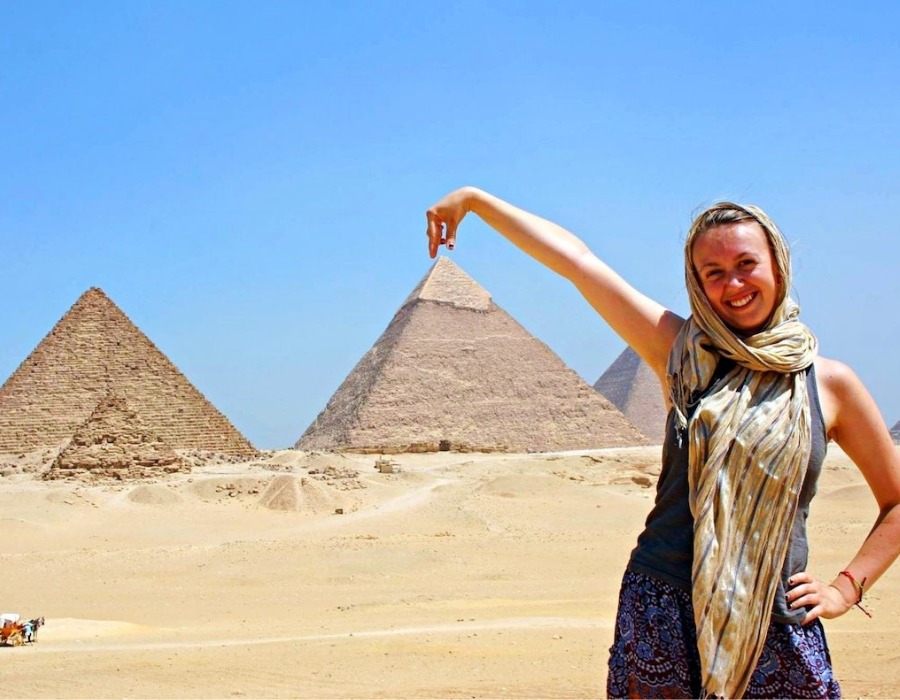
Egypt is not uniformly safe or unsafe; safety depends heavily on where you travel, how you travel and current regional conditions.
The country’s principal archaeological cities and resort destinations operate as established international tourism centers. Cairo receives visitors through Cairo International Airport; Giza contains the Pyramids and Great Sphinx; Luxor and Aswan anchor the Nile Valley tourism route; and Hurghada, Sharm El Sheikh and Marsa Alam serve the Red Sea tourism market.
At the same time, official government advice is clear that some regions carry materially higher risks.
The United States currently tells citizens to exercise increased caution in Egypt generally but says not to travel to Northern and Middle Sinai, Egyptian border areas and the Western Desert, except that Western Desert travel may be undertaken with a professionally licensed tour company under its guidance.
The UK’s advice is geographically detailed. It advises against all travel to North Sinai and within 20 kilometers of much of the Libya border, and against all but essential travel to certain other areas. However, its Western Desert warning specifically excludes established destinations and routes including Luxor, Qena, Aswan, Abu Simbel, the Valley of the Kings, Fayoum, Siwa, Bahariya, Farafra, Dakhla and Kharga under the conditions described in its advice.
This means travelers should avoid treating an “Egypt travel warning” headline as though every square kilometer of Egypt carries the same risk classification.
For 2027, the practical question is therefore not only “Is Egypt safe?” It is:
“Is my specific Egypt itinerary consistent with current official travel advice?”
That is a much better question.
What Does Current Official Travel Advice Say About Egypt?
Different governments use different advisory systems, so their labels should not be compared as though they were identical numerical scores.
The current picture can be summarized as follows:
| Authority | Overall position currently published | Important higher-risk areas |
|---|---|---|
| United States | Level 2 – Exercise Increased Caution | Northern and Middle Sinai, Western Desert, Egyptian border areas |
| United Kingdom | No blanket advise-against warning for the whole country; specific regional restrictions apply | North Sinai, Libya border and selected parts of South Sinai, Ismailiyah and Western Desert |
| Australia | Exercise a high degree of caution overall | North Sinai and Libya-border zone carry “Do not travel”; other selected areas carry higher warnings |
| Canada | Exercise a high degree of caution | Northern Sinai, much of Western Desert and Libya-border areas |
These classifications were current when this guide was researched in October 2026.
The UK FCDO also states that approximately one million British people travel to Egypt each year and most visits are trouble-free, while still warning that terrorism, harassment, transport accidents and regional security issues require attention.
This is the balance travelers should maintain: Egypt is a functioning international tourism destination, but that fact should not be used to dismiss official warnings or specific local risks.
Can Anyone Guarantee That Egypt Will Be Safe Throughout 2027?
No.
No responsible travel company, government or travel publication can guarantee that Egypt—or any country—will remain completely safe throughout 2027.
This is particularly important because Egypt is located in a region affected by changing geopolitical conditions. Current Australian and UK guidance warns that wider Middle East tensions can affect transportation, borders and security conditions, potentially with little notice.
A traveler booking for February 2027 and another traveling in November 2027 could therefore encounter different advisory language.
The best approach is to check official information at three stages:
-
Before paying non-refundable deposits – determine whether your planned destinations fall inside any advise-against zones.
-
Several weeks before departure – review changes to government advice, entry rules, insurance and transport.
-
Immediately before flying – check airline operations, local developments and your government’s current Egypt advisory.
Travel safety is a process rather than a permanent label.
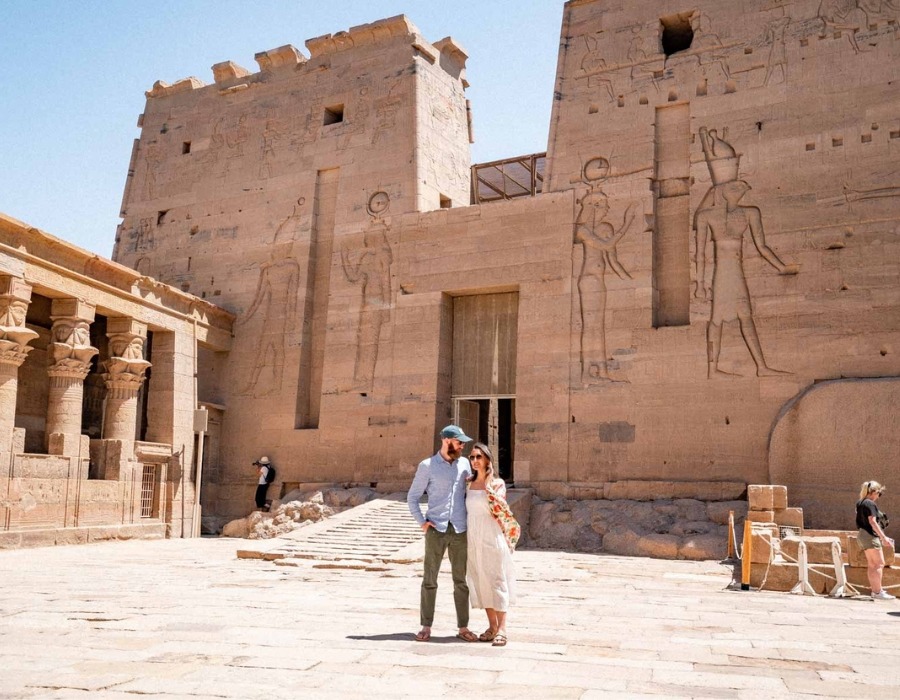
Which Parts of Egypt Are Commonly Included in Tourist Itineraries?
The standard tourism route normally concentrates on a relatively small part of Egypt’s geography.
Typical itineraries include Cairo, Giza, Luxor, Aswan, Abu Simbel, the Nile Valley and Red Sea destinations such as Hurghada or Sharm El Sheikh.
For first-time visitors, this creates a practical advantage: the country’s principal attractions are connected through an established tourism infrastructure of airports, hotels, licensed guides, tour operators, cruise vessels and organized transfers.
Travelers deciding how to combine these destinations can use our plan a trip to Egypt guide before building a final route.
The safety question changes once an itinerary moves beyond this standard corridor into remote deserts, border regions or parts of Sinai. Those journeys require closer examination of current regional advisories and, in some cases, permits or licensed operators.
Is Cairo Safe to Visit in 2027?
Cairo is an established tourist destination, but travelers should use normal major-city precautions and remain aware of current national security advice.
Cairo is Egypt’s capital and the main arrival point for many international travelers. It contains major museums, Islamic monuments, Coptic sites, hotels, restaurants and transportation hubs.
Current U.S. guidance describes crime levels in Cairo and Alexandria as moderate and says crimes against foreigners are commonly opportunistic offenses such as purse snatching and pickpocketing. It also warns travelers about harassment, overcharging and scams in tourist areas.
The UK says Egypt’s overall crime rate is generally low but advises visitors to take sensible precautions. It specifically cautions against scammers and touts in tourist areas.
For most visitors, the everyday challenges of Cairo are more likely to involve traffic, persistent sellers, pricing disagreements, crowded areas or transportation decisions than serious violent crime.
Useful precautions include keeping valuables secure, avoiding poorly lit unfamiliar areas late at night, arranging transportation through a reputable provider or recognized app, and avoiding demonstrations or political gatherings.
Travelers planning sightseeing can review our Cairo attractions guide to organize sites geographically rather than making unnecessary journeys across the city.
Is Cairo Safe to Walk Around?
Walking around tourist-oriented districts during normal sightseeing hours is common, but Cairo requires stronger pedestrian awareness than many visitors expect.
Road traffic is one of the most practical risks.
The UK warns that accidents are common in Egypt because of variable road conditions, dangerous driving and poor traffic-law enforcement.
That means a traveler can feel personally secure in a neighborhood while still needing considerable caution when crossing roads.
Use pedestrian crossings where practical, follow local signals when available and avoid assuming vehicles will automatically yield.
At night, use more discretion. Busy, well-known areas are different from quiet streets in an unfamiliar district. Solo travelers—particularly women—should think carefully about late-night walking and transport arrangements.
Is New Cairo Safe for Tourists?
New Cairo is a modern urban district east of central Cairo containing residential compounds, hotels, restaurants, shopping centers and business areas.
Visitors staying there should apply the same general Cairo precautions: use reputable transportation, keep valuables secure, monitor current advice and allow enough transfer time because distances between New Cairo, central Cairo and Giza can be substantial.
It is generally more useful to choose accommodation according to your itinerary than to select an area solely because it sounds safer. Travelers spending most of their time around Downtown Cairo, Islamic Cairo or Giza may find a distant New Cairo hotel inconvenient despite its modern infrastructure.
Our where to stay in Cairo guide explains the main accommodation areas and their practical differences.
Is Giza Safe to Visit in 2027?
Giza is one of Egypt’s principal tourism areas and receives large numbers of international visitors, but the Pyramids area also requires awareness of touts, unofficial services and transportation arrangements.
Giza forms part of Greater Cairo and contains the Giza Plateau, including the Great Pyramid of Khufu, Pyramid of Khafre, Pyramid of Menkaure and Great Sphinx.
Visitors commonly experience a visible security presence around major archaeological sites. However, official travel advice still recommends being alert in tourist areas and watching for scams or aggressive selling.
One of the most useful ways to reduce confusion is to understand what you actually want to see before arriving. Our guide to things to do in Giza explains the area’s key attractions.
Use authorized entrances and ticket offices, agree clearly on prices for optional services and avoid accepting unsolicited offers you do not want.
Is It Safe to Visit the Pyramids of Giza?
The Pyramids of Giza are part of Egypt’s established tourism infrastructure and are visited by international travelers every day, but normal tourist-site precautions still apply.
Security checks should not be interpreted as evidence that an incident is expected; they form part of the security infrastructure protecting high-profile archaeological sites.
The more common traveler concerns at the plateau involve persistent sellers, unofficial guiding offers, camel or horse pricing and confusion over what is included in a service.
Before paying for anything optional:
-
confirm exactly what is included;
-
agree on the complete price;
-
ask whether the amount is per person or total;
-
use official ticketing channels for archaeological admission;
-
keep cash and valuables secure;
-
do not allow anyone to pressure you into an activity.
A private guide is not mandatory simply for safety, but some travelers prefer one because it reduces logistical confusion and makes transport between the plateau’s main monuments easier.
Is It Safe to Go Inside the Pyramids?
Going inside a pyramid is a different question from the general security situation.
The main considerations are physical rather than criminal: confined spaces, steep passages, heat, low ceilings and limited ventilation may make pyramid interiors uncomfortable for travelers with mobility problems, claustrophobia, respiratory conditions or certain health concerns.
If entering a pyramid is important to your trip, read our guide explaining whether you can go inside the pyramids before deciding.
Access rules and ticket availability can change, so verify current arrangements when you visit.
Is Luxor Safe to Visit in 2027?
Luxor remains one of Egypt’s primary archaeological tourism centers and is specifically excluded from some UK regional advise-against zones, although nationwide precautions still apply.
Luxor is located in Upper Egypt and contains major archaeological sites such as Karnak Temple, Luxor Temple, the Valley of the Kings and Hatshepsut Temple.
The UK FCDO’s current Western Desert warning specifically lists Luxor and the Valley of the Kings among the exceptions to its advise-against area west of the Nile Valley.
Australia nevertheless advises travelers to exercise a high degree of caution throughout Egypt, including Luxor, as part of its national advisory.
These positions are not contradictory. One government may classify an entire country at an elevated caution level while distinguishing particularly high-risk zones inside it.
Visitors should therefore avoid calling Luxor “100% safe.” A more accurate description is that Luxor remains an established tourism destination that falls outside several of the strongest area-specific warnings currently issued by major governments.
For trip planning, our Luxor attractions guide explains the city’s main archaeological sites.
Is Luxor Safe for Americans?
American travelers are subject to the same U.S. State Department country-level Level 2 – Exercise Increased Caution advisory as other U.S. citizens traveling elsewhere in Egypt.
The current U.S. “Do Not Travel” warnings identify Northern and Middle Sinai, Egyptian border areas and the Western Desert rather than specifically listing Luxor as a Level 4 destination.
American visitors should enroll in the Smart Traveler Enrollment Program if appropriate, monitor embassy communications, avoid demonstrations and maintain travel insurance that fits their itinerary.
Is Aswan Safe for Tourists?
Aswan is another important Upper Egyptian tourism destination and a principal starting or finishing point for Nile cruises.
The UK’s current Western Desert warning specifically lists Aswan and Abu Simbel among exceptions to the broader advise-against area.
Aswan is connected to attractions including Philae Temple, the Aswan High Dam, the Unfinished Obelisk and Nubian cultural sites.
Travelers interested in extending their stay beyond a cruise can use our Aswan attractions guide to organize sightseeing.
Normal precautions remain relevant, particularly around transportation, heat, boat operators and long road journeys.
Is Alexandria Egypt Safe to Visit?
Alexandria is Egypt’s major Mediterranean city and another established domestic and international tourism destination.
Visitors should apply major-city precautions concerning belongings, taxis, traffic and unfamiliar neighborhoods.
It is also important not to describe Alexandria as free of security risk. The UK FCDO records serious isolated attacks in Alexandria in recent years, including fatal incidents involving foreign nationals, while simultaneously stating that the overall crime rate in Egypt is generally low.
The correct interpretation is that isolated security incidents do not automatically define the everyday experience of an entire city, but they are one reason official advice continues to recommend situational awareness.
For destination planning, see our Alexandria attractions guide.
Is Hurghada Safe to Visit in 2027?
Hurghada remains a major Red Sea resort destination, but travelers should consider both general security and activity-specific risks such as diving, boat excursions and road transport.
The UK describes travel to the Red Sea tourist areas of southern Sinai as generally low risk and notes that security forces conduct routine checks to protect resorts including Sharm El Sheikh, Hurghada and Marsa Alam.
However, being in a resort destination does not remove other risks.
The UK has warned about serious incidents on Red Sea diving boats and notes that safety standards can vary considerably between operators. It advises travelers to use reputable providers and to obtain a proper safety briefing.
Travelers planning beach time, diving or excursions can read our Hurghada destination guide.
Is Sharm El Sheikh Safe in 2027?
Sharm El Sheikh occupies an important position in Egypt safety discussions because South Sinai and North Sinai should not be treated as though they are the same travel zone.
The UK currently advises against travel to North Sinai and against all but essential travel to the northern part of South Sinai beyond a specified boundary, while stating that travel to Red Sea tourist areas in southern Sinai is generally low risk.
Australia lists Sharm El Sheikh under its “exercise a high degree of caution” category while applying stronger warnings to other parts of Sinai.
This geographic distinction is critical.
A headline saying “Sinai travel warning” does not necessarily mean the same advisory applies to every resort on the Sinai Peninsula.
Travelers considering a beach holiday can use our Sharm El Sheikh guide for destination-specific planning.
Is Dahab Safe in 2027?
Dahab is a Red Sea destination on the Gulf of Aqaba known for diving, snorkeling and a comparatively relaxed tourism atmosphere.
Travelers should check current South Sinai advice carefully because advisory boundaries can be detailed and may change.
The U.S. specifically tells travelers to remain cautious and check current information when traveling in Southern Sinai, including Dahab.
Diving and desert excursions should be booked through reputable providers, and travelers venturing away from established coastal areas should confirm whether permits, organized transportation or additional restrictions apply.
Our Dahab travel guide provides additional destination context.
Is Marsa Alam Safe for Tourists?
Marsa Alam is one of Egypt’s principal Red Sea tourism areas, particularly for diving, snorkeling and resort holidays.
The UK includes Marsa Alam when describing security measures protecting major Red Sea resort areas.
Activity risk can matter as much as general destination security. Divers and boat passengers should assess the operator, vessel condition, emergency procedures, insurance and safety briefing rather than assuming all excursions follow identical standards.
Our Marsa Alam guide covers the destination itself.
What Parts of Egypt Should Tourists Be Most Cautious About?
Current government advice consistently shows that risk varies significantly by geography.
North Sinai carries some of the strongest warnings. The U.S. says not to travel to Northern and Middle Sinai because of terrorism, while the UK advises against all travel to North Sinai.
International border regions also receive strong warnings because they can be military-controlled, affected by neighboring conflicts or difficult for consular authorities to access.
The U.S. says travelers should not visit Egyptian border areas because of security risks and military restrictions.
Parts of the Western Desert require particularly careful itinerary planning. Government advice differs regarding the exact boundaries and exceptions. This is precisely why travelers should use their own government’s current map rather than relying on an old blog post.
Australia, Canada, the UK and the United States all distinguish between specific established oasis/desert routes and higher-risk territory, but they do so in different ways.
Anyone considering remote desert travel should check the current advice specifically for that route and use an appropriately licensed operator when required.
Why “Egypt Is Safe” and “Egypt Is Dangerous” Are Both Poor Answers
Both statements oversimplify the situation.
Saying “Egypt is completely safe” ignores terrorism risks, border restrictions, harassment, road accidents, regional instability and official advise-against areas.
Saying “Egypt is dangerous” ignores the geographic distinction between those areas and the established tourism centers visited every day.
Travel risk has several dimensions:
| Risk | Typical relevance to a standard tourist |
|---|---|
| Regional conflict escalation | Low-frequency but potentially high-impact; monitor official advice |
| Terrorism | Officially recognized risk; stay alert around potential targets |
| Border/military zones | Major concern if itinerary enters restricted regions |
| Street crime | Generally manageable with standard precautions |
| Scams and overcharging | Common practical concern around tourist areas |
| Harassment | Important concern, particularly for women |
| Road safety | Significant practical issue |
| Diving/boat safety | Relevant to Red Sea travelers |
| Heat and dehydration | Important seasonally, especially in Upper Egypt |
| Travel disruption | Can arise from regional tension or airline changes |
The safest approach is therefore risk management rather than reassurance.
Is Egypt Dangerous for Tourists?
Most visitors should distinguish between high-impact security risks and high-frequency everyday problems.
A terrorist incident is a serious risk addressed by official advisories, but it is not what the average traveler should expect to encounter daily.
By contrast, overcharging, persistent selling, taxi disputes, unwanted attention, road conditions and minor scams are more likely to affect the everyday visitor experience.
The U.S. warns about opportunistic theft, harassment, overcharging and aggressive vendors, while the UK specifically warns about scammers and touts at tourist sites.
Understanding this distinction produces better travel decisions.
You should prepare for the common problems while maintaining awareness of the less frequent but more serious security issues addressed in government guidance.
Is Egypt Safe for Americans in 2027?
Americans can travel to Egypt, but they should follow the U.S. State Department’s current Level 2 advisory and avoid areas carrying Level 4 restrictions.
The current State Department advisory says U.S. citizens should exercise increased caution in Egypt because of terrorism, crime, health and other risks. It identifies Northern and Middle Sinai, the Western Desert and Egyptian border areas as higher-risk locations.
For most Americans considering a conventional itinerary—Cairo, Giza, Luxor, Aswan and a Red Sea resort—the important task is ensuring that the exact route remains consistent with current advice.
Americans should also consider enrolling in STEP, retain copies of important travel documents and have a contingency plan for unexpected transportation or security changes.
Travelers building a U.S.-origin itinerary may also compare the practical logistics in our Egypt tour packages from the USA.
Is Egypt Safe for British Travelers?
Current UK advice does not tell British travelers to avoid Egypt as a whole.
Instead, the FCDO applies region-specific restrictions. It also states that approximately one million British nationals travel to Egypt annually and most visits are trouble-free.
British travelers should pay particular attention to travel insurance because the FCDO warns that insurance may be invalidated if a traveler enters an area against its advice.
That point matters for anyone considering desert, border or Sinai itineraries outside standard tourist zones.
Is Egypt Safe for Solo Travelers?
Egypt can be visited independently, but the experience is more demanding for solo travelers than an organized itinerary.
A solo visitor manages airport arrival, transport negotiation, tickets, unfamiliar neighborhoods, vendors and changes in local plans without assistance from a companion or tour representative.
That does not make solo travel inherently unsafe, but it increases the value of preparation.
Solo travelers should book their first accommodation before arrival, arrange a reliable airport transfer if arriving late, keep mobile connectivity available, share their itinerary with someone at home, avoid unnecessary isolated areas after dark and research transportation before each journey.
Travelers comparing independent and organized options can see our Egypt tours for solo travellers.
Is Egypt Safe for Solo Female Travelers?
Women do travel to Egypt alone, but official government advice makes clear that harassment and sexual assault are genuine concerns requiring additional precautions.
The UK reports sexual assaults involving foreign visitors and advises female travelers to exercise caution when traveling alone, particularly at night and in taxis. It recommends using reputable excursion providers and sharing taxi details and live location when traveling alone.
Australia similarly warns that women, particularly foreign nationals, are frequently subjected to unwelcome male attention.
Practical precautions include choosing well-reviewed accommodation, avoiding isolated places late at night, using recognized transportation services, sharing ride information with a trusted contact and refusing unwanted interaction firmly.
Women should not be told that harassment is “just part of the culture” or something they must accept. If a situation feels unsafe, leave it and seek assistance from hotel management, police, tourism authorities or trusted local contacts.
Is Egypt Safe for Families With Children?
Egypt is a major family tourism destination, but parents need to consider several practical safety issues beyond crime.
Young children can be affected by heat, dehydration, long sightseeing days, unfamiliar food and heavy traffic. Crowded archaeological sites can also make supervision harder.
The UK specifically advises travelers not to leave children unaccompanied and notes reports of sexual assault involving minors.
Choose realistic daily schedules and reliable transportation, and supervise children closely around pools, boats, roads and crowded attractions.
Families designing a child-friendly itinerary can compare options through our Egypt family tours.
Is Egypt Safe for Seniors?
Many senior travelers visit Egypt successfully, but physical conditions require planning.
Archaeological sites can involve uneven surfaces, stairs, heat, long walks and limited shade. Some tombs and pyramid interiors contain steep or confined passages.
Transportation comfort also matters because road journeys can be long.
Senior travelers should consider slower itineraries, centrally located hotels, private transportation when appropriate, travel insurance that covers existing health needs and a medical consultation before traveling if they have relevant conditions.
Accessibility requirements should be assessed site by site. Travelers with mobility needs can review our Egypt wheelchair accessible tours when designing a more practical itinerary.
How Safe Is Egypt for Tourists at Night?
There is no useful countrywide rule saying that every place is safe or unsafe after dark.
Busy resort promenades, hotel districts and central restaurant areas can feel very different from quiet streets in an unfamiliar neighborhood.
A sensible rule is to become more conservative with movement after dark.
Use trusted transportation for longer journeys, avoid poorly lit or isolated streets, limit visible valuables and know the address of your hotel in both English and a form a local driver can identify.
Female solo travelers should apply additional caution because official government advice specifically highlights nighttime and taxi-related risks.
Is Cairo Safe to Walk Around at Night?
Cairo remains active late into the evening, and many commercial areas stay busy after dark. However, a busy city is not automatically risk-free.
Visitors unfamiliar with a district should not assume that a route that looks short on a map is pleasant or practical on foot.
Traffic, road crossings, harassment and getting lost can be more relevant concerns than street robbery.
For late journeys, reputable ride-hailing services, hotel-arranged cars or pre-booked transportation can reduce uncertainty.
Are Taxis Safe in Egypt?
Taxi quality varies.
Australia advises travelers to be cautious with street-hailed taxis because scams and overcharging occur and recommends official taxis, hotel-arranged transport or reputable ride-hailing applications. Its current advice also notes assaults involving passengers, including foreigners.
Before entering a ride-hailing vehicle, compare the license plate, vehicle and driver against the app.
For conventional taxis, agree on how the fare will be determined before beginning the journey if there is any uncertainty.
Travelers who prefer to remove airport-arrival uncertainty can arrange Cairo airport transfers in advance.
Is Driving in Egypt Safe for Tourists?
For many international visitors, self-driving is not the easiest option.
The UK warns that road accidents are common because of variable conditions, dangerous driving and weak traffic-law enforcement, and advises against driving outside major cities and resorts at night.
Australia similarly describes road travel as potentially dangerous and points to poor conditions and high-speed driving.
Travelers who are uncomfortable with unfamiliar driving styles may be better served by domestic flights, organized transfers or professional drivers.
Are Trains Safe in Egypt?
Egypt’s rail system connects major cities, but travelers should recognize that railway accidents have occurred.
Both UK and Australian travel advice references rail accidents, while U.S. guidance is particularly cautious regarding public transportation.
Visitors deciding between train, flight and private road transfer should consider journey length, comfort, schedule and current official advice rather than choosing solely on price.
Is It Safe to Fly to Egypt in 2027?
Flying into Egypt is the standard way most international tourists arrive.
Cairo International Airport, Hurghada International Airport, Sharm El Sheikh International Airport, Luxor International Airport and other airports serve international or domestic routes.
The main 2027 uncertainty is not whether Egypt has functioning airports, but whether regional developments cause short-notice disruptions to particular routes.
Current Australian advice states that Middle East conflict can lead to airspace closures, flight delays, cancellations or diversions with little notice.
This does not mean that all flights to Egypt are cancelled. It means travelers should check their individual carrier and route near departure.
For an overview of arrival points, see our guide to airports in Egypt.
Are Flights to Egypt Cancelled?
There is no permanent countrywide rule saying flights to Egypt are cancelled.
Individual airlines can suspend, reroute or reschedule services because of operational or regional security conditions.
If you see news about Middle East airspace closures, check the airline operating your exact flight rather than assuming the announcement applies to Egypt.
Travelers should also check any transit country. A Cairo flight may still operate while the connecting route through another regional hub changes.
Is a Nile Cruise Safe?
A Nile cruise between Luxor and Aswan is a standard component of many Egypt itineraries, but vessel safety still depends on the operator and boat.
Travelers should check life-saving equipment, follow safety instructions and book through reputable cruise providers.
The UK’s travel advice notes that accidents have occurred on river and sea transportation where overcrowding or poor safety standards were involved.
A cruise should therefore be assessed like any other tourism service: vessel condition, licensing, emergency procedures and company reputation matter.
Is the Red Sea Safe for Diving and Snorkeling?
The Red Sea is internationally known for diving and snorkeling, but aquatic activities carry risks separate from terrorism or street crime.
The UK reports serious incidents involving diving boats and tours and warns that safety and insurance standards vary between operators. It recommends reputable vendors, proper safety briefings and compliance with insurance depth limits.
Travelers should verify equipment quality, guide qualifications, emergency oxygen availability and vessel safety rather than selecting a provider only because it is cheaper.
Shark incidents are rare, but temporary beach or dive-site restrictions should always be respected.
Is Desert Travel in Egypt Safe?
Desert travel requires more planning than city sightseeing.
Government advisories make important distinctions between established desert routes and other parts of the Western Desert.
The U.S. advises against Western Desert travel except with a professionally licensed tour company. The UK, Canada and Australia publish their own geographic exceptions and restrictions.
This means a traveler should never assume that an Instagram photo or old trip report proves a remote route remains open.
Desert travelers need an appropriate vehicle, experienced driver, sufficient water, communications, emergency provisions and confirmation that the route is permitted.
Are the White Desert and Bahariya Safe?
Government advice concerning the White Desert, Black Desert and Bahariya is unusually detailed and can vary between countries.
The UK currently excludes the White Desert, Black Desert and several oasis towns from its broader Western Desert advise-against zone, while the U.S. says Western Desert travel should only be undertaken with a professionally licensed tour company.
Australia also warns that safari and camping permissions can change.
Anyone considering this itinerary in 2027 should verify conditions specifically for their planned date rather than assuming today’s rules will still apply.
What About Sinai?
Sinai is one of the clearest examples of why geographic precision matters.
North Sinai and Sharm El Sheikh should not be discussed as one safety zone.
North Sinai currently carries strong advise-against warnings from multiple governments because of terrorism and military activity.
Southern Red Sea resort zones receive different treatment.
Travelers visiting Sharm El Sheikh or Dahab should therefore read the South Sinai section of their own government’s advice rather than simply searching “Is Sinai safe?”
The itinerary matters.
Are Terrorist Attacks a Risk in Egypt?
Yes. Terrorism remains part of official travel advice and should not be minimized.
The UK says terrorists are likely to try to carry out attacks in Egypt and that attacks could be indiscriminate, including at locations visited by foreign nationals. It notes that security measures are in place at tourist sites.
The U.S. similarly identifies terrorism as one of the reasons for its Level 2 advisory.
Visitors should stay alert at large gatherings and high-profile locations, follow local authorities and avoid areas where a security incident has occurred.
The correct approach is awareness—not panic and not denial.
Does the Israel-Gaza Conflict Make Egypt Unsafe?
The effect depends strongly on geography and the wider regional situation.
Egypt borders both Israel and Gaza, but Cairo, Luxor, Aswan and Hurghada are geographically separate from the Gaza border.
However, regional conflict can affect security conditions, borders, diplomatic facilities and air travel even when fighting is not occurring in Egypt’s primary tourism corridor.
The UK notes that international borders involving Israel and Palestine can close at short notice, including the Taba crossing, while Australia’s advice emphasizes the possibility of rapid regional escalation and transportation disruption.
The correct 2027 strategy is to monitor official updates rather than assuming either that neighboring conflict automatically makes all Egypt unsafe or that events elsewhere can have no effect on Egypt travel.
Should Tourists Avoid Demonstrations in Egypt?
Yes.
Multiple government advisories recommend avoiding demonstrations and political gatherings.
The U.S. warns that people have been detained even when near protests and notes that criticizing Egypt or its allies through social media can lead to legal problems.
The UK similarly says the political environment is restrictive and advises travelers to avoid demonstrations and large gatherings.
Visitors should not participate in political demonstrations or assume local laws concerning protest and public expression operate the same way as in their home country.
What Are the Most Common Scams in Egypt?
The most practical travel problems are often pricing and solicitation issues rather than serious crime.
Potential problems include inflated taxi fares, unofficial guiding offers, unsolicited assistance followed by demands for payment, confusing souvenir pricing and persistent selling around major attractions.
The U.S. specifically warns about overcharging, scams, aggressive vendors and “free” gifts that later lead to demands for money.
Simple rules reduce many problems:
-
Ask for prices before accepting a service.
-
Confirm whether a price is total or per person.
-
Use official attraction entrances.
-
Keep small bills available.
-
Decline unwanted offers clearly.
-
Avoid handing your phone, passport or wallet to strangers.
-
Do not assume an unsolicited favor is free.
-
Book complex excursions through reputable providers.
Firm politeness is normally more useful than confrontation.
Is Pickpocketing Common?
The UK’s current guidance says pickpocketing is rare in Egypt, while the U.S. describes crimes against foreigners as often opportunistic, including purse snatching and pickpocketing.
These statements are compatible: opportunistic theft may be among the more common crime categories affecting visitors without necessarily being widespread.
Keep passports and large amounts of cash secured, zip bags in crowded places and avoid leaving phones unattended.
What Should Women Wear in Egypt for Safety?
Clothing cannot guarantee safety and should never be presented as a way to blame victims of harassment.
However, modest clothing is consistent with local customs and is particularly appropriate at mosques, churches, rural areas and traditional neighborhoods.
The UK advises visitors to dress modestly, especially in rural areas, mosques and markets.
In Red Sea resorts, clothing norms are more relaxed within hotels and beach areas.
A practical packing strategy includes lightweight clothing that covers shoulders and knees when needed, a scarf for religious sites, comfortable shoes and sun protection.
For a complete checklist, use our what to pack for Egypt guide.
Is Egypt Safe for LGBTQ+ Travelers?
LGBTQ+ travelers should be particularly careful regarding public behavior, dating apps and online communication.
The UK notes that same-sex sexual activity is not explicitly criminalized but that Egyptian authorities have prosecuted LGBTQ+ people using other laws and that public acceptance of same-sex relationships is limited.
Travelers should review specialist guidance from their government before visiting and make their own risk assessment.
Is Photography Safe in Egypt?
Photography is generally part of the tourist experience, but sensitive locations are a serious exception.
Do not photograph military facilities, security installations or other restricted infrastructure.
The UK warns about photography restrictions involving military property, government infrastructure and certain individuals.
When uncertain, ask.
Travelers using professional filming equipment or drones should research regulations before arrival rather than assuming consumer equipment is automatically permitted.
Can Tourists Fly Drones in Egypt?
Do not bring or operate a drone without confirming the applicable authorization requirements.
The UK’s current Egypt advice states that importing, using or producing drones requires prior Egyptian Ministry of Defence permission and warns of serious penalties for unauthorized use.
Because regulations can change, travelers should verify rules immediately before travel.
What Health Risks Should Travelers Consider?
Travel safety is broader than crime and terrorism.
The CDC recommends travelers review routine vaccinations and destination-specific health advice before visiting Egypt and suggests consulting a healthcare professional at least a month before travel when possible.
Heat and dehydration can become significant practical concerns, particularly during long outdoor sightseeing days in Luxor, Aswan and desert areas.
Drink safe water, use sun protection, pace archaeological visits and take medical needs into account when planning physically demanding excursions.
Travelers with chronic health conditions should carry adequate medication and documentation and understand how their insurance handles medical treatment and evacuation.
Is Tap Water Safe to Drink?
Most international travelers choose bottled or appropriately treated water rather than relying on unfamiliar tap water.
Sealed bottled water is widely available throughout tourism destinations.
Hydration is particularly important during archaeological sightseeing because heat exposure can build gradually even when travelers do not initially feel uncomfortable.
Avoiding dehydration is one of the simplest safety measures you can take in Egypt.
Do I Need Travel Insurance for Egypt?
Travel insurance is strongly advisable.
A useful policy should reflect the actual itinerary rather than merely the country name.
A traveler planning a city holiday has different requirements from someone scuba diving, taking a hot-air balloon flight or traveling into desert areas.
The UK’s FCDO specifically warns that insurance may be invalidated if a traveler goes against its travel advice.
Check:
-
medical coverage;
-
emergency evacuation;
-
trip cancellation;
-
baggage;
-
adventure activities;
-
scuba-diving depth limits;
-
desert excursions;
-
pre-existing medical conditions;
-
exclusions relating to official travel advisories.
Do this before paying significant non-refundable travel costs.
Do I Need a Visa to Visit Egypt in 2027?
Visa requirements depend on nationality and can change, so travelers should verify their own eligibility rather than rely on a generic statement.
Egypt’s official Ministry of Interior e-Visa portal currently lists numerous nationalities eligible to apply electronically, including the United States, United Kingdom, Australia, New Zealand and many European countries. The official portal advises eligible applicants to submit an e-Visa application at least seven days before departure.
The portal currently lists a passport validity requirement of at least six months from arrival for e-Visa applicants, but travelers planning for 2027 should verify this again before departure.
For more detail, see our entry to Egypt guide.
Is It Safe to Travel to Egypt Without a Tour?
Yes, independent travel is possible, but some visitors will find an organized trip easier.
A tour cannot eliminate all risks. What it can do is reduce logistical uncertainty.
A reputable local operator can arrange drivers, licensed guides, domestic connections, hotel transfers and permitted desert activities.
That can be particularly useful for first-time travelers, families, seniors or visitors with limited time.
Independent travelers who research transportation, neighborhoods, tickets and current government advice can also visit the principal destinations successfully.
The decision should be based on confidence and travel style, not fear.
Is a Private Tour Safer Than Independent Travel?
A private tour is not automatically safer in every respect, but it can reduce several common problems.
Having a known driver can reduce taxi negotiation and transportation uncertainty. A licensed guide can explain official site procedures and help visitors distinguish legitimate services from unsolicited offers. An operator can also reorganize an itinerary if local access or transportation changes.
Travelers who value that additional structure can compare Egypt private tour packages.
Choose providers based on licensing, transparency and service quality rather than promises that nothing can ever go wrong.
How Should I Plan a Safer Egypt Itinerary?
A well-designed itinerary reduces unnecessary exposure to fatigue, confusing transport and remote travel.
For a first visit, a straightforward route might be:
Cairo and Giza → Luxor → Aswan → optional Red Sea stay.
This keeps the journey within Egypt’s established tourism network while covering many of the country’s principal attractions.
The itinerary can be completed using domestic flights, organized road transfers, trains and Nile cruise services depending on preference.
Avoid adding remote destinations simply because they look close on a map. Egypt is large, and road distances can be substantial.
Our Egypt travel tips provide further practical planning information.
A Practical Egypt Safety Checklist for 2027
Before traveling, check your government’s official Egypt advisory and compare it with every destination in your itinerary.
Make digital and paper copies of your passport, visa and insurance.
Purchase insurance that covers your planned locations and activities.
Confirm your airport transfer, particularly after a late arrival.
Keep emergency contacts available offline.
Use reputable transportation.
Avoid political demonstrations.
Keep valuables secured rather than openly displayed.
Ask the price before accepting optional tourist services.
Choose reputable diving, balloon, desert and boat operators.
Follow restrictions regarding military sites and photography.
Do not use drones without required permission.
Carry necessary prescription medication.
Stay hydrated and protect yourself from heat.
Share your itinerary with a trusted contact.
Check your airline shortly before departure.
Recheck official advice immediately before travel.
Emergency Numbers in Egypt
Travelers should save important numbers before arriving.
The UK’s current guidance lists 126 for Tourist Police when reporting crime. Australian government guidance lists 122 for police and 123 for medical emergencies.
Travelers should also save their embassy or consulate’s emergency contact details.
Do not depend entirely on internet access. Keep critical information available offline.
Which Official Sources Should Travelers Check Before Going?
For safety information, prioritize official government sources over social-media posts, forum comments or old travel blogs.
U.S. citizens should consult the U.S. Department of State’s Egypt Travel Advisory. U.S. Department of State — Egypt Travel Advisory
British travelers should check the FCDO Egypt travel advice, including its detailed regional map. UK FCDO — Egypt Travel Advice
Australians should use Smartraveller. Smartraveller — Egypt Travel Advice
Canadians should check Canada’s official travel advice. Government of Canada — Egypt Travel Advice
For health preparation, travelers can consult the CDC Egypt traveler page. CDC — Egypt Traveler View
Eligible travelers researching electronic visas should use Egypt’s official Ministry of Interior portal rather than an unofficial visa reseller. Official Egypt e-Visa Portal
When Should You Reconsider an Egypt Trip?
Reconsider the itinerary if your government changes the destination to an advise-against level that affects your actual route.
You should also reassess plans if your insurer will no longer cover the journey, your airline suspends service, local authorities close the destination, a serious security incident affects the area you intend to visit or a medical condition makes the planned activities inappropriate.
Changing one part of an itinerary does not necessarily mean abandoning the entire country.
For example, a warning affecting a remote border region does not automatically mean Cairo or Luxor has the same status.
Follow the geography.
When Is Egypt a Good Choice for a Traveler?
Egypt can be a good choice for travelers who want archaeological sites, museums, Nile scenery, desert landscapes and Red Sea resorts and who are comfortable following sensible travel precautions.
It is especially straightforward for visitors willing to use organized transfers between major destinations and to monitor official advice.
Travelers expecting every environment to operate exactly like Western Europe or North America may experience a greater cultural adjustment, particularly around traffic, street selling, negotiation and social customs.
Preparation matters.
Who May Prefer a More Structured Tour?
A structured itinerary may be especially useful for:
-
first-time visitors;
-
families with children;
-
senior travelers;
-
people concerned about transportation;
-
travelers with accessibility requirements;
-
solo travelers who prefer additional support;
-
visitors with limited vacation time;
-
travelers combining Cairo, Luxor, Aswan and a Nile cruise;
-
people planning remote desert excursions.
The objective is not to create fear. It is to remove unnecessary logistical uncertainty.
Plan Egypt Around the Route, Not Just the Attractions
If you are considering Egypt in 2027, begin with the destinations you actually want to visit and compare each one against current official advice.
Egypt Time Travel can organize private transportation, licensed guiding and a route around Cairo, Giza, Luxor, Aswan, Nile cruises and Red Sea destinations while adjusting the program to your dates and travel style.
A customized itinerary is particularly useful when you want to combine several parts of Egypt without arranging every transfer independently.
Frequently Asked Questions About Egypt Travel Safety in 2027
Is Egypt safe to visit in 2027 right now?
Based on official information available in October 2026, Egypt remains open to international tourism, but several governments advise elevated caution and maintain stronger warnings for specific regions. Travelers should check the situation again immediately before their 2027 trip because conditions can change.
Is Egypt safe for tourists from the USA?
U.S. citizens can visit Egypt, but the current U.S. State Department advisory is Level 2 – Exercise Increased Caution. Northern and Middle Sinai, the Western Desert and border regions carry stronger restrictions.
Is Cairo dangerous for tourists?
Cairo is a functioning major tourism city rather than a place tourists are universally told to avoid. Visitors should nevertheless watch for scams, opportunistic theft, harassment and traffic risks and avoid demonstrations.
Are the Pyramids safe to visit?
The Giza Pyramids are part of Egypt’s established tourism network. Travelers should use official entrances and ticketing channels and be cautious with persistent vendors, unofficial guides and unclear camel or horse prices.
Is Luxor Egypt safe for tourists?
Luxor remains a major tourism center and is outside some of the strongest region-specific restrictions currently applied by major governments. Visitors should still follow countrywide security, road and personal-safety advice.
Is it safe to visit Egypt as a woman alone?
Solo female travel is possible, but government advice specifically warns about harassment and sexual assault. Women traveling alone should use trusted transportation, choose reputable accommodation and excursions, and take additional precautions at night.
Can I walk around Cairo alone?
Walking around Cairo is common, particularly in busy central and tourism districts, but visitors should be cautious around traffic, crowded places and unfamiliar neighborhoods. Solo nighttime walking deserves more caution.
Is Egypt safe for a family holiday?
Many families visit Egypt, particularly Cairo, Luxor, Nile cruise routes and Red Sea resorts. Parents should supervise children carefully and plan around heat, traffic, swimming, boat safety and long sightseeing days.
Is Sharm El Sheikh safe in 2027?
Sharm El Sheikh should be assessed separately from North Sinai. Current official advice from several countries applies different risk levels to southern Red Sea resort zones and North Sinai. Travelers should verify the exact South Sinai advice before departure.
Is Hurghada safe for tourists?
Hurghada remains a principal Red Sea resort area. Travelers should apply normal personal-security precautions and pay particular attention to boat, diving and excursion-provider safety.
Is it safe to travel through Egypt’s Western Desert?
Not without checking the specific route. Official advice differs considerably according to location, and some governments advise avoiding large areas or traveling only with licensed tour companies. Verify the exact route immediately before booking.
Do I need travel insurance for Egypt?
Travel insurance is strongly recommended. Check medical, evacuation, cancellation and activity coverage and confirm that your policy remains valid for every place included in your itinerary.
Conclusion: Is Egypt Safe to Visit in 2027?
For travelers following Egypt’s principal tourism routes, a 2027 trip can be a reasonable travel choice when planned with current official advice, appropriate insurance and normal precautions.
Cairo, Giza, Luxor, Aswan, the Nile Valley and Red Sea resorts are not equivalent to North Sinai, military border areas or remote parts of the Western Desert. Treating all of Egypt as one uniform security zone produces misleading advice in either direction.
The strongest answer to “Is Egypt safe?” is therefore not an unconditional yes.
It is this:
Understand where you are going, avoid locations subject to official advise-against warnings, choose reputable transportation and excursion providers, respect local laws, insure the real itinerary and check government advice again before traveling.
That gives a 2027 traveler a more useful framework than either fear-based headlines or unrealistic guarantees of complete safety.
