
Quick Answer: What Are the Most Important Celebrations and Festivals in Egypt?
Egypt’s major celebrations and festivals include Ramadan, Eid al-Fitr, Eid al-Adha, Coptic Christmas, Coptic Easter, Sham El-Nessim, Mawlid al-Nabi, and the Abu Simbel Sun Festival. Egypt also observes national holidays and hosts religious, cultural, artistic, and local festivals throughout the year. Travelers visiting Egypt in 2027 should confirm Islamic festival dates shortly before traveling because they follow the Hijri lunar calendar.
Celebrations and Festivals in Egypt in 2027
Celebrations and festivals in Egypt reflect thousands of years of religious, cultural, and social history. Some are nationwide holidays celebrated by millions of Egyptians, while others belong to particular religious communities, cities, archaeological sites, or local traditions.
For travelers, Egyptian festivals offer something different from the country’s famous temples, pyramids, tombs, and museums. They provide a chance to see living Egyptian culture through family gatherings, traditional foods, religious observances, street decorations, music, community events, and seasonal customs.
Egypt’s calendar combines Islamic celebrations, Coptic Christian holidays, national commemorations, traditional Egyptian festivals, and modern cultural events.
Some celebrations have fixed Gregorian dates. Coptic Christmas, for example, is celebrated on January 7, while the Abu Simbel solar alignment occurs on February 22 and October 22.
Other celebrations move through the Gregorian calendar.
Ramadan, Eid al-Fitr, Eid al-Adha, Islamic New Year, and Mawlid al-Nabi follow the Hijri lunar calendar. Their expected dates can be calculated years ahead, but travelers should wait for official Egyptian confirmation before treating a projected date as final.
Egypt’s festival traditions also reflect the relationship between modern Egyptian society and the civilizations that came before it. Travelers interested in that broader historical background can explore ancient Egyptian culture before visiting.
Egypt Festivals and Celebrations Calendar for 2027
The following calendar provides a practical overview for travelers planning a trip to Egypt in 2027.
| Festival or Celebration | Expected 2027 Timing | Type | What Travelers Can Expect |
|---|---|---|---|
| Coptic Christmas | January 7 | Christian / Public Holiday | Church services and family celebrations |
| Ramadan | Around February–March* | Islamic | Fasting, lanterns, iftar and active evenings |
| Abu Simbel Sun Festival | February 22 | Cultural / Archaeological | Sunrise solar alignment at Abu Simbel |
| Eid al-Fitr | Around March* | Islamic / Public Holiday | Prayer, family visits, sweets and domestic travel |
| Coptic Easter | May 2 | Christian | Church services and family celebrations |
| Sham El-Nessim | May 3 | Traditional / Public Holiday | Picnics, spring traditions and traditional foods |
| Eid al-Adha | Around May* | Islamic / Public Holiday | Prayer, family meals and charity |
| Holy Family Festivals | Mainly May–August depending on event | Christian / Cultural | Processions, hymns and community celebrations |
| Islamic New Year | Around June* | Islamic | Religious observance |
| July 23 Revolution Day | July 23 | National | Official commemorations |
| Mawlid al-Nabi | Around August* | Islamic / Public Holiday | Religious and popular celebrations |
| Nayrouz | Around September | Coptic | Coptic New Year |
| Armed Forces Day | October 6 | National | National commemoration |
| Abu Simbel Sun Festival | October 22 | Cultural / Archaeological | Second annual solar alignment |
*Projected Islamic dates should not be treated as final until confirmed through official Egyptian announcements.
If your travel dates overlap with a major holiday, confirm attraction opening hours, domestic transportation schedules, and hotel availability before finalizing your itinerary.
- 5% Off

8 Days Luxury Tours to Cairo, Luxor & Hurghada
From$2,260$1,0008 DaysDiscover Luxor's best attractions and spend some nights in Cairo and Hurghada for 8 days. Explore the pyramids of Giza and the most prominent landmarks […] 8 Days Cairo Tours with Nile Cruise by Train
From$1,0108 DaysTour the famous historical attractions in Cairo, and sail between Aswan and Luxor on an 8-day cruise. Explore one of the wonders of the ancient […]8 Days Cairo & Nile Cruise by Airplane
From$1,4608 DaysDiscover the best of ancient Egypt, from Cairo to Aswan with a fascinating 8-day trip to Cairo and Nile Cruise. Join us as we explore […]- 10% Off
8 Days Pyramids & Nile Cruise by Air- Top Travel Deal
8 DaysDiscover the best of ancient Egypt, from Cairo to Aswan with a fascinating 8-day trip to Cairo and Nile Cruise. Join us as we explore […] 5 Days in Cairo – Egypt Tour in December
From$5205 DaysBook a 5 Days Tour Package to Cairo in December and experience the best landmarks in Cairo, see the pyramids of Giza, Old Cairo, and […]4 Days Cairo Tour Package – Egypt December Package
From$4004 Days / 3 NightsBook 4 Days Tours to Cairo in December to visit the Pyramids of Giza, the Sphinx, and the Egyptian Museum in addition to Saqqara and […]8 Days Cairo, Luxor & Hurghada – Trips to Egypt
From$1,0608 DaysDiscover Luxor's best attractions and spend some nights in Cairo and Hurghada for 8 days. Explore the pyramids of Giza and the most prominent landmarks […]Holidays to Egypt in December – 8 Days Cairo & Nile Cruise
From$1,0108 DaysBook Egypt December Package and tour the famous historical attractions in Cairo, Aswan, and Luxor. Explore one of the wonders of the ancient world, then […]




What Festivals Are Celebrated in Egypt?
Egypt celebrates Islamic, Coptic Christian, traditional Egyptian, national, archaeological, and modern cultural festivals.
The main categories are:
-
Islamic celebrations such as Ramadan, Eid al-Fitr, Eid al-Adha, Islamic New Year, and Mawlid al-Nabi.
-
Coptic Christian celebrations including Coptic Christmas and Coptic Easter.
-
Traditional Egyptian celebrations, particularly Sham El-Nessim.
-
National holidays and commemorations.
-
Archaeological and cultural events such as the Abu Simbel Sun Festival.
-
Local religious festivals known as moulids.
-
Contemporary film, theater, music, arts, and cultural festivals.
This diversity reflects Egypt’s long historical development.
Modern Egyptian culture incorporates ancient Egyptian traditions, Coptic Christianity, Islamic heritage, Arab culture, Nubian traditions, Upper Egyptian customs, Mediterranean influences, and contemporary urban culture.
For visitors, understanding these relationships can make a trip considerably more meaningful than viewing Egypt exclusively through its archaeological monuments.
What Is the Most Important Holiday in Egypt?
There is no single holiday that represents every Egyptian equally because Egypt’s major celebrations have different religious, cultural, and national meanings.
For many Muslim Egyptians, Eid al-Fitr and Eid al-Adha are among the year’s most important religious celebrations. Ramadan is equally significant because it changes everyday routines for an entire month.
For Egypt’s Coptic Christian community, Coptic Christmas and Easter are major religious occasions.
Sham El-Nessim is different because it is widely celebrated across Egyptian society as a spring occasion and has traditions connected with Egypt’s ancient past.
For travelers, the answer depends on what type of celebration they want to experience.
| Traveler Interest | Important Egyptian Celebration |
|---|---|
| Islamic religious traditions | Ramadan |
| Major Muslim holiday | Eid al-Fitr / Eid al-Adha |
| Coptic Christian heritage | Coptic Christmas / Easter |
| Traditional Egyptian celebration | Sham El-Nessim |
| Archaeological event | Abu Simbel Sun Festival |
| National history | July 23 / October 6 |
| Local religious culture | Moulids |
Rather than trying to identify one “most important” Egyptian holiday, travelers should choose the celebration that best matches their cultural interests and travel dates.
Ramadan in Egypt
What Is Ramadan Like in Egypt?
Ramadan is the Islamic month of fasting and one of the most culturally distinctive periods to experience Egypt.
Muslims who observe Ramadan abstain from food and drink between dawn and sunset. The daily fast ends with the evening meal known as iftar, while suhoor is eaten before dawn.
For travelers, however, Ramadan involves much more than fasting.
The rhythm of Egyptian cities changes.
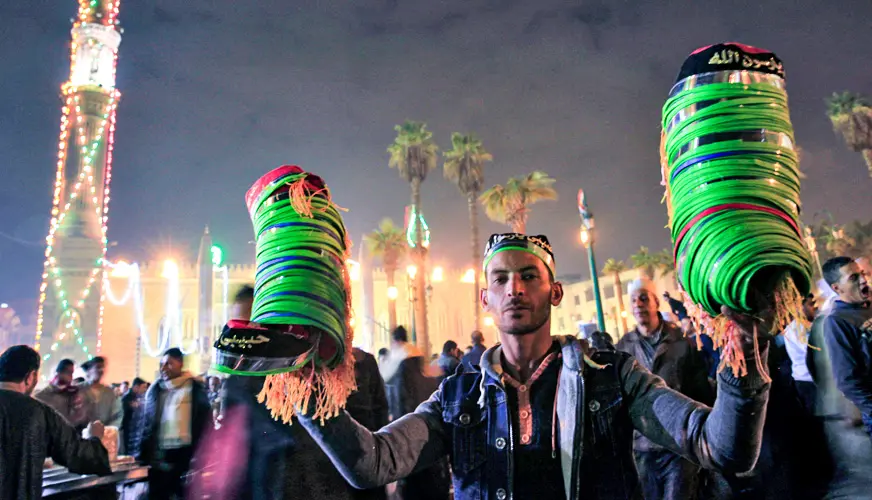
Before sunset, some areas can become quieter as people prepare for iftar. Around sunset, streets may temporarily become less active while families eat together. Later in the evening, restaurants, cafés, markets, and traditional neighborhoods often become lively.
Decorative lighting and traditional Ramadan lanterns known as fanous are also strongly associated with the season.
Cairo can be particularly interesting during Ramadan because the city’s historic Islamic neighborhoods combine mosques, medieval architecture, traditional markets, restaurants, cafés, and evening activity.
Travelers interested in understanding this heritage can explore Islamic Cairo and historic Al-Muizz Street during their stay.
When Is Ramadan in Egypt in 2027?
Ramadan is expected to begin in February 2027 and continue into March, but travelers should treat dates published far in advance as projections rather than final official dates.
The Islamic calendar is lunar, so Ramadan moves approximately 10 or 11 days earlier through the Gregorian calendar each year.
The exact beginning is associated with the Islamic lunar calendar and official religious determination in Egypt.
If experiencing Ramadan is an important reason for your trip, verify the final Egyptian dates before purchasing non-refundable flights or building a date-sensitive itinerary.
What Should Tourists Expect During Ramadan?
Tourists can travel throughout Egypt during Ramadan.
Major archaeological destinations, resorts, hotels, and tourism services continue operating, but some daily schedules can change.
Visitors should expect possible differences in:
-
attraction opening hours;
-
restaurant schedules;
-
traffic before sunset;
-
tour departure times;
-
domestic transportation;
-
evening activity;
-
working hours.
Traffic can become particularly heavy before iftar as people travel home to break the fast.
After sunset, parts of Cairo can remain active much later than during ordinary periods.
International hotels and tourism-oriented restaurants generally continue serving travelers, but local businesses may follow different schedules.
When planning complicated transportation days during Ramadan, allow additional flexibility and consult the Egypt travel tips guide before departure.
Eid al-Fitr in Egypt
How Is Eid al-Fitr Celebrated in Egypt?
Eid al-Fitr marks the end of Ramadan and is one of Egypt’s major Islamic celebrations.
The holiday begins with Eid prayer and continues with family visits, meals, gifts, recreation, and gatherings.
Children often receive new clothing or gifts, while families visit relatives and spend time together.
One of the most recognizable Egyptian Eid traditions is kahk.
Kahk are traditional cookies commonly covered with powdered sugar and associated particularly with Eid al-Fitr. Families may prepare them at home or buy them from bakeries before the holiday.
For travelers, Eid al-Fitr also matters because it can increase domestic tourism.
Egyptian families may travel to:
-
Alexandria;
-
Hurghada;
-
Sharm El-Sheikh;
-
Ain Sokhna;
-
North Coast destinations;
-
other resort areas.
Domestic flights, trains, buses, resorts, and popular recreational areas may therefore experience greater demand.
When Is Eid al-Fitr in Egypt in 2027?
Eid al-Fitr is expected around March 2027.
However, because Eid begins according to the Islamic lunar calendar, travelers should confirm the officially announced Egyptian date closer to the holiday.
If your Egypt itinerary coincides with Eid, reserve important transportation and hotels earlier than you normally would.
Eid al-Adha in Egypt
How Is Eid al-Adha Celebrated?
Eid al-Adha is another major Islamic holiday in Egypt.
The celebration commemorates the willingness of Ibrahim—Abraham—to obey God and is connected with prayer, sacrifice, charity, family meals, and gatherings.
Families may visit relatives and share food, while charitable giving is an important aspect of the occasion.
For travelers, one of the most important considerations is increased domestic movement.
Egyptians may travel between cities or take short holidays during the Eid period, creating additional demand for transportation and accommodation.
When Is Eid al-Adha in Egypt in 2027?
Eid al-Adha is expected around May 2027.
As with other Islamic celebrations, its exact Gregorian date should be considered provisional until officially confirmed in Egypt.
Travelers visiting around Eid al-Adha should avoid extremely tight transportation connections and book essential journeys in advance.
Sham El-Nessim: Egypt’s Spring Celebration
What Is Sham El-Nessim?
Sham El-Nessim is one of Egypt’s most distinctive traditional celebrations.
It is celebrated on the Monday following Coptic Easter and is widely enjoyed by Egyptians from different religious backgrounds.
The festival is strongly associated with spring, outdoor gatherings, family picnics, and traditional foods.
Sham El-Nessim also has historical associations reaching back to ancient Egypt, making it particularly interesting for travelers trying to understand how elements of Egypt’s ancient cultural identity continued and evolved over time.
For deeper historical context, travelers can explore the site’s guide to ancient Egypt.
When Is Sham El-Nessim in Egypt in 2027?
Coptic Easter falls on Sunday, May 2, 2027.
Sham El-Nessim therefore falls on:
Monday, May 3, 2027.
Unlike Islamic holidays, Sham El-Nessim is linked to the Coptic Easter calendar.
How Do Egyptians Celebrate Sham El-Nessim?
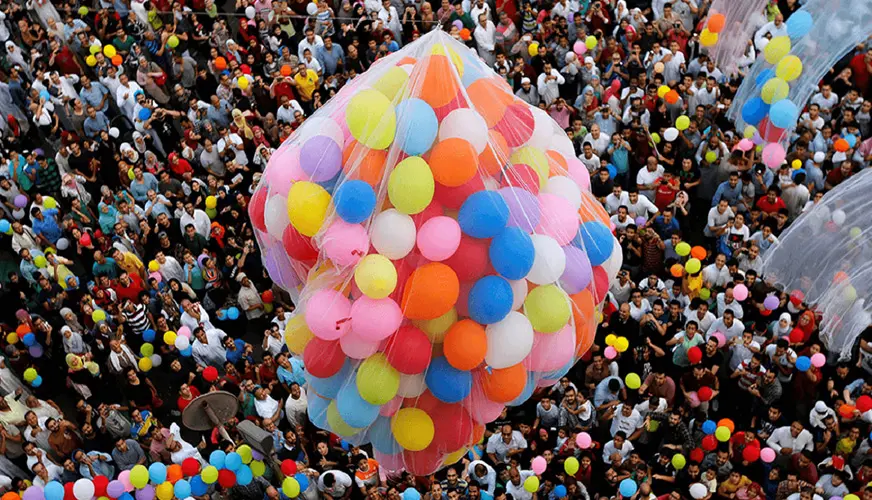
Sham El-Nessim is strongly associated with spending time outside.
Families may gather in:
-
parks;
-
gardens;
-
Nile-side areas;
-
beaches;
-
countryside locations;
-
public recreational areas.
The holiday is also associated with several traditional foods.
What Do Egyptians Eat During Sham El-Nessim?
Fesikh is heavily salted fermented fish traditionally associated with the holiday.
Renga is smoked herring and is another popular choice.
Colored eggs are strongly connected with spring celebrations.
Green onions and lettuce are also traditional components of Sham El-Nessim meals.
Travelers do not need to eat every traditional food to participate in the atmosphere. Fesikh in particular is a specialized traditional food that should be purchased only from reputable sources.
Because parks, gardens, promenades, and recreational areas can become busy, travelers primarily interested in archaeological sightseeing may prefer visiting major sites early in the day.
Coptic Christmas in Egypt
When Is Christmas Celebrated in Egypt?
Coptic Christmas is celebrated on January 7 and is an official public holiday in Egypt.
For Egypt’s Coptic Orthodox Christian community, the celebration follows a period of fasting and includes important church services.
Christmas Eve services take place on January 6, followed by Christmas celebrations on January 7.
For travelers interested in Christian Egypt, this period offers valuable context for understanding a religious tradition that has existed in Egypt for centuries.
Cairo is particularly important because several historic Christian sites are concentrated within Coptic Cairo.
Important sites include the Hanging Church in Cairo and the Church of St. Sergius and Bacchus.
What Should Travelers Know About Coptic Christmas?
Christmas services are religious events rather than tourist performances.
Visitors entering churches should:
-
dress modestly;
-
speak quietly;
-
avoid obstructing worshippers;
-
follow church instructions;
-
ask before photographing people;
-
respect areas restricted during services.
These principles apply equally when visiting mosques or attending other religious celebrations in Egypt.
Coptic Easter in Egypt
When Is Coptic Easter in 2027?
Coptic Easter falls on Sunday, May 2, 2027.
It is one of the most important religious celebrations for Egypt’s Coptic Christian community and follows the period of Lent and fasting.
For travelers, the timing is particularly interesting because Sham El-Nessim follows immediately afterward on Monday.
Someone visiting Egypt at the beginning of May 2027 could therefore encounter two very different cultural occasions within consecutive days:
May 2 — Coptic Easter
May 3 — Sham El-Nessim
One is primarily a Christian religious celebration, while the other is a nationwide Egyptian spring tradition.
The close relationship between these dates illustrates how religious and national traditions intersect within Egypt’s modern calendar.
Abu Simbel Sun Festival
What Is the Abu Simbel Sun Festival?
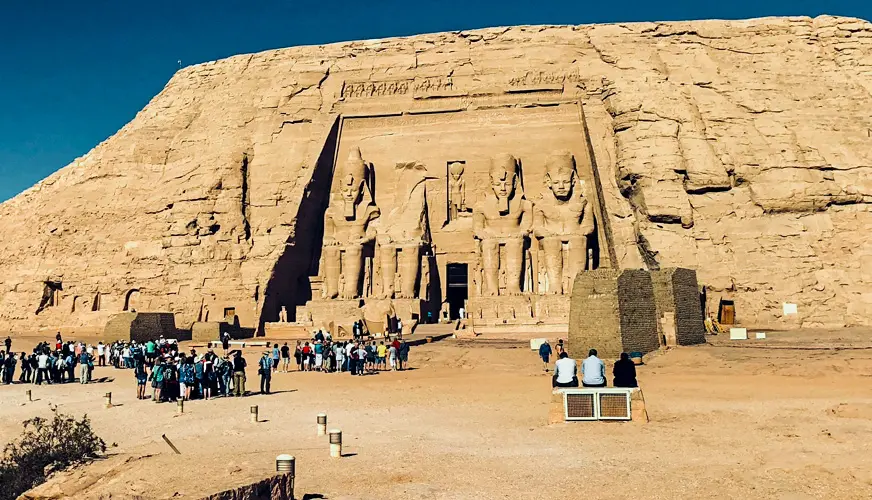
The Abu Simbel Sun Festival is one of Egypt’s most unusual archaeological and cultural events.
Twice each year, sunlight penetrates deep into the Great Temple of Ramesses II at Abu Simbel and reaches statues within the sanctuary.
The phenomenon occurs around sunrise and attracts visitors to southern Egypt specifically to observe the event.
The temple was constructed during the reign of Ramesses II and forms part of the Nubian monuments of southern Egypt.
Travelers can understand the archaeological context before visiting through the detailed guide to Abu Simbel Temple.
When Is the Abu Simbel Sun Festival in 2027?
The solar alignment is associated with two fixed annual dates:
February 22, 2027
October 22, 2027
These dates make the Abu Simbel event considerably easier to plan around than Islamic festivals.
Travelers specifically targeting the event can also use the dedicated guide to the Abu Simbel Sun Festival.
Where Does the Abu Simbel Festival Take Place?
The festival takes place at Abu Simbel in southern Egypt near Lake Nasser and the Sudanese border.
Most international travelers reach Abu Simbel through Aswan.
Depending on the itinerary and available transportation, visitors may travel between Aswan and Abu Simbel by road or air.
A southern Egypt itinerary can also include Philae Temple, Nubian cultural experiences, Aswan’s Nile islands, and other attractions included in the guide to things to do in Aswan.
Is the Abu Simbel Sun Festival Worth Planning Around?
It depends on your priorities.
Choose the festival dates if you want to experience:
-
the solar alignment;
-
a major archaeological event;
-
traditional performances;
-
a lively atmosphere;
-
an unusual cultural experience.
Choose a normal day if your priority is:
-
fewer visitors;
-
quieter photography;
-
slower exploration;
-
easier access around the temple complex.
The archaeological site remains significant regardless of whether you visit during the solar event.
Holy Family Festivals in Egypt
Egypt also has celebrations associated with the Journey of the Holy Family.
UNESCO inscribed Festivals related to the Journey of the Holy Family in Egypt on the Representative List of the Intangible Cultural Heritage of Humanity in 2022.
The traditions commemorate locations and stories associated with the journey of the Holy Family through Egypt.
Two important festival traditions identified by UNESCO include celebrations of the arrival of the Holy Family in Egypt and celebrations connected with the Nativity of the Virgin.
Activities can include:
-
religious processions;
-
hymns;
-
traditional games;
-
artistic performances;
-
community gatherings;
-
traditional food;
-
religious ceremonies.
These festivals are particularly interesting because they demonstrate that Egypt’s Christian heritage is not limited to archaeological churches or museum collections.
It remains part of living community traditions.
Mawlid al-Nabi in Egypt
What Is Mawlid al-Nabi?
Mawlid al-Nabi commemorates the birth of the Prophet Muhammad.
In Egypt, the occasion combines religious significance with recognizable social traditions, particularly seasonal sweets.
Shops may display colorful Mawlid sweets in the weeks surrounding the celebration.
Because Mawlid follows the Islamic lunar calendar, its Gregorian date changes each year.
In 2027, the occasion is expected around August, although travelers should confirm the official Egyptian date closer to the celebration.
Visitors interested in the wider religious context can explore the guide to mosques in Egypt.
Moulids and Local Religious Festivals in Egypt
What Is a Moulid in Egypt?
A moulid is a religious festival or celebration associated with a saint or revered religious figure.
Egyptian moulids vary considerably by location, religious tradition, and community.
Some are primarily religious gatherings.
Others develop a wider festival atmosphere involving:
-
food stalls;
-
processions;
-
markets;
-
music;
-
games;
-
community gatherings;
-
religious ceremonies.
Travelers should not think of “the Egyptian moulid” as a single standardized event.
Each celebration has its own context.
Moulids are living community events rather than tourist performances, so respectful behavior is essential.
Ask before photographing participants at close range, avoid interfering with prayer, and follow local guidance.
Tahteeb and Festival Traditions in Upper Egypt
Egyptian celebrations are not limited to formal public holidays.
Traditional performing arts may also appear at weddings, festivals, cultural events, and community celebrations.
Tahteeb is a particularly important example.
Tahteeb is a traditional stick game strongly associated with Upper Egypt. UNESCO inscribed it on the Representative List of the Intangible Cultural Heritage of Humanity in 2016.
Its historical roots are connected with martial practice, while the modern tradition emphasizes controlled movement, skill, respect, and performance.
This highlights an important point for travelers:
Egyptian festival culture exists far beyond Cairo.
Upper Egypt, Nubia, Luxor, Aswan, the Western Desert oases, Sinai, Alexandria, and Red Sea communities all have cultural traditions that may not appear on national holiday calendars.
Travelers spending time in Upper Egypt can combine cultural experiences with the archaeological and historical attractions described in the guide to things to do in Luxor.
Egyptian National Holidays and Celebrations
Not every important holiday in Egypt is religious.
Egypt also observes national holidays associated with modern Egyptian history.
Important national commemorations include:
| Holiday | Typical Date | Significance |
|---|---|---|
| Revolution and Police Day | January 25 | National commemoration |
| Sinai Liberation Day | April 25 | Commemorates Sinai liberation |
| Labor Day | May 1 | National public holiday |
| June 30 Revolution | June 30 | National commemoration |
| July 23 Revolution Day | July 23 | Commemorates the 1952 Revolution |
| Armed Forces Day | October 6 | Commemorates the October War |
Travelers should distinguish a national public holiday from a public festival.
Some national holidays involve official ceremonies and commemorations rather than large-scale street celebrations.
Their practical significance for tourists may include:
-
government office closures;
-
altered business hours;
-
traffic changes;
-
public events;
-
increased domestic travel.
Egyptian authorities may also issue specific decisions concerning how a public holiday is observed. Travelers should therefore check the official holiday schedule close to their trip.
Modern Cultural Festivals in Egypt
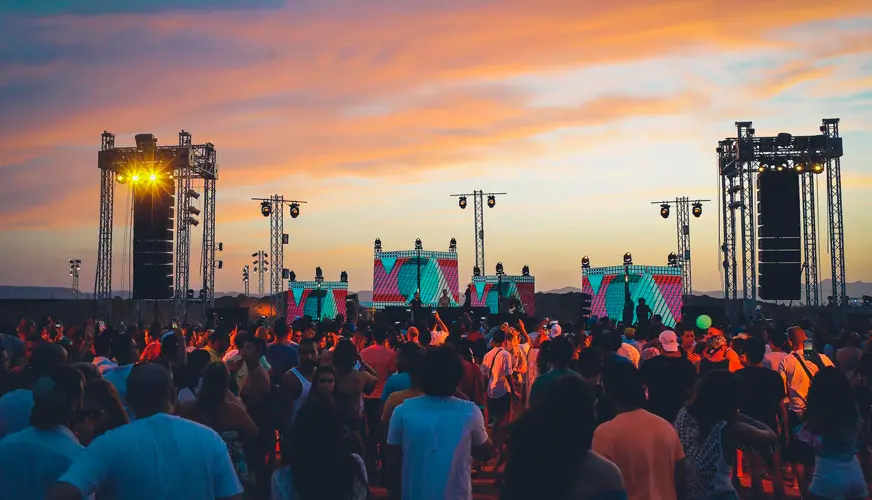
Egypt also hosts contemporary festivals connected with film, theater, music, folklore, art, literature, and other cultural activities.
These events differ from established religious or national holidays because dates and venues may change from year to year.
Travelers may encounter:
-
international film festivals;
-
theater festivals;
-
music events;
-
folklore performances;
-
arts festivals;
-
cultural exhibitions;
-
seasonal entertainment programs;
-
food and culinary events.
For 2027 travel planning, do not assume that a cultural festival will occur on exactly the same dates as it did in 2026.
Wait until the organizer announces:
-
official dates;
-
venues;
-
program;
-
ticketing information;
-
participation details.
This is particularly important when the festival is the primary reason for booking international flights.
Ancient Egyptian Festivals vs Modern Egyptian Festivals
Ancient Egyptian festivals and modern Egyptian festivals should not be treated as the same thing.
Ancient Egyptians celebrated numerous religious and seasonal festivals connected with gods, temples, kingship, agriculture, the Nile, and local cult centers.
Those historical celebrations are important for understanding ancient Egyptian religion and society.
However, most are not modern public festivals that travelers can attend today in their original ancient form.
This distinction is important because travel guides sometimes mix ancient religious festivals with contemporary Egyptian holidays and make them appear to belong to one modern calendar.
Travelers specifically interested in historical celebrations can explore the dedicated guide to ancient Egyptian festivals.
The site’s guide to ancient Egyptian gods and goddesses also explains the religious entities connected with many ancient temple festivals.
Modern festivals should therefore be understood as living traditions, while ancient Egyptian festivals belong primarily to historical and archaeological study unless a specific modern cultural event recreates or references them.
Traditional Food During Egyptian Celebrations
Food plays an important role in Egyptian celebrations.
Different occasions are associated with different dishes, sweets, and eating traditions.
| Celebration | Foods Commonly Associated With It |
|---|---|
| Ramadan | Dates, soups, juices, desserts and family iftar dishes |
| Eid al-Fitr | Kahk and other sweets |
| Sham El-Nessim | Fesikh, renga, colored eggs, lettuce and green onions |
| Coptic celebrations | Festive meals following fasting periods |
| Eid al-Adha | Meat dishes and family meals |
| Mawlid al-Nabi | Traditional Mawlid sweets |
Food in Egyptian celebrations is about more than particular dishes.
Meals are closely connected with family gatherings, hospitality, visiting relatives, sharing food, and community relationships.
Visitors interested in understanding Egyptian cuisine beyond festival foods can explore the guide to traditional Egyptian food.
Where Are the Best Places to Experience Festivals in Egypt?
The best place depends on which Egyptian celebration you want to experience.
Cairo
Cairo offers perhaps the widest variety of religious and cultural experiences.
The capital is particularly interesting for:
-
Ramadan evenings;
-
Islamic celebrations;
-
Coptic heritage;
-
national events;
-
contemporary cultural festivals;
-
traditional markets;
-
historic religious neighborhoods.
Travelers can combine festival experiences with the attractions in the guide to things to do in Cairo.
Islamic Cairo
Islamic Cairo is particularly atmospheric during Ramadan and other Islamic occasions.
Historic mosques, medieval streets, traditional markets, cafés, and evening activity provide important cultural context.
The experience should not be reduced to decoration and photography. Mosques and religious institutions remain active places of worship.
Coptic Cairo and Old Cairo
Coptic Cairo is especially relevant around Christmas, Easter, and Christian heritage trips.
The wider Old Cairo area helps visitors understand the coexistence of different religious and historical traditions within the city.
Abu Simbel
Abu Simbel is the obvious destination for travelers specifically interested in the February or October solar alignment.
Because the site is far south of Cairo, it should usually be incorporated into an Aswan or Upper Egypt itinerary rather than treated as an isolated excursion from northern Egypt.
Aswan
Aswan provides access to Abu Simbel while also offering Nubian culture, Nile scenery, archaeological sites, and traditional communities.
It is one of the strongest destinations for travelers interested in combining ancient monuments with living southern Egyptian culture.
Luxor
Luxor combines some of Egypt’s most important archaeological sites with the traditions of Upper Egypt.
A visit can connect ancient Egyptian history with contemporary Upper Egyptian life rather than treating the city exclusively as an open-air archaeological destination.
Alexandria
Alexandria provides a different festival environment.
Its Mediterranean identity, cultural institutions, coastal location, and popularity among Egyptian domestic travelers make it especially active during some holidays and summer periods.
Hurghada and Sharm El-Sheikh
Red Sea resorts continue serving international travelers during major religious holidays, but they can also receive increased Egyptian domestic tourism during Eid and other vacation periods.
That means resort availability and domestic flights may become more competitive around major holidays.
Is It Good to Visit Egypt During a Festival?
Yes. Visiting Egypt during a festival can add significant cultural value to a trip, but it can also affect crowds, transportation, opening hours, and daily schedules.
The best festival depends on what you want to experience.
| Traveler Priority | Celebration to Consider |
|---|---|
| Evening street atmosphere | Ramadan |
| Islamic family traditions | Eid |
| Spring culture | Sham El-Nessim |
| Christian heritage | Coptic Christmas / Easter |
| Archaeology | Abu Simbel Sun Festival |
| Local traditions | Moulids |
| Contemporary culture | Announced arts and cultural festivals |
Ramadan can provide memorable evenings but requires flexibility.
Eid offers a festive social atmosphere but can increase domestic travel.
Sham El-Nessim provides an opportunity to observe a distinctively Egyptian spring tradition, although parks and outdoor areas can become crowded.
The Abu Simbel Sun Festival provides a rare archaeological experience but attracts more visitors than an ordinary day.
If festivals are only one factor in choosing travel dates, compare them with temperature, crowds, sightseeing conditions, and seasonal patterns in the guide to the best time to visit Egypt.
How Do Festivals Affect Travel in Egypt?
Festivals can affect travel differently depending on the event, destination, and time of year.
Attraction Opening Hours
Major tourist attractions usually continue operating through much of Egypt’s festival calendar.
However, opening hours may change during Ramadan, public holidays, or special events.
Always verify current hours shortly before visiting rather than relying on an old itinerary.
Domestic Transportation
Major holidays can create increased demand for:
-
trains;
-
buses;
-
domestic flights;
-
private transfers;
-
resort transportation.
Eid periods deserve particular attention because Egyptians travel to visit family and take domestic holidays.
Hotels
Popular resort destinations may experience increased demand during Egyptian public holidays.
Hotels in Aswan and around Abu Simbel can also experience unusual demand around the February and October solar alignment.
Restaurants
Ramadan creates the greatest change in restaurant schedules.
Some local establishments may operate differently during fasting hours and become extremely busy after sunset.
Tourism-oriented hotels generally continue serving international guests.
Traffic
Cairo traffic can change significantly around major celebrations.
The period before iftar during Ramadan is particularly important because many people are trying to reach home before sunset.
Allow additional travel time instead of planning a museum visit, airport transfer, and restaurant reservation with minimal time between them.
How to Respect Egyptian Festival Traditions
Experiencing local celebrations can be one of the most rewarding parts of traveling through Egypt, but religious and community events should be approached respectfully.
Follow these practical guidelines:
-
Dress modestly when entering mosques and churches.
-
Avoid blocking worshippers while taking photographs.
-
Ask permission before photographing people at close range.
-
Keep noise low during religious ceremonies.
-
Follow instructions from mosque, church, archaeological, or event staff.
-
Be considerate around people who are fasting during Ramadan.
-
Do not treat prayers or private rituals as staged entertainment.
-
Respect family spaces at local festivals.
-
Confirm photography restrictions before using professional equipment.
-
Allow local participants priority at religious events.
Travelers unfamiliar with local customs can prepare further using the Egypt travel guide.
How to Plan a 2027 Egypt Trip Around Festivals
Planning around a festival requires slightly more preparation than choosing ordinary travel dates.
Step 1: Choose the Type of Festival You Want to Experience
First decide whether your priority is:
-
Islamic culture;
-
Coptic Christian heritage;
-
traditional Egyptian celebrations;
-
archaeology;
-
local community traditions;
-
modern cultural events.
Your choice determines both the season and destination.
Step 2: Separate Fixed Dates From Moving Dates
Some dates are straightforward to plan around.
Examples include:
January 7 — Coptic Christmas
February 22 — Abu Simbel solar alignment
October 22 — Abu Simbel solar alignment
Other religious dates require confirmation.
Step 3: Verify Islamic Dates
Do not rely entirely on a travel article published months or years before your trip.
Confirm Ramadan, Eid, Mawlid, and other Islamic dates before making date-sensitive reservations.
Step 4: Book High-Demand Travel Early
Advance reservations are especially useful around:
-
Eid holidays;
-
Abu Simbel festival dates;
-
domestic flights;
-
popular resort periods;
-
limited hotel inventory.
Step 5: Build Flexibility Into Your Itinerary
Avoid scheduling every day minute by minute during major festivals.
Opening hours, traffic, meal times, and local activity can differ from normal periods.
Step 6: Match the Festival With Nearby Destinations
A well-designed itinerary should follow Egypt’s geography.
For example:
Abu Simbel → Aswan → Nile Cruise → Luxor
This is more practical than repeatedly flying between northern and southern Egypt.
A Ramadan cultural itinerary could follow:
Islamic Cairo → Al-Muizz Street → Khan El-Khalili → Old Cairo → Giza
Travelers building a longer route can use the Egypt trip planner to organize destinations efficiently.
Planning a Festival-Focused Egypt Tour
A festival-focused trip works best when the celebration fits naturally into the broader itinerary.
For example, travelers targeting the Abu Simbel Sun Festival can build a route around Cairo, Aswan, Abu Simbel, a Nile cruise, and Luxor.
Travelers interested in Ramadan can spend more time in Cairo, particularly around Islamic Cairo, while still including Giza, museums, and other major attractions.
Those interested in Coptic heritage can combine Old Cairo with important Christian sites rather than treating Christmas or Easter as isolated events.
The important principle is not to add unnecessary transfers simply to include more destinations.
A festival should strengthen the trip rather than make the itinerary exhausting.
Egypt Time Travel can arrange itineraries according to travel dates, trip duration, preferred destinations, accommodation level, and the cultural celebration travelers want to experience.
Visitors who want a customized route can explore Egypt tailor-made holidays or review broader Egypt tour packages when comparing itinerary styles.
Frequently Asked Questions About Celebrations and Festivals in Egypt
What holidays do Egyptians celebrate?
Egyptians celebrate Islamic holidays such as Eid al-Fitr and Eid al-Adha, Coptic Christian occasions including Christmas and Easter, the traditional spring celebration Sham El-Nessim, and national holidays including July 23 and October 6. Egypt also has local religious festivals, archaeological events, and contemporary cultural festivals.
What is an important holiday celebrated in Egypt and when is it?
Sham El-Nessim is one of Egypt’s most distinctive traditional holidays. It is celebrated on the Monday after Coptic Easter and falls on May 3 in 2027. Egyptians commonly celebrate outdoors with family gatherings and traditional foods such as colored eggs, lettuce, green onions, renga, and fesikh.
What is the most famous Egyptian festival for tourists?
The Abu Simbel Sun Festival is one of the best-known Egyptian events among international travelers. It occurs on February 22 and October 22, when sunrise penetrates the Great Temple of Ramesses II and reaches figures within the sanctuary.
Are Egyptian festivals open to tourists?
Many Egyptian celebrations can be observed by tourists, but access depends on the event. Public cultural festivals are generally easier to attend, while religious services and community moulids require greater sensitivity. Visitors should follow local instructions and avoid assuming every ceremony is designed for tourism.
Does Egypt celebrate Christmas?
Yes. Egypt’s Coptic Orthodox Christian community celebrates Christmas on January 7. Coptic Christmas is an official public holiday in Egypt, and church services on Christmas Eve and Christmas Day form an important part of the religious celebration.
Is Ramadan a good time to visit Egypt?
Ramadan can be a good time to visit Egypt for travelers interested in local culture and evening atmosphere. Tourism continues, but daily schedules may change. Visitors should expect different restaurant hours, possible attraction schedule adjustments, busy traffic before iftar, and increased activity after sunset.
Do tourists have to fast during Ramadan in Egypt?
Non-Muslim tourists are not required to fast during Ramadan. Hotels and tourism-oriented businesses continue serving visitors. However, being considerate around people who are fasting and behaving respectfully in religious or traditional areas is appropriate.
Are tourist attractions closed during Eid?
Not necessarily. Many tourist attractions continue operating during Eid, but individual opening hours may change. Domestic tourism can also increase significantly. Travelers should confirm current schedules for museums and archaeological sites and book important transportation in advance.
What should tourists wear at religious festivals in Egypt?
Modest clothing is appropriate when entering mosques, churches, or religious gatherings. Requirements vary by location, so visitors should follow instructions at the site. Clothing suitable for ordinary archaeological sightseeing may not always be appropriate inside an active place of worship.
Are ancient Egyptian festivals still celebrated today?
Most ancient Egyptian religious festivals are no longer celebrated in their original temple form. Sham El-Nessim, however, has strong historical associations with ancient Egyptian spring traditions and continues as a modern Egyptian celebration. Historical temple festivals should therefore be distinguished from today’s public events.
What food do Egyptians eat during festivals?
Festival foods depend on the occasion. Kahk is strongly associated with Eid al-Fitr; Sham El-Nessim includes colored eggs, renga, fesikh, lettuce, and green onions; Ramadan centers on iftar meals and seasonal desserts; and Mawlid al-Nabi is associated with traditional sweets.
Do festival dates in Egypt change every year?
Some do. Ramadan, Eid al-Fitr, Eid al-Adha, Islamic New Year, and Mawlid follow the Hijri lunar calendar, so their Gregorian dates change annually. Coptic Easter and Sham El-Nessim also move. Coptic Christmas remains on January 7, while the Abu Simbel solar alignment occurs on February 22 and October 22.
Conclusion: Experiencing Egypt Through Its Celebrations
Celebrations and festivals in Egypt provide a direct connection between the country’s history and its living culture.
Ramadan changes the daily rhythm of cities and creates distinctive evenings. Eid brings families together. Coptic Christmas and Easter reveal Egypt’s longstanding Christian heritage. Sham El-Nessim connects modern Egyptian spring celebrations with traditions associated with the country’s ancient past.
The Abu Simbel Sun Festival adds another dimension by combining archaeology, astronomy, cultural performances, and one of southern Egypt’s most remarkable monuments.
Local moulids, Holy Family celebrations, Upper Egyptian traditions, national holidays, and contemporary cultural events add further layers to Egypt’s annual calendar.
For travelers planning Egypt in 2027, the most important practical rule is simple:
Distinguish fixed festival dates from moving religious dates and verify time-sensitive information shortly before traveling.
Once the dates are confirmed, a celebration can be incorporated naturally into Cairo sightseeing, an Upper Egypt itinerary, an Aswan and Abu Simbel journey, or a longer trip combining the Nile Valley with other regions.
Travelers who want to combine Egyptian festivals with archaeological sites, local culture, and major destinations can start with Egypt Time Travel or request one of the site’s tailor-made Egypt trips.
