
Quick Answer: What Is the Capital of Egypt?
Cairo is the capital of Egypt. The Egyptian Constitution explicitly identifies Cairo as the capital of the Arab Republic of Egypt, and this remains the case for 2027 despite the relocation of many ministries and government functions to Egypt’s New Administrative Capital east of Cairo. Cairo is also Egypt’s largest urban center and the heart of Greater Cairo, which extends into Giza and surrounding communities.
Cairo, the capital of Egypt, is much more than the answer to a geography question. It is Egypt’s largest city, one of the principal urban centers of Africa and the Middle East, a historic center of Islamic civilization, and the main gateway for travelers visiting the Pyramids of Giza, the Grand Egyptian Museum, Historic Cairo, Coptic Cairo, and many of the country’s best-known cultural sites.
For anyone asking “what is the capital of Egypt?”, the straightforward answer is Cairo. But understanding Cairo requires distinguishing the city from Cairo Governorate, Greater Cairo, neighboring Giza, and the New Administrative Capital. These terms are frequently mixed together online even though they describe different geographical or administrative entities.
Cairo was formally founded in 969 CE by Jawhar al-Siqilli for the Fatimid dynasty. Earlier settlements—including Fustat, al-Askar and al-Qata’i—already occupied parts of the area that later became the modern metropolis. The Ministry of Tourism and Antiquities identifies Cairo as the fourth capital of Islamic Egypt after those earlier cities.
For travelers, Cairo is usually the first major stop on an Egypt itinerary. Its tourism geography extends beyond Cairo Governorate itself: most visitors combine central Cairo with neighboring Giza, where the pyramids, Great Sphinx and Grand Egyptian Museum are located. Egypt’s official tourism portal similarly presents Cairo and Giza together as one major visitor destination within Greater Cairo.
If you are planning a first trip, the site’s broader guide to Cairo attractions is a useful companion to this capital-city overview.
What Is the Capital of Egypt?
The capital city of Egypt is Cairo, known in Arabic as Al-Qahirah. Cairo is the political, historical, commercial and cultural center most closely associated with modern Egypt.
More importantly, its status is not simply conventional. Article 222 of Egypt’s Constitution states that Cairo is the capital of the Arab Republic of Egypt. That constitutional provision is the clearest answer to questions created by Egypt’s development of the New Administrative Capital.
Egypt’s official tourism authority describes Cairo as the country’s capital and a major political, economic and cultural center within Africa and the Middle East.
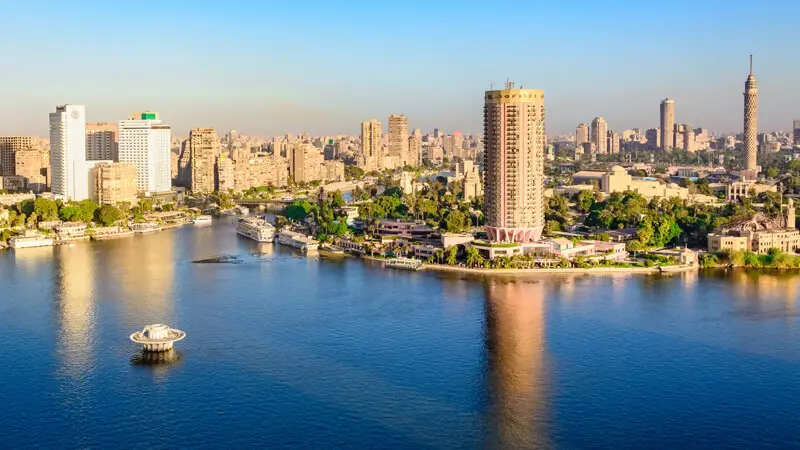
Is Cairo Still the Capital of Egypt in 2027?
Yes. Cairo remains the capital of Egypt for 2027 unless Egypt’s constitutional framework is formally changed.
This distinction is especially important because many government ministries, administrative agencies and cabinet operations have moved to the New Administrative Capital, located east of Cairo.
By 2026, cabinet meetings and numerous ministry operations were already taking place from government headquarters in the New Capital, and government sources also documented the relocation of ministries from central Cairo.
That does not mean Cairo automatically stopped being the national capital.
Egypt’s Constitution still states:
Cairo is the capital of the Arab Republic of Egypt.
The easiest way to understand the situation is:
| Term | Meaning in 2027 planning |
|---|---|
| Cairo | Constitutional capital of Egypt |
| Cairo Governorate | Administrative governorate centered on Cairo |
| Greater Cairo | Large metropolitan region spanning Cairo, Giza and adjoining urban areas |
| New Administrative Capital | Major government and administrative center east of Cairo |
| Giza | Separate governorate immediately west of Cairo, containing the pyramids and GEM |
Egyptian government sources confirmed in 2026 that ministries and other state institutions were operating from the New Administrative Capital. The New Capital also includes government, parliamentary and administrative districts.
For SEO and factual accuracy, therefore, avoid wording such as “Egypt changed its capital from Cairo to the New Administrative Capital” unless a formal constitutional change occurs.
A better statement is:
Cairo remains Egypt’s official constitutional capital, while the New Administrative Capital has become an important center for national government administration.
That phrasing accurately reflects the distinction as of the information available for 2027 travel planning.
Where Is Cairo Located?
Cairo is located in northern Egypt, on and around the Nile River just south of the point where the Nile spreads into its delta.
The city is in the part of Egypt historically known as Lower Egypt. The term can sound counterintuitive because Cairo appears in the northern half of a map, but “Lower Egypt” refers to the lower course of the Nile, where the river approaches the Mediterranean Sea.
Egypt’s State Information Service places Cairo approximately 165 km south of the Mediterranean coast and about 120 km west of the Suez Canal.
Cairo is therefore strategically positioned between:
- the Nile Valley to the south;
- the Nile Delta to the north;
- Giza and Egypt’s Western Desert to the west;
- the eastern desert and Suez corridor to the east.
This location helped transform the Cairo region into a major crossroads for trade, government, religion, education and transportation.
Cairo’s geographical position also explains why visitors can reach very different environments from the capital relatively quickly: desert archaeological sites west of the city, fertile agricultural areas around the Nile, the Delta to the north, and the Suez region farther east.
For a broader comparison with Alexandria, Luxor, Aswan and other destinations, see this guide to cities in Egypt.
Is Cairo in Africa?
Yes. Cairo is in Africa.
Egypt is a transcontinental country because most of its territory lies in northeastern Africa while the Sinai Peninsula lies in Asia. Cairo itself is west of Sinai and unquestionably lies on the African side of Egypt.
This makes the following statements accurate:
- Cairo is an African city.
- Cairo is the capital of an African country.
- Egypt has territory in both Africa and Asia.
- Cairo is not located in Asia.
- Cairo is not a country.
Travelers sometimes become confused because Egypt is culturally and politically associated with the Middle East as well as North Africa. These classifications are not contradictory.
Cairo can simultaneously be described as:
an African city, a North African capital, an Arab capital and a major Middle Eastern metropolitan center.
Cairo, Cairo Governorate and Greater Cairo: What Is the Difference?
This distinction is essential for understanding population figures, maps, attraction locations and travel times.
Cairo city and Cairo Governorate overlap administratively in ways that differ from many other world capitals.
Greater Cairo, however, is much larger. It extends beyond Cairo Governorate into neighboring Giza and parts of Qalyubia and surrounding urban development.
Egypt’s official tourism portal describes Greater Cairo as a metropolitan region stretching across Cairo, Giza and outer suburbs east and west of the traditional city center.
This is why two statements that appear contradictory can both be true:
- The Pyramids of Giza are not physically in Cairo Governorate.
- Visiting the Pyramids is nevertheless normally considered part of a Cairo trip.
The same applies to the Grand Egyptian Museum.
For travel planning, think of Greater Cairo rather than strict administrative borders.
Cairo proper
Includes areas such as:
- Downtown Cairo;
- Garden City;
- Zamalek’s eastern administrative context and central Nile islands;
- Islamic Cairo;
- Old Cairo;
- Heliopolis;
- Nasr City;
- Maadi;
- New Cairo and eastern extensions.
Giza
Immediately west of the Nile and Cairo, Giza contains or provides access to:
- the Giza Plateau;
- Great Pyramid of Khufu;
- Pyramid of Khafre;
- Pyramid of Menkaure;
- Great Sphinx;
- Grand Egyptian Museum;
- routes toward Saqqara and Dahshur.
Greater Cairo
Greater Cairo is the practical urban system connecting these areas through highways, bridges, public transport and continuous development.
That distinction matters when booking a hotel. A property marketed as being “in Cairo” can be located many kilometers from Downtown, while a Giza hotel may be significantly more convenient for travelers who want early access to the pyramids.
How Big Is Cairo?
Cairo is one of the world’s major megacity environments, but population statistics vary dramatically depending on which boundary is being measured.
The Cairo Governorate’s official portal reported an estimated population of more than 10.47 million people in January 2026 and gives a total governorate area of approximately 3,085 km².
CAPMAS had previously estimated Cairo Governorate’s population at approximately 10.3 million at the beginning of 2024.
Greater Cairo is substantially larger because it includes urban areas beyond Cairo Governorate.
This is why travelers may encounter different figures such as 10 million, 20 million or more in articles about Cairo. They are often measuring different things:
| Statistic | What it usually measures |
|---|---|
| Around 10+ million | Cairo Governorate/city population |
| Much larger figures | Greater Cairo metropolitan population |
| Cairo land area | Depends on administrative definition |
| Greater Cairo area | Extends into other governorates |
For a travel article, using one metropolitan figure without defining its geographic boundary can be misleading.
A better formulation is:
Cairo Governorate has more than 10 million residents, while Greater Cairo is a substantially larger metropolitan region extending across Cairo, Giza and neighboring urban areas.
When Was Cairo Founded?
Modern Cairo was founded in 969 CE.
The Fatimid general Jawhar al-Siqilli established the new city after the Fatimid conquest of Egypt. It became the new capital of the Fatimid Caliphate and was built northeast of earlier settlements.
The Ministry of Tourism and Antiquities identifies Cairo as the fourth Islamic capital of Egypt, following:
- Fustat;
- al-Askar;
- al-Qata’i;
- Cairo, or al-Qahirah.
The ministry also records the establishment of Al-Azhar shortly afterward, helping Cairo develop into a major center of religion and scholarship.
By 2027, Cairo will therefore be approximately 1,058 years old when measured from its 969 foundation.
That does not mean human settlement in the Cairo region is only about one thousand years old. The broader area contains much older settlements and monuments.
Nearby ancient centers include:
- Memphis;
- Heliopolis;
- Giza;
- Saqqara.
Fustat itself predates Fatimid Cairo by more than three centuries.
What Does the Name Cairo Mean?
Cairo’s Arabic name is Al-Qahirah.
It is commonly translated into English as “The Victorious.”
Egypt’s Ministry of Tourism and Antiquities uses “the Victorious” when explaining the foundation of Fatimid Cairo.
English speakers usually say Cairo, while Arabic speakers use Al-Qahirah in formal contexts.
In everyday Egyptian Arabic, people may also use Masr, the Arabic word for Egypt, when referring to Cairo in conversation, particularly when contrasting the capital with another part of the country.
Visitors interested in useful words, Egyptian Arabic and the relationship between formal Arabic and everyday speech can continue with this guide to the language of Egypt.
What Was the Capital of Egypt Before Cairo?
There is no single answer covering all Egyptian history because Egypt has had different capitals over thousands of years.
Immediately before Fatimid Cairo, the Islamic-era administrative geography involved Fustat, al-Askar and al-Qata’i at different periods.
Fustat was founded in 641 CE by Amr ibn al-As following the Arab conquest and became Egypt’s first Islamic capital. The modern archaeological area of Fustat lies within what is now Old Cairo.
A simplified historical sequence looks like this:
| Period | Important capital or political center | Why it matters |
|---|---|---|
| Early Dynastic / Old Kingdom | Memphis | Major early capital near modern Cairo |
| Middle and New Kingdom periods | Thebes at important stages | Political and religious center in Upper Egypt |
| Ptolemaic and Roman Egypt | Alexandria | Mediterranean capital |
| From 641 CE | Fustat | First Islamic capital of Egypt |
| Abbasid period | al-Askar | New administrative capital |
| Tulunid period | al-Qata’i | Capital established by Ahmad ibn Tulun |
| Later pre-Fatimid period | Fustat again | Administrative center restored |
| From 969 CE | Cairo | Fatimid foundation that eventually absorbed earlier urban centers |
For ancient geography near Cairo, Memphis is particularly important because the ancient city stood south of modern Cairo near the great pyramid fields.
Cairo did not suddenly appear in an empty landscape. It grew beside, around and eventually incorporated earlier settlements.
That layered development is one reason modern Cairo contains archaeological traces of Roman, Coptic, early Islamic, Fatimid, Ayyubid, Mamluk, Ottoman and modern Egyptian history within a relatively compact metropolitan region.
What Was Cairo Called in Ancient Egypt?
Ancient Egyptians did not call the modern city “Cairo,” because Cairo did not yet exist as the city founded in 969 CE.
This is an important correction to a common search query.
Several ancient settlements were located in what is now the Greater Cairo region, but they should not simply be renamed “ancient Cairo.”
Two particularly important ancient centers were:
Memphis: an ancient capital located south of today’s central Cairo and Giza.
Heliopolis: known to ancient Egyptians as Iunu or Iwnw, an important religious center in an area now absorbed into northeastern Greater Cairo.
The Giza necropolis also predates Cairo by thousands of years.
Therefore, a more historically accurate answer to “What was Cairo called in ancient Egypt?” is:
Cairo itself did not yet exist. Ancient settlements such as Memphis and Heliopolis occupied the wider region that eventually became Greater Cairo.
Why Did Cairo Become the Capital of Egypt?
Cairo’s long-term importance resulted from a combination of geography, political power and urban expansion.
Its location near the transition between the Nile Valley and Nile Delta gave it strategic advantages for controlling transport and communication between Upper and Lower Egypt.
When the Fatimids established Cairo in 969, the new city served as their political center. Over time, Cairo expanded beyond its original walls and absorbed earlier settlements.
Under later Ayyubid and Mamluk rulers, the city became an increasingly powerful administrative, commercial, religious and intellectual center.
UNESCO describes Historic Cairo as having prospered partly because of its position at an international crossroads connecting trade routes between Africa, Asia and Europe. It developed into a major political, cultural and economic capital and an important destination for scholars.
Cairo’s position was reinforced by several major institutions and developments:
- Al-Azhar became an influential religious and educational institution;
- the Citadel functioned as a major center of government;
- markets connected regional and international commerce;
- the city sat close to Nile transportation routes;
- later railways, roads and aviation strengthened its national role;
- modern Egypt concentrated media, universities, finance and government in the metropolitan area.
The result is a capital whose importance comes from far more than administrative designation.
Why Is Cairo Important Today?
Modern Cairo performs several overlapping roles.
It is Egypt’s constitutional capital, largest urban center, financial hub, media center, education center and most important international transport gateway.
Even as administrative functions move eastward, Cairo retains enormous national importance.
Its cultural influence also extends well beyond Egypt.
Cairo hosts universities, publishing houses, film and television production, cultural institutions, museums and historic religious centers whose influence reaches across the Arab world and Africa.
For travelers, Cairo has another role: it connects several different versions of Egypt in one destination.
Within the same metropolitan trip, a visitor can experience:
- Old Kingdom pyramids;
- ancient Egyptian museums;
- Roman and Coptic heritage;
- early Islamic architecture;
- Fatimid streets;
- Mamluk mosques;
- Ottoman houses;
- 19th-century Downtown Cairo;
- modern Nile districts;
- contemporary Greater Cairo.
Few destinations illustrate Egypt’s historical continuity as clearly.
Historic Cairo and Its UNESCO World Heritage Status
Historic Cairo has been on UNESCO’s World Heritage List since 1979.
UNESCO describes it as one of the world’s oldest Islamic cities, with mosques, madrasas, historic residences, fountains, baths and other urban structures representing centuries of development. The World Heritage property includes several components and reflects Cairo’s role as a political, intellectual, religious and commercial center.
Historic Cairo is not simply one monument.
It encompasses a large and complex cultural landscape including areas associated with:
- Fustat;
- the Fatimid city;
- the Citadel;
- historic cemeteries;
- medieval streets;
- religious monuments;
- traditional markets.
Visitors who want to explore this layer of the capital in depth should begin with Islamic Cairo.
One of the most rewarding routes passes through Al-Muizz Street, whose architectural layers include Fatimid, Mamluk and later monuments.
UNESCO specifically recognizes the exceptional survival of Historic Cairo’s urban fabric as well as its individual buildings.
What Are the Best Things to See in Cairo in 2027?
A first-time Cairo visit should combine ancient Egypt, medieval Cairo, museums and modern city life rather than concentrating on only one period.
The following places form the core visitor experience.
The Giza Pyramids
The pyramids are technically in neighboring Giza, but they are an essential part of almost every Cairo itinerary.
The Giza Necropolis contains the pyramid complexes of Khufu, Khafre and Menkaure together with tombs, temples and other archaeological remains.
The Ministry of Tourism and Antiquities identifies the Great Pyramid as the pyramid built for King Khufu and the largest of the three principal pyramids on the plateau.
The Great Pyramid of Khufu is the last surviving Wonder of the ancient world’s traditional Seven Wonders.
Nearby, the Great Sphinx of Giza forms part of Khafre’s pyramid complex.
For most first-time visitors, allow at least half a day for the plateau rather than treating it as a quick photo stop.
Grand Egyptian Museum
The Grand Egyptian Museum, often abbreviated GEM, dramatically changed the Cairo-Giza museum landscape.
The museum officially opened in November 2025 and now provides access to the Tutankhamun galleries, main galleries, Grand Hall, Grand Staircase and Khufu’s Boats Museum. Grand Egyptian Museum
For 2027 itineraries, the GEM deserves substantial time rather than being added casually after the pyramids.
Travelers particularly interested in ancient Egypt can consider dedicated Grand Egyptian Museum tours.
At the time of this guide’s 2026 research, official museum hours showed galleries generally open 9:00 AM–6:00 PM, with extended evening hours on Wednesdays and Saturdays. Hours, ticket categories and visitor rules can change before or during 2027, so travelers should verify them on the museum’s official platform shortly before visiting.
Egyptian Museum in Tahrir
The historic Egyptian Museum remains an important Cairo institution even after major objects and collections moved to newer museums.
Located at Tahrir Square, its building contains more than 100 display halls across two principal exhibition floors according to the Ministry of Tourism and Antiquities.
The opening of the GEM does not make the Tahrir museum irrelevant. Instead, visitors now have several complementary museum experiences.
Al-Azhar and Medieval Cairo
Al-Azhar Mosque is one of Cairo’s defining religious and historical institutions and sits within the broader Historic Cairo district.
The surrounding area makes more sense when explored on foot rather than as isolated vehicle stops.
Historic Cairo’s value comes from the relationship between:
- mosques;
- houses;
- markets;
- gates;
- streets;
- courtyards;
- schools;
- craft districts.
That urban context is central to understanding the city.
Khan el-Khalili
Khan el-Khalili Bazaar is Cairo’s best-known traditional market district.
It is more than a souvenir stop. The bazaar belongs to a larger historic commercial landscape adjacent to medieval monuments and Al-Muizz Street.
The official Egyptian tourism portal highlights its shops selling jewelry, metalwork, incense, spices, leather products and other crafts.
Visiting in the late afternoon and staying into the evening can reveal a different atmosphere from a rushed midday stop.
Saladin Citadel
The Saladin Citadel occupies a commanding elevated position and played a major political and military role in Cairo’s development.
Within the Citadel complex, the Mosque of Muhammad Ali is one of the most recognizable structures on Cairo’s skyline.
The Citadel also offers geographical context: from its elevated position, visitors can appreciate the scale of the historic city and the relationship between its medieval core and modern expansion.
Coptic Cairo and Fustat
Coptic Cairo preserves churches and other monuments associated with Egypt’s Christian heritage.
Nearby Fustat represents an even broader historical transition between Roman, Coptic and early Islamic Egypt.
Fustat was established in 641 as Egypt’s first Islamic capital. Today, its archaeological and historic zone includes places such as the Mosque of Amr ibn al-As, the Hanging Church, Ben Ezra Synagogue and archaeological remains.
National Museum of Egyptian Civilization
The National Museum of Egyptian Civilization in Fustat takes a different approach from the Egyptian Museum and GEM.
Rather than concentrating exclusively on pharaonic masterpieces, NMEC presents Egyptian civilization across multiple periods.
Its Royal Mummies Gallery houses the royal mummies in a dedicated exhibition environment.
This makes the three major museum experiences complementary:
| Museum | Best for |
|---|---|
| Grand Egyptian Museum | Monumental ancient Egyptian collection, Tutankhamun and Giza context |
| Egyptian Museum, Tahrir | Historic museum experience and broad archaeological collection |
| NMEC | Continuity of Egyptian civilization and Royal Mummies Gallery |
Cairo Tower and the Nile
Cairo Tower provides a modern landmark and elevated view over the metropolitan area.
Egypt’s official tourism portal lists the tower at 187 meters high.
A Nile-side evening can complement monument-heavy sightseeing particularly well because Cairo’s relationship with the river is fundamental to its geography and identity.
How Many Days Do You Need in Cairo?
For a first visit, three days is a strong minimum for seeing Cairo and Giza without compressing every attraction into a rushed schedule.
Two days can cover the principal highlights, but three or four days allows a better balance between ancient Egypt, museums and Historic Cairo.
| Time in Cairo | Best for | Realistic plan |
|---|---|---|
| 1 day | Very limited stopover | Pyramids + one major museum |
| 2 days | Essential highlights | Giza/GEM + Historic Cairo |
| 3 days | Most first-time visitors | Giza, museums, Islamic and Coptic Cairo |
| 4 days | More relaxed exploration | Add neighborhoods, markets and evening experiences |
| 5+ days | Deeper cultural travel | Add Saqqara, Dahshur, Memphis and slower neighborhood exploration |
For a more detailed day-by-day structure, use this Cairo itinerary.
A Practical 3-Day Cairo Itinerary for 2027
A three-day itinerary works best when sites are grouped geographically rather than selected only by historical importance.
Day 1: Giza and ancient Egypt
Start with the Giza Plateau before the day’s sightseeing pace builds.
Visit:
- Great Pyramid of Khufu;
- Khafre and Menkaure pyramids;
- Great Sphinx;
- selected areas of the plateau.
Continue to the Grand Egyptian Museum.
This pairing works because the museum and pyramids are in the same western Greater Cairo tourism zone, although traffic and entrance procedures still require generous scheduling.
Day 2: Historic Cairo
Focus on medieval Cairo.
A logical route might include:
- Citadel;
- Sultan Hassan area;
- Al-Azhar;
- Al-Muizz;
- Khan el-Khalili.
Walking sections are essential. Historic Cairo is not best understood entirely from a vehicle.
Day 3: Central Cairo and Fustat
Combine:
- Egyptian Museum at Tahrir;
- Nile or Downtown Cairo;
- Old Cairo/Fustat;
- NMEC.
Travelers with less interest in museums could replace part of this schedule with Zamalek, a Nile experience or local food exploration.
For a wider activity list, see things to do in Cairo.
Best Areas to Stay in Cairo
Where you stay can significantly affect a Cairo trip because metropolitan travel times are often more important than straight-line distance.
The best district depends on the type of trip.
Downtown Cairo
Best for:
- Tahrir Square;
- Egyptian Museum;
- central urban atmosphere;
- historic 19th- and early-20th-century architecture.
Downtown can work particularly well for travelers who want an urban experience rather than resort-style accommodation.
Zamalek
Best for:
- Nile setting;
- restaurants and cafes;
- Cairo Tower;
- central position;
- comparatively relaxed evening environment.
Zamalek is often attractive to travelers who value dining and neighborhood atmosphere as much as sightseeing.
Garden City
Best for:
- central location;
- Nile proximity;
- access toward Downtown;
- quieter streets in selected sections.
Giza / Pyramids Area
Best for:
- early pyramid visits;
- pyramid-view hotels;
- proximity to the Grand Egyptian Museum.
The main compromise is longer travel toward Islamic Cairo and eastern areas.
Heliopolis
Best for:
- airport access;
- travelers with short connections;
- eastern Cairo.
New Cairo
Best for:
- modern accommodation;
- business trips;
- eastern-city activities.
It is considerably farther from the pyramids and many historic attractions than a map may initially suggest.
The dedicated where to stay in Cairo guide can help travelers match neighborhoods to sightseeing priorities.
How to Get Around Cairo in 2027
Cairo requires a combination of transportation methods rather than relying on a single system.
The best choice changes by destination.
Cairo Metro
Cairo’s metro is valuable for certain journeys, particularly between central districts.
Egypt’s National Authority for Tunnels lists three principal operating lines:
- Line 1: Helwan–New Marg;
- Line 2: Shubra El-Kheima–El Moneeb;
- Line 3: Adly Mansour through central and western Greater Cairo branches.
The authority identifies Line 1 as operating since 1987 and Line 2 since 1996. Line 3 has expanded significantly and links areas including Heliopolis, Downtown, Zamalek, Mohandiseen and Cairo University connections.
For travelers, the metro can reduce exposure to road congestion for selected trips.
It is not, however, a complete tourist transport solution.
Private vehicle
Private transfers and guided vehicles are often more practical for:
- Giza Pyramids;
- GEM;
- Saqqara;
- Dahshur;
- complex multi-site days.
The advantage is not merely comfort. Efficient routing can save substantial time.
Taxis and ride-hailing
These are widely used for individual journeys around Greater Cairo.
Traffic conditions should always be included when calculating departure times.
Walking
Walking is particularly useful in:
- Historic Cairo;
- Al-Muizz;
- Khan el-Khalili;
- Downtown;
- parts of Zamalek;
- Coptic Cairo.
But Cairo is too large to treat as a fully walkable visitor destination.
A strong itinerary combines walking within districts and vehicles or public transport between districts.
Cairo International Airport
Cairo International Airport is Egypt’s principal international aviation gateway and is located northeast of central Cairo.
The airport’s official site lists airline operations across Terminals 1, 2 and 3. Cairo Airport
Actual transfer time to a hotel depends heavily on:
- arrival time;
- traffic;
- hotel district;
- terminal;
- road conditions.
Travelers staying in Giza should not assume the journey from Cairo airport will take the same amount of time as a transfer to Heliopolis.
For airport planning, see the broader guide to airports in Egypt and the dedicated Cairo airport transfer page.
Is Cairo Close to the Pyramids?
Cairo and the Giza Pyramids belong to the same Greater Cairo travel region, but the pyramids are geographically in Giza rather than Cairo Governorate.
This is one of the most useful distinctions for first-time visitors.
The pyramids sit west of central Cairo on the edge of the desert.
Actual travel time depends on where in Cairo you begin.
From western areas, access can be relatively straightforward.
From Heliopolis or eastern New Cairo, crossing the metropolitan area may take much longer.
Do not plan Cairo solely using kilometer distances.
A 15–25 km urban journey can take very different amounts of time depending on:
- rush hour;
- bridge traffic;
- road works;
- major events;
- hotel location.
For archaeological travelers, staying near Giza for part of the trip can sometimes reduce early-morning travel.
Cairo and the Grand Egyptian Museum in 2027
The Grand Egyptian Museum is now one of the defining reasons to spend additional time in Greater Cairo.
Its official opening in November 2025 changed how visitors should structure ancient-Egypt sightseeing.
Previously, many Cairo itineraries concentrated almost all major museum time in Tahrir.
For 2027, visitors should instead decide how much time to allocate among:
- GEM;
- Egyptian Museum;
- NMEC.
A traveler primarily interested in Tutankhamun and Old Kingdom material may prioritize GEM.
A traveler interested in museum history and a more traditional archaeological display may still value the Egyptian Museum.
A visitor wanting a civilization-wide narrative and royal mummies should prioritize NMEC.
Trying to visit all three museums plus the pyramids in one day is usually a poor use of time.
Best Time to Visit Cairo
For most sightseeing travelers, the cooler period from approximately October through April is generally easier for long outdoor days than peak summer.
Cairo’s climate is dry, and summer can be extremely hot, especially when exploring exposed archaeological areas.
Winter days are generally much more comfortable for:
- walking in Historic Cairo;
- exploring Giza;
- outdoor photography;
- Saqqara excursions.
However, winter can also bring:
- busy tourism periods;
- cool evenings;
- occasional haze;
- higher seasonal demand during Christmas and New Year.
Spring and autumn provide transitional conditions.
For a complete countrywide comparison, consult the best time to visit Egypt, because conditions in Cairo differ from Luxor, Aswan, Alexandria and Red Sea resorts.
Cairo Weather by Season
A useful 2027 planning framework is:
| Season | Typical experience | Best suited to |
|---|---|---|
| December–February | Mild days, cooler evenings | Intensive sightseeing |
| March–April | Warming conditions | Culture + outdoor attractions |
| May–September | Hot to very hot | Travelers comfortable with heat |
| October–November | Cooling conditions | Balanced city sightseeing |
Summer travel is possible, but the itinerary should change.
During very hot periods:
- start archaeological sites early;
- reserve museums for hotter midday hours;
- reduce unnecessary walking around noon;
- keep water available;
- avoid scheduling every outdoor attraction consecutively.
The official State Information Service describes Egypt’s climate as hot and dry in summer and more moderate in winter.
How Much Does a Cairo Trip Cost in 2027?
There is no single reliable cost for visiting Cairo because accommodation, exchange rates, entrance fees and private-tour prices vary.
For 2027 content, it is safer to explain the cost structure than to publish a rigid total that may become outdated quickly.
A Cairo budget normally includes:
| Cost category | What affects the price |
|---|---|
| Accommodation | Neighborhood, hotel category, season |
| Airport transfer | Destination, vehicle type |
| Sightseeing | Number of ticketed sites |
| Museums | Standard vs special admission |
| Guide | Private or group |
| Transport | Metro, ride-hailing, private vehicle |
| Food | Local restaurants vs hotel/fine dining |
| Day trips | Distance and guide/vehicle requirements |
Giza and museum ticket prices can change, so travelers should verify current official rates shortly before travel.
The same applies to GEM timed-entry availability.
One practical budgeting principle is to avoid comparing Cairo packages only by headline price.
A lower-priced itinerary may exclude:
- attraction admission;
- licensed guide;
- private transfers;
- airport pickup;
- meals;
- special-access tickets.
The meaningful comparison is total trip value and inclusions, not simply the lowest advertised rate.
What to Eat in Cairo
Food is part of understanding Cairo rather than simply a break between attractions.
Common Egyptian dishes travelers may encounter include:
- koshari;
- ful medames;
- taameya;
- molokhia;
- grilled meats;
- hawawshi;
- kofta;
- mahshi;
- fatta;
- Egyptian breads;
- local pastries and desserts.
Cairo has everything from small neighborhood restaurants to Nile dining and international hotel restaurants.
For more context on dishes and dining traditions, use the guide to traditional Egyptian food.
Food-focused exploration works particularly well in Downtown Cairo and historic districts because markets, bakeries and traditional cafes reveal daily city life that monument-only itineraries can miss.
Cairo at Night
Cairo changes character after sunset.
During cooler months especially, evenings are active and social life often continues late.
Possible evening experiences include:
- Nile views;
- dinner in Zamalek;
- traditional cafés;
- Khan el-Khalili;
- illuminated historic streets;
- cultural performances;
- Cairo Tower views;
- evening museum openings when available.
A separate guide to Cairo at night covers these experiences in greater depth.
For many travelers, an evening in Historic Cairo or along the Nile provides a useful contrast to daytime archaeological sightseeing.
Cairo Culture and Local Etiquette
Cairo is a large modern city rather than a cultural museum.
Visitors move through neighborhoods where people live, work, study and worship.
Respectful travel therefore matters.
At mosques and religious sites, clothing should be reasonably modest and visitors should follow any instructions concerning shoes, restricted areas or prayer times.
Photography rules differ by monument and museum.
At GEM, for example, personal photography is generally permitted under current visitor rules, while flash, tripods, selfie sticks, drones and live streaming are restricted, and designated sections can have additional photography rules.
In markets, bargaining may be part of the experience, but not every shop or business operates on negotiable pricing.
In heavily visited areas, a clear and polite “no, thank you” is usually more effective than prolonged negotiation with someone whose service you do not want.
Is Cairo Safe to Visit?
Cairo receives large numbers of international visitors, but no major city should be treated as risk-free.
Travelers should:
- follow current government travel advice from their own country;
- use reputable transportation;
- protect valuables in crowded areas;
- follow local instructions near security-sensitive sites;
- avoid demonstrations and large unplanned gatherings;
- confirm changing conditions before travel.
Safety conditions and official travel advisories are time-sensitive, so a 2027 guide should not present permanent guarantees.
For dedicated planning, consult the site’s current guide on whether Egypt is safe to visit, while checking your government’s travel advisory before departure.
Is Cairo Good for Families?
Yes, but family itineraries should usually include fewer major stops per day than adult-only schedules.
Good family choices may include:
- Giza Pyramids;
- GEM;
- NMEC;
- Nile experiences;
- selected parks;
- short sections of historic districts rather than very long walking routes.
The Grand Egyptian Museum also has visitor facilities designed for modern museum travel, and its official visitor information includes family-oriented facilities and children’s programming.
Families can use this dedicated guide to things to do in Cairo with family for more targeted planning.
Is Cairo Accessible for Travelers With Limited Mobility?
Accessibility varies significantly by site.
Modern museums tend to provide a more predictable accessibility experience than medieval streets, archaeological terrain and older historic buildings.
Travelers using wheelchairs or with limited mobility should check each attraction separately because “Cairo is accessible” or “Cairo is not accessible” are both overly broad statements.
GEM’s current admission information includes provisions for visitors with disabilities, while historic urban areas can contain uneven paving, steps, thresholds and narrow streets.
Private transportation can also reduce walking requirements between sites.
Planning by attraction rather than by city-wide assumptions is the most effective strategy.
Best Day Trips From Cairo
Cairo’s geography makes it an excellent base for archaeological excursions beyond the central city.
The strongest options include Saqqara, Dahshur and Memphis.
Saqqara
The Saqqara Necropolis is fundamental for understanding the development of Egyptian pyramid architecture.
It includes the Step Pyramid complex of Djoser and monuments spanning long periods of Egyptian history.
Dahshur
Dahshur helps explain the architectural transition toward true smooth-sided pyramids.
The Bent Pyramid and Red Pyramid are particularly important to understanding the experimentation that preceded the Great Pyramid.
Memphis
Memphis was one of ancient Egypt’s most important capitals and is geographically connected to the pyramid fields south of Giza.
Combining Memphis, Saqqara and Dahshur creates a strong chronological complement to the Giza Plateau.
Cairo for History Lovers
Cairo is particularly rewarding because a traveler can follow historical development rather than simply viewing unrelated monuments.
A chronological Cairo-region journey can move through:
Ancient Egypt: Memphis → Saqqara → Giza.
Roman and early Christian Egypt: Babylon fortress area → Coptic Cairo.
Early Islamic Egypt: Fustat → Mosque of Amr ibn al-As.
Fatimid Cairo: Al-Azhar → Al-Muizz → city gates.
Ayyubid Cairo: Saladin’s Citadel.
Mamluk Cairo: Sultan Hassan, Qalawun complex and monumental medieval architecture.
Ottoman Cairo: houses, mosques and urban layers added to the existing city.
Khedivial Cairo: Downtown’s broad streets, squares and 19th-century architecture.
Modern Cairo: Zamalek, expanded suburbs, museums, transportation systems and Greater Cairo development.
This chronological method is more meaningful than treating Cairo as a checklist.
Cairo for First-Time Visitors
A first-time visitor does not need to see everything.
The most balanced trip usually includes four experiences:
- Ancient Egypt at Giza.
- One or two major museums.
- Historic Islamic Cairo.
- Modern Cairo/Nile life.
From there, travelers can add Old Cairo, Saqqara, nightlife, food or shopping according to personal interest.
Trying to cover every major site in 48 hours often produces more transit than meaningful sightseeing.
Three or four days is usually a better framework.
Common Cairo Travel Mistakes
Several planning errors repeatedly reduce the quality of Cairo trips.
- Assuming the pyramids are in central Cairo.
They are in Giza, and travel time should be planned accordingly. - Thinking GEM and the Giza Plateau can be rushed.
Both deserve substantial time. - Treating Cairo as one compact center.
Greater Cairo is enormous. - Planning by kilometers rather than traffic conditions.
Short distances can take much longer than expected. - Visiting every museum in the same day.
Museum fatigue can become significant. - Ignoring Historic Cairo as a walking experience.
The urban fabric is part of the attraction. - Scheduling too many outdoor sites in summer afternoons.
Heat changes the practical pace of sightseeing. - Choosing a hotel based only on price.
Location can save hours across a multi-day visit. - Assuming the New Administrative Capital has replaced Cairo officially.
Cairo remains the constitutional capital. - Using outdated information about museum collections.
Major collections have moved among the Egyptian Museum, NMEC and GEM over recent years.
Interesting Facts About Cairo
Cairo’s history produces many useful facts beyond the standard “City of a Thousand Minarets” description.
- Cairo was founded in 969 CE during the Fatimid period.
- The Arabic name Al-Qahirah is commonly translated as “The Victorious.”
- Cairo remains Egypt’s constitutional capital under Article 222.
- Cairo Governorate’s official portal estimated more than 10.47 million residents in January 2026.
- Historic Cairo has been a UNESCO World Heritage Site since 1979.
- Cairo developed beside earlier Islamic capitals including Fustat, al-Askar and al-Qata’i.
- Fustat was founded in 641 CE and became Egypt’s first Islamic capital.
- The Giza Pyramids lie in Giza rather than Cairo Governorate but belong to the Greater Cairo tourism region.
- The Grand Egyptian Museum officially opened in November 2025.
- Cairo’s metro system began operating in 1987, making it a pioneering metro system for Africa and the Arab region.
- The Royal Mummies Gallery is now at NMEC in Fustat rather than the Egyptian Museum in Tahrir.
- Historic Cairo preserves monuments representing Fatimid, Ayyubid, Mamluk, Ottoman and later historical layers.
Who Should Visit Cairo?
Cairo is particularly suitable for travelers interested in:
- archaeology;
- ancient Egypt;
- Islamic architecture;
- museums;
- food;
- photography;
- religious history;
- urban history;
- local markets;
- cultural travel.
It is less suitable for travelers seeking a quiet resort-style holiday.
For those visitors, Cairo often works best as the cultural beginning or end of a broader Egypt itinerary before continuing to Luxor, Aswan or the Red Sea.
How Cairo Fits Into a Wider Egypt Trip
A classic first-time journey might follow:
Cairo → Luxor → Nile Valley/Aswan → Red Sea
Cairo contributes:
- pyramids;
- major museums;
- Old Kingdom context;
- Islamic and Coptic history.
Luxor contributes:
- Karnak;
- Valley of the Kings;
- New Kingdom monuments.
Aswan contributes:
- Nubian culture;
- Philae;
- Nile landscapes.
The Red Sea adds relaxation, snorkeling or diving.
The capital therefore works best as one element of Egypt’s broader geographical story rather than as a substitute for the rest of the country.
Before finalizing a trip, these Egypt travel tips can help with practical countrywide planning.
Planning a Private Cairo Trip in 2027
Independent exploration works well for some parts of Cairo, while private guiding offers particular value at archaeology-heavy sites.
A knowledgeable guide can provide context that is difficult to obtain from simply moving between monuments.
Private transport is especially useful when combining distant locations such as:
- Giza;
- Saqqara;
- Downtown Cairo;
- Citadel;
- Old Cairo.
A traveler primarily interested in the city’s highlights can compare Cairo day tours rather than arranging every transfer independently.
For travelers building Cairo into a longer holiday, Cairo vacation packages provide a more natural next step.
Frequently Asked Questions About Cairo, the Capital of Egypt
What is the capital of Egypt?
Cairo is the capital of the Arab Republic of Egypt. Article 222 of Egypt’s Constitution explicitly identifies Cairo as the national capital. This remains the correct answer even though many government offices now operate from the New Administrative Capital.
Is Cairo the capital city of Egypt in 2027?
Yes. Cairo remains Egypt’s constitutional capital for 2027 based on the current constitutional framework. The New Administrative Capital functions as a major government and administrative center but has not replaced Cairo in Article 222.
What country is Cairo in?
Cairo is in Egypt. Egypt is officially known as the Arab Republic of Egypt and is located mainly in northeastern Africa, with the Sinai Peninsula extending into Asia.
Is Cairo a city or a country?
Cairo is a city and governorate-level administrative entity, not a country. Egypt is the country. Cairo is its capital.
Where is Cairo located in Egypt?
Cairo is in northern Egypt along the Nile, close to the southern beginning of the Nile Delta. It lies east of Giza and around 165 km south of the Mediterranean coast.
Is Cairo in Africa or Asia?
Cairo is in Africa. Although Egypt extends into Asia through the Sinai Peninsula, Cairo lies on the African side of the country.
How old is Cairo?
Cairo was founded in 969 CE, so it will be approximately 1,058 years old in 2027 when measured from the foundation of Fatimid Cairo. The broader metropolitan area contains settlements and archaeological sites that are much older.
What was Egypt’s capital before Cairo?
Immediately before Fatimid Cairo, Egypt’s Islamic capitals included Fustat, al-Askar and al-Qata’i at different periods. Earlier in Egyptian history, capitals included Memphis, Thebes and Alexandria.
Are the Pyramids of Giza in Cairo?
The pyramids are in Giza Governorate, not Cairo Governorate. However, Giza is part of the Greater Cairo metropolitan and visitor region, so pyramid visits are normally included in Cairo itineraries.
Why is Cairo famous?
Cairo is famous for its proximity to the Giza Pyramids, its major Egyptian museums, Historic Cairo, Islamic architecture, Coptic heritage, Khan el-Khalili, Nile setting and role as Egypt’s capital and largest metropolitan center.
How many days should I spend in Cairo?
Two days can cover the essential highlights, but three days is better for most first-time visitors. Four days allows more time for Historic Cairo, museums, local neighborhoods and a less rushed schedule.
Has the New Administrative Capital replaced Cairo?
No, not constitutionally. Government ministries and state functions have moved to the New Administrative Capital, but the Egyptian Constitution still names Cairo as the capital of the Arab Republic of Egypt.
Conclusion
Cairo is the capital of Egypt and remains the country’s constitutional capital for 2027. Founded in 969 CE, the city developed beside earlier settlements such as Fustat and eventually became the enormous political, commercial and cultural center known today as Greater Cairo.
For travelers, Cairo should be understood as more than a gateway to the pyramids. Its appeal comes from the combination of Giza’s ancient monuments, world-class museums, Historic Cairo, Coptic heritage, the Nile and the daily life of one of Africa’s major metropolitan areas.
The most important planning distinction is geographical: Cairo, Giza, Greater Cairo and the New Administrative Capital are related but not interchangeable terms.
A well-planned first trip usually needs at least three days. Spend one day around Giza and the Grand Egyptian Museum, another exploring Historic Cairo, and a third combining central Cairo with Old Cairo, Fustat or NMEC. That structure gives travelers a far better understanding of why Cairo has remained at the center of Egyptian life for more than a thousand years.
