

Quick Answer: Is there a hidden city under the Giza Pyramids?
No underground city beneath the Giza Pyramids has been scientifically confirmed. In March 2025, researchers claimed that satellite radar analysis revealed enormous shafts, chambers, and interconnected structures beneath the Pyramid of Khafre. However, independent experts questioned the findings, and no archaeological excavation has verified the proposed city. Genuine underground passages, burial shafts, and previously unknown spaces do exist at Giza, but they are not evidence of a vast hidden civilization.
The possibility of a hidden city under the Giza Pyramids captured worldwide attention after researchers presented dramatic three-dimensional images of structures supposedly extending deep beneath Egypt’s most famous monuments.
The images appeared to show enormous vertical shafts, spiral passages, and chambers larger than ordinary buildings. Some reports suggested that an unknown civilization had constructed an extensive underground complex long before the familiar pyramids appeared on the Giza Plateau.
The story raised an extraordinary question: could one of the world’s most intensively studied archaeological landscapes contain an entire undiscovered city?
There is a more interesting answer than a simple yes or no.
The archaeological record confirms that the Giza Plateau contains underground chambers, burial shafts, tunnels, and spaces that remain incompletely understood. Modern scientific surveys have also identified previously unknown cavities inside the Great Pyramid.
Yet these discoveries are different from the proposed underground metropolis.
Understanding that distinction is essential, particularly after a related radar study was formally retracted in August 2026.
For anyone planning to visit Egypt in 2027, the real archaeology of Giza provides a fascinating story without requiring extraordinary claims to be accepted as established fact.

Is the Hidden City Under the Giza Pyramids Real?
The hidden city beneath the Giza Pyramids remains an unverified claim, not an established archaeological discovery.
Researchers have proposed that unusual radar interpretations indicate a vast underground complex. However, those interpretations have not been independently demonstrated to represent the enormous artificial structures described in the publicity surrounding the claim.
No publicly established archaeological excavation has confirmed the proposed network of giant shafts, connected buildings, and underground halls.
The distinction is important because the phrase hidden city under the pyramids can refer to several very different things.
It might describe a speculative underground complex, actual ancient burial structures, or the real settlement where people involved in pyramid construction lived.
These subjects should not be confused.
| Question | Evidence-based answer |
|---|---|
| Has a vast underground city been discovered beneath Giza? | No scientifically confirmed discovery establishes such a city. |
| Did researchers announce an underground complex in 2025? | Yes, but the announcement and its interpretation were disputed. |
| Are there real tunnels and chambers beneath the pyramids? | Yes, various excavated passages, shafts, and chambers exist. |
| Have scientists discovered hidden spaces inside the Great Pyramid? | Yes, including the ScanPyramids Big Void and North Face Corridor. |
| Was a related radar paper retracted? | Yes, a separate 2022 paper was retracted in August 2026. |
| Is the actual city of the pyramid builders known? | Yes, archaeologists have excavated Heit el-Ghurab, a settlement near the Sphinx. |
| Can tourists explore the alleged underground city? | No. It has not been verified or established as a visitor attraction. |
The most reliable conclusion is therefore specific: Giza has genuine underground archaeology, but the claimed enormous subterranean city has not been demonstrated to exist.
This does not mean researchers have discovered everything beneath the plateau.
It means that scientific evidence must distinguish what is known, what is suspected, and what remains speculation.
What Did Researchers Claim to Discover Beneath the Giza Pyramids in 2025?
The underground-city story gained widespread attention in March 2025 after researchers associated with the Khafre SAR Project presented interpretations of satellite radar data.
Their presentation focused particularly on the Pyramid of Khafre, the second-largest of the three principal pyramids at Giza.
The researchers suggested that their imaging method revealed a collection of enormous, interconnected structures descending deep beneath the limestone plateau.
Their proposed reconstruction included features described as shafts, passages, and large chambers.
According to the presentation, these structures might form part of a previously unknown underground complex.
However, the images were interpretations of remotely collected measurements. They were not photographs of excavated architecture.
That difference lies at the center of the controversy.
The alleged vertical shafts and spiral structures
One of the most widely shared elements was a reconstruction showing eight enormous cylindrical shafts descending beneath the pyramid.
The researchers depicted spiral-shaped features around the shafts and suggested that they could represent engineered access structures.
Some accounts described the proposed shafts as extending approximately 648 meters into the ground, while broader interpretations placed elements of the complex much deeper.
These depths are claimed dimensions, not archaeologically verified measurements.
There is no established excavation showing eight such shafts or demonstrating that their apparent shapes correspond to ancient construction.
The reconstruction nevertheless proved visually compelling because the features resembled architectural designs familiar from modern buildings.
That familiarity does not establish their authenticity.
A shape that looks engineered in a computer-generated model may arise from assumptions made while processing and interpreting uncertain data.
The proposed underground chambers
The researchers also proposed the existence of very large spaces beneath the shafts.
Public descriptions included enormous cube-like features and additional structures that appeared to be connected by passageways.
Some interpretations suggested that the complex might extend beyond the immediate area beneath Khafre’s Pyramid.
These descriptions encouraged media comparisons with underground cities and extensive prehistoric installations.
However, an archaeological city would normally require much more than a proposed geometric pattern.
Archaeologists would look for physical indicators of occupation, such as tools, ceramics, prepared floors, inscriptions, building materials, refuse, human activity, or a datable sequence of construction.
The 2025 announcement did not establish such evidence for the alleged deep complex.
Claims about an ancient water system
Another popular interpretation proposed that the underground structures might have been connected to water movement or an ancient hydraulic system.
Water was undoubtedly essential to ancient Egyptian civilization.
The Nile supplied transportation routes, agricultural resources, and the economic foundation of the Egyptian state.
Ancient Egyptians also developed sophisticated techniques for moving, storing, and managing water.
However, knowledge of ancient Egyptian hydraulic engineering does not independently support the existence of an enormous underground hydraulic complex beneath Khafre’s Pyramid.
A convincing interpretation would need to explain how water entered the structures, where it moved, when the infrastructure was built, and what archaeological remains demonstrate its operation.
Without that evidence, the proposed system remains hypothetical.
Suggestions of a much older civilization
Some discussion surrounding the announcement went beyond the identification of underground features.
Speculative accounts proposed that the complex could be dramatically older than the Fourth Dynasty pyramids.
Claims involving ages of tens of thousands of years appeared in media coverage.
Such suggestions would require exceptionally strong evidence.
Archaeological dating depends on physical material and contextual relationships, not simply the appearance of a proposed underground structure.
A speculative radar image cannot establish when a building was constructed, whether it was constructed by humans, or whether it belonged to an unknown civilization.
The established historical context of Giza connects its major pyramids with the Fourth Dynasty of Egypt’s Old Kingdom, approximately 4,500 years ago.
A radically earlier date would need independent, reproducible evidence.
Who Were the Researchers Behind the Underground City Claim?
Three names became associated with the 2025 announcement: Filippo Biondi, Corrado Malanga, and Armando Mei.
Their backgrounds are relevant because the claim combined remote sensing, data interpretation, archaeology, and historical speculation.
Filippo Biondi
Filippo Biondi is associated with engineering and remote-sensing research.
He coauthored a 2022 paper proposing a technique that used satellite synthetic aperture radar data to interpret internal features of the Great Pyramid.
The technique focused on information derived from extremely small movements and radar measurements.
Biondi was also involved in the later claims concerning the Giza Plateau.
His engineering background is relevant to the data-processing method, but technical expertise alone does not establish that a proposed archaeological interpretation is correct.
Corrado Malanga
Corrado Malanga is a researcher whose academic background is in chemistry.
He coauthored the 2022 radar paper with Biondi and was involved in presenting the 2025 findings.
The proposed underground complex was interpreted through a combination of technical imagery and historical speculation.
Claims of this magnitude require specialists in several fields to evaluate the evidence independently.
Those fields include geophysics, signal processing, geology, archaeology, and Egyptology.
Armando Mei
Armando Mei was associated with the public presentation and archaeological interpretations of the proposed structures.
His involvement contributed to the historical explanations circulated alongside the radar imagery.
However, an interpretation of a radar anomaly is not the same as identifying a historically documented building.
For a claim about an unknown civilization, researchers must show how the physical evidence supports that conclusion.
The central issue is not whether researchers have professional titles. It is whether their methods, measurements, and conclusions can be independently tested and reproduced.

Was the Giza Underground City Discovery Published in a Scientific Study?
The widely publicized 2025 underground-city claims should not be confused with the researchers’ earlier published work.
Biondi and Malanga published an article in the journal Remote Sensing in October 2022.
That paper concerned an experimental imaging interpretation of the Great Pyramid of Khufu.
It was not a peer-reviewed archaeological confirmation of the enormous underground city described in 2025.
When the underground-city announcement received international attention, the large-scale Khafre claims had not been established through an equivalent independently reviewed scientific publication.
This difference matters for readers evaluating the phrase “a new study finds.”
A scientific paper can contain a hypothesis, preliminary result, or interpretation that has not been independently confirmed.
Publication and peer review are important parts of scientific evaluation, but neither guarantees that a conclusion is correct.
Subsequent research may strengthen, revise, or reject the original conclusion.
That is precisely why the later retraction of the 2022 paper deserves attention.
How Did Researchers Use Radar to Search Beneath the Pyramids?
The controversial research used a proposed form of radar-based analysis described as Synthetic Aperture Radar Doppler Tomography.
Understanding the basic technology helps explain why researchers were interested in it and why independent scientists questioned the conclusions.
What is Synthetic Aperture Radar?
Synthetic Aperture Radar, commonly abbreviated SAR, is a remote-sensing technology.
A radar instrument transmits electromagnetic signals and records information from the returning signals.
Satellites equipped with SAR systems can produce detailed observations of the Earth’s surface under a variety of lighting and weather conditions.
Because SAR systems actively transmit signals, they do not depend on sunlight in the same way ordinary optical cameras do.
Researchers use radar observations for applications including terrain monitoring, surface deformation, environmental mapping, and infrastructure assessment.
SAR data can also help scientists examine subtle changes in the position or movement of surfaces over time.
But observing the movement of an exterior surface is fundamentally different from directly imaging architectural structures deep underground.
Can satellite radar see through solid rock?
Satellite radar is not a universal underground imaging device.
The ability of electromagnetic signals to penetrate material depends on factors such as frequency, moisture, conductivity, and the physical properties of the material.
Radar systems designed for different applications have different capabilities.
A satellite observing the Earth’s surface cannot simply be assumed to reveal rooms hundreds of meters or kilometers beneath solid limestone.
Radar waves can lose energy as they interact with the ground.
At extreme depths, conventional direct radar imaging faces major physical limitations.
The 2025 researchers proposed an alternative interpretation involving measurements associated with tiny movements rather than ordinary direct penetration through the entire rock mass.
That proposal remains controversial because it requires convincing demonstrations that the measurements uniquely identify the alleged deep structures.
What is Doppler tomography?
The Doppler effect describes a change in measured frequency associated with relative motion between a source and an observer.
In remote sensing, Doppler information can help characterize motion and geometry.
Tomography generally means reconstructing information about an object or region from multiple measurements.
The researchers proposed using radar-derived movement information to reconstruct hidden features.
Their argument was that minute movements associated with environmental vibrations could produce usable information about structures that ordinary satellite radar would not directly penetrate.
The difficulty is establishing whether those movements contain sufficient reliable information to reconstruct detailed internal geometry.
An image-processing technique may produce an elaborate visualization, but the visualization must still correspond to independently verified physical reality.
Why does independent validation matter?
Imagine a researcher examining a complicated medical scan.
A computer program identifies a pattern that resembles an unfamiliar object.
Before concluding that the object is present, researchers must determine whether the pattern could be caused by noise, imaging artifacts, assumptions, or normal anatomy.
The same principle applies to archaeological remote sensing.
A dependable method should identify known structures accurately, produce consistent results under controlled conditions, and generate predictions that can be tested by other specialists.
Ideally, different techniques should agree.
For example, an underground anomaly identified by one method might later be examined using another geophysical survey or carefully authorized archaeological investigation.
Without that validation, an attractive visualization can remain an interpretation rather than a discovery.
Could Radar Really Detect a City Two Kilometers Beneath Giza?
There is no independently validated evidence that the proposed satellite radar method can reconstruct a detailed artificial city approximately two kilometers beneath the Giza Plateau.
The concern is not that archaeologists refuse to use modern technology.
Modern archaeology routinely relies on geophysical surveys, three-dimensional mapping, satellite imagery, and non-invasive detection methods.
The concern is the enormous difference between measuring a subtle surface signal and reconstructing individual structures at extraordinary depths.
What makes deep underground imaging difficult?
Several problems must be addressed.
First, electromagnetic signals behave differently in air, dry sand, limestone, fractured rock, and groundwater-bearing geological layers.
Second, signal strength and reliability change according to the material and measurement method.
Third, processing large datasets can introduce patterns that require careful interpretation.
Fourth, a mathematical model may produce more than one possible explanation for the same observations.
Fifth, a highly detailed reconstruction requires enough independent information to distinguish one proposed structure from another.
Without these safeguards, a model may appear more precise than the underlying measurements justify.
What would demonstrate that the technique works?
A convincing validation exercise would examine a structure whose dimensions and layout are already known.
Researchers could receive measurement data without being told the hidden layout.
They would then need to reconstruct the structure accurately using a documented procedure.
Independent investigators should be able to repeat the analysis.
The method could also be tested at multiple locations with different geological conditions.
Only after successful validation would increasingly ambitious interpretations become persuasive.
Why are the proposed depths particularly significant?
A claimed cavity several meters beneath the surface is not equivalent to a claimed underground complex hundreds or thousands of meters deep.
The deeper the proposed features, the more demanding the method’s technical justification becomes.
The geology of the Giza Plateau also matters.
The plateau contains limestone formations, fractures, ancient quarrying, and groundwater-related conditions.
A valid interpretation must account for these features rather than treating every detected variation as evidence of human construction.
The question is not simply whether a signal exists.
The question is whether the signal reliably establishes the precise artificial structure being claimed.
Why Did Archaeologists Reject the Hidden City Announcement?
Several prominent archaeologists and specialists challenged the 2025 claims.
Their concerns involved methodology, the absence of independently confirmed archaeological evidence, and interpretations that extended far beyond the available observations.
Zahi Hawass questioned the evidence
Egyptologist Zahi Hawass, a former Egyptian minister of antiquities, publicly rejected the underground-city allegations in March 2025.
He stated that the claims lacked a scientific foundation and challenged reports suggesting that the researchers had conducted authorized archaeological work inside Khafre’s Pyramid.
Hawass emphasized that no confirmed archaeological discovery supported the proposed colossal underground structures.
This objection concerned the evidence presented for the announcement.
It did not mean that every underground chamber or shaft at Giza was unknown.
In fact, Hawass himself has participated in excavations documenting genuine underground structures on the plateau.
Geophysical specialists questioned the imaging method
Archaeological geophysicist Lawrence Conyers raised concerns about the ability of the claimed technique to identify structures at the reported depths.
His criticism focused on the physical limitations of radar and the interpretation of the resulting data.
Other researchers questioned whether the visual reconstructions could be justified by the measurements.
A central concern was that the proposed structures appeared much more detailed than the independently demonstrated information supported.
Archaeological context was missing
A large underground city would have implications for construction, occupation, infrastructure, and the historical development of the Giza Plateau.
Researchers would need to investigate the alleged structures in relation to established archaeological remains.
That includes the known pyramid complexes, quarrying activity, temples, tombs, ancient settlements, and geological conditions.
The extraordinary proposed architecture was not supported by corresponding archaeological material.
The research team defended its findings
The researchers did not simply abandon their interpretation after receiving criticism.
Biondi publicly maintained that the satellite-derived data indicated artificial structures.
The disagreement therefore concerned both the proposed method and the significance of the results.
Scientific disagreement can be productive when it leads to transparent methods, independently repeatable measurements, and testable predictions.
However, disagreement alone does not place an unsupported interpretation on the same evidentiary level as excavated and independently confirmed archaeology.
What Happened to the Pyramid Radar Study in August 2026?
A major development occurred on August 10, 2026.
The journal Remote Sensing formally retracted the 2022 paper by Filippo Biondi and Corrado Malanga.
Its title was:
Synthetic Aperture Radar Doppler Tomography Reveals Details of Undiscovered High-Resolution Internal Structure of the Great Pyramid of Giza.
The journal’s editorial investigation identified serious methodological flaws and statistical errors that undermined the paper’s scientific conclusions.
The retraction followed concerns raised about the study’s methods.
According to the published retraction information, the authors disagreed with the decision.
What did the retraction actually concern?
The 2022 paper examined the Great Pyramid of Khufu and proposed that satellite radar data could reveal previously unknown internal structures.
The researchers’ 2025 publicized claim focused on enormous underground features, particularly beneath the Pyramid of Khafre.
These are related through researchers and methodological ideas, but they are not the same claim.
The journal did not excavate Khafre’s Pyramid, investigate a newly exposed underground city, or publish a direct archaeological finding about the 2025 proposed complex.
The retraction concerned the conclusions and methods of the specific 2022 publication.
Does the retraction prove the 2025 claims are false?
The retraction does not independently establish that every possible cavity beneath Khafre is absent.
It does, however, significantly weaken reliance on the earlier published paper as evidence supporting the proposed imaging approach.
The 2025 underground-city announcement still requires independent validation.
A responsible conclusion is that the extraordinary city claim remains unverified, while an associated earlier scientific publication has lost its standing as a valid published result.
Why is this important for travelers reading older articles?
Many accounts of the underground-city story were published in March and April 2025.
Older articles may accurately describe what researchers announced at that time but omit the later retraction.
A reader encountering those accounts in 2027 could mistakenly assume that the research gained scientific confirmation afterward.
That is not what the retraction indicates.
Any current summary of the story should clearly distinguish the original claim, the response from other experts, and the subsequent journal decision.
The strongest evidence-based update is that the alleged city remains unverified and a related earlier radar paper was retracted in 2026.
Timeline: From Hidden Pyramid Discoveries to the 2026 Retraction
The controversy is easier to understand when placed alongside genuine scientific discoveries.
| Year | Development | What it means |
|---|---|---|
| 1988 | Excavations began revealing the pyramid builders’ settlement at Heit el-Ghurab. | A real ancient settlement near Giza was documented through archaeology. |
| 1999 | Further excavation investigated the deepest levels of the Osiris Shaft. | An existing underground shaft complex was studied directly. |
| 2017 | ScanPyramids researchers reported a large void inside Khufu’s Pyramid. | A major internal space was identified using independent muon measurements. |
| 2022 | Biondi and Malanga published an experimental SAR interpretation of Khufu’s Pyramid. | The disputed imaging methodology entered the scientific literature. |
| 2023 | Researchers characterized a corridor near the north face of Khufu’s Pyramid. | Another real internal feature was documented scientifically. |
| 2024 | A geophysical survey identified anomalies in Giza’s Western Cemetery. | Investigators located possible subsurface features requiring further evaluation. |
| March 2025 | Researchers publicly proposed an enormous underground complex beneath Khafre. | The hidden-city story circulated worldwide without archaeological confirmation. |
| August 2026 | Remote Sensing retracted the 2022 radar paper. | Major problems were formally identified in the earlier study. |
| 2027 travel planning | Visitors can explore authentic monuments and documented archaeology. | The alleged city should not be treated as an accessible or proven attraction. |
The timeline reveals a crucial distinction.
Not every discovery involving an underground feature is evidence for the same underground system.
The confirmed discoveries differ in location, scale, dating, methodology, and archaeological context.
What Has Actually Been Discovered Beneath the Giza Pyramids?
Archaeologists have documented a remarkable range of underground structures at Giza.
They include passages built into the pyramids, chambers cut into bedrock, funerary shafts, tomb complexes, and geophysical anomalies requiring further investigation.
Researchers have also identified spaces inside the pyramids that were previously unknown to modern investigators.
These are genuine subjects of archaeological research.
The following comparison separates documented features from the alleged underground city.
| Structure or discovery | Location | Evidence | Status |
|---|---|---|---|
| ScanPyramids Big Void | Inside Khufu’s Pyramid | Multiple muon-detection systems | Scientifically detected |
| North Face Corridor | Inside Khufu’s Pyramid | Muon measurements and additional investigation | Confirmed internal feature |
| Subterranean Chamber | Beneath the base of Khufu’s Pyramid | Known architectural passage and chamber | Documented |
| Osiris Shaft | Beneath the Khafre causeway area | Archaeological excavation | Documented underground shaft complex |
| Western Cemetery anomaly | Cemetery west of Khufu’s Pyramid | Ground-penetrating radar and electrical resistivity | Detected anomaly; precise interpretation unresolved |
| Heit el-Ghurab settlement | Southeast Giza Plateau | Excavated buildings and artifacts | Confirmed ancient settlement |
| Proposed 2025 underground city | Allegedly deep beneath Khafre and Giza | Disputed radar interpretation | Not independently verified |
A useful way to understand the site is through the archaeological landscape of the Giza Necropolis.
The three principal pyramids are only the most visible parts of an extensive funerary complex.
The ScanPyramids Big Void: A Genuine Hidden Space Inside Khufu’s Pyramid
One of the most significant modern discoveries at Giza occurred in 2017.
An international collaboration known as ScanPyramids reported a large previously unknown void inside the Great Pyramid of Khufu.
The discovery was published in the scientific journal Nature under the title Discovery of a big void in Khufu’s Pyramid by observation of cosmic-ray muons.
The identified void lies above the Grand Gallery.
Measurements indicated that it extends for at least 30 meters.
Its exact purpose remains unknown.
How was the Big Void discovered?
The team used cosmic-ray muon radiography.
Muons are particles generated through interactions involving cosmic rays in the atmosphere.
They can pass through substantial amounts of material, including stone, although their passage is affected by the amount and density of material encountered.
By measuring muon patterns, researchers can infer differences in density within a large structure.
A cavity allows a different pattern of particle transmission than an equivalent volume of solid stone.
The ScanPyramids researchers used several detector technologies and independent analyses to confirm the feature.
This repeated detection provided strong evidence that a large internal space exists.
Why is the Big Void important?
The Great Pyramid is more than 4,500 years old, yet its internal architectural history remains incompletely understood.
A previously unrecognized space could contribute to knowledge of construction techniques, structural design, or ancient building sequences.
However, detecting a void does not reveal its original purpose automatically.
It might have had a structural function, played a role during construction, or served another purpose that has not been established.
Researchers must separate identification of a feature from interpretation of its function.
Is the Big Void part of the alleged hidden city?
No reliable evidence connects the ScanPyramids Big Void to the proposed deep underground city.
The Big Void is located within the body of the Great Pyramid.
The dramatic 2025 claim concerned enormous structures allegedly extending far beneath the Giza Plateau.
The two discoveries involve different locations, different claimed scales, and different evidentiary foundations.
Confusing them creates a misleading impression that verified muon research confirms the controversial satellite-radar interpretation.
It does not.

The Nine-Meter Corridor Discovered Inside the Great Pyramid
Another important result was published in March 2023.
Researchers used muon measurements to characterize a corridor-shaped feature behind the chevron-shaped stone arrangement near the northern face of the Great Pyramid.
The corridor measures approximately nine meters in length.
Its cross-section is about two meters by two meters.
The measurements were published in Nature Communications.
Why is this corridor different from the underground city claim?
The North Face Corridor occupies a specific, measurable location within Khufu’s Pyramid.
Its presence was supported by specialized scientific measurements and additional investigations.
The feature could be studied in relation to known architectural details.
It was not inferred to be part of a vast, previously unknown civilization.
The discovery demonstrates that modern technology can reveal hidden parts of Egyptian monuments without making unsupported claims about their function.
What was the corridor built for?
Its original purpose has not been conclusively established.
One possibility involves the distribution of structural loads around the pyramid’s entrance region.
However, the complete architectural explanation remains a research question.
This uncertainty is normal in archaeology.
Researchers can establish that a space exists before they understand why ancient builders created it.
The existence of an unexplained feature is not evidence for any particular extraordinary interpretation.
What Did Archaeologists Find in Giza’s Western Cemetery in 2024?
A separate geophysical investigation produced intriguing results in the Western Cemetery at Giza.
The research was published in 2024 in the journal Archaeological Prospection.
The project involved researchers from Japanese institutions and Egypt’s National Research Institute of Astronomy and Geophysics.
They used ground-penetrating radar and electrical resistivity tomography to investigate part of the cemetery.
What did the survey identify?
The researchers reported an L-shaped shallow anomaly measuring approximately ten meters by ten meters.
The feature appeared to lie within about two meters of the ground surface.
An additional electrical-resistivity anomaly was detected at an estimated depth of roughly five to ten meters.
The shallow feature might represent an intentionally filled structure, and the researchers considered whether it could relate to a deeper feature.
However, the precise nature of the deeper anomaly could not be identified from the geophysical measurements alone.
Does this confirm an underground city?
No.
The Western Cemetery anomaly is not equivalent to the enormous structures described in the 2025 hidden-city claim.
Its estimated depth is much shallower, and its interpretation remains open.
The responsible scientific approach is to describe what the instruments detected without claiming that a particular building has been discovered.
Further research would be necessary to establish the feature’s physical nature, date, and archaeological purpose.
Why is the discovery interesting?
The Western Cemetery contains tombs and monuments associated with ancient Giza.
Identifying previously unknown features in a cemetery can help archaeologists decide where further research may be productive.
Ground surveys also provide information without immediately disturbing fragile remains.
Even an anomaly that eventually proves to be geological rather than architectural can improve understanding of the ancient landscape.
It is a meaningful research result precisely because the investigators acknowledged what their instruments could and could not determine.
The Osiris Shaft: A Real Underground Complex at Giza
The Osiris Shaft is among the most interesting documented underground structures on the Giza Plateau.
Unlike the alleged city, it has been physically explored and described in archaeological literature.
It lies in the area beneath the causeway associated with the Pyramid of Khafre.
The complex contains multiple descending shafts, chambers, and funerary features.
Parts of the structure are associated with groundwater.
When was the Osiris Shaft investigated?
The structure was known to earlier excavators, including Selim Hassan.
Further exploration was undertaken by a team led by Zahi Hawass, with significant work at its deepest levels in 1999.
Hawass subsequently published an archaeological account titled The Discovery of the Osiris Shaft at Giza.
The shaft descends through several levels cut into the limestone.
The deepest area is approximately 30 meters below the surface.
This is an impressive depth for an excavated archaeological feature, but it is not comparable to the kilometer-scale structures proposed in the viral 2025 interpretations.
What is inside the Osiris Shaft?
The complex includes chambers, burial installations, and stone sarcophagi.
The lower levels are associated with water, which complicates exploration and preservation.
The arrangement reflects funerary activity and the complex history of the Giza Plateau.
Archaeological investigations have associated different parts of the complex with phases of ancient Egyptian use.
The exact interpretation of every feature is not equally certain, but the physical existence of the shaft and its chambers is established.
Was the Osiris Shaft an entrance to a giant city?
There is no established archaeological evidence that the Osiris Shaft leads into the proposed hidden metropolis.
A real underground structure does not automatically validate claims about a larger connected network.
To demonstrate a connection, investigators would need to identify and document actual passages or a continuous geological and architectural relationship.
Speculation about an entrance should therefore be distinguished from excavated evidence.
Can tourists visit the Osiris Shaft?
The Osiris Shaft is not a standard public-access attraction included with ordinary Giza Plateau entry.
Access arrangements for specialist sites may change, but visitors should not assume the shaft is available for independent exploration.
For a 2027 visit, any claimed special-access opportunity should be verified through the relevant Egyptian antiquities authorities.
Never attempt to enter restricted shafts or tunnels.
They are protected archaeological spaces and may present serious physical hazards.
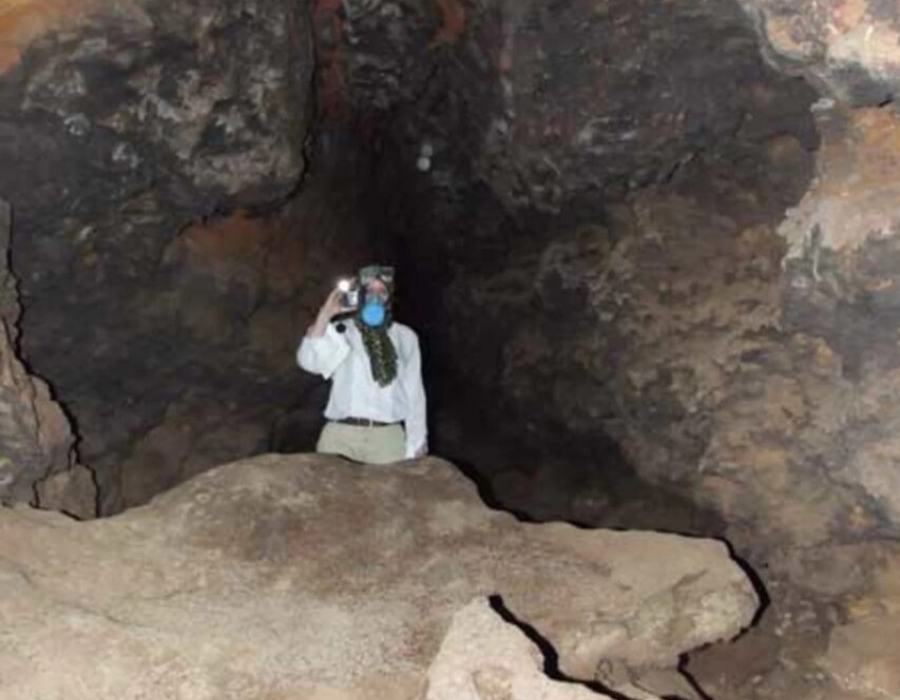
Is There a Subterranean Chamber Beneath the Great Pyramid?
Yes.
The Great Pyramid of Khufu contains a known Subterranean Chamber below its base.
This chamber is reached through an internal descending passage.
It is part of the pyramid’s documented architectural system.
The presence of this chamber demonstrates that ancient Egyptian pyramid construction could include substantial underground excavation.
However, it does not establish the existence of a buried city.
What does the chamber look like?
The Subterranean Chamber is cut into the natural bedrock.
Its rough and unfinished appearance differs from some of the more carefully finished spaces higher inside the Great Pyramid.
The chamber and related passages have attracted considerable attention from historians and architectural researchers.
Questions remain about their intended function and how they fit into the pyramid’s construction sequence.
Some researchers have considered whether changes in the original building plan may explain the unfinished appearance.
Such interpretations must be evaluated against the architecture rather than presented as certain.
Why did ancient builders excavate below the pyramid?
Subterranean chambers were an established part of ancient Egyptian royal funerary architecture.
Burial spaces could be cut into the ground or incorporated into massive stone monuments.
Different pyramid designs used different combinations of descending corridors, chambers, shafts, and passages.
The Great Pyramid illustrates a particularly complex architectural arrangement.
Its internal features are evidence of ancient engineering and funerary practice.
They are not, by themselves, evidence of a separate underground urban civilization.
Travelers interested in the experience can explore our guide to what visitors can actually see inside the Egyptian pyramids.
What Is Actually Beneath the Pyramid of Khafre?
The Pyramid of Khafre contains documented passages and a burial chamber associated with its original construction.
Khafre was a Fourth Dynasty ruler and the son of Khufu.
His pyramid stands on the Giza Plateau beside the Great Pyramid and the Pyramid of Menkaure.
Although Khafre’s Pyramid appears particularly imposing from several viewpoints, its internal arrangement is less elaborate than that of the Great Pyramid.
Does Khafre’s Pyramid have underground passages?
Yes.
The known internal system includes descending and horizontal passages and a burial chamber associated with the limestone bedrock.
These features have been studied by archaeologists.
The existence of real passages beneath part of the pyramid is not disputed.
The dispute concerns the proposed enormous, interconnected structures extending far below the known architecture.
What makes Khafre important to the controversy?
The most dramatic 2025 reconstructions were associated with the area beneath Khafre’s Pyramid.
That association brought renewed attention to an important monument that can sometimes receive less discussion than the Great Pyramid.
Khafre’s funerary complex also includes a mortuary temple, causeway, and valley temple.
The Great Sphinx is commonly associated with the broader Khafre complex, although some details of its original construction and interpretation remain subjects of scholarly discussion.
These surviving architectural relationships are essential to understanding the plateau.
How should the radar claim be evaluated?
A genuine new discovery beneath Khafre would need to fit into the documented geology and archaeological setting.
Researchers would need to distinguish known ancient passages from new anomalies.
They would also need to identify whether a proposed feature is inside the pyramid, beneath its base, or elsewhere below the plateau.
Those locations are not interchangeable.
The historical significance of a passage within an Old Kingdom royal tomb would differ dramatically from that of a purported city hundreds of meters deeper.
Are There Underground Chambers Beneath the Pyramid of Menkaure?
The Pyramid of Menkaure contains its own internal passages and burial spaces.
Menkaure ruled after Khafre during the Fourth Dynasty.
His pyramid is smaller than the other two main pyramids at Giza, but it remains an essential part of the royal landscape.
The monument has a documented internal architectural system, as do numerous other Egyptian pyramids.
These known spaces relate to funerary design rather than evidence of an extensive underground city.
The Pyramid of Menkaure also demonstrates why each pyramid should be studied individually.
The three major Giza pyramids were not identical projects.
Their dimensions, internal plans, construction details, and surrounding complexes differ.
Treating the entire plateau as one undifferentiated underground structure overlooks important archaeological distinctions.
The Real Lost City of the Pyramids: Heit el-Ghurab
One of the most revealing discoveries at Giza is not a secret city hidden kilometers underground.
It is a real ancient settlement excavated near the pyramids.
Known as Heit el-Ghurab, or the Lost City of the Pyramid Builders, the settlement occupies an area southeast of the Giza Plateau.
It lies approximately 400 meters south of the Great Sphinx.
Researchers associated with Ancient Egypt Research Associates, commonly called AERA, began investigating the site in 1988.
The settlement provides physical evidence of how the enormous pyramid-building projects were organized.
Who lived in the city?
The inhabitants included people involved in the construction and administration of the royal pyramid complexes.
Archaeological evidence points to workers, craftspeople, administrators, and individuals responsible for preparing food and managing supplies.
The settlement supported the construction operations associated particularly with Khafre and Menkaure, with evidence suggesting an earlier phase connected to Khufu may also have existed.
This was a working community, not merely a collection of temporary shelters.
Its infrastructure reflected the scale of the royal building projects.
What did archaeologists find?
Excavations identified an extensive settlement containing buildings and spaces used for different activities.
These included:
-
Residential structures and accommodation areas.
-
Workshops associated with production and maintenance.
-
Food preparation facilities.
-
Storage areas and administrative buildings.
-
Streets and organized circulation routes.
-
Evidence of livestock, food distribution, and substantial provisioning.
-
Clay seal impressions and other artifacts connected with administration.
Archaeologists also investigated associated burial areas.
These remains provide direct information about the people who supported the pyramids’ construction.
The discoveries have transformed interpretations of ancient Egyptian labor organization.
Why is this city more important than a speculative underground metropolis?
Heit el-Ghurab offers a rare connection between the monumental pyramids and the people who constructed them.
The archaeological material allows researchers to investigate how workers were housed, fed, organized, and supervised.
Food remains reveal aspects of diet.
Administrative artifacts help explain resource management.
Building layouts reveal the spatial organization of the settlement.
Instead of relying on imagined structures, researchers can interpret physical evidence recovered through excavation.
Was Heit el-Ghurab built underground?
No.
It was an ancient surface settlement whose remains became buried beneath accumulated material over time.
The site is sometimes called the Lost City of the Pyramids, but that name does not mean it was a massive subterranean metropolis.
This distinction is especially important because internet accounts may use the phrase lost city for both the real workers’ settlement and the disputed 2025 proposal.
One is an excavated archaeological site.
The other is an unverified interpretation of remote-sensing data.
Can tourists see the Lost City of the Pyramid Builders?
Heit el-Ghurab is an archaeological research area rather than a conventional attraction that every visitor can enter.
Travelers should not assume the excavated settlement is included in standard sightseeing access.
However, its history greatly enriches a visit to Giza.
Understanding the settlement changes how visitors interpret the pyramids.
The monuments were not isolated objects appearing mysteriously in the desert.
They were components of a highly organized society with infrastructure, administrators, skilled workers, transportation networks, and food-supply systems.
For travelers interested in the people behind the monuments, this is one of the most meaningful stories connected with the Old Kingdom of Egypt.
Why Does the Giza Plateau Contain So Many Underground Features?
The Giza Plateau combines a natural limestone landscape with thousands of years of human activity.
These two factors help explain why archaeologists encounter so many subsurface features.
The natural limestone bedrock
The pyramids were constructed on a limestone plateau.
Natural limestone formations can contain fractures, joints, cavities, and variations in rock density.
Weathering and groundwater movement can alter the subsurface.
Some features may be natural, while others result from human activity.
This creates a challenging environment for interpreting geophysical measurements.
An underground anomaly may indicate a cavity, a change in material, an ancient excavation, or a geological variation.
Its precise identity must be established through additional evidence.
Ancient quarrying activity
Construction of the pyramids required enormous quantities of stone.
Ancient quarrying reshaped parts of the plateau.
Quarry faces, extraction areas, construction debris, and modified ground surfaces are part of the archaeological landscape.
Some of these activities created irregularities that remain visible today.
Others are buried or difficult to distinguish without specialist investigation.
Understanding quarrying is essential before interpreting unusual subsurface patterns as unknown structures.
Burial shafts and tomb complexes
Giza was a major royal necropolis.
The surrounding cemeteries contain the tombs of officials, royal relatives, and other individuals associated with the ancient Egyptian state.
Many tombs included burial shafts or chambers cut into the ground.
Different periods introduced different funerary practices and architectural designs.
A buried void in this landscape may therefore belong to a tomb or another funerary feature rather than an unknown city.
Later activity on the plateau
The Giza Plateau continued to attract human activity long after the Fourth Dynasty.
Some monuments were reused, modified, or affected by later construction.
The complex archaeological history can produce overlapping features from different periods.
A single underground pattern may not belong to one original construction project.
Archaeologists must investigate dates, materials, and relationships before proposing a larger architectural system.
Did Ancient Egyptians Build Underground Cities?
Ancient Egyptians constructed underground spaces for several purposes, particularly burial and ritual activities.
Royal tombs, burial chambers, and rock-cut complexes demonstrate sophisticated methods of excavation.
The Valley of the Kings at Luxor offers a famous example of extensive underground royal tomb architecture from a much later period of Egyptian history.
At Saqqara, burial complexes include underground galleries and chambers from various eras.
These sites show that ancient Egyptians were capable of substantial subterranean engineering.
However, a tomb complex is not necessarily a city.
What makes an underground structure a city?
A city normally implies a settlement supporting organized human activity.
Depending on its historical context, archaeologists might expect evidence of occupation, movement, food preparation, storage, production, administration, and waste disposal.
An underground community would also require practical arrangements for access, air circulation, water, and the movement of people and materials.
Large empty chambers alone do not establish an urban function.
A collection of shafts does not prove permanent settlement.
And a computer reconstruction cannot reveal the age or social role of a structure without supporting physical evidence.
Could ancient Egyptians have constructed spaces that are still unknown?
Yes.
Archaeologists continue to investigate unrecorded tombs, shafts, and other architectural features throughout Egypt.
The possibility of additional discoveries is entirely reasonable.
However, a plausible undiscovered chamber and an alleged underground city extending kilometers into bedrock are very different propositions.
The evidence needed to establish one should not be confused with the evidence needed to establish the other.
Why Do Stories About Secret Chambers Beneath Giza Keep Appearing?
Mysteries surrounding the Giza Pyramids are not a modern invention.
The monuments attracted attention from ancient travelers, writers, historians, and later explorers.
Their scale and age encouraged speculation about construction methods, burial arrangements, and hidden spaces.
Some historical accounts mixed observations with stories that could not be independently verified.
Over time, popular culture added new explanations involving hidden archives, forgotten civilizations, extraordinary technologies, and ancient secret knowledge.
The legend of the Hall of Records
One recurring story concerns a supposed Hall of Records beneath the Giza Plateau.
In modern popular mythology, it is often described as a hidden archive containing knowledge from a lost civilization.
The idea became especially associated with twentieth-century esoteric narratives involving Edgar Cayce.
However, the proposed Hall of Records is not a documented archaeological discovery.
Its popular location beneath or near the Great Sphinx has not been established through accepted archaeological evidence.
The presence of real shafts and chambers at Giza does not demonstrate that such an archive exists.
Why is the Sphinx central to these stories?
The Great Sphinx of Giza is one of ancient Egypt’s most recognizable monuments.
Its monumental size, weathered appearance, and relationship to the surrounding pyramid landscape have inspired many theories.
Researchers have studied the Sphinx’s construction, geology, restoration history, and nearby structures.
However, speculative accounts frequently move from genuine unanswered questions to elaborate conclusions unsupported by direct evidence.
An unresolved historical question should remain a question until reliable evidence supports an answer.
Did ancient texts describe a giant city under Giza?
No accepted archaeological or textual evidence establishes the specific kilometer-scale underground complex proposed in 2025.
Ancient Egyptian religious texts contain complex descriptions of the afterlife and the underworld.
These texts are important for understanding Egyptian beliefs.
They should not automatically be interpreted as literal engineering diagrams of physical structures beneath the pyramids.
Likewise, later legends about underground passages do not establish that the structures depicted in modern reconstructions existed.
Historical interpretation requires attention to language, context, dating, and material evidence.
How Do Archaeologists Investigate Possible Hidden Structures?
Modern archaeology uses multiple methods to investigate the ground without unnecessary destruction.
Each method measures different physical properties and has different limitations.
An especially strong investigation combines several techniques rather than relying entirely on one type of measurement.
| Research method | What it can help reveal | Important limitation |
|---|---|---|
| Ground-Penetrating Radar | Shallow subsurface contrasts and possible buried features | Penetration varies with ground conditions and instrument frequency. |
| Electrical Resistivity Tomography | Contrasts in the electrical properties of underground materials | An anomaly may have multiple geological or archaeological explanations. |
| Muon Radiography | Density differences within large structures | Requires suitable detector arrangements and careful interpretation. |
| Seismic Techniques | Subsurface properties inferred from mechanical-wave behavior | Results depend on survey design, geology, and modeling assumptions. |
| Magnetometry | Magnetic contrasts associated with certain buried features | Not every material or structure produces a useful detectable signal. |
| Photogrammetry | Accurate three-dimensional records of visible surfaces | Cannot directly reveal structures hidden behind solid rock. |
| Archaeological Excavation | Physical materials, construction details, and stratigraphy | Can be invasive, expensive, and restricted by conservation requirements. |
Step 1: Establish what is already known
Before proposing a discovery, researchers examine existing archaeological records.
They review maps, earlier excavations, geological studies, and the documented architecture.
At Giza, this process is particularly important because the plateau has been investigated for generations.
Step 2: Identify the research question
A precise question produces a better investigation.
For example, researchers might ask whether a known passage continues beyond a blocked section.
They might investigate an unexplained density anomaly within a pyramid.
Or they might search for a burial shaft in a cemetery.
Each question requires a suitable method.
Step 3: Collect carefully controlled measurements
Researchers select instruments appropriate to the location, material, and expected depth.
The survey must account for background noise, local conditions, and potential sources of interference.
Reliable measurements need accurate records of how and where the data were collected.
Step 4: Test different explanations
An underground anomaly does not automatically have one meaning.
Researchers must consider natural geological features, ancient construction, later disturbance, or measurement artifacts.
Competing interpretations should be evaluated against the available evidence.
Step 5: Compare independent methods
When multiple techniques identify a feature in the same location, confidence may increase.
For example, muon measurements can be compared with other survey results and known architectural plans.
Independent teams may examine the same data or conduct new measurements.
Step 6: Verify physically when appropriate
Physical confirmation may involve authorized excavation, small-scale investigation, direct observation, or other carefully controlled procedures.
However, ancient monuments must be protected.
Drilling or excavation is not automatically justified simply because an interesting anomaly appears.
Authorities and specialists must consider conservation, safety, and the potential loss of archaeological information.
Step 7: Publish the results transparently
A strong archaeological publication explains the methodology, data, limitations, and conclusions.
Independent specialists should have enough information to evaluate the claims.
The final interpretation should not exceed what the evidence can reasonably establish.
This is the standard that helps distinguish a genuine archaeological discovery from an attractive but unsupported reconstruction.
How Can Readers Tell a Real Discovery From a Viral Claim?
Dramatic archaeology headlines can be difficult to evaluate, particularly when they include technical language.
A useful approach is to ask several straightforward questions.
Was the structure physically discovered or digitally reconstructed?
A photograph of an excavated chamber is different from a visualization generated from numerical data.
Both can be valuable, but they represent different levels of direct observation.
Look for captions explaining whether an image is a photograph, survey diagram, hypothesis, or artistic reconstruction.
Has the finding been independently reproduced?
A detection becomes more persuasive when separate instruments or teams produce consistent results.
The ScanPyramids Big Void is an example of why independent measurement matters.
Are the location and dimensions clear?
A report should explain whether a feature lies inside a pyramid, immediately beneath it, or deep beneath the plateau.
The difference may be hundreds or thousands of meters.
Vague descriptions can make unrelated structures appear connected.
Are the researchers reporting an anomaly or identifying a building?
An anomaly is an observation requiring interpretation.
A building is an archaeological conclusion that normally requires evidence of human construction.
The two terms should not be used interchangeably.
Does the report acknowledge uncertainty?
Credible archaeological research often identifies limitations.
Researchers may know that a cavity exists without understanding its purpose.
They may detect a resistivity anomaly without determining whether it is natural or artificial.
Such caution is a strength, not a weakness.
Has the information changed since publication?
An article may become outdated after new measurements, independent criticism, or a journal correction.
The August 2026 retraction is an example of a development that changes how earlier pyramid radar claims should be presented.
Readers should examine both the original announcement and subsequent scientific evaluation.
Why Did the Giza Underground City Story Spread So Quickly?
The claim combined several elements that naturally attract attention.
The pyramids are among the world’s most recognizable monuments.
Their construction still raises legitimate questions about engineering, labor organization, and the development of the Egyptian state.
A proposed underground city adds a dramatic new possibility to that familiar history.
The story also included detailed three-dimensional reconstructions.
Images showing enormous shafts beneath a famous monument are easy to share, even when the underlying data are disputed.
Technical terms such as satellite radar and tomography can make a claim sound more established than it is.
Why are dramatic reconstructions so persuasive?
A rendered underground structure may look like a real architectural survey.
The viewer sees walls, stairs, and chambers arranged in three dimensions.
However, that apparent precision can reflect decisions made by the person creating the model.
A reconstruction is useful when it accurately represents reliable evidence.
It becomes misleading if uncertain measurements are presented as a fully mapped ancient complex.
The best visual journalism labels reconstructions clearly and explains their evidentiary status.
Can scientific controversy itself be newsworthy?
Yes.
A controversial claim can be worth investigating even when it is eventually rejected.
The discussion may explain how scientific methods work, why archaeologists disagree, and what is actually known about a famous site.
In this case, the controversy creates an opportunity to distinguish documented underground discoveries from interpretations that remain unsupported.
That distinction is more useful than presenting the proposed city as either an unquestionable discovery or a mystery that must be solved through speculation.
Could Future Research Discover More Underground Structures at Giza?
Additional discoveries are possible.
The Giza Plateau is a large archaeological landscape containing extensive remains from different periods.
Not every feature has been excavated, mapped in detail, or interpreted with complete certainty.
Modern research techniques continue to improve.
Instruments become more sensitive, surveys become more precise, and researchers develop better ways to combine information from different methods.
However, improved technology does not remove the need for verification.
What might future research realistically reveal?
Possible future discoveries include additional tomb shafts, burial chambers, construction features, cavities, and architectural relationships.
Some previously recorded structures may be studied more accurately.
Other anomalies may turn out to be natural geological features.
Research might clarify the purpose of the ScanPyramids Big Void or other internal spaces.
These are reasonable scientific possibilities, not predictions that any specific discovery will occur.
What would change the current conclusion about the hidden city?
Evidence would need to become substantially stronger.
That might involve reproducible surveys, independently confirmed measurements, an established physical connection with documented structures, or archaeological investigations demonstrating artificial construction.
A future discovery would also need a reliable historical context.
Archaeologists would need to identify what was built, when it was built, and what it was used for.
Until such evidence exists, the proposed underground metropolis should remain classified as unverified.
What Is the Most Important Archaeological Mystery at Giza?
There is no single question that all researchers consider the most important.
Different specialists investigate different aspects of the plateau.
Some study the internal architecture of the pyramids.
Others examine construction logistics, ancient environments, quarrying, funerary practices, or the settlements that supported royal building projects.
Several questions remain especially interesting.
Why was the ScanPyramids Big Void constructed?
Its presence is supported by scientific measurements, but its original function has not been established.
Understanding whether it relates to structural design or construction would contribute to knowledge of the Great Pyramid.
How were the largest stone blocks transported and positioned?
Archaeological evidence supports an organized workforce using sophisticated logistics.
However, specialists continue to investigate the detailed construction sequences and methods.
Different stages of pyramid building may have required different solutions.
How did the Giza landscape change over time?
Ancient waterways, quarrying, construction, and later human activity transformed the area.
Reconstructing that landscape helps explain why particular monuments and settlements were placed where they are.
What can the pyramid builders’ settlement reveal?
Research at Heit el-Ghurab provides information about food, labor, administration, craft production, and daily life.
These subjects are essential to understanding how ancient Egyptian society supported major state projects.
The real story is not only about impressive monuments.
It is also about the people, knowledge, and institutions that made them possible.
Can You Visit the Hidden City Under the Giza Pyramids in 2027?
No. There is no confirmed underground-city attraction beneath Giza that travelers can book or explore.
The supposed enormous complex remains unverified.
A visit to the Giza Plateau should focus on the documented pyramids, temples, Sphinx, tombs, and archaeological landscape.
Some pyramid interiors may be open through official visitor arrangements, but these are established archaeological spaces rather than access points to the disputed underground city.
Can visitors enter the Great Pyramid?
Access to the interior of the Great Pyramid may be offered through separate ticketing arrangements, subject to current restrictions.
Visitors normally encounter narrow passages, steep or confined routes, and ancient interior chambers.
The experience is very different from walking through a spacious museum.
The route is not suitable for everyone.
Travelers who experience severe claustrophobia, significant mobility limitations, or difficulty negotiating steep passages should consider whether an interior visit is appropriate.
Can visitors enter Khafre’s Pyramid?
Public interior access may be available depending on the operating arrangements in effect during the visit.
Because site access and restoration arrangements can change, travelers should verify availability shortly before arrival.
The pyramid’s interior is an authentic ancient funerary structure.
It is not an entrance to the alleged underground complex shown in the 2025 reconstructions.
Are the hidden chambers open to tourists?
The ScanPyramids Big Void is not a conventional public-access room.
Visitors should not expect to enter it during an ordinary Great Pyramid visit.
Likewise, restricted shafts, research areas, and archaeological excavation zones are not automatically accessible.
Access must be authorized.
How much does it cost to visit Giza in 2027?
A reliable 2027 price cannot be stated without checking the official ticketing arrangements applicable to the travel date.
Giza Plateau admission and admission to individual pyramid interiors may involve separate ticket categories.
Additional services, such as private transport and licensed guiding, have their own costs.
Travelers should check current official information instead of relying on older online prices.
This is particularly important for international visitors whose ticket categories may differ from those available to Egyptian residents.
What are the opening hours?
Opening times and last-entry rules can vary according to official schedules, seasonal arrangements, and special circumstances.
Visitors should confirm the hours shortly before their 2027 visit.
Arriving early in the day can be a practical choice for visitors who prefer cooler conditions and more time to explore.
However, an early arrival does not guarantee that every interior monument will be open.
Is the Giza Plateau wheelchair accessible?
The plateau presents accessibility challenges because of uneven ground, slopes, substantial distances, and ancient architectural constraints.
Some outdoor viewpoints may be more manageable with suitable transport and assistance than the interiors of the pyramids.
The steep, narrow internal passageways of ancient pyramids are not generally suitable for wheelchair access.
Travelers with mobility requirements should arrange their visit around accessible outdoor experiences and confirm current transport arrangements.
A private vehicle and carefully planned route can help reduce unnecessary walking.
What Can You Actually See at the Giza Pyramids?
The confirmed monuments provide a much richer experience than the alleged underground-city attraction that appears in some online discussions.
A first-time visitor should understand the principal components of the plateau.
| Attraction | What makes it important | Visitor experience |
|---|---|---|
| Great Pyramid of Khufu | The largest pyramid at Giza and site of important internal discoveries | Exterior views and interior access where officially available |
| Pyramid of Khafre | A major Fourth Dynasty royal pyramid central to the 2025 controversy | Exterior exploration and potential official interior access |
| Pyramid of Menkaure | The third main royal pyramid and part of the Giza architectural sequence | Exterior views and any available interior access |
| Great Sphinx | Monumental limestone sculpture associated with the Giza funerary landscape | Viewing and photography from permitted areas |
| Khafre’s Valley Temple | Important surviving component of the funerary complex | Architectural interpretation, subject to access |
| Pyramid panorama viewpoints | Reveal the relationship between the three pyramids and the surrounding plateau | Photography and understanding site geography |
| Selected subsidiary monuments | Help explain royal burials, religious practice, and tomb architecture | Access depends on the monument |
Travelers should not rush directly to the largest pyramid and overlook the surrounding structures.
Much of the archaeological story lies in the relationships between monuments.
The Great Pyramid and its known internal architecture
The Great Pyramid of Khufu remains essential for understanding ancient Egyptian construction.
Its passages and chambers reveal an extraordinary architectural undertaking.
The modern discoveries made through muon radiography add another layer to that story.
A guide can explain how the known spaces relate to the pyramid’s overall design and why previously unknown voids matter.
The Sphinx and the Khafre complex
The Sphinx provides an opportunity to examine the relationship between sculpture, natural bedrock, and monumental architecture.
The nearby valley temple and causeway help explain how royal funerary complexes functioned.
Together, the monuments show that a pyramid was part of a larger ceremonial and architectural landscape.
The Western Cemetery
The cemeteries surrounding the pyramids include tombs associated with ancient officials and other members of society.
Their architecture and archaeological history are relevant to modern investigations of subsurface anomalies.
Visitors should not assume every cemetery area or tomb is open.
A guided explanation may still help travelers understand why so much of the plateau’s history lies outside the three main pyramids.
How to Explore Giza in Half a Day
For most first-time visitors, approximately three to four hours is a reasonable starting point for the main Giza highlights.
Visitors who want to enter multiple pyramids, spend considerable time taking photographs, or examine the surrounding monuments may need longer.
A useful route should account for both geography and the physical demands of the site.
A practical three-to-four-hour itinerary
| Stage | Suggested time | Main activity |
|---|---|---|
| Orientation | 20–30 minutes | Understand the site layout and historical background |
| Great Pyramid | 45–60 minutes | Exterior exploration; longer if entering the pyramid |
| Khafre and Menkaure | 45–60 minutes | Compare royal pyramids and construction differences |
| Panoramic viewpoint | 20–30 minutes | Photograph and interpret the full pyramid landscape |
| Sphinx and related monuments | 40–60 minutes | Explore the Sphinx area and Khafre’s funerary complex |
| Transfers and flexibility | 20–40 minutes | Allow for movement, rest, and operating conditions |
These are planning suggestions, not a guaranteed schedule.
Travel times and route order depend on visitor access arrangements, transport, weather, and site conditions.
Should you go inside a pyramid?
Entering a pyramid is worthwhile for travelers interested in experiencing ancient interior architecture.
However, it may not be the best option for visitors who dislike confined spaces.
The internal routes can be physically demanding.
An exterior-focused visit still provides a substantial archaeological experience.
The decision should be based on personal interests and comfort rather than the assumption that entering a pyramid reveals access to mysterious undiscovered chambers.
Should you hire an Egyptologist guide?
A knowledgeable guide can explain the differences between the three pyramids, their historical relationships, and the distinction between confirmed discoveries and speculative theories.
Guiding is especially useful when visitors want to understand construction, funerary practices, and ancient Egyptian society.
For independent travelers, preparing a route in advance and reading about the monuments can also make the experience more rewarding.
Our Cairo itinerary provides additional ideas for combining the pyramids with other historical attractions.
What Other Archaeological Sites Should You Visit Near Giza?
Travelers interested in the underground-city controversy may find other Egyptian archaeological sites especially rewarding.
Giza is part of a much wider ancient funerary landscape.
The most useful comparison is not between Giza and an imagined underground metropolis.
It is between different periods of Egyptian pyramid construction and the actual underground structures that survive.
Saqqara: Where pyramid architecture developed
The Saqqara Necropolis contains an extraordinary range of funerary monuments.
Its most famous landmark is the Step Pyramid of Djoser.
The complex is associated with the Third Dynasty and represents a major development in monumental stone architecture.
Saqqara is also important for understanding the evolution of tombs and pyramid design.
Selected underground features and burial spaces provide evidence of ancient Egyptian engineering.
Visitors should check which specific monuments are open before traveling.
Dahshur: A different stage of pyramid engineering
The Dahshur pyramid field contains important royal pyramids associated with the development of the true pyramid form.
The Bent Pyramid and Red Pyramid are central to the story of ancient Egyptian engineering.
Their designs illustrate construction decisions that differed from those used at Giza.
Exploring Dahshur helps visitors understand that pyramid building developed through experimentation and accumulated technical knowledge.
Where authorized access is available, certain pyramid interiors provide an opportunity to experience genuine ancient passageways.
Memphis: Understanding the ancient capital
Ancient Memphis was an important administrative and religious center of Egypt.
Its relationship with the wider necropolis is essential to the history of Giza, Saqqara, and Dahshur.
The modern archaeological remains are only part of what was once a major ancient city.
Learning about Memphis helps place the royal tombs within the political and social organization of the Old Kingdom.
The Grand Egyptian Museum and archaeological interpretation
A museum visit can complement a day on the plateau.
Artifacts, historical interpretation, and carefully presented archaeological context can explain how ancient Egyptian royal monuments were constructed and used.
Visitors should check current exhibition access and display information when planning their trip.
The museum experience is different from walking through an archaeological site.
Together, they can make the evidence behind Egypt’s ancient history easier to understand.
A One-Day Giza Archaeology Itinerary for Curious Travelers
A visitor particularly interested in ancient mysteries may prefer a day organized around the history of discoveries rather than the usual photo stops alone.
Morning: Giza Plateau
Begin with the Great Pyramid and an introduction to the ScanPyramids discoveries.
Discuss the difference between the confirmed Big Void and the later disputed radar claims.
Continue toward Khafre’s Pyramid to understand the location of the 2025 alleged underground complex.
Visit the Sphinx area and consider how the surviving monuments relate to the original royal complex.
Midday: Break and transfer
Allow time for rest, food, and transportation.
The timing depends on visitor preferences and traffic conditions.
Afternoon: Saqqara
Explore the development of pyramid construction through the Step Pyramid and related monuments.
Compare documented ancient burial spaces with the ideas presented in modern discussions about underground structures.
This combination gives travelers a useful historical framework.
Rather than searching for one speculative discovery, visitors can see how archaeological understanding has developed across several centuries of ancient Egyptian architecture.
Those who prefer a more relaxed day should dedicate the full visit to Giza instead of rushing between sites.
Which Giza Experience Is Best for Your Travel Style?
Not every visitor needs the same route.
The best experience depends on historical interests, physical comfort, available time, and the broader Egypt itinerary.
| Traveler | Recommended approach | Why |
|---|---|---|
| First-time visitor | Giza highlights and Sphinx | Covers the essential monuments without excessive complexity |
| Archaeology enthusiast | Giza plus Saqqara or Dahshur | Compares actual ancient structures and construction history |
| Family with children | Exterior monuments, accessible viewpoints, shorter explanations | Balances learning, photography, and rest |
| Photography-focused visitor | Pyramid panorama and Sphinx viewpoints | Emphasizes landscape and visual relationships |
| Traveler with limited mobility | Prearranged vehicle-based outdoor route | Reduces demanding walking where possible |
| Visitor interested in scientific discoveries | Great Pyramid interpretation and historical context | Explains muon detection, actual voids, and archaeological methods |
| Traveler with one free morning | Focused Giza visit | Avoids spending too much time transferring between sites |
For families
A straightforward explanation of how the pyramids were built may be more engaging than a detailed discussion of radar signal processing.
Children often respond well to questions about the size of stone blocks, the purpose of burial chambers, and the lives of ancient workers.
The Heit el-Ghurab story offers an accessible way to explain that real people organized and built these monuments.
For archaeology enthusiasts
A more detailed itinerary can explore the differences among Khufu, Khafre, and Menkaure.
It can also cover the relationship between royal pyramids, subsidiary tombs, temples, and ancient settlements.
Visitors particularly interested in the evidence may prefer time for careful interpretation rather than an itinerary crowded with unrelated attractions.
For travelers with limited time
The Giza Plateau alone deserves several hours.
A short visit should prioritize the main royal pyramids, the Sphinx, and one or two useful viewpoints.
Attempting to include too many sites can reduce the quality of the experience.
For travelers with accessibility requirements
A route should be planned around actual mobility needs.
Vehicle access, surface conditions, available assistance, and rest opportunities matter more than the number of attractions included.
Interior pyramid entry may be inappropriate for visitors who cannot safely manage steep and narrow passages.
Common Misconceptions About the Giza Underground City
The story has generated several recurring misunderstandings.
Correcting them helps readers evaluate future discoveries more carefully.
Misconception 1: A satellite photographed the underground city
The widely shared images were digital reconstructions based on disputed interpretations.
They were not conventional photographs showing an excavated ancient city beneath the plateau.
Misconception 2: All radar scanning is unreliable
Radar and other geophysical methods are important tools in archaeological research.
Their reliability depends on the technique, survey conditions, measurement design, and interpretation.
Questioning one particular application does not invalidate an entire scientific field.
Misconception 3: The 2017 Big Void proves there is a city underneath Giza
The Big Void was detected within the Great Pyramid of Khufu.
It does not confirm giant shafts or an underground metropolis beneath Khafre.
The two claims concern different structures and different evidence.
Misconception 4: The 2026 retraction means there are no mysteries left
A paper can be retracted while genuine unanswered questions remain.
The Big Void still requires interpretation.
The Giza Plateau still contains archaeological areas under investigation.
Rejecting unsupported conclusions does not end scientific curiosity.
Misconception 5: Archaeologists have never explored beneath the pyramids
Known passages and chambers have been documented for generations.
The Osiris Shaft and other subterranean features demonstrate direct archaeological investigation below the surface.
The debate is about the alleged massive city, not whether underground archaeology exists at all.
Misconception 6: A geometric shape must be artificial
Natural geology and data processing can produce patterns that look regular.
Additional evidence is needed to establish that a feature was deliberately constructed.
Misconception 7: An underground city would automatically be older than the pyramids
The age of a structure cannot be determined from its position or appearance alone.
Reliable dating requires contextual evidence.
A feature lying beneath another monument is not automatically evidence of a previously unknown prehistoric civilization.
Misconception 8: Visitors can book tours to the newly discovered city
No confirmed public archaeological attraction corresponding to the proposed 2025 underground city exists.
Any itinerary promising access to such a site should be treated with caution.
What Should You Know Before Visiting the Pyramids in 2027?
Understanding the science is valuable, but practical preparation matters once you reach Egypt.
Verify access rather than relying on old articles
Official ticket arrangements, monument openings, and site regulations can change.
Check which pyramid interiors are accessible on your intended date.
Do not assume a ticket covering the plateau includes every additional monument.
Prepare for heat and exposed conditions
The Giza Plateau contains extensive outdoor areas.
Shade can be limited in some locations, and walking distances can be considerable.
Carry drinking water, wear comfortable footwear, and consider sun protection.
The most comfortable time of day depends on the season and prevailing weather.
Understand what a pyramid interior feels like
Interior visits often involve steep, narrow corridors and confined spaces.
They can be uncomfortable for travelers with certain mobility or medical limitations.
A good visit does not require entering every pyramid.
Allow enough time
A rushed itinerary may overlook important architectural relationships.
Visitors particularly interested in the underground discoveries should allow time for explanations of the known internal passages and scientific research.
Use accurate historical interpretation
When discussing archaeological mysteries, distinguish established discoveries from theories.
A qualified guide should be able to explain which structures have been excavated, which have been detected using non-invasive methods, and which are speculative.
Respect restricted areas
The Giza Plateau is a protected archaeological landscape.
Visitors should remain within permitted routes and follow instructions from site authorities.
Unauthorized entry into shafts or excavation areas can damage important remains and create serious safety risks.
Plan transportation in advance
Giza is part of the Greater Cairo metropolitan area.
Travel time can vary significantly according to traffic and the location of your accommodation.
Prearranged transport is useful for travelers planning several attractions in one day.
If you’re organizing a broader Egypt holiday, our Egypt trip planning guide explains how to coordinate destinations and travel time.
How Egypt Time Travel Can Help You Explore Giza’s Real Archaeology
For travelers who want to understand the evidence behind ancient Egyptian monuments, Giza is best experienced as an archaeological landscape rather than a collection of mysterious buildings.
A private visit can be structured around the three royal pyramids, the Sphinx, the historical development of pyramid architecture, and confirmed scientific discoveries.
Travelers with more time can include Saqqara or Dahshur.
An archaeology-focused itinerary can also connect Cairo with Luxor, where later royal tomb architecture provides a revealing comparison with the pyramid age.
Egypt Time Travel can help arrange a private itinerary appropriate to your interests, travel dates, and preferred pace.
Explore the company’s Egypt archaeology tour options or request a personalized route focused on Giza and nearby ancient sites.
The objective is to experience the monuments themselves and understand what researchers have actually learned about them.
Frequently Asked Questions About the Hidden City Under the Giza Pyramids
1. Is there really a hidden city underneath the Giza Pyramids?
No underground city beneath the Giza Pyramids has been scientifically confirmed. The widely discussed 2025 claim was based on disputed satellite-radar interpretations rather than an excavated archaeological city. The Giza Plateau does contain genuine underground chambers, tomb shafts, and passages, but these known structures do not establish the existence of the enormous interconnected metropolis described in viral reports.
2. What did the 2025 Giza radar research claim to discover?
Researchers claimed that their interpretation of satellite radar data revealed enormous shafts, chambers, and connected structures beneath the Pyramid of Khafre. Their digital reconstructions suggested a complex extending far below the plateau. Independent experts questioned the method and conclusions, and the proposed structures have not been confirmed through archaeological excavation or independently validated measurements.
3. How deep is the alleged underground city beneath the pyramids?
Different descriptions of the 2025 claim referred to shafts extending hundreds of meters underground and a broader complex reaching approximately two kilometers in depth. These figures describe the researchers’ proposed interpretation, not measured dimensions of an excavated site. There is no accepted archaeological evidence establishing that a city exists at those depths beneath Giza.
4. Was the Giza pyramid radar study retracted?
Yes. On August 10, 2026, the journal Remote Sensing retracted a 2022 paper by Filippo Biondi and Corrado Malanga concerning radar interpretations of internal structures in Khufu’s Pyramid. The journal identified serious methodological flaws and statistical errors. The retracted paper was separate from the widely publicized 2025 claim about enormous underground structures beneath Khafre.
5. What is the difference between the ScanPyramids Big Void and the hidden city claim?
The ScanPyramids Big Void is a scientifically detected space inside the Great Pyramid of Khufu, reported in 2017 using multiple muon-detection techniques. The hidden-city claim concerns much larger structures allegedly located deep beneath the Pyramid of Khafre and the Giza Plateau. The Big Void does not independently support or confirm the proposed underground city.
6. Have archaeologists found real tunnels beneath the pyramids?
Yes. Archaeologists have documented underground passages, burial shafts, and chambers at Giza. Examples include the Subterranean Chamber below the Great Pyramid’s base and the multi-level Osiris Shaft near Khafre’s causeway. These structures have archaeological contexts distinct from the unverified proposal of a massive underground metropolis.
7. Who discovered the alleged hidden city under the pyramids?
The 2025 public announcement was associated with Filippo Biondi, Corrado Malanga, and Armando Mei. Their team presented interpretations of satellite radar data that they believed indicated enormous underground structures. Because the proposed city has not been independently confirmed, it should be described as an alleged discovery rather than a verified archaeological finding.
8. Is the Pyramid of Khafre connected to an underground city?
There is no confirmed evidence linking Khafre’s Pyramid to the vast underground city proposed in 2025. The pyramid has known internal passages and a burial chamber, and its wider funerary complex includes important temples and a causeway. No verified excavation has demonstrated that these structures connect to the enormous deep shafts shown in the controversial reconstructions.
9. Is there a Hall of Records beneath the Great Sphinx?
No archaeologically verified Hall of Records has been established beneath the Great Sphinx. The idea is associated with modern esoteric traditions and stories about lost civilizations. Research into the Sphinx and surrounding geology has not confirmed a hidden archive containing ancient records.
10. What is the real Lost City of the Pyramid Builders?
The Lost City of the Pyramid Builders is Heit el-Ghurab, an excavated settlement approximately 400 meters south of the Sphinx. Archaeologists documented areas associated with workers, craftspeople, administration, storage, and food preparation. The settlement was part of the infrastructure supporting pyramid construction. It was not the enormous deep underground city proposed in the 2025 radar claims.
11. Can tourists enter secret chambers inside the Great Pyramid?
Tourists may enter certain officially accessible parts of the Great Pyramid when admission is available, but not every known or newly detected space is open. The ScanPyramids Big Void is not a standard visitor-access chamber. Travelers should use authorized routes and check current ticketing and monument-access conditions before visiting.
12. Could archaeologists discover more hidden chambers at Giza?
Yes. Additional chambers, shafts, cavities, or other archaeological features may be identified through future research. The Giza Plateau contains extensive remains, and modern surveying techniques continue to develop. However, the possibility of future discoveries does not establish the existence of a specific underground city. Any new claim must be supported by reliable measurements and appropriate archaeological investigation.
Conclusion: What Is Really Hidden Beneath the Giza Pyramids?
The claim that a vast hidden city exists beneath the Giza Pyramids remains unverified.
The dramatic 2025 radar reconstructions generated worldwide interest, but independent specialists questioned the methods and archaeological conclusions. A related 2022 paper by two of the researchers was subsequently retracted in August 2026.
At the same time, genuine discoveries continue to reveal important details about the Giza Plateau.
The ScanPyramids Big Void, the North Face Corridor, the Subterranean Chamber, the Osiris Shaft, and the excavated settlement at Heit el-Ghurab demonstrate how much there is to learn from reliable archaeological evidence.
For travelers visiting Egypt in 2027, these discoveries offer an excellent reason to explore Giza with curiosity and realistic expectations.
The most compelling story is not necessarily the possibility of a gigantic lost city.
It is the continuing scientific effort to understand how ancient Egyptians built, used, and lived around one of the most extraordinary monumental landscapes in human history.
