
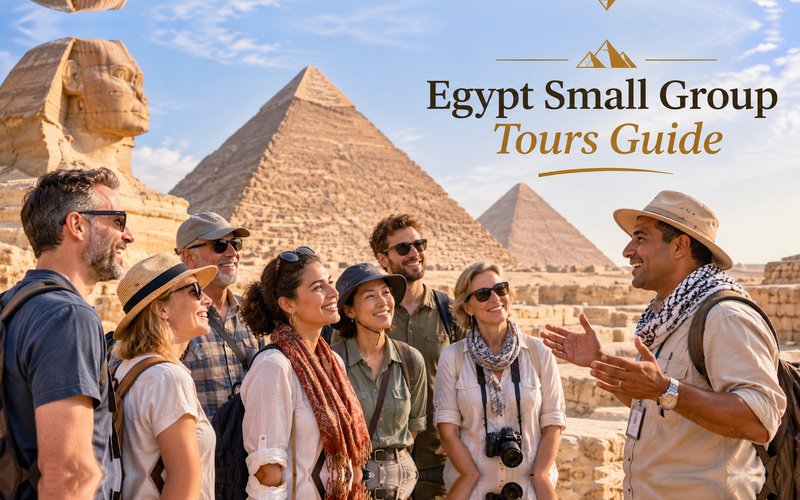
Quick Answer: What are the best Egypt small group tours for 2027?
The best Egypt small group tours for 2027 combine Cairo’s pyramids and museums with Luxor’s ancient temples, Aswan’s Nile scenery, and knowledgeable local guides. Groups typically range from around 6 to 16 travelers, although there is no universal definition. For most first-time visitors, an 8–12-day tour offers a good balance of sightseeing, comfortable transportation, cultural experiences, and time to explore.
An Egypt small group tour can make a complicated multi-city journey considerably easier. Instead of coordinating airport transfers, domestic flights, hotels, archaeological tickets, Nile cruises, and local guides independently, travelers follow a planned route with a manageable number of companions.
But not every small group tour in Egypt delivers the same experience.
A tour advertised for 12 travelers might use an intimate private minibus, share a Nile cruise vessel with hundreds of other passengers, or combine several independently operated excursions. These differences matter as much as the number printed on the itinerary.
For 2027, the smartest approach is to compare group limits, actual sightseeing time, guide qualifications, transport arrangements, and total costs before selecting a departure.
This guide explains how to choose the right tour, which destinations deserve priority, what to expect from different travel styles, and how to avoid the booking mistakes that can turn an otherwise excellent Egyptian holiday into an exhausting schedule.
What Is an Egypt Small Group Tour?
An Egypt small group tour is an organized journey in which a relatively limited number of travelers share a planned itinerary, transportation, accommodation arrangements, and guided experiences.
Unlike a private tour, participants generally book individual places on a scheduled departure and travel alongside other guests.
The operator usually coordinates the essential logistics, including transportation between destinations, sightseeing arrangements, and selected hotel stays.
Small group Egypt tours are especially popular among travelers who want more support than independent travel provides without the atmosphere of a large coach tour.
How Many People Are in a Small Group Tour?
There is no legally standardized international definition of a small group tour.
A useful comparison framework is:
|
Group size |
Typical experience |
Best suited for |
|---|---|---|
|
2–6 travelers |
Very intimate, with potentially greater personal attention |
Couples, friends, premium travel |
|
7–10 travelers |
Social atmosphere with manageable coordination |
Solo travelers, first-time visitors |
|
11–16 travelers |
Wider social mix, often with shared operating costs |
Value-focused and cultural groups |
|
17–24 travelers |
More structured group logistics |
Travelers comfortable with larger groups |
|
25+ travelers |
Traditional coach-tour environment |
Large organized departures |
These are descriptive categories, not official industry classifications.
Some tour companies call a 16-person departure a small group. Others use the term only for tours carrying fewer than 10 passengers.
The most important question is not the average group size. It is the maximum number of travelers permitted on your specific departure.
Ask the operator to confirm three separate figures:
-
Maximum group capacity.
-
Number of passengers currently booked.
-
Minimum number needed for the departure to operate.
An average of eight passengers means little if the operator can accept 20.
Small Group Tours vs Private Tours vs Large Group Tours
The right format depends on how much independence, flexibility, and social interaction you prefer.
|
Feature |
Small group tour |
Private tour |
Large coach tour |
|---|---|---|---|
|
Other travelers |
Usually 6–16 |
Only your party |
Often 25 or more |
|
Schedule |
Mostly fixed |
Usually customizable |
Fixed |
|
Guide attention |
Shared among fewer people |
Dedicated to your party |
Shared among more people |
|
Flexibility |
Moderate to limited |
Usually highest |
Lowest |
|
Cost sharing |
Yes |
Limited to your party |
Yes |
|
Social experience |
Strong |
Primarily your companions |
Broad group interaction |
|
Hotel choice |
Usually predetermined |
Often customizable |
Predetermined |
|
Departure flexibility |
Scheduled dates |
Often flexible dates |
Scheduled dates |
|
Best advantage |
Balance of value and convenience |
Personal control |
Standardized logistics |
For someone visiting Egypt alone, joining a small group can provide companionship and simplify arrangements.
For a couple interested in photography, specialist archaeology, or slower travel, a private itinerary may provide better value despite a higher quoted price.
Travelers who prioritize complete control over sightseeing can also compare Egypt private tour packages before committing to a fixed group departure.
Why Choose a Small Group Tour of Egypt in 2027?
The strongest reason to choose small group travel is not simply convenience. It is the combination of guided historical interpretation, coordinated transportation, and shared experiences.
Egypt’s major attractions are spread across considerable distances. A visitor can spend one day examining the pyramids near Cairo and another visiting temples hundreds of kilometers south in Luxor.
Organizing these experiences independently is possible, but it requires time, research, and local logistical awareness.
Better Access to Your Guide’s Knowledge
Ancient Egypt becomes more understandable when a qualified guide explains how the monuments relate to one another.
At the Giza Plateau, for example, the Great Pyramid belongs to the funerary complex of Pharaoh Khufu, a Fourth Dynasty ruler of the Old Kingdom.
The surrounding pyramids, tombs, temples, and ceremonial structures form part of a larger historical landscape.
A knowledgeable guide can explain this relationship rather than treating every monument as a disconnected photo stop.
Smaller groups often make it easier to ask questions about architecture, religion, royal history, burial traditions, and archaeological interpretation.
However, small group size does not automatically guarantee a qualified Egyptologist. Ask about the guide’s credentials and whether the same guide accompanies the entire journey.
More Manageable Sightseeing
Egypt’s most famous archaeological sites can involve considerable walking, uneven surfaces, exposed areas, stairs, and limited shade.
In a smaller group, coordination may be easier during museum visits, security checks, restaurant stops, and transfers.
This can reduce the amount of time spent regrouping, although it does not guarantee faster entry or priority access.
Large monuments remain busy regardless of group size.
An Easier Introduction to Egyptian Culture
Traveling with a local guide offers opportunities to understand everyday Egyptian life beyond archaeological sites.
Depending on the itinerary, cultural experiences might include:
-
Exploring traditional markets and learning about local trading customs.
-
Trying Egyptian dishes such as koshari, ful medames, molokhia, and freshly baked baladi bread.
-
Learning about the cultural significance of the Nile.
-
Visiting an artisan workshop with transparent purchasing arrangements.
-
Enjoying a traditional felucca sailing experience.
-
Meeting local residents through appropriately organized community activities.
The quality of these activities depends on how they are arranged.
A genuine cultural visit should be respectful, voluntary for participants, and beneficial to the people hosting it.
Shared Experiences Without a Large-Crowd Atmosphere
Group trips to Egypt appeal to travelers who enjoy discovering places alongside people with similar interests.
Conversations over breakfast, a shared sunset on the Nile, and the excitement of visiting Abu Simbel can create a pleasant social atmosphere.
At the same time, a well-designed tour should allow some independent time.
You should not need to spend every meal, evening, and free hour with the group.
Better Cost Sharing
Shared transportation, guides, and operational arrangements can reduce the cost per traveler compared with a privately operated journey.
However, small groups are not necessarily cheaper than independent travel.
An independently organized trip using modest hotels and public transport may cost less.
The value of a small group tour comes from the combined services, logistical support, and experience rather than a guaranteed lowest price.
Which Type of Egypt Small Group Tour Is Right for You?
Small group tours of Egypt are available in several styles.
The distinction matters because two tours covering the same destinations can feel completely different.
|
Tour style |
Main experience |
Ideal duration |
Suitable traveler |
|---|---|---|---|
|
Classic Egypt |
Pyramids, temples, tombs, museums |
7–10 days |
First-time visitor |
|
Egypt with Nile cruise |
Archaeological sightseeing and river travel |
8–12 days |
Couples, seniors, general travelers |
|
Luxury small group |
Premium accommodation and carefully paced activities |
8–14 days |
Comfort-focused travelers |
|
Archaeology-focused |
Extended visits and detailed historical interpretation |
10–15 days |
History enthusiasts |
|
Budget adventure |
Essential landmarks and simpler accommodation |
7–14 days |
Younger or flexible travelers |
|
Family-focused |
Shorter visits, varied activities, suitable pacing |
8–12 days |
Families with children |
|
Egypt and Jordan |
Pyramids, Nile Valley, Petra, Jordanian landscapes |
12–16+ days |
Multi-country travelers |
|
Egypt with Red Sea |
Culture followed by beach relaxation |
10–14 days |
Couples, families, mixed-interest groups |
Durations are editorial planning recommendations, not confirmed departure lengths.
Classic Small Group Egypt Tours
A classic itinerary generally focuses on Cairo, Giza, Luxor, and Aswan.
The most balanced versions combine Old Kingdom monuments in northern Egypt with New Kingdom temples and royal tombs in Upper Egypt.
Typical highlights include the Pyramids of Giza, the Great Sphinx, Karnak Temple, the Valley of the Kings, Philae Temple, and Abu Simbel when time permits.
A classic trip works particularly well for first-time visitors because it introduces several major periods of Egyptian history.
For travelers with seven or eight days, however, the itinerary can become busy. Prioritize essential attractions rather than trying to visit every museum and temple.
Luxury Small Group Tours in Egypt
Luxury small group tours in Egypt focus on comfort, service standards, accommodation quality, and well-designed experiences.
Luxury should mean more than selecting expensive hotels.
A genuinely premium itinerary might offer:
-
Smaller maximum group sizes.
-
High-quality hotels in convenient locations.
-
Better-equipped vehicles and adequate luggage space.
-
Experienced guides with strong subject knowledge.
-
More thoughtfully scheduled sightseeing.
-
Additional flexibility during free periods.
-
Better cabin categories on Nile cruises.
-
Clearly explained dining and transfer arrangements.
The word luxury does not guarantee a particular hotel, cruise vessel, or guide-to-guest ratio.
Before paying, request hotel names, room categories, cruise details, and written confirmation of the services included.
Travelers considering a premium holiday can compare Egypt luxury tours to understand how the accommodation and sightseeing style differs from standard packages.
Budget-Friendly Small Group Tours
Budget group tours can be excellent for travelers who care more about experiences than premium accommodation.
They may use simple hotels, overnight trains, budget-conscious transport, or a higher proportion of optional activities.
A lower package price is not necessarily a warning sign.
However, ask whether the itinerary includes attraction admission, domestic flights, checked luggage, lunches, optional excursions, and service tips.
A tour with a low advertised price can become substantially more expensive if major activities are excluded.
Egypt Small Group Tours With Nile Cruises
Combining a small group land itinerary with a Nile cruise is one of the most convenient ways to experience both Cairo and Upper Egypt.
Travelers can explore the pyramids and museums in Giza, then continue south for temple visits and river travel.
The key distinction is that a small group on land does not automatically mean a small cruise ship.
Some operators reserve cabins for their tour participants aboard a much larger vessel.
Others use smaller dahabiyas or specialized riverboats.
The choice affects atmosphere, facilities, privacy, and price.
Archaeology and Cultural Discovery Tours
Archaeology-focused small group tours are ideal for travelers who want to understand Egyptian civilization beyond its most famous monuments.
An itinerary might connect the Old Kingdom pyramids of Saqqara and Dahshur with the monumental temples of the New Kingdom in Luxor.
It might also include lesser-visited tombs, detailed museum visits, or additional time discussing inscriptions and religious symbolism.
The quality of the guide matters especially here.
Look for a program that identifies its historical themes and allocates enough time to explore them.
A guide who can describe the difference between the Old Kingdom, Middle Kingdom, and New Kingdom will add more educational value than an itinerary that simply lists monuments.
Family, Senior, and Solo Traveler Tours
Travelers with different needs should not assume that all scheduled departures are equally suitable.
Families benefit from flexible activities, suitable hotel arrangements, and reasonable sightseeing durations.
Older travelers may value early starts that avoid midday heat, comfortable vehicles, and fewer hotel changes.
Solo travelers often appreciate a social atmosphere but should check the single-room supplement and shared-room policy.
The best small group Egypt tour is the one that accommodates your actual travel needs rather than merely including your preferred attractions.

The Best Places to Visit on Egypt Small Group Tours
Most successful Egyptian itineraries are built around a north-to-south route.
Cairo and Giza introduce the country’s ancient and modern history. Luxor concentrates some of the most important royal and religious monuments. Aswan introduces Nubian heritage and the southern Nile.
Additional destinations can be incorporated according to available time.
Cairo and Giza: Pyramids, Museums, and Historic Neighborhoods
Cairo is a logical starting point for many international visitors because Cairo International Airport serves major international connections.
Across the metropolitan area, travelers can explore ancient monuments, medieval streets, Coptic heritage, modern neighborhoods, and major museums.
The Giza Necropolis contains the famous pyramids associated with Khufu, Khafre, and Menkaure, together with the Great Sphinx and surrounding funerary monuments.
These structures belong to the Old Kingdom, a period when royal pyramid construction became one of the defining expressions of Egyptian state power.
A well-paced small group tour should provide sufficient time to appreciate the broader plateau rather than scheduling only brief photographs.
Travelers should also clarify whether entering a pyramid is included. Plateau admission and tickets for specific pyramid interiors may be separate.
The Grand Egyptian Museum
The Grand Egyptian Museum is located near the Giza pyramids and is a major consideration for 2027 itineraries.
Its official visitor information currently includes the Main Galleries, Tutankhamun Galleries, Grand Hall, Grand Stairs, and Khufu’s Boats Museum.
This makes museum planning especially important for visitors interested in royal artifacts, ancient craftsmanship, and the archaeological context of the pyramids.
Travelers should allow substantial time rather than assuming that a quick visit will cover everything.
A thoughtfully arranged visit to the Grand Egyptian Museum can occupy several hours, depending on which galleries and experiences are included.
Before departure, confirm timed-entry arrangements, admission inclusions, and the museum’s latest visitor rules.
Islamic Cairo and Coptic Cairo
Cairo offers much more than pharaonic monuments.
Islamic Cairo includes historically significant mosques, monumental gateways, traditional markets, and architectural landmarks associated with different periods of the city’s development.
Coptic Cairo preserves important elements of Egypt’s Christian heritage.
A balanced tour can introduce these districts without rushing between them.
Ask whether the itinerary includes walking time, historic context, and meaningful visits rather than only vehicle-based sightseeing.
Saqqara and Dahshur: Understanding How Pyramids Developed
Saqqara and Dahshur are valuable additions for travelers who want to understand how Egyptian pyramid architecture evolved.
At Saqqara, the Step Pyramid of Djoser represents an important early stage in monumental stone construction.
Dahshur includes the Bent Pyramid and Red Pyramid, which illustrate developments in royal pyramid design during the Fourth Dynasty.
These sites are especially rewarding because they help explain the architectural evolution that preceded the Great Pyramid at Giza.
They also require additional travel time outside central Cairo.
Rather than attempting Giza, Saqqara, Dahshur, and a major museum in one exhausting day, consider dividing the archaeological sites across two days.
Luxor: The Greatest Concentration of Ancient Egyptian Temples and Royal Tombs
Luxor occupies the site of ancient Thebes, one of Egypt’s most important religious and political centers during the New Kingdom.
The city is divided by the Nile into an eastern and western bank, each with distinctive archaeological attractions.
The East Bank is associated with monumental temple complexes, while the West Bank includes royal tombs, mortuary temples, and other funerary sites.
Karnak Temple
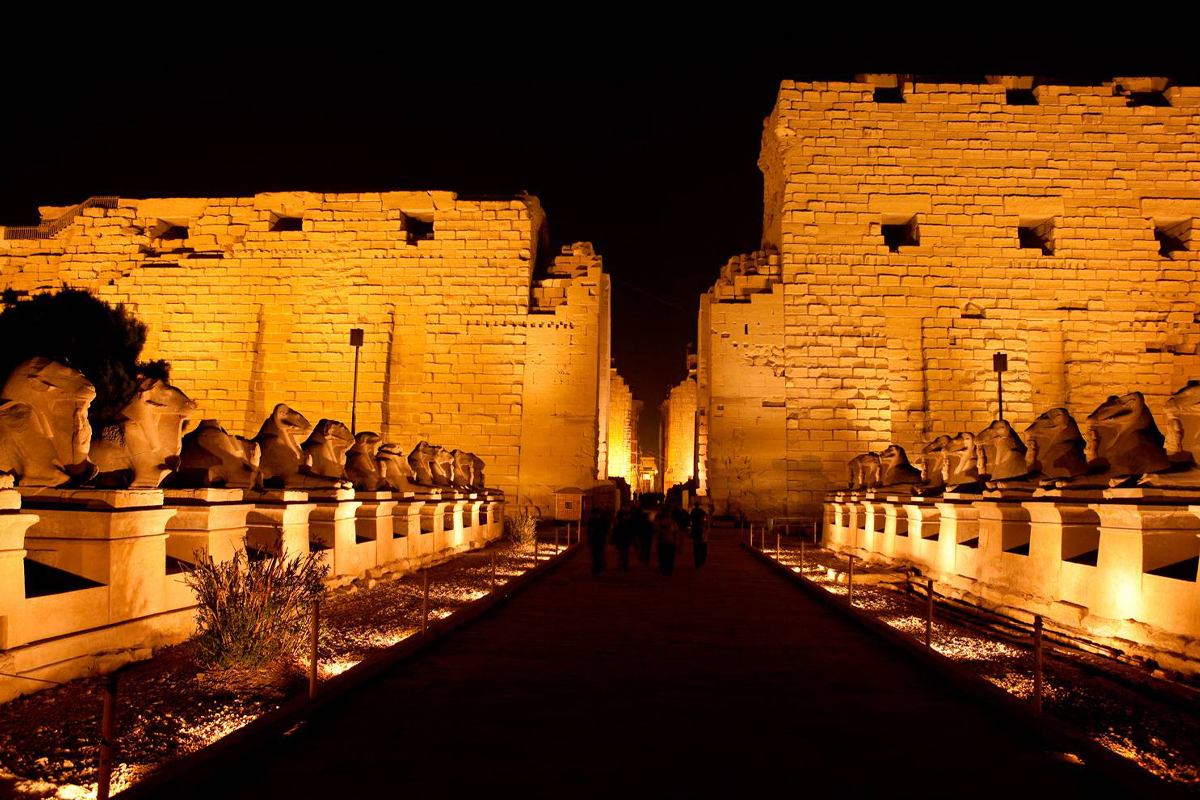
Karnak is a vast religious complex developed over many centuries.
Its Great Hypostyle Hall, monumental gateways, courtyards, and sacred spaces illustrate the scale of royal religious construction in ancient Egypt.
A knowledgeable guide can explain how different pharaohs contributed to the complex rather than presenting it as the work of a single ruler.
Valley of the Kings
The Valley of the Kings contains royal tombs primarily associated with the New Kingdom.
The decorated chambers preserve important religious texts and images intended to support the deceased king’s journey into the afterlife.
Individual tomb access varies according to conservation requirements and ticket categories.
Some tombs require separate admission, and availability can change.
Travelers should check which tombs their tour includes rather than assuming every famous burial chamber is covered by a standard ticket.
Temple of Hatshepsut and Luxor Temple
The mortuary temple of Queen Hatshepsut at Deir el-Bahari is an important architectural and historical landmark.
Its terraced design rises against the cliffs on Luxor’s West Bank.
Luxor Temple, meanwhile, stands on the East Bank and has a strong historical relationship with the religious landscape of ancient Thebes.
For small group travelers interested in history, at least two nights in Luxor generally provide a more satisfying experience than a single rushed stop.
Aswan: Nubian Culture, Temples, and the Southern Nile
Aswan has a different atmosphere from Cairo and Luxor.
Its river islands, granite outcrops, and Nubian heritage make it a natural place to slow the pace of an Egyptian itinerary.
The city is often included at the beginning or end of a Nile cruise.
One major attraction is Philae Temple, associated primarily with the goddess Isis.
The temple complex was relocated during the international effort to preserve Nubian monuments threatened by changes to the Nile’s water levels.
Today it stands on Agilkia Island and is reached by boat.
Aswan is also suitable for felucca excursions, visits to selected cultural sites, and carefully arranged opportunities to understand Nubian traditions.
Abu Simbel: A Journey Worth Planning Properly
The temples of Abu Simbel are located south of Aswan, near Lake Nasser.
The Great Temple was constructed under Ramesses II and is famous for its colossal seated statues and elaborate interior.
The nearby smaller temple honors Hathor and Queen Nefertari.
Both monuments were relocated as part of an international preservation campaign during the twentieth century.
An excursion to Abu Simbel Temple is a highlight for travelers interested in ancient engineering, royal propaganda, and monumental architecture.
However, Abu Simbel should never be treated as a quick excursion.
The road journey from Aswan typically takes several hours in each direction, depending on the route, traffic, security arrangements, and transportation method.
Ask exactly when the group departs, how long it stays at the temples, and when it returns.
Some travelers will prefer an overnight stay or a different transport arrangement rather than a particularly early morning road departure.
Edfu and Kom Ombo: Important Temples Between Luxor and Aswan
Nile cruise itineraries commonly include Edfu and Kom Ombo.
Edfu Temple is dedicated to Horus and is one of Egypt’s best-preserved major ancient temples.
Kom Ombo is notable for its unusual arrangement honoring Sobek and Horus the Elder.
These sites introduce travelers to the Ptolemaic period, which followed the earlier pharaonic dynasties.
They also help connect the archaeological landscapes of Luxor and Aswan.
When comparing cruise itineraries, ask whether both visits are included and how transportation between the vessel and each site is arranged.
Hurghada and the Red Sea: Add Relaxation After the Temples
Travelers who want a combination of cultural sightseeing and beach time can add Hurghada or another Red Sea destination.
Hurghada offers resort accommodation, marine excursions, snorkeling, and access to diving experiences.
It is best treated as a separate part of the journey rather than squeezed into an already demanding archaeological itinerary.
Two or three nights can create a useful change of pace after several days of temple visits.
However, adding the Red Sea involves additional road or air transfers, which should be included in the overall trip duration.
Alexandria: A Different Chapter of Egyptian History
Alexandria, on Egypt’s Mediterranean coast, offers historical experiences associated with the Greco-Roman period, later Egyptian history, and the modern city.
A small group itinerary might include the Catacombs of Kom El Shoqafa, the Citadel of Qaitbay, and the Bibliotheca Alexandrina.
Alexandria works best as an extension to a Cairo-focused journey.
It is less efficient as an addition to a very short itinerary that already includes Luxor and Aswan.
How Many Days Do You Need for a Small Group Tour in Egypt?
For most first-time international visitors, 10–12 days is an excellent target.
Eight days can cover the main highlights if transfers are arranged efficiently. Fourteen days provides a more relaxed experience and opportunities to explore beyond the standard route.
The following recommendations assume the tour is primarily focused on cultural sightseeing.
|
Available time |
Recommended route |
Main advantage |
Main limitation |
|---|---|---|---|
|
5–6 days |
Cairo and Luxor |
Essential highlights |
Little room for Aswan |
|
7–8 days |
Cairo, Luxor, Aswan |
Strong first-time introduction |
Busy schedule |
|
9–10 days |
Cairo, Luxor, Nile cruise, Aswan |
Balanced historical journey |
Limited beach time |
|
11–12 days |
Classic route plus additional sites |
Better pacing |
Higher overall cost |
|
13–15 days |
Classic Egypt plus Red Sea or Alexandria |
More variety |
More transfers |
|
16+ days |
Extended Egypt or Egypt and Jordan |
Greater geographical coverage |
Larger time commitment |
These are planning models, not advertised itineraries.
A shorter itinerary with meaningful time at the main attractions can be better than a longer itinerary filled with unnecessary transfers.
Sample Egypt Small Group Tour Itineraries for 2027
The following itineraries illustrate realistic route structures for different travel durations.
They are examples for planning and comparison, not confirmed tour departures or promises of specific activities.
Actual tour schedules depend on arrival times, domestic transportation, cruise timetables, and attraction arrangements.
7-Day Egypt Small Group Tour: Essential Highlights
Best for: Travelers with limited holiday time who want Cairo, Luxor, and Aswan.
Day 1 — Arrival in Cairo
Arrive at Cairo International Airport and transfer to the hotel.
If your flight arrives early enough, enjoy a gentle introduction to the city. Travelers arriving late should prioritize rest.
Day 2 — Pyramids of Giza and Grand Egyptian Museum
Spend the morning at the Giza Plateau.
Explore the pyramids, the Great Sphinx, and the surrounding archaeological landscape.
Continue to the Grand Egyptian Museum if admission and opening arrangements allow sufficient time.
This will be a substantial sightseeing day.
Day 3 — Cairo to Luxor
Travel to Luxor, usually by domestic flight for a compact itinerary.
Visit Karnak Temple and Luxor Temple if flight timing permits.
Stay overnight in Luxor.
Day 4 — Luxor West Bank
Explore the Valley of the Kings, Hatshepsut’s mortuary temple, and the Colossi of Memnon.
Consider an additional tomb or museum only if sufficient time remains.
Day 5 — Luxor to Aswan
Continue toward Aswan, potentially stopping at Edfu and Kom Ombo when traveling by road.
The route and feasibility depend on the available transportation and time.
Day 6 — Aswan and Philae
Visit Philae Temple and enjoy a Nile-based experience.
A trip to Abu Simbel may be possible instead, but including both extensive Aswan sightseeing and a full Abu Simbel excursion in the same day would be demanding.
Day 7 — Return to Cairo and Departure
Travel back to Cairo or connect to your onward flight according to the booked route.
Leave a comfortable connection margin.
Who should choose this itinerary?
It is suitable for travelers who prioritize major landmarks and are comfortable with a moderately busy schedule.
It is less suitable for people who want extended museum visits, substantial free time, or a leisurely Nile cruise.
10-Day Egypt Small Group Tour: Cairo, Luxor, and Nile Cruise
Best for: First-time visitors who want the classic highlights without continuously changing hotels.
Day 1 — Cairo Arrival
Transfer to your hotel and recover from international travel.
Day 2 — Giza Pyramids and Grand Egyptian Museum
Explore the pyramid complex and museum with enough time to understand their different historical contexts.
Day 3 — Saqqara, Dahshur, and Historic Cairo
Spend part of the day exploring early pyramid architecture.
Depending on the pace and logistics, include selected cultural attractions in Cairo.
A slower itinerary may allocate the entire day to Saqqara and Dahshur.
Day 4 — Cairo to Luxor
Fly south to Luxor.
Visit Karnak Temple and Luxor Temple before preparing for the Nile cruise.
Day 5 — Luxor West Bank
Explore the Valley of the Kings and Hatshepsut Temple.
Board or continue aboard the cruise according to its actual embarkation schedule.
Day 6 — Nile Cruise and Edfu
Travel along the Nile and visit Edfu Temple when scheduled.
Enjoy time on board between excursions.
Day 7 — Kom Ombo and Aswan
Visit Kom Ombo Temple and continue toward Aswan.
Depending on sailing conditions and cruise scheduling, the vessel may reach Aswan later in the day.
Day 8 — Aswan Sightseeing
Visit Philae Temple and other selected attractions.
Spend time enjoying the Nile scenery.
Day 9 — Abu Simbel or Additional Aswan Experiences
Choose a full-day Abu Simbel excursion or a more relaxed day exploring Aswan.
Return to Cairo later if flights and travel arrangements allow, or overnight in Aswan and adjust the sequence accordingly.
Day 10 — Departure
Connect with your international departure or complete the final transfer.
Important cruise-planning note: Standard Luxor-to-Aswan cruises commonly operate over multiple nights, and actual sailing days may not match this illustrative daily sequence. Confirm the vessel’s dated program before using the itinerary to book flights.
For a complete alternative, see this 10-day Egypt itinerary, which provides further ideas for arranging the country’s major destinations.
12-Day Egypt Small Group Tour: History With a Better Pace
Best for: Couples, older travelers, and first-time visitors who want more breathing room.
|
Day |
Destination |
Suggested experience |
|---|---|---|
|
1 |
Cairo |
Arrival and hotel transfer |
|
2 |
Giza |
Pyramids, Sphinx, museum |
|
3 |
Cairo |
Saqqara and selected city attractions |
|
4 |
Luxor |
Flight south, Karnak and Luxor Temple |
|
5 |
Luxor |
Valley of the Kings and Hatshepsut Temple |
|
6 |
Nile cruise |
Edfu and sailing |
|
7 |
Nile cruise |
Kom Ombo and Nile scenery |
|
8 |
Aswan |
Philae Temple and river experiences |
|
9 |
Aswan |
Abu Simbel or free day |
|
10 |
Cairo |
Return flight and relaxation |
|
11 |
Cairo |
Historic Cairo, market visit, or flexible sightseeing |
|
12 |
Cairo |
International departure |
This itinerary adds flexibility rather than merely additional attractions.
A free afternoon in Aswan or an extra evening in Cairo can be more valuable than adding another lengthy road excursion.
14-Day Egypt Small Group Tour: Ancient Egypt and the Red Sea
Travelers with two full weeks can combine archaeological sightseeing with a coastal stay.
A possible structure is:
-
Days 1–3: Cairo, Giza, museums, and Saqqara.
-
Days 4–5: Luxor and the major East Bank and West Bank sites.
-
Days 6–8: Nile cruise with Edfu, Kom Ombo, and Aswan.
-
Day 9: Additional Aswan experiences or Abu Simbel.
-
Day 10: Transfer toward the Red Sea, with adequate travel time.
-
Days 11–12: Beach relaxation, snorkeling, or approved marine excursions.
-
Day 13: Return to Cairo or position for an international departure.
-
Day 14: Departure.
This structure is particularly appealing for mixed-interest travelers.
One person may love ancient history while another prefers water activities or resort relaxation.
The important consideration is to choose a route that makes geographical sense and to avoid unnecessary backtracking.
For many travelers, a balanced Egypt trip with several major experiences is preferable to an itinerary that tries to cover the entire country.
Small Group Tours With Nile Cruises: What Should You Expect?
A Nile cruise can be one of the most enjoyable components of a group journey, but travelers should understand exactly which type of river experience they are booking.
The traditional sightseeing cruise operates between Luxor and Aswan, with stops or excursions associated with major temples along the route.
Many itineraries use three-night or four-night cruise arrangements, although sailing direction and schedules vary.
Standard Nile Cruise Ships
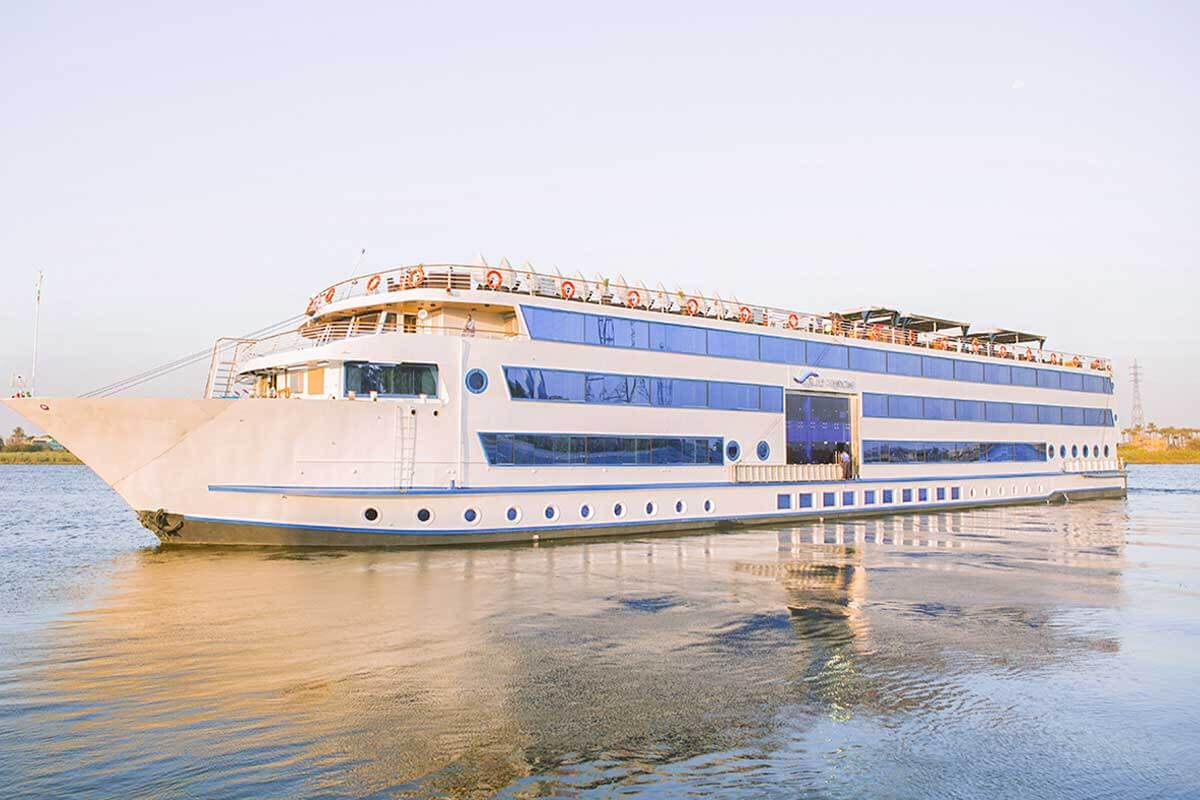
A standard Nile cruise vessel generally offers cabins, restaurant facilities, lounges, and open-deck areas.
Some also have a swimming pool or other leisure facilities.
These vessels accommodate passengers beyond the members of your land-tour group.
Consequently, a group of eight travelers can board a vessel carrying many more guests.
Ask whether your Egyptologist guide will accompany your group during the cruise and whether excursions are conducted privately for your group or combined with other passengers.
For tour styles and itineraries that feature river travel, explore Egypt tours with a Nile cruise.
Dahabiya Nile Cruises
A dahabiya is a traditional-style Nile sailing vessel commonly associated with more intimate river journeys.
Modern dahabiyas may offer comfortable private cabins, attentive service, and a comparatively quiet atmosphere.
They often appeal to couples, small groups of friends, and travelers who prefer a slower river experience.
However, a dahabiya is not automatically luxurious, and its actual itinerary depends on the boat, river conditions, and operator.
The number of cabins, private facilities, air-conditioning, meals, and operating arrangements should all be confirmed before booking.
Travelers seeking this style can consider dahabiya boats on the Nile as an alternative to larger cruise ships.
Felucca Sailing Experiences
A felucca is a traditional sailing boat commonly used for shorter Nile experiences.
Some adventure-oriented tours also offer overnight felucca arrangements.
The comfort level can differ considerably from a conventional cruise.
Overnight adventure sailing may involve simpler sleeping conditions and shared facilities.
A daytime felucca excursion, by contrast, can provide a scenic introduction to river life without requiring overnight accommodation.
These are distinct products, and travelers should never assume that a tour advertising Nile sailing includes a conventional cruise cabin.
Questions to Ask About Your Nile Cruise
Before paying a deposit, confirm:
-
What is the name and category of the cruise vessel?
-
How many passengers can the vessel accommodate?
-
Is your group traveling privately on the boat or sharing it?
-
Is the cabin on the main, middle, or upper deck?
-
Are the listed sightseeing excursions included?
-
Is the Egyptologist guide present throughout the cruise?
-
Are meals included, and which drinks cost extra?
-
Are additional tickets, docking transfers, or service tips excluded?
-
What happens if river operations or schedules change?
-
Is the cruise vessel guaranteed or subject to substitution?
A properly detailed cruise description should answer these questions without relying on vague terms such as deluxe, five-star, or premium.
How Much Do Egypt Small Group Tours Cost in 2027?
The cost of an Egypt small group tour depends on the itinerary, duration, departure date, accommodation standard, transportation, cruise category, inclusions, and number of travelers.
Published 2027 tours already span very different price levels, from basic adventure programs to premium journeys costing several times more.
The advertised starting price alone is therefore a poor measure of value.
Understanding Different Price Categories
The following figures are illustrative budgeting allowances rather than verified offers or guaranteed 2027 market prices.
They are intended to help travelers build a preliminary budget before requesting a dated quotation.
|
Travel style |
Illustrative planning allowance per person per day |
What to expect |
|---|---|---|
|
Budget |
US$100–180 |
Simpler hotels, shared services, fewer inclusions |
|
Standard / Comfort |
US$180–300 |
Comfortable accommodation, guided sightseeing, organized transfers |
|
Premium |
US$300–500 |
Higher accommodation standards, additional services |
|
Luxury |
US$500+ |
Premium hotels, upgraded travel experiences, greater service expectations |
These allowances exclude international flights and may exclude domestic flights, major admission tickets, visas, tips, and optional activities.
They are not prices quoted by Egypt Time Travel.
A specific tour may fall above or below these planning bands depending on its services and operating costs.
Sample Budget for a 10-Day Tour
Suppose a traveler finds a 10-day tour priced at US$2,200 per person.
That is the advertised land-program price, not necessarily the final trip cost.
An illustrative budgeting worksheet might look like this:
|
Expense |
Hypothetical amount |
|---|---|
|
Published 10-day package |
$2,200 |
|
Single-room supplement, if applicable |
$350 |
|
Visa allowance |
$30 |
|
Meals not included |
$180 |
|
Tips and personal expenses |
$120 |
|
Optional experiences |
$150 |
|
Illustrative total before international flights and insurance |
$3,030 |
This example demonstrates how the total can change. It is not a quotation, market-average estimate, or forecast of what a particular operator will charge.
The most useful comparison is the total payable amount for the experiences you actually want.
If a tour excludes major admission tickets, domestic transportation, and several meals, it may be less competitive than a more expensive package that includes them.
What Is Usually Included in Egypt Travel Packages?
Inclusions vary, but organized Egypt travel packages commonly include some combination of:
-
Hotel accommodation.
-
Selected breakfasts and other meals.
-
Sightseeing transportation.
-
Airport transfers.
-
Guided archaeological visits.
-
Local travel support.
-
Some museum and monument admissions.
-
Domestic transport where specifically listed.
-
Nile cruise accommodation when part of the itinerary.
The phrase all-inclusive should never be interpreted as a guarantee that every possible expense is covered.
For example, a package may include entrance to the Giza Plateau but exclude entry inside the Great Pyramid.
Similarly, a Nile cruise may include full-board meals while excluding drinks, gratuities, certain excursions, and optional upgrades.
Common Extra Costs
The expenses travelers most often need to clarify are international flights, visas, single-room supplements, optional excursions, tips, additional meals, and travel insurance.
Other potential charges include:
-
Special tomb or pyramid interior admission.
-
Hot-air balloon flights in Luxor.
-
Abu Simbel excursions.
-
Early hotel check-in or late checkout.
-
Extra baggage on domestic flights.
-
Alcoholic drinks.
-
Premium cruise cabins.
-
Private airport transfers outside the group schedule.
-
Extra hotel nights before or after the tour.
Before comparing prices, read the complete inclusion and exclusion list.
For a broader budgeting framework, consult the guide to how much a trip to Egypt costs.
Are Egypt Small Group Tours Cheaper Than Private Tours?
Small group tours are often more economical for one or two people because transportation and guide costs are distributed across the group.
However, the difference becomes less predictable when three, four, or more people travel together.
For a family of four, a private vehicle and guide may become cost-competitive with four individual places on a scheduled group tour.
This is especially true when private arrangements allow travelers to avoid expensive optional excursions or additional hotel nights.
Compare both approaches using the same hotel category, itinerary, admissions, transport, and meal inclusions.
How to Find the Best Egypt Tour Companies for 2027
The best Egypt tour companies are not necessarily those with the lowest prices or the longest lists of attractions.
A reliable operator should demonstrate suitable legal operating arrangements, clear communication, accurate itineraries, transparent pricing, qualified guides, and realistic customer support.
Travelers can compare established international small-group operators such as Intrepid Travel, G Adventures, and Explore Worldwide with Egypt-based tour companies that provide locally organized services.
These names are comparison examples, not an independently verified ranking of the best companies.
Check Company Legitimacy and Operating Arrangements
Before booking, establish which business is responsible for delivering the tour.
Some international companies sell their own branded itineraries while working with local destination management companies.
Other agencies operate directly within Egypt.
Neither structure is automatically better.
What matters is identifying the contracting company and confirming who is responsible if something goes wrong.
Ask for:
-
The company’s legal business name.
-
Its applicable travel or tourism authorization.
-
The local operating company’s identity, if different.
-
Written booking terms and cancellation policies.
-
Emergency assistance arrangements.
-
A formal quotation or booking agreement.
-
A secure, traceable payment method.
Do not assume a professional website or social media presence proves legal authorization.
Verify the Guide’s Qualifications
Egypt’s archaeological sites deserve proper historical interpretation.
An engaging guide can explain the relationships between monuments and historical periods, but the operator should be clear about qualifications.
Ask whether your group will be accompanied by an appropriately licensed local guide, whether the guide has Egyptology expertise, and which languages are available.
Also clarify whether the guide is assigned throughout the journey or whether different specialists meet the group in each destination.
Both models can work well.
Continuity offers familiarity, while destination-specific specialists may offer strong local expertise.
Examine the Actual Group Size
Look beyond advertising phrases.
An operator might describe a tour as intimate without specifying how many passengers can join.
Ask for the contractual maximum.
For travelers who strongly prefer smaller groups, a confirmed 10-person maximum may be more valuable than a marketing statement that the average group contains eight people.
Also ask whether additional passengers may join for particular excursions.
Evaluate the Daily Itinerary
Read the itinerary as a sequence of actual travel days, not simply a collection of attractions.
A useful itinerary should identify:
-
Where the group sleeps each night.
-
How it travels between destinations.
-
What sightseeing is included.
-
Which activities are optional.
-
Whether there is sufficient time to explore.
-
How many early departures are scheduled.
-
Whether arrival and departure days contain meaningful sightseeing.
-
How transportation disruptions are handled.
Be cautious when several geographically distant attractions are listed within a single morning.
A long attraction list can signal unrealistic pacing.
Check Hotels and Cruise Standards
Request actual accommodation names or representative properties with clear substitution rules.
A hotel described as five-star might differ significantly in location, room quality, accessibility, and service.
Look at where the hotel is situated relative to planned activities.
For Cairo, a central hotel and a Giza hotel may offer different advantages.
In Luxor and Aswan, riverside location may influence both atmosphere and cost.
For Nile cruises, request the vessel name, category, deck information, and cabin type.
Read Independent Reviews Critically
Reviews can help identify recurring operational strengths and weaknesses.
Prioritize detailed feedback describing:
-
The exact tour purchased.
-
Travel dates.
-
Guide performance.
-
Hotel quality.
-
Transportation conditions.
-
Unexpected expenses.
-
Communication before departure.
-
How problems were resolved.
A high star rating without meaningful detail provides limited information.
Look for patterns rather than relying on a single extremely positive or negative account.
Review the Cancellation Policy
A flexible cancellation policy can be particularly valuable for international departures booked well in advance.
Read the terms for deposits, final payment, refunds, postponements, substitutions, and force majeure.
Also ask what happens if the operator cancels because too few travelers book the departure.
Some operators may offer an alternative date, a different tour, or a refund under their stated conditions.
The exact arrangement should be in writing.
A Practical Operator Comparison Scorecard
Use this simple assessment when comparing shortlisted companies.
|
Evaluation area |
Suggested weighting |
|---|---|
|
Itinerary quality and realistic pacing |
20 points |
|
Guide qualifications and interpretation |
15 points |
|
Group-size transparency |
15 points |
|
Accommodation and transport quality |
15 points |
|
Pricing and inclusion transparency |
15 points |
|
Legal arrangements and customer support |
10 points |
|
Cancellation terms and booking clarity |
10 points |
|
Total |
100 points |
The weighting is an editorial decision tool, not an official industry ranking.
A traveler with mobility requirements might reasonably give transport accessibility more weight, while a dedicated archaeology enthusiast could prioritize guide expertise.
The purpose is to compare tours consistently rather than choosing the cheapest headline price.
Best Time for Small Group Tours in Egypt in 2027
October through April is generally the most comfortable period for travelers planning extensive outdoor sightseeing in Egypt.
Temperatures are usually more manageable than during the hottest summer months, especially in Upper Egypt.
However, the ideal season depends on your interests, tolerance for heat, preferred destinations, and budget.
|
Season |
Typical conditions |
Best suited for |
Main consideration |
|---|---|---|---|
|
December–February |
Cooler sightseeing weather, sometimes chilly evenings |
Archaeology and walking |
Popular holiday dates |
|
March–April |
Generally pleasant to warm |
Multi-city itineraries |
Possible wind and dust |
|
May |
Increasing heat, especially in Upper Egypt |
Flexible schedules |
Midday exposure |
|
June–August |
Very hot inland, particularly Luxor and Aswan |
Heat-tolerant travelers, Red Sea stays |
Heat management essential |
|
September |
Cooling gradually after summer |
Early autumn travel |
Inland heat can remain strong |
|
October–November |
Generally favorable sightseeing weather |
First-time visitors and cultural tours |
Popular departure periods |
Weather varies across Egypt, and exceptional conditions can occur in any season.
For month-by-month planning, review Egypt weather by month.
Is Winter the Best Season?
Winter offers favorable conditions for many archaeological excursions.
It is especially suitable for visiting the Giza Plateau, Luxor’s West Bank, and major temples without the most intense summer heat.
However, early mornings and evenings can feel cool, particularly on open Nile cruise decks.
Christmas and New Year departures may also face higher accommodation demand.
Should You Travel in March, April, October, or November?
These months can offer a useful balance between weather and sightseeing comfort.
They are well suited to travelers interested in long walking days and multi-destination itineraries.
In spring, occasional dusty or windy conditions may affect outdoor experiences.
Choose flexible clothing and allow a little contingency time around important flights or specialized excursions.
What About Summer Small Group Tours?
Summer travel requires more planning.
Luxor and Aswan can be extremely hot, and prolonged outdoor sightseeing around midday may be uncomfortable or medically risky for some travelers.
A sensible summer itinerary should emphasize early visits, shaded breaks, reliable air-conditioning, and realistic activity durations.
Travelers who struggle with heat may prefer a different season.
A Special 2027 Consideration: The Total Solar Eclipse
A total solar eclipse is scheduled for August 2, 2027, with Luxor inside the path of totality.
This is a genuinely unusual opportunity for travelers interested in astronomy and Egyptian history.
However, an ordinary Egypt small group tour should not be assumed to include eclipse viewing.
If the event is a major reason for your journey, request written confirmation of the viewing location, local arrangements, transportation, and contingency planning.
Do not assume that buying a regular attraction ticket guarantees access to a particular archaeological site during the event.
Eclipse viewing also requires appropriate solar eye protection, except during the brief period of complete totality when observing from within the path.
August is one of the hottest times to visit Luxor, so heat management is particularly important.
A specialist eclipse tour should prioritize safety and confirmed logistics over marketing promises.
Egypt Small Group Tours From the USA, UK, Canada, Australia, and Europe
International departure arrangements can influence the total trip experience as much as the itinerary within Egypt.
Travelers should first establish whether their tour begins at an airport, hotel, or designated meeting point in Egypt.
Egypt Tour Packages From the USA
Travelers researching Egypt tour packages from the USA will find both land-only itineraries and packages that may incorporate international flights.
Land-only tours generally allow greater freedom when selecting departure airports and airlines.
Travelers flying from New York, Washington, Los Angeles, Chicago, and other US cities should compare the full journey rather than only the international flight price.
Consider total travel time, connecting airports, baggage policies, and arrival dates.
The most important booking detail is making sure your flight arrives before the group’s first scheduled activity or welcome meeting.
For a country-specific comparison, see Egypt tour packages from the USA.
Small Group Egypt Tours From the UK
UK travelers can often arrange travel through London and other major departure airports.
The exact direct-flight and connecting-flight options depend on the airport, airline, destination, and departure date.
For a classic cultural tour, arriving in Cairo is often convenient.
However, some itineraries may start or finish in different Egyptian cities.
Before booking flights, confirm whether the package is sold with flights or as a land-only arrangement, and what financial protection or consumer rights apply to the booking.
Travelers can also review Egypt holidays from the UK when evaluating suitable holiday formats.
Egypt Tours From Canada
Canadian travelers should pay particular attention to connecting flights and arrival times.
A journey involving a long connection may leave travelers tired on the first day.
Consider arriving in Egypt the day before your group departure, especially when the tour starts with early sightseeing.
Extra hotel accommodation can provide useful protection against travel disruption.
Small Group Tours to Egypt From Australia
Travelers departing from Sydney, Melbourne, Brisbane, Perth, or other Australian airports may face long international journeys.
Allowing a recovery day before intensive sightseeing can make a significant difference.
It is also important to compare travel insurance terms, international flight connections, and the timing of domestic transportation within Egypt.
Travelers can explore small group tours to Egypt from Australia when planning this longer international journey.
Egypt Small Group Tours From Europe
European travelers have a variety of possible flight connections, although schedules differ by country and season.
A tour that begins in Cairo and ends near the Red Sea may be attractive if a suitable open-jaw flight arrangement is available.
However, avoid assuming that a domestic transfer between airports is included.
Check the exact arrival city, departure city, and luggage arrangements.
Should You Buy a Land-Only Package or a Tour With Flights?
Land-only packages offer greater flexibility for choosing airlines, departure cities, and travel dates.
Packages that include flights may simplify coordination and, depending on the seller and jurisdiction, offer different forms of booking protection.
Neither is universally better.
Compare the total price, cancellation terms, flight connections, luggage allowance, and responsibility for missed connections.
Egypt Visa, Safety, and Travel Requirements for 2027
Entry regulations and travel advisories can change between booking and departure.
Travelers should confirm official requirements for their nationality and itinerary rather than relying entirely on a tour operator’s general information.
Do You Need a Visa for Egypt?
Many international visitors need a tourist visa to enter Egypt.
The official Egyptian e-Visa system lists a range of eligible nationalities, including the United States, United Kingdom, Canada, Australia, and numerous European countries.
Eligibility can depend on the travel document held, not merely the country in which someone lives.
As checked in November 2026, the official Egyptian e-Visa portal lists a single-entry tourist e-Visa fee of US$30 and a multiple-entry fee of US$65. Those are current reference figures, not guaranteed 2027 charges.
visa2egypt.gov.eg
Some eligible travelers can obtain visas on arrival, but availability, permitted entry points, and payment arrangements may differ.
A Sinai-only entry permission is not a substitute for the appropriate visa when traveling onward to Cairo, Luxor, or Aswan.
The official e-Visa portal states that travelers should apply at least seven days before departure. It also lists passport validity requirements of at least six months from arrival.
For practical preparation, consult the guide on applying for an Egypt visa online.
Is Egypt Safe for Small Group Travel in 2027?
Small group travel can simplify transportation and provide access to organized local assistance, but it does not eliminate security, health, traffic, or other travel risks.
Government travel advice varies by nationality and geographical area.
As of November 2026, official travel advisories distinguish major tourism destinations from regions subject to stronger warnings or restrictions.
Travelers should follow the most recent advice issued by their own government, especially when considering border areas, remote deserts, or multi-country travel.
A responsible tour operator should clearly explain its route, transportation procedures, emergency contact arrangements, and relevant contingency plans.
For a broader discussion, review whether Egypt is safe to visit.
Health, Drinking Water, and Heat
Visitors should prepare for strong sunlight, dehydration risks, and long sightseeing days.
Practical precautions include drinking safe water, using sun protection, wearing suitable shoes, and taking breaks during hot weather.
Travelers with ongoing medical conditions should discuss their travel plans with an appropriate healthcare professional.
Consider medical coverage that includes emergencies and evacuation where appropriate.
Medication rules should also be checked before departure, particularly for controlled medicines.
Travel Insurance
Travel insurance is strongly advisable for an international Egypt tour.
Consider coverage for:
-
Medical emergencies.
-
Trip cancellations and interruptions.
-
Missed connections.
-
Baggage problems.
-
Personal liability where relevant.
-
Activities included in the itinerary.
-
Emergency evacuation.
Read exclusions carefully.
Some policies may not provide coverage for travel undertaken contrary to official government advice.
Local Currency and Payments
Egypt uses the Egyptian pound.
Cash remains useful for small purchases, tips, and situations where card payments are unavailable.
However, travelers should avoid carrying unnecessary amounts of cash during sightseeing.
Ask the operator which expenses must be paid locally and whether they expect payment in Egyptian pounds, US dollars, or another currency.
Currency conversion and payment fees can affect your actual travel budget.
Are Egypt Small Group Tours Suitable for Solo Travelers?
Yes. Small group tours are particularly attractive to solo travelers who want organized logistics and opportunities to meet other people.
Joining a group means you can enjoy shared excursions without having to find your own guide or arrange every transfer.
It also provides a clear daily structure.
However, solo travelers should examine accommodation conditions before booking.
Single Supplements and Room Sharing
Many advertised per-person tour prices assume two travelers share a room.
A solo traveler requesting a private room may pay a single supplement.
Some companies offer a twin-share arrangement in which solo participants of compatible rooming categories may share.
Policies differ.
Before paying, ask:
-
Is the published price based on twin sharing?
-
Is a private room available throughout the journey?
-
Does the single supplement cover the cruise cabin as well as hotels?
-
What happens if no suitable roommate is available?
-
Can the operator confirm the final accommodation arrangement in writing?
A small group tour should not require you to accept room sharing unless this is clearly part of the booking arrangement.
Best Tour Styles for Solo Travelers
Cultural and classic itineraries tend to provide a balance between organized sightseeing and social interaction.
Adventure-focused programs can suit travelers who enjoy more active activities and simpler accommodation.
Premium small groups may suit solo travelers who want a quieter experience with greater comfort.
For additional ideas, see Egypt tours for solo travellers.
Are Small Group Egypt Tours Good for Families and Seniors?
They can be, but suitability depends on the actual itinerary.
A well-designed group trip should match the participants’ physical abilities, interests, accommodation needs, and preferred pace.
Families With Children
Children may enjoy the pyramids, boat rides, museum displays, and ancient Egyptian stories.
However, long museum visits and consecutive early departures can be tiring.
Family-focused tours should provide:
-
Age-appropriate sightseeing.
-
Reasonable activity durations.
-
Suitable sleeping arrangements.
-
Clear child pricing and minimum ages.
-
Safe and appropriate vehicle seating.
-
Enough downtime between major visits.
Parents should verify the operator’s child-age policy, particularly for cruise facilities and excursions.
A family-specific itinerary may be preferable to a general adult tour.
Travelers planning this style can compare Egypt family tours.
Seniors and Travelers Who Prefer a Slower Pace
Age alone does not determine whether a tour is suitable.
Walking distances, stairs, heat, vehicle access, medical needs, and scheduling are more useful considerations.
For travelers who prefer a relaxed pace, choose a tour with fewer hotel changes and sufficient time in each destination.
An itinerary with two or three nights in Luxor can be more comfortable than one that adds several consecutive long transfers.
Travelers With Mobility Requirements
Some archaeological locations contain uneven ground, steps, narrow entrances, and areas that are difficult to navigate using mobility aids.
Historic tombs and temples may not have the accessibility facilities found in modern museums.
A tour advertised as small or luxury is not necessarily accessible.
Ask for specific details about the selected monuments, accommodation, vehicles, bathrooms, cruise gangways, and assistance arrangements.
Travelers requiring specialized support should compare wheelchair-accessible tours in Egypt rather than assuming that a standard departure can accommodate every requirement.
Egypt and Jordan Small Group Tours: Are They Worth It?
Egypt and Jordan small group tours offer the opportunity to combine two countries with very different archaeological and natural landscapes.
Egypt is especially notable for its pyramids, Nile Valley temples, royal tombs, and pharaonic history.
Jordan is well known for Petra, the ancient Nabataean city, alongside destinations such as Wadi Rum and the Dead Sea.
Combining both countries can be rewarding for travelers with enough time.
Suggested Egypt and Jordan Itinerary
A 14–16-day itinerary might allocate approximately nine or ten days to Egypt and four to six days to Jordan.
For example:
|
Days |
Destination |
Focus |
|---|---|---|
|
1–3 |
Cairo and Giza |
Pyramids, museum, Egyptian history |
|
4–5 |
Luxor |
Temples and royal tombs |
|
6–8 |
Nile cruise and Aswan |
River journey, Edfu, Kom Ombo, Philae |
|
9 |
Egypt departure city |
Transfer and international connection |
|
10–11 |
Petra, Jordan |
Nabataean archaeological heritage |
|
12 |
Wadi Rum |
Desert landscape and cultural experience |
|
13 |
Dead Sea or Amman |
Relaxation or city sightseeing |
|
14 |
Jordan |
Departure |
This is an illustrative route, not a confirmed flight or cross-border transport schedule.
Travelers may need additional days to accommodate flight availability, arrival times, and more extensive sightseeing.
For an alternative route, explore Egypt and Jordan tours.
What About Small Group Tours of Egypt, Jordan, and Israel?
Some multi-country travel programs have historically combined Egypt, Jordan, and Israel.
However, regional security conditions, travel advisories, border-crossing procedures, visas, and operating schedules can change significantly.
A 2027 itinerary involving all three countries should be evaluated particularly carefully.
Do not assume that an advertised historical route is currently operating or that its border crossings will be available on the planned travel dates.
Confirm each country separately, including entry requirements, applicable official travel advice, flight or land transport arrangements, cancellation terms, and insurance conditions.
For travelers whose main interest is Egypt’s ancient history, an Egypt-only tour may provide a simpler and more focused experience.
Common Mistakes to Avoid When Booking Egypt Group Trips
Even a well-designed tour can disappoint if the traveler makes assumptions about its structure.
The following mistakes are especially important to avoid.
Choosing a Tour Based Only on Price
A lower price may reflect simpler accommodation, limited meals, excluded admissions, or additional optional activities.
Compare total costs rather than headline prices.
Assuming Every Tour Includes a Nile Cruise
Some itineraries offer a short boat excursion rather than overnight cruising.
Others include Nile cruise accommodation but use standard large vessels.
Check the number of cruise nights and the actual vessel arrangements.
Ignoring Travel Time Between Cities
Egypt is a large country.
Road journeys, airport procedures, railway schedules, and hotel transfers all consume time.
A sightseeing day and a transfer day are not interchangeable.
Booking an Extremely Busy Itinerary
Travelers often underestimate the fatigue associated with repeated early departures, substantial walking, and long drives.
A tour covering fewer sites with adequate time at each location may be far more enjoyable.
Failing to Confirm Group Size
The description small group is not sufficiently precise.
Request the maximum number of participants and clarify whether local excursions may combine different groups.
Overlooking the Single-Room Supplement
Solo travelers may face substantial additional accommodation costs.
Ask for the final price in the desired room category.
Booking Flights Before Confirming Departure Details
A tour may begin at a specific hotel or meeting time rather than at the airport.
Arriving after the first group transfer can create additional expense and inconvenience.
Not Reading the Cancellation Terms
A tour’s refund policy and the airline’s refund policy may be entirely different.
Read both before making nonrefundable commitments.
Assuming Every Famous Site Is Included
The tour may visit the Giza Plateau without including a pyramid interior, or the Valley of the Kings without including premium tomb tickets.
Verify admission categories rather than relying on destination names.
Ignoring the Season
A tightly scheduled Luxor itinerary can be particularly demanding during the hottest months.
Plan according to weather, physical comfort, and realistic sightseeing conditions.
How to Choose the Right Egypt Small Group Tour: A Practical Checklist
Before selecting a 2027 departure, work through these steps.
-
Choose your ideal duration. Seven to eight days covers the essentials; 10–12 days is often more comfortable.
-
Identify your priorities. Pyramids, museums, temples, Nile cruising, culture, beaches, or a combination.
-
Set a complete budget. Include flights, admissions, single-room supplements, meals, tips, and insurance.
-
Compare genuine group limits. Confirm the maximum size and minimum operating number.
-
Review the route geographically. Avoid unnecessary backtracking and excessive transfers.
-
Check the accommodation. Request hotel names, locations, and cruise specifications.
-
Evaluate the guides. Confirm qualifications, language, and responsibilities.
-
Check 2027 requirements. Verify visas, official advisories, entry rules, and attraction arrangements.
-
Read booking conditions. Understand payment deadlines, cancellation rights, and substitutions.
-
Get written confirmation. Ensure the final itinerary and inclusions match your expectations.
This framework applies equally to budget, standard, premium, and luxury group travel.
Frequently Asked Questions About Egypt Small Group Tours Guide in 2027
1. How Many People Are Usually on Egypt Small Group Tours?
Many small group tours of Egypt operate with approximately 6–16 participants, but there is no universal group-size standard. Some tours are smaller, while others have a maximum above 16. The advertised average is not necessarily the maximum. Ask the operator to confirm its contractual group limit and whether additional travelers join any sightseeing excursions.
2. Are Small Group Tours to Egypt Worth the Money?
They are often worth considering for travelers who value organized transportation, guided sightseeing, and shared experiences. A small group tour can reduce planning demands and provide a social environment. However, the best value depends on what is included. Compare the final cost against independent travel and private tours using equivalent accommodation, transport, and admission arrangements.
3. What Is the Best Egypt Small Group Tour for First-Time Visitors?
A classic Cairo, Luxor, and Aswan itinerary lasting approximately 8–12 days is a strong choice for most first-time visitors. It covers the pyramids, major museums, royal tombs, and important temples. Adding a Nile cruise can make the journey especially appealing. The best version allows adequate sightseeing time without excessive transfers.
4. Can I Join an Egypt Small Group Tour as a Solo Traveler?
Yes. Many organized group tours accept solo participants. Solo travelers should check the room-sharing policy, private-room availability, single supplement, and group demographics. Some tours have scheduled departures with participants from several countries. Joining a group can make sightseeing easier and provide opportunities to meet other travelers.
5. Do Egypt Small Group Tours Include International Flights?
Some packages include international flights, but many are land-only arrangements beginning and ending in Egypt. Flights within Egypt may also be included or excluded depending on the operator. Confirm the exact starting and ending locations, flight inclusions, baggage allowance, airport transfers, and responsibility for missed connections before purchasing separate tickets.
6. Can I Book a Luxury Small Group Tour in Egypt?
Yes. Luxury small group tours are available for travelers who prefer premium hotels, comfortable transport, smaller groups, and a more carefully managed travel experience. However, luxury standards differ between operators. Ask for the hotel and cruise names, room categories, maximum group size, guide arrangements, and complete inclusion list before comparing prices.
7. Do Egypt Small Group Tours Include Abu Simbel?
Some itineraries include Abu Simbel, while others offer it as an optional excursion from Aswan. Visiting the temples usually requires a substantial journey unless alternative transport is arranged. If Abu Simbel is a priority, choose an itinerary that clearly states the excursion is included and provides sufficient time at the site.
8. Is a Nile Cruise Necessary on an Egypt Group Tour?
A Nile cruise is not essential, but it can be an enjoyable way to travel between Luxor and Aswan. Travelers who prefer extended land sightseeing or more flexible schedules may choose a road-based itinerary instead. A cruise works particularly well for visitors who want temple excursions combined with periods of relaxation on the river.
9. Can I Customize an Egypt Small Group Tour?
Scheduled group tours usually have limited flexibility because the participants follow a shared itinerary. Some operators permit optional excursions, extra hotel nights, or private extensions before or after the group program. For extensive customization, a private or tailor-made tour is generally more suitable. Confirm any requested modifications in writing.
10. Are Egypt and Jordan Small Group Tours Better Than Egypt-Only Tours?
Neither option is universally better. Egypt-only tours allow more time for archaeological sites, museums, Nile cruises, and regional experiences. Egypt and Jordan tours introduce Petra and other Jordanian attractions but require additional travel arrangements and a larger time commitment. For a first visit lasting fewer than 10 days, focusing on Egypt is usually more practical.
11. How Far in Advance Should I Book Egypt Small Group Tours for 2027?
Book when your preferred departure, accommodation, and cancellation terms are suitable rather than relying on a universal deadline. Popular holiday periods, limited-capacity departures, premium cruise cabins, and specialist events may justify earlier planning. Request a dated quotation and verify availability before purchasing nonrefundable flights. The best booking window depends on the actual tour.
12. Which Is Better: Small Group Egypt Tours or Private Egypt Tours?
Small group tours suit travelers seeking companionship, organized departures, and shared operating costs. Private tours are better for travelers who want flexible schedules, personalized sightseeing, specialist interests, or more control over accommodation. Families and small groups of friends should compare both options because private tours can become cost-competitive when several people share the expense.
Final Recommendation: Choosing Your Egypt Small Group Tour for 2027
The best Egypt small group tour is not necessarily the one with the most attractions, the cheapest advertised price, or the strongest promotional language.
It is the itinerary that matches your travel style, budget, preferred group size, and expectations.
For most first-time visitors, a 10–12-day journey covering Cairo, Giza, Luxor, Aswan, and a Nile cruise provides a particularly strong introduction to Egypt.
History-focused travelers may prefer additional archaeological sites, while couples and comfort-oriented travelers might place greater value on luxury accommodation and a slower pace.
Solo travelers should prioritize group atmosphere and clear rooming policies. Families and older travelers should examine activity levels and transfer schedules.
Above all, compare what the operator actually promises to deliver.
Egypt Time Travel offers Egypt small group tours for travelers who want to explore available group itineraries and compare travel styles.
Before reserving a place, request the latest 2027 departure information, maximum group size, complete inclusions, and applicable booking conditions.
A carefully chosen itinerary will give you enough time to appreciate Egypt’s remarkable heritage without making every day feel like a race between monuments.
