
Quick Answer: What is Qasr Ibrim, and can you visit it in 2027?
Qasr Ibrim is an ancient fortified settlement in southern Egypt, overlooking Lake Nasser between Aswan and Abu Simbel. Occupied for almost 3,000 years, it preserves evidence of Egyptian, Kushite, Roman, Christian Nubian, and Ottoman history. Travelers normally see the fortress from a Lake Nasser cruise ship because public entry to the archaeological site is restricted. Confirm 2027 sailing arrangements before booking.
Few archaeological sites in Egypt have witnessed as many changes in political power, religion, and everyday life as Qasr Ibrim.
Long before Lake Nasser existed, this fortified settlement stood high above the Nile in Lower Nubia. Egyptian officials, Kushite rulers, Roman soldiers, Christian bishops, and Ottoman troops occupied the same strategic location over different periods.
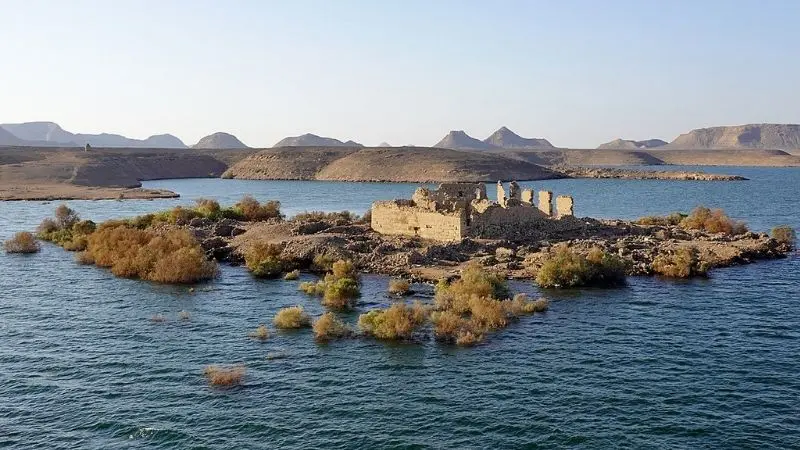
Today, its surviving ruins rise above the water, surrounded by a landscape transformed by the construction of the Aswan High Dam.
But the most remarkable discoveries at Qasr Ibrim are not necessarily its walls.
Archaeologists have recovered ancient documents, textiles, food remains, and fragments of literature that reveal details of ordinary lives across centuries. Some papyri even provide evidence of how Roman soldiers received supplies at this remote frontier.
For travelers planning a 2027 visit, Qasr Ibrim presents an unusual experience. You cannot normally wander through the fortress, but you can see its surviving remains from the water during certain Lake Nasser cruises.
Understanding that distinction makes it easier to decide whether the journey belongs in your Egypt itinerary.
What Is Qasr Ibrim in Egypt?
Qasr Ibrim, also spelled Kasr Ibrim, is an archaeological site and ancient fortress in Lower Nubia, southern Egypt. It occupies a rocky height that became an island following the creation of Lake Nasser.
Its name is commonly understood as the Castle or Fortress of Ibrim.
The site was much more than a defensive structure. For different civilizations, it served as a military stronghold, administrative center, religious settlement, and inhabited town.
Its location allowed occupants to observe movement along the Nile, defend a strategically important position, and maintain connections between Egypt and regions farther south.
The remains visible today represent multiple phases of construction rather than a single monument built by one ruler.
Essential Qasr Ibrim Facts
| Feature | Details |
|---|---|
| Name | Qasr Ibrim |
| Alternative spelling | Kasr Ibrim |
| Ancient names | Primis, Premnis, and Phrim in different historical traditions |
| Country | Egypt |
| Region | Lower Nubia, Aswan Governorate |
| Present location | Island in Lake Nasser |
| Approximate distance from Aswan | 235 km south |
| Approximate distance from Abu Simbel | 60 km north |
| Historical occupation | From the late second millennium BC, approximately, to AD 1812 |
| Major historical periods | Egyptian, Kushite, Roman, Christian Nubian, and Ottoman |
| Principal visitor experience | Panoramic viewing from a Lake Nasser cruise |
| Public landing access | Normally not permitted |
| Major archaeological finds | Papyri, manuscripts, textiles, pottery, and architectural remains |
The settlement’s long occupation is one reason Qasr Ibrim is particularly important to archaeologists.
Instead of documenting a single dynasty, it provides evidence for changes across numerous political and cultural periods.
A visitor viewing the fortress from a ship is therefore looking at the remains of an entire historical community, not simply a ruined castle.
Where Is Qasr Ibrim Located?
Qasr Ibrim is located in southern Egypt on Lake Nasser, between Aswan and Abu Simbel, north of the Egyptian-Sudanese border.
The site lies approximately 235 kilometers south of Aswan and around 60 kilometers north of Abu Simbel, according to commonly cited geographic descriptions.
These figures describe its general geographic position rather than a practical driving route.
The archaeological island cannot be approached like an ordinary roadside attraction.
Qasr Ibrim Map and Geographic Coordinates
The approximate geographic coordinates of Qasr Ibrim are:
22°39′ N, 32°00′ E
A Qasr Ibrim map should show the fortress in the southern part of Lake Nasser, between the Aswan High Dam and Abu Simbel.
Its location is best understood through the sequence of landmarks encountered on many lake cruises:
Aswan → Kalabsha → Wadi El Seboua → Amada → Qasr Ibrim → Abu Simbel
Travelers sailing north follow the same general corridor in reverse.
Cruise operators may change the order, timing, or inclusion of individual stops.
Why Was This Location Important?
Before the modern reservoir existed, the Nile passed through a much narrower valley.
Qasr Ibrim stood on a steep, elevated outcrop overlooking the surrounding landscape.
This position offered several advantages.
First, its height made it easier to defend against approaching forces.
Second, the Nile provided a major route for people, goods, military supplies, and communication.
Third, Lower Nubia occupied an important position between Egyptian political centers to the north and Kushite territories farther south.
Controlling Qasr Ibrim could therefore influence military movement and regional trade.
Its value was not simply that it stood beside a river. The fortress occupied a position where geography itself strengthened defensive control.
Is Qasr Ibrim Near Abu Simbel?
Yes. Qasr Ibrim is geographically closer to Abu Simbel than to Aswan.
That relationship explains why many Lake Nasser cruise itineraries include a panoramic view of Qasr Ibrim shortly before or after visiting the famous temples.
However, proximity does not mean that travelers visiting Abu Simbel by road can automatically add Qasr Ibrim as a conventional excursion.
The fortress stands on an island and is not a normal public landing stop.
If Qasr Ibrim is an important part of your plans, focus on cruise itineraries that specifically include a scenic passage beside the fortress.
Why Is Qasr Ibrim So Important?
Qasr Ibrim is significant because it preserves archaeological evidence from numerous civilizations in a region where many ancient settlements were submerged by Lake Nasser.
Its importance can be understood through three distinctive characteristics.
It Preserves an Exceptionally Long Historical Record
The settlement was occupied across roughly three millennia.
Its archaeological layers document political, religious, economic, and cultural changes that took place in Lower Nubia.
These changes included periods of Egyptian influence, Kushite control, Roman military activity, independent Christian Nubian rule, and Ottoman administration.
Few individual sites offer this combination of historical continuity and surviving documentation.
Its Dry Climate Preserved Fragile Materials
Southern Egypt’s arid environment helped protect objects that often disappear at archaeological sites exposed to significant rainfall or moisture.
Excavations have recovered materials such as papyrus, leather, textiles, basketry, and plant remains.
These discoveries allow archaeologists to study much more than monumental architecture.
They provide information about agriculture, clothing, literacy, food supplies, religious practices, and daily administration.
Much of the Elevated Settlement Survived the Reservoir
The construction of the Aswan High Dam transformed the surrounding landscape.
Many archaeological sites in Lower Nubia were threatened by flooding, and numerous temples were moved through international preservation projects.
Qasr Ibrim was unusual because its elevated main settlement remained above the rising water.
It survived in its original location, although lower-lying areas, including surrounding archaeological remains, were lost beneath the lake.
That survival gives Qasr Ibrim special value as a place where architecture and archaeological layers retain their original geographic relationship.
Qasr Ibrim History: Nearly 3,000 Years of Changing Civilizations
The history of Qasr Ibrim extends from ancient Egyptian activity to the abandonment of the fortified settlement in the early nineteenth century.
The fortress was not continuously controlled by one kingdom, nor did every phase have the same importance.
Different communities adapted the location according to their political, religious, and defensive needs.
1. Egyptian Influence During the New Kingdom
The earliest history of Ibrim is connected to Egypt’s expansion into Nubia during the New Kingdom.
During this period, Egyptian rulers exercised substantial influence over territories to the south.
Nubia mattered to Egyptian administrations for several reasons, including its mineral resources, regional connections, and strategic location along the Nile.
Egyptian officials established religious and administrative monuments across the region.
At Ibrim, inscriptions and associated monuments provide evidence of New Kingdom activity.
Royal names and religious dedications show that Egyptian authorities considered this area important enough to commemorate their presence.
However, it is important to distinguish the existence of earlier Egyptian monuments from the later phases of the fortified settlement.
The surviving archaeological site developed through many stages.
Not every wall or building belongs to the New Kingdom.
2. The Kushite and Napatan Periods
Qasr Ibrim later became associated with the powerful Kingdom of Kush.
Kush developed major political and religious centers farther south and maintained complex relationships with Egypt.
At times, Kushite rulers controlled territories within Egypt itself.
One of the important rulers associated with Qasr Ibrim is Taharqa.
Taharqa ruled during the Twenty-Fifth Dynasty, when Kushite kings also held the Egyptian throne.
Archaeological remains at Ibrim include evidence of a temple associated with his reign.
This connection demonstrates that the site was more than a military outpost.
It also possessed religious significance within the wider Nile Valley.
Kushite rulers adopted and adapted Egyptian religious traditions while maintaining their own cultural and political identities.
Qasr Ibrim provides evidence of that interconnected history.
The archaeological material should not be interpreted as belonging exclusively to Egyptian civilization. Nubian communities played an essential role in shaping the settlement.
3. Meroitic Control and Frontier Politics
During the later Kushite period, political power became associated with Meroe, farther south in present-day Sudan.
Qasr Ibrim occupied a sensitive position between northern Egypt and southern territories.
That made it important during periods of competition between regional powers.
Its defensive structures could protect residents, control movement, and support military forces.
The settlement also participated in wider cultural and commercial networks.
Archaeological evidence shows that Ibrim continued to develop as a populated center rather than functioning only as a temporary battlefield.
The relationships between Kush and Egypt were not exclusively hostile.
Trade, religious influences, and cultural exchanges continued even when political control was contested.
4. Roman Involvement Under Augustus
The Roman period is among the best-known chapters of Qasr Ibrim’s history.
After Rome gained control of Egypt in 30 BC, the southern frontier became strategically important to the new Roman administration.
Conflict developed between Roman-controlled Egypt and the Kingdom of Kush.
The Roman prefect Gaius Petronius led military operations into Nubia during the late first century BC.
Qasr Ibrim, known in classical accounts as Primis or Premnis, became involved in these campaigns.
Roman forces captured the fortified position and established a military presence.
Ancient accounts describe the installation of a garrison and the strengthening of defenses.
Archaeological finds, including military-related materials and documents, support the existence of Roman troops at the site.
However, the precise duration of Roman control remains debated.
The distinction between a documented Roman garrison and a much longer period of Roman occupation is important when reconstructing the fortress’s history.
5. The Post-Meroitic and Early Medieval Periods
Qasr Ibrim continued to be occupied after the Roman-Meroitic frontier conflicts.
The centuries following the decline of Meroitic political power saw new regional communities and political formations emerge in Nubia.
Archaeological material from the period sometimes described as the X-Group or Ballaña phase reflects these changes.
The site did not disappear when one political order ended.
Instead, its inhabitants reused buildings, constructed new facilities, and continued to exploit the advantages of the location.
This continuity helps explain why archaeologists can trace such a long sequence of occupation.
6. Qasr Ibrim as a Christian Nubian Center
Christianity transformed much of Nubia during the first millennium AD.
Christian kingdoms emerged south of Egypt, developing distinctive religious, artistic, administrative, and literary traditions.
Qasr Ibrim became an important Christian settlement.
The site contained a substantial cathedral and was associated with ecclesiastical administration.
Its surviving architecture and written documents provide valuable evidence for medieval Nubian society.
Christian Nubia was not simply an extension of Byzantine Egypt.
Its kingdoms possessed their own rulers, institutions, languages, and cultural traditions.
Greek and Coptic were used in religious and administrative contexts, while Old Nubian became an important written language.
Qasr Ibrim is especially valuable because its documents reveal aspects of society that monumental churches alone cannot explain.
Land transactions, legal matters, correspondence, and administrative records help historians understand the workings of medieval Nubian communities.
The cathedral’s later history also illustrates how buildings could be transformed when political and religious circumstances changed.
7. Islamic Influence and Ottoman Occupation
Over time, the political and religious environment of Lower Nubia changed again.
Islamic influence expanded through commerce, political relationships, and the movement of communities.
During the Ottoman period, Qasr Ibrim became associated with a military garrison.
Parts of the earlier Christian settlement were adapted for new purposes.
The former cathedral building was eventually used as a mosque.
Archaeologists have recovered Ottoman-period documents and household materials that help reconstruct life inside the fortified town.
These include objects associated with clothing, food preparation, domestic activities, and administration.
The settlement’s final abandonment is generally dated to AD 1812.
That date marks the end of its long history as an inhabited fortified center, not the destruction of every surviving building.
The ruins remained in the landscape and later attracted archaeological investigation.
Qasr Ibrim Historical Timeline
| Period | Main Development |
|---|---|
| New Kingdom, second millennium BC | Egyptian religious and administrative activity in the area |
| Early first millennium BC | Development of fortifications and settlement activity |
| Twenty-Fifth Dynasty | Kushite influence and the temple associated with Taharqa |
| Later first millennium BC | Meroitic involvement and competition over Lower Nubia |
| Late 20s BC | Roman military campaigns and occupation of the fortress |
| Late antiquity | Continued settlement and political changes |
| Medieval period | Important Christian Nubian religious and administrative center |
| Ottoman period | Military garrison and adaptation of earlier buildings |
| AD 1812 | Final abandonment of the settlement |
| 1960s onward | Major archaeological salvage and research associated with the Aswan High Dam |
| Present day | Protected archaeological remains on an island in Lake Nasser |
The table summarizes a complicated history. Individual periods overlap, and exact dating remains uncertain for some archaeological phases.
How Long Did the Romans Occupy Qasr Ibrim?
The Roman occupation of Qasr Ibrim began during the military campaigns of Gaius Petronius in the late 20s BC. A short occupation lasting only a few years is generally associated with the historical accounts, but the exact end date and duration remain debated.
This uncertainty matters because online descriptions sometimes provide a precise number of years without explaining the evidence.
Qasr Ibrim Roman Occupation Dates
The main events belong to the reign of Augustus.
Roman control over Egypt began in 30 BC.
During the late 20s BC, military conflict developed between Rome and Kush.
The Roman prefect Gaius Petronius led campaigns southward and captured Qasr Ibrim.
Ancient historical accounts describe Roman military operations during approximately 25–20 BC, with differences in how individual events are dated.
Some reconstructions place the Roman capture of Qasr Ibrim around 24 or 23 BC.
A withdrawal or change in the frontier arrangement is often associated with approximately 21–20 BC.
These are historical reconstructions, not an uncontested sequence of precisely dated events.
What Was the Duration of Roman Occupation at Qasr Ibrim?
The conventionally reconstructed Roman military occupation was relatively short, potentially around two to four years.
However, this should not be presented as a universally established duration.
Archaeologists have debated whether the quantity and character of Roman-period materials indicate activity extending beyond the short military presence described in ancient texts.
Historical narratives and archaeological evidence do not always produce identical chronologies.
The safest conclusion is that Roman military occupation occurred during the late 20s BC and that the exact length of the garrison’s presence remains disputed.
What Was the Qasr Ibrim Roman Occupation End Date?
There is no single end date that should be treated as conclusively established.
A date around 21 or 20 BC is commonly associated with the end of the short Roman occupation in historical reconstructions.
But researchers have questioned whether Roman military activity may have continued in some form.
Travel guides sometimes simplify this issue by stating a fixed occupation period.
A more accurate account acknowledges the uncertainty.
Why Did Rome Want the Fortress?
Qasr Ibrim stood at a strategically useful position in Lower Nubia.
A garrison there could help Roman authorities observe movement along the Nile and maintain a defensive presence farther south than Aswan.
The fortress also had practical advantages for storing supplies and supporting military operations.
Its earlier defensive importance made it an attractive position for whichever power controlled the surrounding territory.
Roman interest in Qasr Ibrim was therefore part of the broader struggle over the southern frontier of Egypt.
What Was the Role of the Kingdom of Kush?
The Kingdom of Kush was an independent African power, not simply a territory ruled from Egypt.
The Kushite leadership resisted Roman expansion and negotiated its position in relation to Rome.
The Kandake, or queen, mentioned in ancient accounts is often associated with Amanirenas.
The conflict demonstrates the military and diplomatic strength of Kush.
Qasr Ibrim’s Roman history is best understood as part of a relationship between two powerful political systems rather than as an isolated Roman conquest.
The fortress eventually passed out of Roman control and remained important within Nubian history.
What Did Archaeologists Discover at Qasr Ibrim?
Archaeological discoveries at Qasr Ibrim include written documents, religious buildings, pottery, textiles, leather objects, basketry, and plant remains.
These discoveries make it one of the most informative archaeological sites in Lower Nubia.
Its significance comes partly from the survival of fragile materials that would ordinarily decay.
Ancient Papyri and Written Documents
The Qasr Ibrim papyrus discoveries are among the site’s most important contributions to historical research.
Archaeologists have recovered documents associated with different periods and languages.
These include Greek, Old Nubian, Arabic, and Ottoman Turkish texts, along with other written material.
The documents do not all belong to the same era.
They represent separate communities that lived at Ibrim across centuries.
Their subjects are also varied.
Some concern religion and literature, while others record administrative or economic matters.
This is especially important because the political history of ancient Nubia was not always recorded in the same detail as the history of Egypt.
Written records from Qasr Ibrim help reconstruct events and institutions that would otherwise remain poorly understood.
The Remarkable Cornelius Gallus Papyrus
One of the most famous literary discoveries at Qasr Ibrim is a papyrus containing Latin poetry attributed to Cornelius Gallus.
The fragments were discovered in 1978.
Gallus was an important Roman poet associated with the development of Latin love elegy.
Very little of his poetry survives.
The discovery was therefore significant not merely for Egyptian archaeology but also for the study of Roman literature.
It demonstrated that a rare Latin literary text had reached a remote settlement on Rome’s southern frontier.
The papyrus also raises questions about the movement of books, educated readers, and written culture within the Roman world.
Although Qasr Ibrim is geographically distant from Rome, its documentary evidence reveals connections to much wider intellectual traditions.
Roman Letters That Mention Food Supplies
A particularly interesting example of archaeological information gain comes from Roman military papyri recovered at Qasr Ibrim.
Research made available through the University of Warsaw’s publishing platform in September 2026 examines three papyri connected with the Roman military presence.
The documents are letters sent to soldiers at Qasr Ibrim by colleagues stationed elsewhere in Egypt.
All three refer to shipments of pigs.
The study discusses what these references reveal about military food supply and the diet of Roman troops.
This may seem like a small detail compared with the history of emperors and battles.
Yet it answers practical questions about everyday life.
Soldiers stationed in a remote frontier fortress still needed food, equipment, clothing, and communication with other military bases.
The papyri help illustrate the logistical network that supported their presence.
They also show why archaeological discoveries do not have to be spectacular treasures to be historically important.
A brief letter concerning food can reveal how an empire maintained its frontier.
Importantly, these are archaeological documents studied in a publication released online in 2026, not papyri claimed to have been newly excavated in that year.
Old Nubian Manuscripts and Medieval Society
Qasr Ibrim has also produced substantial evidence for medieval Nubian literacy and administration.
Old Nubian documents are especially significant.
They help historians study a language and a society that are less familiar to many international travelers than ancient Egyptian hieroglyphic culture.
The documents include records connected with property, correspondence, religious institutions, and administrative matters.
Such materials reveal the presence of organized legal and economic systems.
They also demonstrate that medieval Nubia maintained its own written traditions.
For visitors interested in Egypt’s broader history, Qasr Ibrim offers a reminder that the Nile Valley supported multiple literate civilizations.
Not all important historical developments were centered on Cairo, Memphis, or Thebes.
Textiles, Clothing, and Everyday Objects
The dry conditions at Qasr Ibrim preserved large quantities of textile material.
Researchers have studied fabrics associated with different historical periods.
Some textiles reveal weaving techniques, decorative patterns, and clothing traditions.
Others help reconstruct trade and cultural connections.
The site also produced materials such as basketry, leather, and wooden objects.
These discoveries offer a more intimate view of daily life.
A fortress may be remembered for military history, but its residents also wore clothing, prepared food, maintained households, and practiced skilled crafts.
The surviving material makes those activities visible to modern researchers.
Ancient Crops and Food Remains
Archaeobotanical studies at Qasr Ibrim have provided evidence about agricultural practices in Nubia.
The exceptionally dry environment helped preserve plant remains.
Researchers have examined evidence relating to crops such as barley, millet, and cotton.
These materials help scholars investigate changes in agriculture across different periods.
Cotton remains and textiles are especially useful for understanding the development of fiber production and processing in the region.
Plant remains also illuminate relationships between local environments and the communities that inhabited the Nile Valley.
Rather than presenting the desert as an empty space around the fortress, this evidence helps explain how residents obtained and used important resources.
What Can Visitors Actually See at Qasr Ibrim?
Travelers normally see Qasr Ibrim from a passing Lake Nasser cruise ship.
The experience is primarily a panoramic view of the archaeological island and its surviving structures.
You should not expect a conventional guided walk through the ruins.
The Fortress Walls
Sections of the fortified settlement remain visible on the rocky island.
From the water, their position above the surrounding landscape helps explain why the site was strategically valuable.
The walls also make Qasr Ibrim recognizable as a fortified historical settlement.
However, not all visible masonry belongs to one historical period.
The ruins reflect centuries of building, reuse, alteration, and collapse.
The Remains of the Settlement
The elevated site contains remains associated with domestic, religious, and defensive structures.
From a cruise ship, you may be able to distinguish the general outline of the settlement.
Some structures are easier to recognize than others, depending on distance, light, and the position of the vessel.
Do not expect to identify every historical building without specialist interpretation.
Much of the site’s importance lies in archaeological layers and objects recovered through excavation rather than in features that are easily visible from the lake.
The Former Cathedral Area
Qasr Ibrim’s cathedral is one of its historically significant architectural features.
Its surviving remains are associated with the Christian Nubian period.
The building was later adapted for other uses.
Understanding its history adds meaning to the external view, even though visitors cannot normally enter it.
The Surrounding Lake Nasser Landscape
The setting is an essential part of the experience.
Qasr Ibrim stands above a reservoir that did not exist when its ancient inhabitants lived there.
The contrast between the surviving fortress and the surrounding water reveals how dramatically the landscape has changed.
From the ship, travelers can appreciate the site’s isolation and defensive position.
It is also possible to understand why archaeological preservation became so urgent during the construction of the Aswan High Dam.
How Long Does the Viewing Experience Last?
A Qasr Ibrim viewing stop may last only a short time.
Some published Lake Nasser cruise programs allow approximately 15 minutes for panoramic observation and photographs.
This is an itinerary example, not a guaranteed duration for every ship or departure.
Actual viewing time depends on the vessel, its schedule, navigational conditions, and operating arrangements.
If photographing the fortress is important to you, ask the cruise operator whether the itinerary includes a scheduled scenic pause.
Can You Enter Qasr Ibrim in 2027?
Ordinary tourists should plan to view Qasr Ibrim from a cruise vessel rather than enter the archaeological site.
Published Lake Nasser cruise programs describe Qasr Ibrim as a panoramic visit conducted from the ship because entrance to the site is not permitted.
This restriction is important when interpreting tour descriptions.
A listing that says “visit Qasr Ibrim” may refer to viewing the fortress from the sun deck rather than landing on the island.
As of October 2026, the published cruise information reviewed for this guide does not establish that general public access will become available in 2027.
Why Is Public Access Restricted?
Qasr Ibrim is a sensitive archaeological site containing fragile remains.
Unlike a large temple complex prepared for substantial visitor traffic, it is not generally operated as a walk-through tourist attraction.
Its structures, excavation areas, and archaeological deposits require protection.
Boat access also differs from an ordinary museum or monument visit.
The existence of a navigable lake does not automatically make landing or entering the site permissible.
Travelers should respect the restrictions established by the relevant Egyptian authorities.
Is There a Qasr Ibrim Entrance Ticket?
There is no standard public tourist admission arrangement that travelers should rely on when planning a conventional visit to Qasr Ibrim.
For most visitors, viewing the fortress is incorporated into the route of a Lake Nasser cruise.
The relevant cost is therefore the cruise package rather than a separate, publicly available fortress admission ticket.
If a tour company advertises special landing access, request clear confirmation of official permission before relying on the claim.
Can You Book a Private Qasr Ibrim Tour?
Private travel arrangements may help customize a wider Lake Nasser itinerary, but they do not automatically override archaeological access restrictions.
A private cruise or charter should not be assumed to include permission to walk through Qasr Ibrim.
The practical experience normally remains a view from the water.
For travelers wanting a more extensive archaeological visit, other Nubian temples along Lake Nasser provide opportunities to explore structures on land, subject to their operating arrangements.
How to Visit Qasr Ibrim on a Lake Nasser Cruise
A Lake Nasser cruise is the most practical way for ordinary travelers to see Qasr Ibrim.
These cruises travel through the reservoir between the Aswan area and Abu Simbel, following a route associated with some of southern Egypt’s most important Nubian monuments.
Travelers interested in the full experience can explore the Lake Nasser cruise options available through Egypt Time Travel.
Option 1: Aswan to Abu Simbel Cruise
A southbound sailing begins in or near Aswan and travels toward Abu Simbel.
Published itineraries commonly offer four nights and five days.
The route can include Kalabsha, Wadi El Seboua, Amada, and a panoramic view of Qasr Ibrim.
Abu Simbel is often visited near the end of the journey.
This direction works especially well for travelers who want to explore the Nubian monuments gradually before reaching the famous temples of Ramesses II.
The experience moves from smaller and less internationally familiar sites toward one of Egypt’s most recognizable monuments.
Best suited for: Travelers who prefer a longer archaeological journey and want Abu Simbel as the final major highlight.
Option 2: Abu Simbel to Aswan Cruise
Northbound sailings begin near Abu Simbel and travel toward Aswan.
Some published programs offer three nights and four days.
Abu Simbel is visited near the beginning of the itinerary.
The vessel then continues north, with Qasr Ibrim and other Nubian monuments included according to the specific cruise program.
This direction may suit travelers who want to connect their lake cruise with onward travel from Aswan.
However, the logistics of reaching Abu Simbel before embarkation deserve attention.
Travelers should confirm transfers, reporting times, luggage arrangements, and any required overnight stay.
Best suited for: Visitors who want Abu Simbel first and prefer to finish the cruise in Aswan.
Option 3: A Customized Southern Egypt Itinerary
Travelers with additional time may combine a Lake Nasser cruise with several days in Aswan or a longer Egypt itinerary.
A customized trip can include:
-
Aswan sightseeing before or after the cruise.
-
Abu Simbel and other Nubian monuments.
-
Time at the Nubian Museum.
-
Additional archaeological experiences farther north.
-
Flights or ground transfers that match international travel plans.
The main advantage is greater control over the overall itinerary.
However, a customized land tour is not a substitute for a lake cruise if seeing Qasr Ibrim itself is a priority.
Comparing Qasr Ibrim Cruise Options
| Travel option | Typical published duration | Qasr Ibrim experience | Main advantage |
|---|---|---|---|
| Aswan to Abu Simbel cruise | 4 nights / 5 days | Panoramic view from vessel | Builds toward Abu Simbel |
| Abu Simbel to Aswan cruise | 3 nights / 4 days | Panoramic view from vessel | Convenient finish in Aswan |
| Longer Lake Nasser itinerary | Varies | Depends on confirmed route | More flexible pacing |
| Abu Simbel road excursion | Often a day trip from Aswan | Normally not included | Efficient visit to Abu Simbel |
| Private itinerary without a lake cruise | Varies | Not automatically accessible | Flexibility elsewhere in Egypt |
These durations reflect commonly published cruise formats, not confirmed schedules for every 2027 departure.
What Should You Confirm Before Booking?
Before reserving a Kasr Ibrim Lake Nasser cruise, confirm the itinerary in writing.
Important questions include:
-
Does the vessel actually sail past Qasr Ibrim?
-
Is there a planned panoramic viewing pause?
-
Will passengers have access to an open viewing deck?
-
Which temples are included as shore excursions?
-
Are admission fees included?
-
Are transfers between the vessel, airport, and hotels included?
-
Does the cruise end in Aswan or Abu Simbel?
-
Are guides available to explain the archaeological sites?
-
What happens if the vessel or route changes?
Some cruise ships are named after archaeological sites, including Kasr Ibrim.
The ship’s name should not be confused with guaranteed access to the fortress.
A cruise called Kasr Ibrim does not imply that passengers can enter the archaeological island.
Qasr Ibrim vs a Traditional Nile Cruise: What Is the Difference?
A Lake Nasser cruise and a conventional Nile cruise offer different experiences.
The distinction is important for travelers who have never visited southern Egypt.
A traditional Nile cruise generally travels between Luxor and Aswan.
It focuses on major ancient Egyptian temple complexes along that stretch of the river.
A Lake Nasser cruise travels south of the Aswan High Dam, exploring monuments associated with ancient Nubia and the southern Nile Valley.
| Feature | Lake Nasser Cruise | Traditional Nile Cruise |
|---|---|---|
| Main route | Aswan area to Abu Simbel | Usually Luxor to Aswan |
| Qasr Ibrim | Possible panoramic viewing | Not included |
| Abu Simbel | Often part of the cruise route | Usually requires a separate excursion |
| Key monuments | Kalabsha, Wadi El Seboua, Amada, Abu Simbel | Karnak, Luxor, Edfu, Kom Ombo |
| Main historical emphasis | Nubian heritage and southern Nile history | Major Upper Egyptian temple complexes |
| Scenery | Reservoir, desert hills, and isolated archaeological sites | Nile banks, agriculture, settlements, and temples |
| Best for | Travelers seeking Nubian archaeology | First-time visitors seeking classic Egypt highlights |
Neither experience is automatically better.
A traditional Nile cruise may be the stronger first choice for someone who has never seen Luxor or Edfu.
A Lake Nasser cruise becomes especially appealing when travelers want to understand the history of Nubia and visit monuments that lie farther south.
For a wider comparison of Egypt’s river journeys, see the Egypt Nile cruise guide.
What Happened to Qasr Ibrim When Lake Nasser Was Created?
Qasr Ibrim became an island after the construction of the Aswan High Dam and the formation of Lake Nasser.
The reservoir submerged large sections of the former Nile Valley.
The elevated main settlement survived, but lower archaeological areas were affected or lost.
This transformation explains why Qasr Ibrim appears so different today from the landscape its original inhabitants knew.
The Aswan High Dam and the Changing Nile Valley
The Aswan High Dam was built to regulate Nile waters and support major national infrastructure objectives.
Its construction created the immense reservoir known as Lake Nasser in Egypt.
The project also presented an enormous challenge for archaeological conservation.
Many ancient settlements, temples, and cemeteries in Nubia lay within areas threatened by the rising water.
International preservation efforts followed.
Some monuments were moved to higher ground, while archaeological teams carried out urgent documentation and excavation projects.
The Aswan High Dam is therefore connected to Qasr Ibrim’s modern history in two ways.
It changed the landscape around the fortress and accelerated efforts to study vulnerable Nubian archaeology.
Why Was Qasr Ibrim Not Moved?
Moving an entire fortified settlement would have been fundamentally different from relocating a temple.
Qasr Ibrim occupied an extensive archaeological area containing successive occupation layers and numerous structures.
Because the elevated part of the settlement remained above the reservoir, the site survived in its original location.
This was a major advantage for archaeological research.
The relationship between surviving structures and the original terrain could still be studied.
However, the site was not completely unaffected.
Surrounding lower areas were flooded, and the changing lake environment introduced additional conservation challenges.
Was Qasr Ibrim Completely Saved?
No. It is more accurate to say that the elevated settlement survived while parts of the broader archaeological landscape were submerged.
Ancient cemeteries and lower-lying remains were among the areas affected.
This distinction matters because a photograph of the surviving island may suggest that the entire ancient settlement escaped flooding.
In reality, the visible remains represent only part of a much larger historical environment.
The UNESCO Nubian Monuments Connection
The international campaign to protect Nubian monuments is one of the major achievements of twentieth-century heritage conservation.
UNESCO launched an international effort that continued from 1960 to 1980.
The World Heritage property known as the Nubian Monuments from Abu Simbel to Philae was inscribed in 1979.
Its formally listed component areas include Abu Simbel, Amada, Wadi Seboua, Kalabsha, Philae, and several archaeological areas in Aswan.
Qasr Ibrim belongs to the wider archaeological and conservation history of Nubia, but travelers should not confuse it with one of the ten individually named components in the World Heritage property’s formal list.
Understanding this difference avoids overstating the fortress’s designation.
The preservation story is still extraordinary.
Without archaeological rescue campaigns and documentation, much of what we know about ancient Nubian settlements would be far more limited.
What Attractions Can You Visit Near Qasr Ibrim?
Although travelers cannot normally walk around Qasr Ibrim, several important monuments along Lake Nasser can be visited during organized cruise excursions.
These attractions help explain the cultures and historical periods represented at the fortress.
1. Abu Simbel Temples
The Abu Simbel Temples are among the most important monuments in southern Egypt.
The complex contains two famous rock-cut temples associated with Ramesses II and Queen Nefertari.
The Great Temple features colossal seated statues of Ramesses II.
The smaller temple honors Nefertari and the goddess Hathor.
Abu Simbel is especially significant because the temples were relocated during the international effort to protect Nubian monuments from the rising waters of Lake Nasser.
For travelers seeing Qasr Ibrim from a cruise, Abu Simbel provides an opportunity to enter monumental spaces and examine detailed reliefs.
The two sites complement each other.
Qasr Ibrim illustrates the long history of an inhabited frontier settlement.
Abu Simbel demonstrates royal architecture, religious symbolism, and the political ambitions of the New Kingdom.
Recommended visit: Allow approximately two hours for the main temple complex, depending on crowds and tour arrangements.
2. Temple of Amada
The Temple of Amada is one of the most important ancient monuments along Lake Nasser.
It dates to Egypt’s Eighteenth Dynasty, with construction associated with rulers including Thutmose III and Amenhotep II.
The temple is especially valued for its surviving inscriptions and painted reliefs.
Unlike Qasr Ibrim, it is a temple rather than a long-occupied fortified town.
It offers travelers an opportunity to examine religious architecture from Egypt’s New Kingdom.
Amada is frequently included in Lake Nasser cruise itineraries.
Nearby sites may include the Temple of Derr and the Tomb of Pennut, depending on the program.
Recommended visit: Allow sufficient time to examine the reliefs and inscriptions rather than treating the stop as a quick photograph opportunity.
3. Wadi El Seboua Temple
The Temple of Wadi El Seboua is associated with Ramesses II.
Its setting and monumental approach make it a distinctive part of the Nubian temple route.
The name Wadi El Seboua is commonly translated as Valley of the Lions.
The monument includes an avenue associated with sphinx-like figures and an Egyptian temple plan.
The temple was relocated during the Nubian preservation campaign.
Its history also includes later Christian reuse.
That makes it particularly relevant to the wider story of religious change in Nubia.
Travelers exploring both Wadi El Seboua and Qasr Ibrim encounter evidence of how sacred places could be reinterpreted by successive communities.
4. Kalabsha Temple
The Kalabsha Temple is another major attraction associated with Lake Nasser.
The surviving temple complex is primarily associated with the Roman period and the Nubian deity Mandulis.
Its architecture demonstrates the continuation and adaptation of Egyptian temple traditions under Roman rule.
Kalabsha was relocated to a position near the Aswan High Dam during the rescue campaign.
The site is useful for visitors interested in the relationship between Egyptian and Nubian religious culture.
It also provides a more accessible example of monumental architecture from a period when Roman power influenced southern Egypt.
5. Temple of Dakka
The Temple of Dakka is a Greco-Roman monument associated with the god Thoth.
It belongs to the group of Nubian temples preserved through relocation.
The temple is often included with Wadi El Seboua and Maharraqa in organized lake cruise excursions.
Dakka demonstrates how Egyptian religious traditions continued into the Ptolemaic and Roman periods.
Its presence along the route helps visitors understand that Nubia was not culturally isolated from developments farther north.
6. Nubian Museum in Aswan
The Nubian Museum is an excellent complement to a Lake Nasser cruise.
Located in Aswan, the museum presents the history and cultural heritage of Nubia through archaeological objects and interpretive displays.
Its collections help visitors understand the region beyond the monumental temples.
The museum is especially worthwhile for travelers interested in everyday life, political history, religious traditions, and the consequences of the Aswan High Dam.
Some archaeological objects associated with the wider Nubian preservation and excavation campaigns can also be understood within the museum’s regional context.
Travelers should not assume that every important Qasr Ibrim papyrus is displayed there.
Research material is dispersed among collections and institutions, and exhibition arrangements can change.
Comparing Nearby Attractions
| Attraction | Main interest | Visitor experience | Historical connection |
|---|---|---|---|
| Qasr Ibrim | Fortified settlement and documentary archaeology | View from cruise ship | Multiple civilizations |
| Abu Simbel | Royal rock-cut temples | On-site temple visit | Ramesses II and the New Kingdom |
| Amada | Ancient inscriptions and reliefs | Temple excursion | Eighteenth Dynasty |
| Wadi El Seboua | Ramesside temple and later religious history | Temple excursion | New Kingdom and Christian reuse |
| Kalabsha | Nubian religion under Roman influence | Temple excursion | Roman-period Nubia |
| Dakka | Greco-Roman religious architecture | Temple excursion | Ptolemaic and Roman traditions |
| Nubian Museum | Regional history and artifacts | Indoor museum visit | Nubian civilization across periods |
Actual access to each attraction depends on current local arrangements and the selected itinerary.
Suggested Qasr Ibrim and Lake Nasser Itinerary for 2027
A well-planned journey should balance archaeological interest with the reality that Qasr Ibrim is primarily a scenic cruise encounter.
A four-night Aswan-to-Abu Simbel itinerary offers a useful framework.
Day 1: Arrive in Aswan and Explore the Kalabsha Area
Begin in Aswan.
Depending on the cruise departure arrangements, board the vessel and prepare for the first archaeological excursions.
Many Lake Nasser cruises include the Kalabsha temple area near the beginning or end of the journey.
This is a useful introduction to Nubian religious history.
The monuments demonstrate how Egyptian architectural traditions interacted with local religious beliefs.
Before boarding, allow adequate time for travel from your hotel or airport.
Avoid scheduling a tightly connected arrival that leaves no margin for flight or transfer delays.
Day 2: Continue Across Lake Nasser Toward Wadi El Seboua
Spend part of the day sailing across Lake Nasser.
The scenery is different from the traditional Nile Valley.
Instead of continuously cultivated riverbanks, passengers see broad water, desert hills, and isolated archaeological landscapes.
Depending on the operator’s schedule, Wadi El Seboua may be visited on this day or the next.
This is an opportunity to understand the monument relocation program.
The temple’s present position is part of its modern conservation story.
Day 3: Explore Wadi El Seboua and Amada
Continue the archaeological program with visits to temples included in the confirmed cruise itinerary.
Wadi El Seboua, Dakka, and Maharraqa are sometimes combined.
Amada is another important stop.
The route provides an interesting chronological comparison.
Visitors can see monuments associated with the New Kingdom, Ptolemaic rule, and Roman-period religious traditions.
The sites also reveal the complexity of cultural change in Nubia.
Do not rush through every temple simply to complete the itinerary.
Carefully observed inscriptions and architectural details often provide more lasting value than visiting more locations without enough time.
Day 4: View Qasr Ibrim and Visit Abu Simbel
This is the central day for travelers interested in Qasr Ibrim.
On some published southbound schedules, the ship passes Qasr Ibrim in the morning before continuing to Abu Simbel.
Passengers view the fortress from the deck.
The remains appear above the water, offering a chance to appreciate the ancient settlement’s location.
The guide may explain the site’s history, but the amount of interpretation varies.
Prepare any questions about the Roman garrison, Christian cathedral, or papyrus discoveries in advance.
After passing Qasr Ibrim, continue toward Abu Simbel.
The famous temples offer a completely different archaeological experience.
At Qasr Ibrim, much of the story lies in excavated documents and surviving settlement layers.
At Abu Simbel, monumental architecture communicates royal power through enormous statues and carved temple spaces.
Seeing both on the same day provides an unusually strong historical contrast.
Day 5: Disembark and Continue Your Egypt Journey
After the final overnight stay, disembark according to the vessel’s schedule.
Travel arrangements may involve road or air transfers.
If ending in Abu Simbel, confirm how you will return to Aswan or connect with your next destination.
Do not assume that every cruise price includes a transfer beyond the immediate embarkation or disembarkation area.
For travelers planning additional sightseeing, Aswan’s attractions and experiences provide several worthwhile extensions.
Is a Shorter Itinerary Possible?
Yes, but a shorter itinerary may require choosing between a Lake Nasser cruise and other major destinations.
If your primary goal is to see Abu Simbel, a road excursion from Aswan may be more time-efficient.
If your goal is to see Qasr Ibrim and understand the wider Nubian archaeological landscape, the lake cruise is more appropriate.
A rushed schedule should not be built around a promise of landing at Qasr Ibrim.
How Much Does It Cost to Visit Qasr Ibrim in 2027?
There is no dependable stand-alone tourist admission price for entering Qasr Ibrim because general public access is restricted.
Most travelers encounter the site through a Lake Nasser cruise package.
The total cost depends on the cruise vessel, travel season, cabin category, occupancy, number of nights, transfers, and included excursions.
Verified, operator-specific 2027 prices should be obtained before presenting a fixed budget.
What Usually Influences Cruise Pricing?
The vessel is a major factor.
Cabins on different ships can vary in size, facilities, furnishings, and service arrangements.
Seasonal demand also affects pricing.
Departures during more comfortable sightseeing months may have different rates from those scheduled during the hotter summer period.
The length of the cruise matters as well.
A four-night itinerary normally includes an additional night’s accommodation compared with a three-night itinerary, although total value depends on inclusions.
Private arrangements and upgraded cabins may increase the overall cost.
What Costs Should You Compare?
| Expense | What to check before booking |
|---|---|
| Cruise accommodation | Number of nights, cabin type, occupancy |
| Meals | Full board or another meal plan |
| Sightseeing | Which temple visits are included |
| Admission tickets | Included, optional, or payable separately |
| Guide | Shared guide, private guide, or limited interpretation |
| Transfers | Airport, hotel, and disembarkation arrangements |
| Abu Simbel activities | Main temple visit and optional evening show |
| Tips | Included service charges versus discretionary gratuities |
| Extra accommodation | Overnight stays before or after the cruise |
| Cancellation terms | Deposit, refund rules, and changes |
How to Avoid Misleading Cruise Comparisons
Two Lake Nasser cruises with different prices may not offer the same experience.
A lower advertised fare could exclude transfers or certain excursions.
A higher rate might include additional services, but not necessarily better archaeological interpretation.
Compare the full itinerary and inclusion list before making a decision.
For most travelers, the useful question is not simply, “Which cruise is cheapest?”
It is, “Which cruise provides the Nubian monuments I want to see, with suitable transfers and enough time at each stop?”
For broader budgeting beyond Lake Nasser, the cost of traveling to Egypt guide can help with overall holiday planning.
What Is the Best Time to Visit Qasr Ibrim?
The cooler months, particularly October through April, are generally more comfortable for sightseeing in southern Egypt.
Lake Nasser has a desert climate, and temperatures can become very high during summer.
Although much of a cruise is spent aboard a vessel, outdoor viewing and temple excursions expose travelers to sun and heat.
October to November: Comfortable Conditions for Exploring
Autumn is an appealing period for travelers interested in outdoor archaeological visits.
Temperatures generally become more manageable than during midsummer.
This makes temple excursions more comfortable.
The season may also attract stronger tourist demand, so booking arrangements should be checked early.
For travelers combining a cruise with other destinations, autumn provides a useful balance between climate and sightseeing opportunities.
December to February: Popular Winter Travel
Winter is often an excellent time to explore Upper Egypt and Nubia.
Daytime conditions are generally more comfortable for walking around exposed archaeological sites.
Mornings and evenings can feel cooler, particularly on open decks.
Travelers should bring light layers rather than assuming that every part of southern Egypt remains hot throughout the day and night.
Winter is also a popular period for Egypt holidays.
Availability and pricing can differ from the summer season.
March to April: Good Sightseeing with Increasing Heat
Spring can provide favorable conditions for exploring Nubian monuments.
However, temperatures generally rise as the season progresses.
Wind and blowing dust may occasionally affect outdoor comfort.
Travelers should allow for changing conditions, especially on open decks and at exposed desert sites.
Planning early-morning temple visits can be helpful where cruise schedules permit.
May to September: Hotter Conditions
Summer in southern Egypt can be extremely hot.
Outdoor temple visits may become physically demanding, particularly during midday.
Travelers should not assume that a cruise eliminates heat exposure.
Even when cabins and indoor areas are air-conditioned, sightseeing takes place outside.
If considering a summer departure, verify that the vessel is operating on your dates and evaluate the excursion schedule carefully.
Travelers who are sensitive to heat may find the cooler months more comfortable.
Best Season by Traveler Preference
| Traveler priority | Suggested period | Main consideration |
|---|---|---|
| Comfortable temple sightseeing | November–February | Popular travel period |
| Balance of weather and flexibility | October, March | Temperatures vary |
| Photography in cooler conditions | October–March | Light and weather depend on the day |
| Lower seasonal demand | Some summer periods | High heat and potentially limited sailings |
| Traveling with children or older relatives | Cooler months | Reduced heat exposure |
| Archaeological sightseeing | October–April | More comfortable outdoor conditions |
These are general climate recommendations, not guarantees of specific daily weather or cruise availability.
What Should You Pack for a Qasr Ibrim Cruise?
Packing for Qasr Ibrim is mainly about being comfortable during a Lake Nasser cruise.
Because visitors normally view the fortress from the ship, there is no need to prepare for a walk through the ruins.
However, other excursions may involve walking around archaeological sites with uneven surfaces and limited shade.
Useful items include:
-
Comfortable, supportive walking shoes.
-
A wide-brimmed hat.
-
Sunglasses and sunscreen.
-
Lightweight, breathable clothing.
-
A light jacket for cooler mornings or evenings.
-
A refillable water bottle.
-
A camera or smartphone with sufficient storage.
-
Binoculars for observing the fortress from a distance.
-
Personal medications and travel essentials.
-
A small day bag for excursions.
For photography, a modest zoom lens can be useful because the ship may not approach the fortress closely.
Do not bring a drone with the assumption that it can be operated freely.
Drone use in Egypt is subject to strict legal controls and permissions.
A traveler should not attempt unauthorized drone photography around archaeological sites or sensitive areas.
How Accessible Is the Qasr Ibrim Experience?
The Qasr Ibrim viewing experience may be relatively manageable for some travelers with mobility limitations because it takes place from a vessel.
However, access to the best viewing position depends on the ship.
Some decks may only be reached by stairs.
Other parts of the cruise may involve gangways, steps, uneven surfaces, and walking at archaeological sites.
Accessibility should therefore be evaluated across the entire itinerary, not simply the Qasr Ibrim viewing stop.
Travelers With Limited Mobility
Before booking, ask about:
-
Step-free access to cabins and public areas.
-
Whether the viewing deck can be reached without stairs.
-
Bathroom accessibility.
-
Gangway arrangements.
-
Assistance during embarkation and disembarkation.
-
Mobility requirements at the included temples.
Do not assume that a vessel described as luxurious is fully wheelchair accessible.
Traveling With Children
Children interested in castles, ancient armies, and archaeology may find the story of Qasr Ibrim engaging.
However, the actual viewing experience is brief and largely visual.
There are no ordinary public opportunities to explore the fortress’s rooms or walls.
Families may find it useful to explain the site’s history before the cruise.
A simple comparison can help: imagine a town that remained important while many different civilizations came and went.
For younger children, combining Qasr Ibrim with the enormous statues at Abu Simbel may provide a more varied experience.
Travelers Interested in Archaeology
Qasr Ibrim is particularly rewarding for visitors who enjoy understanding historical evidence.
A specialist guide or advance reading can make the experience more meaningful.
The visible remains alone cannot communicate the importance of the papyri, textiles, and excavated archives.
Knowledge of these discoveries changes the way the site is perceived.
A relatively modest-looking fortress becomes a major source of information about ancient and medieval Nubian society.
Is Qasr Ibrim Worth Visiting in 2027?
Qasr Ibrim is worth seeing for travelers interested in archaeology, Nubian history, and Lake Nasser’s historical landscape.
However, it is not an attraction that usually justifies booking an expensive multi-day cruise solely for a brief view of the ruins.
The strongest reason to include Qasr Ibrim is its place within a wider journey through southern Nubia.
Who Will Appreciate Qasr Ibrim Most?
Travelers who enjoy historical interpretation are likely to find the fortress especially interesting.
The site rewards curiosity about how people lived, traded, worshipped, and governed over long periods.
It is also appealing to travelers who have already explored major Egyptian temples and want a different perspective on Nile Valley history.
Photographers may appreciate the landscape and isolated ruins.
However, the quality of photographs depends on the vessel’s position, viewing distance, and available light.
Who Might Prefer Another Experience?
Travelers who primarily want to enter ancient buildings may prefer Abu Simbel, Kalabsha, or Amada.
Visitors with only one or two days in Aswan may reasonably prioritize other attractions.
A first-time visitor with limited time in Egypt might also find the main Luxor and Aswan sightseeing route more suitable.
Qasr Ibrim should not be marketed as a substitute for visiting accessible temples.
Its appeal lies in understanding the historic settlement and appreciating its unusual survival.
A Simple Decision Guide
Choose a Lake Nasser cruise if:
-
You want to explore several Nubian monuments.
-
You enjoy archaeological history.
-
You have multiple days available.
-
You prefer slower travel through remote landscapes.
-
You value the connection between Qasr Ibrim, Amada, and Abu Simbel.
Consider a shorter Abu Simbel excursion if:
-
You have limited time in southern Egypt.
-
Your main interest is visiting the famous temples.
-
You do not want a multi-night cruise.
-
You prefer a more straightforward road-based itinerary.
Neither choice is universally correct.
The best itinerary is the one that matches your interests, available time, and realistic expectations.
Common Mistakes Travelers Make When Planning Qasr Ibrim
Several misunderstandings can lead to disappointment.
Mistake 1: Assuming You Can Walk Inside the Fortress
This is the most important issue to clarify.
Qasr Ibrim is generally viewed from the water, not entered by ordinary cruise passengers.
Tour descriptions should make this distinction clear.
Mistake 2: Confusing Qasr Ibrim With the Cruise Ship
Kasr Ibrim is also the name used by a Lake Nasser cruise vessel.
A search for “Kasr Ibrim Lake Nasser cruise” may therefore return ship information rather than archaeological information.
Check whether the page refers to the ancient citadel or the vessel.
Mistake 3: Assuming Every Nile Cruise Includes Qasr Ibrim
Traditional Nile cruises between Luxor and Aswan do not pass the fortress.
Qasr Ibrim is associated with Lake Nasser, south of the Aswan High Dam.
The itinerary must specifically cover that area.
Mistake 4: Expecting Extensive Visible Decorations
The site is archaeologically important, but it does not present the monumental visual experience of Abu Simbel.
Many of its most important discoveries are manuscripts and excavated materials.
Mistake 5: Treating the Roman Occupation Dates as Certain
The Roman presence is historically documented, but its exact duration is debated.
A responsible guide should explain that uncertainty rather than claiming a single definitive occupation period.
Mistake 6: Booking Without Checking Transfers
Some cruises start in Aswan and finish in Abu Simbel, while others operate in the opposite direction.
Transport arrangements can materially affect the overall itinerary.
Mistake 7: Assuming a Listed Stop Guarantees a Landing
A panoramic viewing stop is not the same as a shore excursion.
Always distinguish between the two.
How to Experience Qasr Ibrim More Meaningfully
Because visiting Qasr Ibrim usually involves a relatively short viewing opportunity, historical preparation makes a significant difference.
You do not need to become an archaeology specialist.
A few useful questions can transform the experience.
Think About the Original Landscape
Imagine the fortress before Lake Nasser existed.
The Nile flowed through a narrower valley below the settlement.
The inhabitants could watch movement along the river from an elevated defensive position.
The modern island provides a striking visual contrast with that older landscape.
Look Beyond the Roman Period
Roman history is only one chapter.
The site also preserves evidence of Kushite religion, independent Christian Nubian administration, and Ottoman settlement.
Considering all these periods prevents the fortress from becoming merely a story about a Roman outpost.
Remember the People Behind the Documents
Ancient history often focuses on kings, armies, and large buildings.
Qasr Ibrim offers something different.
Its documents reveal people exchanging letters, managing property, recording transactions, and supplying soldiers.
Its textiles and food remains provide evidence of practical daily activities.
Those details bring the settlement closer to ordinary human experience.
Connect Qasr Ibrim With the Other Nubian Temples
A Lake Nasser cruise becomes more valuable when each attraction contributes to a larger historical picture.
Abu Simbel illustrates royal power.
Amada preserves New Kingdom religious art.
Kalabsha reflects Nubian religious traditions under Roman influence.
Qasr Ibrim demonstrates how communities lived through successive political and cultural transformations.
Together, these sites explain why southern Egypt deserves attention beyond its most famous monuments.
Frequently Asked Questions About Qasr Ibrim
Is Qasr Ibrim in Egypt or Sudan?
Qasr Ibrim is in Egypt, in the Lower Nubia region of Aswan Governorate. It stands on an island in Lake Nasser, north of the Egyptian-Sudanese border. The archaeological site is part of the historical Nubian landscape, which extends across modern southern Egypt and northern Sudan.
What Does Qasr Ibrim Mean?
Qasr Ibrim is commonly translated as the Castle or Fortress of Ibrim. The site has appeared under different names in historical sources, including Primis, Premnis, and Phrim. These variations reflect the settlement’s long history and the different languages used by the communities and administrations associated with it.
Is Qasr Ibrim the Same as Kasr Ibrim?
Yes. Qasr Ibrim and Kasr Ibrim are alternative English spellings for the same ancient archaeological site in southern Egypt. The spelling difference results from transliterating Arabic into Latin letters. Kasr Ibrim is also used in the name of a Lake Nasser cruise vessel, which can create confusion in travel searches.
Can Tourists Walk Around Qasr Ibrim?
Ordinary tourists cannot normally walk around Qasr Ibrim. Lake Nasser cruise programs generally include a panoramic viewing opportunity from the ship rather than a landing. Because archaeological access rules may change, travelers should confirm current restrictions with their cruise operator before planning a 2027 journey.
Why Is Qasr Ibrim on an Island?
Qasr Ibrim became an island when the Aswan High Dam created Lake Nasser. Before the reservoir existed, the fortified settlement stood on elevated ground above the Nile Valley. The surrounding lower landscape was flooded, but much of the elevated archaeological settlement survived above the water.
What Is Qasr Ibrim Famous For?
Qasr Ibrim is famous for its exceptionally long history and remarkable archaeological discoveries. The site preserves evidence of Egyptian, Kushite, Roman, Christian Nubian, and Ottoman occupation. Its dry environment helped preserve manuscripts, papyri, textiles, and other fragile objects that provide unusually detailed information about ancient and medieval life.
Were Ancient Papyri Found at Qasr Ibrim?
Yes. Archaeologists recovered important papyri and manuscripts at Qasr Ibrim. One famous discovery is a Latin poetry fragment attributed to Cornelius Gallus. Other documents include Greek and Old Nubian texts, legal records, religious writings, and correspondence. Some Roman military papyri provide information about supplies sent to soldiers stationed at the frontier.
Was Qasr Ibrim a Roman Fortress?
Qasr Ibrim served as a Roman military position during the reign of Augustus, following campaigns led by Gaius Petronius in the late first century BC. However, the settlement existed long before the Romans arrived and continued to be occupied afterward. Calling it exclusively a Roman fortress overlooks its Egyptian, Kushite, Christian Nubian, and Ottoman history.
How Long Did Roman Occupation Last at Qasr Ibrim?
Roman military occupation at Qasr Ibrim is commonly reconstructed as a short period of a few years during the late 20s BC. Some estimates suggest approximately two to four years, but the exact duration remains debated. Archaeological evidence has prompted discussion about whether Roman activity continued beyond the period described in ancient historical accounts.
Is Qasr Ibrim a UNESCO World Heritage Site?
Qasr Ibrim is associated with the archaeological conservation history of the Nubian monuments region. However, it is not one of the ten individually named component areas in the formal UNESCO World Heritage listing for the Nubian Monuments from Abu Simbel to Philae. The wider region’s preservation is closely connected to the international campaign launched during the construction of the Aswan High Dam.
Can You See Qasr Ibrim Without Booking a Lake Nasser Cruise?
For ordinary travelers, a Lake Nasser cruise is the most practical established way to see Qasr Ibrim. The archaeological island is not a conventional public roadside attraction, and access is restricted. A private arrangement should not be assumed to provide landing permission. Travelers with limited time may prefer visiting accessible Nubian monuments instead.
Is Qasr Ibrim Suitable for Families?
Qasr Ibrim can interest families, particularly children who enjoy ancient history and fortified settlements. However, the experience is normally a brief view from a cruise vessel. Families should consider the length of the entire lake cruise, available cabin arrangements, heat during excursions, and the ages and interests of their children before booking.
Final Thoughts: Should Qasr Ibrim Be Part of Your 2027 Egypt Trip?
Qasr Ibrim is not the kind of archaeological attraction where visitors spend hours walking through decorated chambers.
Its value is different.
The fortress represents nearly 3,000 years of history on a strategically important stretch of the Nile.
It preserves evidence of Egyptian officials, Kushite rulers, Roman soldiers, Christian Nubian communities, and Ottoman inhabitants.
Its unusual survival above Lake Nasser also makes it a powerful reminder of the immense changes caused by modern water infrastructure and the importance of archaeological conservation.
For travelers interested in history, the experience becomes most rewarding when Qasr Ibrim is understood alongside Abu Simbel, Amada, Kalabsha, and the other monuments of Nubia.
A Lake Nasser cruise provides that wider context.
If you are planning a southern Egypt journey in 2027, Egypt Time Travel can help explore tailor-made Egypt itineraries that combine Nubian archaeology, appropriate cruise arrangements, and the attractions that best match your interests.
The essential planning advice is simple: choose the journey for the full Nubian experience, confirm the cruise’s viewing arrangements, and approach Qasr Ibrim as one of the Nile Valley’s most important archaeological stories rather than a conventional walk-through monument.
