
Quick Answer: Where can you see Tutankhamun at the Grand Egyptian Museum in 2027?
The Grand Egyptian Museum (GEM) near the Giza Pyramids displays Tutankhamun’s golden burial mask and more than 5,000 artifacts from his tomb in dedicated galleries. Visitors can see royal jewelry, gilded coffins, ceremonial objects, furniture, and personal possessions. However, Tutankhamun’s mummy and original tomb remain in the Valley of the Kings in Luxor, not inside the museum.
For anyone visiting Egypt in 2027, the Grand Egyptian Museum Tutankhamun exhibition is one of the country’s most important cultural experiences. After decades in which the young pharaoh’s treasures were divided between museum displays and storage, the collection can now be explored together in a purpose-built museum near the pyramids.
Tutankhamun’s tomb contained around 5,000 objects when Howard Carter discovered it in 1922. The collection includes extraordinary goldwork, but also everyday possessions that reveal what royal life looked like more than 3,300 years ago.
The museum offers something different from simply seeing the famous golden mask: visitors can follow the story of a young ruler through the objects that surrounded him in life, protected his burial, and expressed ancient Egyptian beliefs about eternity.
Before planning a visit, it is important to distinguish three places: the Grand Egyptian Museum in Giza, the original Egyptian Museum in central Cairo, and Tutankhamun’s tomb in Luxor. Each tells a different part of the story.
Where Is King Tutankhamun Now?
King Tutankhamun’s treasures are displayed at the Grand Egyptian Museum in Giza, while his mummy remains in his tomb, KV62, in the Valley of the Kings on Luxor’s West Bank. His golden burial mask is part of the GEM’s Tutankhamun Galleries.
This distinction matters because people searching for where King Tut is now often mean different things.
|
What are you looking for? |
Current location |
What visitors can expect |
|---|---|---|
|
Tutankhamun’s golden mask |
Grand Egyptian Museum, Giza |
Original royal funerary mask |
|
Tutankhamun’s treasures |
Grand Egyptian Museum, Giza |
Extensive collection of tomb artifacts |
|
Tutankhamun’s mummy |
Tomb KV62, Valley of the Kings, Luxor |
Preserved royal remains in their original archaeological setting |
|
Tutankhamun’s tomb |
Valley of the Kings, Luxor |
Burial chamber and wall paintings |
|
Original burial equipment |
Grand Egyptian Museum |
Coffins, shrines, funerary objects, and related artifacts |
|
Ancient Egyptian history beyond Tutankhamun |
GEM and other Egyptian museums |
Collections covering multiple historical periods |
The Grand Egyptian Museum and the Valley of the Kings are not interchangeable experiences.
The museum explains Tutankhamun’s belongings and their meaning. The tomb provides the archaeological setting in which many of those possessions were discovered.
Travelers particularly interested in the pharaoh may want to experience both.
What Is the Grand Egyptian Museum Tutankhamun Exhibition?
The Tutankhamun exhibition is a dedicated collection at the Grand Egyptian Museum that brings together more than 5,000 artifacts associated with the Eighteenth Dynasty pharaoh’s burial.
The galleries organize the king’s story around several major themes: discovery, identity, funeral, lifestyle, and rebirth.
Instead of treating every artifact as an isolated object, the exhibition helps visitors understand why these possessions were important and how they fitted into Egyptian royal life and religious beliefs.
What makes the exhibition historically important?
When Howard Carter discovered Tutankhamun’s tomb in November 1922, archaeologists found a remarkably preserved royal burial assemblage.
Unlike many Egyptian royal tombs that had been extensively looted in antiquity, KV62 retained thousands of possessions, including decorated furniture, jewelry, ritual objects, vehicles, weapons, and elaborate funerary equipment.
Although the burial was not completely untouched, its surviving contents provided archaeologists with unusually detailed evidence of royal material culture during Egypt’s New Kingdom.
A major advantage of the Grand Egyptian Museum is the opportunity to understand these objects as parts of one archaeological collection.
A decorated chair, a pair of sandals, a ceremonial weapon, and a golden coffin served very different purposes. Together, they reveal how the Egyptians understood kingship, personal identity, religion, and preparation for the afterlife.
How many Tutankhamun artifacts are displayed?
The Grand Egyptian Museum describes its Tutankhamun Galleries as presenting over 5,000 artifacts together.
Different institutional descriptions sometimes use different totals depending on whether individual components, object groups, or cataloged pieces are counted separately.
For visitor planning, the most useful point is that the museum presents an exceptionally extensive collection rather than a small selection of famous treasures.
That scale also creates a practical challenge: seeing everything in detail during a short visit is unrealistic.
Travelers should decide whether they want a highlights-focused experience or a slower archaeological visit.
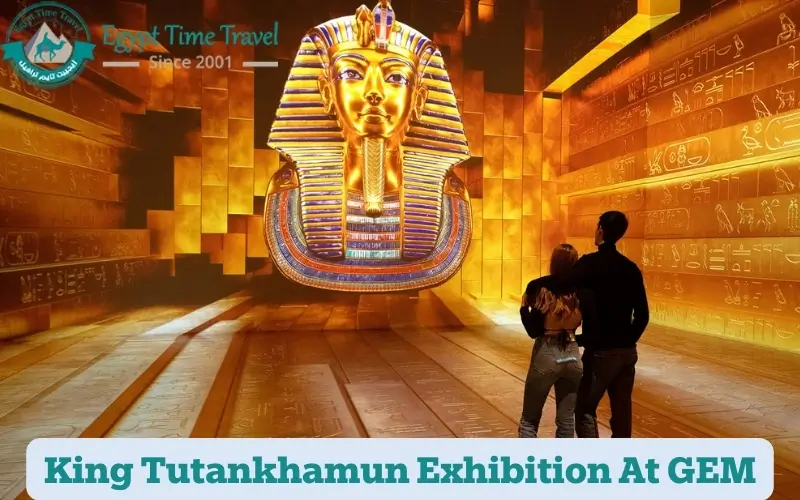
When Did the Grand Egyptian Museum’s Tutankhamun Galleries Open?
The Grand Egyptian Museum’s full public opening took place in November 2025, following earlier phases of limited and trial access. By October 2026, the museum’s official visitor information lists the Tutankhamun Galleries among the areas included with general admission.
This is important because older online guides may still describe the galleries as closed or awaiting their opening.
Earlier trial-operation announcements referred to the main galleries operating without access to Tutankhamun’s complete exhibition.
Those statements should not be treated as current visitor guidance.
For travelers planning a 2027 visit, the appropriate approach is to check the museum’s current booking availability and any temporary restrictions for the chosen date, rather than relying on pre-opening articles.
What changed after the museum opened?
The opening brought several important changes to how visitors encounter Tutankhamun’s collection.
First, the treasures are presented within a much larger museum environment, rather than being experienced primarily through selected displays in the historic Egyptian Museum at Tahrir Square.
Second, the exhibition can connect the king’s possessions to a broader narrative about ancient Egyptian civilization.
Third, visitors can combine Tutankhamun’s treasures with other major exhibits, including the Grand Stairs, the Main Galleries, and Khufu’s ancient boats.
These developments make the Grand Egyptian Museum a substantial destination in its own right, rather than a brief stop before visiting the pyramids.
What Can You See Inside the Tutankhamun Galleries?
The Tutankhamun Galleries contain a wide range of royal possessions and funerary objects. The famous gold artifacts attract considerable attention, but some of the most revealing pieces are those associated with personal life, religious rituals, and the preparation of the burial.
The following categories provide a useful framework for deciding what to prioritize.
1. Golden burial mask
The best-known object associated with Tutankhamun, made principally of gold with decorative stone and glass inlays. It represents both royal identity and the pharaoh’s transformation into a divine being after death.
2. Royal coffins and funerary equipment
The nested coffins, shrines, and related burial objects demonstrate the elaborate protective arrangements surrounding a New Kingdom king.
3. Royal furniture
Decorated chairs, beds, and other pieces reveal sophisticated ancient craftsmanship and aspects of ceremonial and domestic royal life.
4. Canopic shrine and miniature coffins
These objects protected the king’s preserved internal organs and provide a remarkable explanation of ancient Egyptian burial beliefs.
5. Anubis shrine
A jackal-shaped representation of Anubis associated with funerary protection, offering insight into the relationship between Egyptian gods and royal burial practices.
What should visitors pay attention to beyond the gold?
Gold is only part of Tutankhamun’s story.
The less famous objects can be particularly interesting because they reveal practical details about the young ruler’s world.
Footwear shows how materials were worked and decorated. Storage chests reveal how valuable possessions were organized. Personal ornaments demonstrate royal fashion and symbolism. Weapons and ceremonial equipment reflect the relationship between kingship, military authority, and court culture.
Many of these objects were never intended as artworks for a public audience. They were possessions that eventually became part of the burial.
This makes the collection exceptionally useful for understanding life and death in ancient Egypt.
A good museum visit therefore balances the spectacular objects with the quieter exhibits that explain how the pharaoh lived.
Where Is Tutankhamun’s Golden Mask Now?
Tutankhamun’s original golden burial mask is displayed in the Tutankhamun Galleries at the Grand Egyptian Museum near Giza.
The mask is one of the most recognizable archaeological objects in the world and was originally placed over the king’s mummified head and shoulders.
Its craftsmanship combined precious materials with religious imagery intended to protect and transform the dead ruler.
What is the mask made of?
The mask is predominantly gold, decorated with materials including lapis lazuli, glass, carnelian, obsidian, and other inlays.
Its royal headcloth, curved ceremonial beard, and protective cobra and vulture communicate the king’s authority.
The blue-and-gold decoration is particularly distinctive, but its significance goes beyond appearance.
In ancient Egyptian religious thought, gold was associated with the divine and with permanence. The mask also connects Tutankhamun to Osiris, the god closely associated with death and rebirth.
Its function was therefore religious as well as artistic.
Is the mask solid gold?
Tutankhamun’s funerary mask is an actual gold object rather than a modern gold-painted reproduction.
However, the term “solid gold” should not be taken to mean that every visible component is gold. The mask incorporates several decorative materials and inlays.
Its value cannot be meaningfully reduced to the market price of its metal.
The craftsmanship, historical context, archaeological provenance, and importance to Egyptian cultural heritage are far more significant.
Is the mask the same as Tutankhamun’s coffin?
No. The golden mask and the burial coffins are separate objects.
The mask covered the king’s head and shoulders.
The anthropoid coffins enclosed the mummy, while further protective structures surrounded the burial within the tomb.
Because many photographs show gold-covered funerary objects, visitors sometimes confuse the mask, innermost coffin, and surrounding shrines.
Understanding their separate purposes makes the museum displays easier to interpret.
Why is Tutankhamun’s mask so famous?
The mask became an international symbol of ancient Egypt because of its extraordinary preservation, craftsmanship, association with the 1922 discovery, and prominent appearance in exhibitions, publications, and documentaries.
Its cultural influence is much wider than Tutankhamun’s relatively short reign.
The young pharaoh was not necessarily one of Egypt’s most politically influential rulers. Yet the surviving objects from his burial have made him one of the best-known figures in world history.
What Happened to Tutankhamun’s Coffins and Burial Shrines?
Tutankhamun’s burial involved several protective layers, each carrying religious and symbolic significance.
The king’s mummy was enclosed in anthropoid coffins within a stone sarcophagus. Around the sarcophagus were elaborate wooden shrines that occupied much of the burial chamber.
These were not simply decorative containers.
They reflected the Egyptian belief that the deceased king needed protection, transformation, and divine assistance to continue existence in the afterlife.
Why were there multiple coffins?
The nested arrangement created physical and ritual layers around the body.
Each coffin was decorated with protective imagery and divine symbolism. The king was represented through royal regalia, inscriptions, and religious motifs connecting him to the afterlife.
The sequence of coffins also emphasizes the importance Egyptians placed on preserving the royal body.
Visitors interested in the wider meaning of such burial customs can explore the site’s guide to ancient Egyptian culture.
What was the purpose of the large gilded shrines?
The shrines formed protective structures around the sarcophagus.
Their surfaces carried images and inscriptions associated with religious protection and the king’s transition into the afterlife.
Some elements were made from wood covered with gold leaf rather than solid gold.
That distinction is important because ancient Egyptian craftspeople used different materials to achieve visual, structural, and religious purposes.
What are canopic coffinettes?
Canopic coffinettes were small containers shaped like miniature royal coffins.
Tutankhamun’s set was associated with the preservation of internal organs removed during mummification.
The king’s canopic equipment included a chest, a shrine, and miniature gold coffins, illustrating the detailed religious arrangements involved in royal burial.
For a more specific explanation of the Egyptian practice, see the role of canopic jars in mummification.
Where Is Tutankhamun’s Mummy Now?
Tutankhamun’s mummy remains in his tomb, KV62, in the Valley of the Kings near Luxor.
It was not transferred to the Grand Egyptian Museum with the main collection of burial treasures.
This separation is important for visitors because the two sites provide very different experiences.
At GEM, travelers see objects designed to accompany the king into the afterlife.
At KV62, they encounter the place where those objects were discovered, including the actual burial chamber and its surviving decorated walls.
Can visitors see Tutankhamun’s mummy?
Tutankhamun’s mummy has been displayed in a protective case inside KV62, although actual access and display arrangements should be confirmed before a 2027 visit.
The tomb is an archaeological site, not a conventional museum gallery.
Conditions and conservation requirements can affect how visitors experience it.
Visitors should also understand that the tomb’s interior is much smaller than the size and fame of its discovery might suggest.
Why was the mummy left in Luxor?
The mummy’s continued presence at KV62 maintains an important connection between the king’s remains and the burial setting.
Conservation is also a major consideration whenever ancient human remains are displayed or moved.
The movement of archaeological objects can involve risks and requires specialist planning.
Travelers should not assume that every object associated with Tutankhamun belongs in the same building.
Can you visit the tomb and museum on the same day?
For an ordinary tourist itinerary, no.
The Grand Egyptian Museum is in Giza, within Greater Cairo. Tutankhamun’s tomb is in Luxor, a separate destination in southern Egypt.
Combining the two comfortably requires travel between cities and generally works better across multiple days.
Visitors planning to see the original burial site can use our detailed guide to the Valley of the Kings in Luxor.
Who Was King Tutankhamun?
Tutankhamun was an Egyptian pharaoh of the Eighteenth Dynasty who ruled during the New Kingdom in the fourteenth century BCE.
He became king at a young age and reigned for approximately nine years before dying in his late teens.
His reign followed a period of major religious and political upheaval associated with Akhenaten.
Although Tutankhamun’s reign was relatively brief, the circumstances of his burial transformed him into one of the world’s most widely recognized ancient rulers.
Why was Tutankhamun called the Boy King?
Tutankhamun is known as the Boy King because he became pharaoh while still a child.
The young ruler inherited a kingdom dealing with the consequences of religious changes introduced during the Amarna Period.
His reign was associated with the restoration of traditional religious institutions and the return to established forms of royal worship.
Because of his age, senior officials and advisers played important roles in government.
What was Tutankhamun’s original name?
Tutankhamun was originally known as Tutankhaten.
The earlier name honored Aten, the solar deity promoted during Akhenaten’s religious reforms.
The later form, Tutankhamun, refers to Amun, a major god of the Egyptian religious tradition.
The name change reflects the wider political and religious changes occurring during his reign.
This context helps explain why the historical importance of Tutankhamun extends beyond his famous burial treasures.
For readers interested in the broader period, the New Kingdom of Egypt provides background on the dynasties and institutions surrounding his reign.
How did Tutankhamun die?
Tutankhamun’s exact cause of death remains uncertain.
Scientific research has examined his mummy for evidence of injuries, medical conditions, and other possible contributing factors.
Different explanations have been proposed, but the evidence does not establish a universally accepted single cause.
Claims that he was definitely murdered, died in a chariot accident, or suffered one specific fatal disease should be treated cautiously.
The uncertainty is part of the historical record.
It is not necessary to exaggerate that uncertainty into an archaeological mystery.
How Was Tutankhamun’s Tomb Discovered?
Howard Carter discovered the entrance to Tutankhamun’s tomb in the Valley of the Kings in November 1922, after years of archaeological work in the region.
The excavation was financially supported by Lord Carnarvon.
The discovery became internationally famous because the tomb preserved an extensive collection of royal burial objects.
Why was the 1922 discovery extraordinary?
Many royal tombs in the Valley of the Kings had been robbed or disturbed during antiquity.
Tutankhamun’s tomb had also experienced ancient interference, but a large quantity of its contents survived.
The surviving objects offered an unusually detailed view of funerary practices, royal possessions, and craftsmanship.
The find was therefore important to archaeological research, not only to public fascination with gold.
Was Tutankhamun’s tomb completely untouched?
No.
It is more accurate to describe the tomb as remarkably intact rather than entirely untouched.
Evidence indicates that the burial had experienced ancient disturbances.
Nevertheless, the survival of so many objects distinguished it from numerous other royal tombs.
This is why “relatively intact” is preferable to descriptions such as “perfectly sealed for 3,000 years.”
Why was Tutankhamun buried in a relatively small tomb?
KV62 is comparatively modest beside several larger royal tombs in the Valley of the Kings.
One possible explanation is that Tutankhamun died unexpectedly and that a tomb not originally intended as his final burial place was adapted for his use.
However, this interpretation is not definitively established.
His short reign and the complexity of royal tomb construction provide useful historical context, but they do not resolve every question about the burial’s planning.
What did the discovery change?
The excavation helped transform public interest in Ancient Egypt and gave researchers a large body of evidence about New Kingdom material culture.
The objects also created long-term challenges concerning documentation, conservation, storage, interpretation, and display.
The Grand Egyptian Museum represents a new chapter in that history.
A collection discovered in a confined tomb is now presented within an extensive modern museum, where researchers and visitors can examine relationships between objects more clearly.
What Is the Best Way to Explore the Tutankhamun Galleries?
For most first-time visitors, the most useful strategy is to begin with Tutankhamun’s historical story, visit the major funerary objects, and then spend time examining the personal possessions that made the discovery archaeologically important.
The exhibition’s thematic structure supports this approach.
Discovery: Understanding the excavation
Begin by establishing how Tutankhamun’s tomb was discovered and why its preservation mattered.
Pay attention to the relationship between the burial chamber and the objects removed from it.
This helps visitors understand the collection as an archaeological discovery rather than a group of unrelated masterpieces.
Identity: Understanding the young king
The identity theme introduces Tutankhamun as a historical person.
Questions about his family, reign, physical condition, and death can be explored in the context of the available evidence.
A useful approach is to distinguish what inscriptions and artifacts directly establish from conclusions drawn through modern interpretation.
Funeral: Understanding royal burial
The funerary theme explains how the king’s body was prepared and protected.
Examine the coffins, shrines, and other burial equipment as a coordinated system.
Look for repeated protective motifs and the appearance of Egyptian gods.
For more context about those religious figures, our guide to ancient Egyptian gods and goddesses explains the roles of several important deities.
Lifestyle: Discovering everyday possessions
The lifestyle section is especially rewarding for visitors who want more than gold and monumental objects.
Furniture, containers, jewelry, and personal possessions reveal details about court life and the practical craftsmanship of the period.
Consider which items were probably used during the king’s lifetime and which were produced specifically for burial.
Rebirth: Understanding the afterlife
The final religious themes connect the objects to beliefs about transformation and eternal existence.
For the ancient Egyptians, death was not simply understood as the end of life.
Burial equipment, ritual texts, protective images, and offerings supported the desired continuation of existence.
Seeing these different categories together helps explain why so many objects were placed inside one tomb.
Which Tutankhamun Artifacts Should You Prioritize?
Visitors with limited time should not attempt to inspect thousands of items individually.
Instead, choose a selection that represents the full range of the collection.
|
Artifact or category |
Why prioritize it? |
What it teaches |
|---|---|---|
|
Golden burial mask |
Iconic masterpiece |
Royal identity and divine transformation |
|
Burial coffins |
Extraordinary funerary craftsmanship |
Protection of the royal mummy |
|
Gilded shrines |
Monumental religious objects |
Layered burial protection |
|
Canopic equipment |
Detailed ritual craftsmanship |
Mummification and preservation |
|
Royal furniture |
Personal and ceremonial possessions |
Palace life and royal status |
|
Jewelry and diadems |
Fine materials and symbolism |
Royal authority and identity |
|
Anubis shrine |
Distinctive religious imagery |
Funerary protection |
|
Chariots and equipment |
Royal transport and power |
Elite lifestyle and kingship |
|
Clothing and footwear |
Everyday material culture |
Textiles, fashion, and craftsmanship |
|
Games and personal objects |
Human-scale details |
Leisure and personal life |
This is an editorial priority list, not a claim that every item will always occupy the same display position.
Artifacts may be temporarily withdrawn for conservation, research, or exhibition maintenance.
If you only have one hour for Tutankhamun
Focus on the mask, principal funerary equipment, canopic objects, and two or three examples of personal possessions.
Read the main interpretive panels rather than every individual label.
The goal is to leave with a coherent understanding of the king’s burial.
If you have two hours
Follow the exhibition’s narrative and include a wider selection of furniture, jewelry, and personal objects.
Spend additional time on the contrast between objects used in life and objects intended for the afterlife.
If you have three hours or more
Explore the galleries more slowly and consider joining a knowledgeable guide or using museum interpretation materials.
Visitors with a strong interest in archaeology may find it useful to focus on craftsmanship, conservation, inscriptions, and the relationship between object groups.
Allow time for breaks to avoid museum fatigue.
How Much Time Do You Need at the Grand Egyptian Museum?
Most travelers should allow approximately four to six hours for a meaningful visit to the Grand Egyptian Museum, including the Tutankhamun Galleries and other principal displays.
A shorter visit is possible, but visitors should prioritize rather than rushing through the entire complex.
The following are planning recommendations, not official museum tour durations.
|
Visitor type |
Suggested time |
Recommended focus |
|---|---|---|
|
Highlights-focused traveler |
2–3 hours |
Tutankhamun and selected major highlights |
|
First-time museum visitor |
4–5 hours |
Tutankhamun, Grand Hall, stairs, main exhibits |
|
Ancient Egypt enthusiast |
5–7 hours |
Extensive gallery exploration and interpretation |
|
Family with younger children |
2–4 hours |
Selected highlights, breaks, age-appropriate experiences |
|
Archaeology-focused visitor |
Full day or repeat visit |
Collections, inscriptions, chronology, and specialized subjects |
Is two hours enough?
Two hours can provide a worthwhile introductory experience, particularly if the main objective is seeing Tutankhamun’s treasures.
However, it is not enough to study the full collection carefully and visit every major part of GEM.
If you only have two hours, do not spend most of that time taking photographs in the entrance areas.
Prioritize the exhibition you came to see.
Is a full day too much?
A full day can be justified for travelers particularly interested in archaeology and Egyptian history.
The collection spans far more than Tutankhamun’s reign.
The museum also contains architectural spaces, the Main Galleries, and the Khufu boat collection.
A long visit should include rest periods, refreshments, and a realistic expectation of how much information can be absorbed.
Should you visit the pyramids on the same day?
Yes, combining GEM with the Giza Pyramids is geographically sensible, but it makes for a substantial day.
The museum is near the pyramid plateau, so visiting both avoids unnecessary travel across Cairo.
Travelers who want to enter pyramids, explore multiple viewpoints, visit the Sphinx, and spend several hours inside GEM may prefer to divide the activities over two days.
For planning the archaeological site itself, consult our guide to the Giza Necropolis and its monuments.
Grand Egyptian Museum Tickets and Opening Hours for 2027
Latest published operating schedule
Checked October 2026
Regular gallery days
9 AM–6 PM
Sun, Mon, Tue, Thu, Fri
Extended gallery days
9 AM–9 PM
Wednesday and Saturday
Last gallery entry is one hour before closing. These are currently published hours, not guaranteed 2027 schedules.
The Grand Egyptian Museum operates a timed-entry ticketing system. Visitors should reserve admission in advance and select an available arrival window.
The general admission ticket currently includes the Tutankhamun Galleries, Main Galleries, Grand Hall, Grand Stairs, Khufu’s Boats Museum, and designated visitor areas.
Additional experiences and guided services may have separate conditions or charges.
How much does the Grand Egyptian Museum cost?
The published admission categories differ according to nationality, age, residency, and eligibility for reduced admission.
Egyptian government information issued for the museum’s November 2025 public opening listed the following prices:
|
Visitor category |
Published opening-era admission |
|---|---|
|
Foreign adult visitor |
EGP 1,450 |
|
Foreign child or eligible student |
EGP 730 |
|
Egyptian adult |
EGP 200 |
|
Egyptian child, student, or senior |
EGP 100 |
|
Eligible expatriate adult |
EGP 730 |
These are historical published prices for reference, not verified 2027 ticket prices. The amount payable on your travel date may differ.
Current rules also provide free admission for certain qualifying categories, subject to eligibility checks and conditions. Some guided activities may still incur a charge.
Before purchasing, check the current category and price directly through the museum’s official reservation system.
Do you need separate tickets for King Tut’s exhibition?
The museum’s current general admission information includes access to the Tutankhamun Galleries.
That means visitors do not ordinarily need to buy an entirely separate admission ticket just to enter those permanent galleries.
However, special experiences, additional services, or future temporary exhibitions may have their own ticketing rules.
Always review exactly what your chosen admission product includes.
Do you need to book in advance?
Yes. The museum’s published booking guidance requires tickets to be purchased online in advance with a designated entry time.
Demand can vary considerably by date, holiday period, and visitor numbers.
For 2027 travel, confirm availability before fixing a tightly scheduled tour around the museum.
Can you visit without a guide?
Yes. Independent visitors can explore the permanent collections using the museum’s interpretation materials.
A knowledgeable guide can be especially useful if you want help understanding the relationship between the artifacts, ancient Egyptian religion, and the historical events surrounding Tutankhamun’s reign.
Guided visits can also be useful for travelers with limited time.
Where Is the Grand Egyptian Museum Located?
The Grand Egyptian Museum is located near El Remayah Square, along the Cairo–Alexandria Desert Road, close to the Giza Pyramids.
It sits on the western side of Greater Cairo rather than in the historic city-center museum district.
This location is one reason why GEM and the pyramids fit naturally into the same sightseeing itinerary.
Grand Egyptian Museum Location Map
Explore the location of the Grand Egyptian Museum near the Giza Pyramids and find other important museums in Cairo.
How far is GEM from central Cairo?
The distance depends on the starting neighborhood.
Downtown Cairo, Zamalek, Garden City, New Cairo, and the Giza hotel districts all involve different driving routes.
Traffic can significantly affect journey times.
Travelers should not assume that a short straight-line distance on a map translates into a short taxi journey.
Where possible, leave a buffer before the museum’s assigned entry window.
How do you get to the museum?
The most straightforward options for international visitors are usually a prearranged private transfer, licensed taxi, or reputable app-based car service.
Tour buses and organized excursions are also available.
Public transportation arrangements may change, and visitors should verify the practical connection between any metro or bus stop and the museum entrance before traveling.
The museum’s visitor information identifies access by road from the Cairo–Alexandria Desert Road.
Is it better to stay near the pyramids?
Staying near Giza can make a museum-and-pyramids-focused trip easier, especially for travelers with an early itinerary.
However, Cairo accommodation decisions should account for more than one attraction.
Downtown and Zamalek can be convenient for city sightseeing and restaurants, while areas nearer Giza may reduce travel for western Cairo attractions.
Our guide to where to stay in Cairo explains how to choose a location according to your itinerary.
What Else Can You See at the Grand Egyptian Museum?
Tutankhamun is the primary reason many people visit GEM, but the museum covers a much wider span of Egyptian civilization.
The main exhibits help place his relatively brief reign within thousands of years of Egyptian history.
The Grand Hall and Ramesses II statue
The museum’s Grand Hall is an important architectural space and features a monumental statue of Ramesses II.
Ramesses II ruled during the Nineteenth Dynasty, after Tutankhamun’s time.
Comparing the two kings illustrates how differently ancient rulers are remembered.
Ramesses II became famous through major monuments, temples, and a long reign.
Tutankhamun became internationally famous largely because of the survival of his burial collection.
The Grand Stairs
The Grand Stairs contain monumental artifacts that connect Egyptian rulers, religious practices, and architectural traditions across different periods.
Visitors can appreciate sculpture at a larger scale than the many small objects in Tutankhamun’s tomb collection.
The stairs also provide an introduction to the museum’s broader historical themes.
The Main Galleries
The museum’s twelve main exhibition halls cover ancient Egyptian history through chronological and thematic displays.
They explore subjects including kingship, society, and beliefs.
A visit to these galleries is worthwhile for travelers who want to understand the political, cultural, and religious setting in which the pharaohs ruled.
The wider displays prevent Tutankhamun’s burial from being viewed as an isolated event.
Khufu’s Boats Museum
Khufu’s ancient boats represent a very different period of Egyptian history.
King Khufu ruled during the Old Kingdom, many centuries before Tutankhamun.
The surviving royal boats provide important evidence of ancient craftsmanship, shipbuilding, and funerary traditions.
They also create a connection between GEM and the nearby Great Pyramid of Khufu.
For context, our guide to the Great Pyramid of Cheops explains the monument associated with this ruler.
Grand Egyptian Museum vs Egyptian Museum in Tahrir: Which Should You Visit?
The Grand Egyptian Museum is the stronger choice for travelers whose primary goal is seeing Tutankhamun’s treasures.
The Egyptian Museum in Tahrir remains historically important and offers a different kind of museum experience.
The two institutions should not be treated as identical.
|
Comparison |
Grand Egyptian Museum |
Egyptian Museum in Tahrir |
|---|---|---|
|
Location |
Giza, near pyramids |
Downtown Cairo |
|
Main appeal |
Modern displays and extensive collections |
Historic museum and Egyptian antiquities |
|
Tutankhamun focus |
Dedicated galleries with major treasure collection |
Not the main destination for the reassembled collection |
|
Building experience |
Contemporary museum architecture |
Historic early twentieth-century museum |
|
Best combination |
Giza Pyramids |
Downtown Cairo sightseeing |
|
Suggested time |
Half day or longer |
Around 2–3 hours, depending on interest |
Is the old Egyptian Museum still worth visiting?
Yes.
The museum in Tahrir is an important historic institution with collections spanning many periods of ancient Egypt.
Visitors interested in the history of Egyptian museum collecting may find the building itself meaningful.
However, those specifically searching for Tutankhamun’s golden mask should plan around GEM rather than relying on outdated descriptions of the old museum.
Our Egyptian Museum in Cairo vs Grand Egyptian Museum comparison provides a more detailed decision guide.
Should you visit both museums?
Visiting both can make sense for travelers with several days in Cairo and a strong interest in archaeology.
If time is limited, it may be more useful to combine GEM with the pyramids, then explore a different side of Cairo on another day.
Travelers who want a broad overview of Egypt’s historical collections can also review the country’s major museums and collections.
Is the Grand Egyptian Museum Worth Visiting in 2027?
Yes. For most travelers interested in ancient Egyptian history, the Grand Egyptian Museum deserves a prominent place in a Cairo itinerary.
The scale of the Tutankhamun collection, access to important objects from multiple periods, and proximity to the Giza Pyramids make it especially valuable.
However, its suitability depends on how much time you have and what kind of experience you prefer.
Who will enjoy the museum most?
The experience is particularly well suited to:
-
First-time visitors who want to see Tutankhamun’s original treasures.
-
Families looking for an educational cultural attraction.
-
Travelers interested in archaeological discoveries.
-
Museum enthusiasts who appreciate material culture and craftsmanship.
-
Visitors wanting historical context before or after exploring the pyramids.
-
Travelers building a longer Cairo and Luxor itinerary.
Who may prefer a shorter visit?
Travelers with little interest in museums, limited walking tolerance, or very tight schedules may prefer a curated highlights visit.
The most effective approach is not necessarily to skip GEM.
Instead, decide which galleries matter most and avoid trying to cover everything.
Is GEM suitable for children?
Many children can enjoy the museum, particularly the visually striking sculptures, gold objects, and unusual artifacts.
Younger children are unlikely to appreciate several hours of detailed archaeological interpretation.
A shorter itinerary with regular breaks is generally more realistic.
Families should review the museum’s current children’s activities and visitor arrangements before their chosen date.
For wider trip ideas, see our guide to exploring Egypt with kids.
Can You Take Photos in the Tutankhamun Galleries?
Photography is permitted in many parts of the Grand Egyptian Museum for personal use, but restrictions apply.
The museum’s current visitor rules prohibit flash photography, tripods, selfie sticks, drones, and live streaming.
Certain areas within the Tutankhamun Galleries also restrict photography or video recording.
Visitors should follow the instructions displayed beside artifacts and those given by museum staff.
Can you photograph the golden mask?
Do not assume that photography is permitted around every Tutankhamun artifact.
Restrictions may apply around particularly sensitive or crowded displays.
Because policies can change, confirm the rules at the gallery entrance and obey any artifact-specific signs.
Why are some photographs restricted?
Museum restrictions can serve several purposes, including protection of sensitive materials, controlling visitor movement, security, and preventing disruption.
Photography rules may also differ between personal and commercial use.
Travelers should avoid blocking narrow viewing areas to photograph individual objects.
The most important part of the visit is seeing the collection, not obtaining a photograph of every piece.
Is the Grand Egyptian Museum Wheelchair Accessible?
The Grand Egyptian Museum is a modern museum complex with accessibility provisions, and its current admissions policy includes free entry for visitors with disabilities.
However, accessibility involves more than whether the entrance accommodates a wheelchair.
Travelers should also consider the distances between galleries, availability of lifts, accessible restrooms, resting spaces, and transport arrangements.
What should wheelchair users confirm?
Before visiting, check the availability and operating condition of lifts, accessible circulation routes, wheelchair assistance, and nearby drop-off points.
Ask about long walking distances and whether any galleries have temporary access restrictions.
It is also useful to confirm accessible transport rather than assuming an ordinary taxi will meet individual mobility needs.
For broader trip preparation, our guide to wheelchair-friendly travel in Egypt addresses practical destination considerations.
What about seniors and travelers with limited stamina?
Museum visits can involve prolonged standing, walking, and concentrated attention.
A shorter tour with rest stops may offer a better experience than attempting every gallery in a single visit.
For visitors with mobility limitations, prioritizing the Tutankhamun Galleries and a few major highlights can make the outing more manageable.
What Is the Best Time to Visit GEM in 2027?
For many international travelers, October through April offers comfortable conditions for combining the Grand Egyptian Museum with outdoor sightseeing around Giza.
The museum is primarily indoors, so it can also be a useful attraction during Egypt’s hotter months.
The best time of day depends on the traveler, available entry slots, and the rest of the itinerary.
Is morning or afternoon better?
A morning entry can be helpful for travelers who want to visit the museum while they are fresh and then spend the remainder of the day relaxing or sightseeing.
An afternoon visit may work if you have already spent the morning elsewhere.
Wednesday and Saturday currently offer extended evening gallery hours, which can provide additional scheduling flexibility.
These days should not automatically be considered quieter, however.
Actual crowd levels depend on demand and local conditions.
Is the museum suitable for summer visits?
Yes.
The indoor galleries can be a practical part of a summer Cairo itinerary when outdoor attractions may feel uncomfortable during the hottest hours.
A sensible summer strategy is to arrange outdoor sightseeing earlier in the day and reserve the museum for another part of the schedule.
Travelers planning seasonal activities can compare conditions using our Egypt weather by month guide.
Should you avoid public holidays?
Public holidays and popular travel periods can bring increased visitor demand.
If your dates coincide with a busy season, book tickets early and allow more time for arrival, security procedures, and circulation.
Do not rely on expected crowd patterns as a guarantee of availability.
How to Combine Tutankhamun’s Treasures with the Giza Pyramids
The most geographically efficient Cairo itinerary for many visitors combines the Grand Egyptian Museum with the Giza Plateau.
Both attractions are located in the western part of Greater Cairo, making them easier to combine than sites situated across the city.
However, the best order depends on weather, museum booking slots, individual interests, and the level of activity planned at the pyramids.
Option 1: Full-day GEM and Giza itinerary
|
Approximate schedule |
Activity |
|---|---|
|
8:00–10:30 AM |
Giza Pyramids and major viewpoints |
|
10:30–11:30 AM |
Additional Giza sightseeing and transfer buffer |
|
11:30 AM–12:30 PM |
Lunch and rest |
|
12:30–4:30 PM |
Grand Egyptian Museum, prioritizing Tutankhamun |
|
Late afternoon |
Return to hotel |
This is an illustrative itinerary, not a timetable guaranteeing entry to either attraction.
Choose a museum entry slot that fits your actual travel and transfer arrangements.
Travelers who plan to enter a pyramid or spend considerable time at the Giza Plateau should allow additional time.
Option 2: Museum-focused half day
If your main interest is Tutankhamun, devote most of the outing to GEM.
Begin with the Tutankhamun Galleries, then visit the Grand Hall, Grand Stairs, and selected Main Galleries.
This is a better option than rushing through multiple attractions just to fit them into one day.
Option 3: Two-day Giza cultural itinerary
Spend the first day exploring the pyramids and Sphinx with time for photography and historical interpretation.
Dedicate the second day to GEM, allowing a much slower examination of Tutankhamun’s collection.
This is particularly suitable for archaeology enthusiasts and travelers who want to enjoy the museum without feeling rushed.
If you want professionally arranged guiding and transport, Egypt Time Travel offers Grand Egyptian Museum tours that can be considered as part of a wider Cairo plan. Confirm the actual inclusions and museum reservation arrangements before booking.
How to See Both Tutankhamun’s Treasures and His Tomb
Seeing Tutankhamun’s treasures and the original burial chamber requires a Cairo–Luxor itinerary.
This is one of the most interesting ways to understand the pharaoh’s story because the museum and archaeological site answer different questions.
GEM helps explain what was found.
KV62 shows where the discovery took place.
Suggested four-day Cairo and Luxor itinerary
-
Day 1 — Giza Pyramids
Explore the major pyramids, the Great Sphinx, and surrounding archaeological landscape.
-
Day 2 — Grand Egyptian Museum
Spend approximately four to six hours exploring Tutankhamun’s treasures and selected main collections.
-
Day 3 — Travel to Luxor
Transfer to Luxor and, depending on arrival time, explore part of the East Bank.
-
Day 4 — Valley of the Kings
Visit Tutankhamun’s tomb, subject to ticketing and access arrangements, and selected nearby monuments.
A four-day plan is relatively compact and assumes efficient domestic travel.
Travelers who want to enjoy Cairo and Luxor at a slower pace should consider additional nights.
What else should you visit in Luxor?
The Valley of the Kings contains tombs belonging to multiple New Kingdom rulers.
The wider Luxor area also contains remarkable temples and archaeological remains associated with Egyptian royal and religious history.
Visitors with sufficient time can explore Karnak, Luxor Temple, Hatshepsut’s mortuary temple, and other sites.
Our guide to things to do in Luxor offers a broader introduction to these experiences.
Is a guided Egyptology tour worth considering?
A qualified guide can connect historical events, royal chronology, archaeological discoveries, and museum objects across different sites.
That can be particularly helpful when visitors want to understand the relationship between the Giza Pyramids, Tutankhamun’s burial, and wider Egyptian history.
For a customized route covering both Cairo and Luxor, Egypt Time Travel’s tailor-made holidays provide a relevant starting point for discussing dates, pacing, and interests.
What Is the Difference Between the Original Tutankhamun Exhibition and Traveling Exhibitions?
The Tutankhamun Galleries at the Grand Egyptian Museum contain original archaeological artifacts from the king’s collection.
Traveling exhibitions in Europe, North America, and other regions may offer very different experiences.
Some are historical exhibitions assembled from authentic objects, while others focus on reconstructions, replicas, multimedia presentations, or immersive projections.
The distinction should be clear before purchasing tickets.
Are all King Tut exhibitions authentic?
No.
The title “Tutankhamun exhibition” does not automatically mean that original objects from KV62 will be displayed.
A museum exhibition and an immersive entertainment experience may both explore the same subject while using different materials.
When assessing a touring exhibition, check whether its organizers explicitly identify the objects as original antiquities, replicas, or digital representations.
Is a traveling exhibition the same as GEM?
No.
GEM’s permanent Tutankhamun collection offers the opportunity to see authentic archaeological material in Egypt.
A traveling exhibition may focus on educational storytelling, reproductions, or selected works.
These experiences can be enjoyable, but they should not be represented as equivalent.
Will Tutankhamun’s treasures tour London, Glasgow, Stockholm, Boston, or Cologne in 2027?
Do not assume that a future exhibition carrying Tutankhamun’s name will contain the original golden mask or the GEM collection.
No specific 2027 touring schedule for those cities has been verified for this article.
Travelers should consult announcements from the host institution and examine the exhibition’s object descriptions.
A listing for an immersive King Tut experience is not evidence that the original treasures have left Egypt.
What Are the Most Common Mistakes Visitors Make?
The most common problems arise from outdated information, unrealistic timing, and confusion between museum objects and the original tomb.
Confusing the mask with the mummy
The golden burial mask is at GEM.
The mummy is in Luxor.
Travelers who want to see both need to plan accordingly.
Using outdated pre-opening guides
Some older articles still describe the Tutankhamun Galleries as closed.
Use the current museum ticketing information rather than relying on content written during the trial-opening phase.
Assuming every famous artifact is made of solid gold
Many burial objects combined wood, gold leaf, stone, glass, and other materials.
The materials were chosen for craftsmanship, symbolism, durability, and religious meaning.
Planning only one hour for the museum
One hour may be enough to see selected objects but is not realistic for a broad exploration.
Reserve additional time if you want to appreciate the exhibition’s historical context.
Booking transport too tightly
Cairo traffic can be unpredictable.
Leave enough time between your hotel departure and the assigned museum entry slot.
Treating the museum as a replacement for Luxor
GEM contains Tutankhamun’s treasures, but the Valley of the Kings remains a separate and important archaeological destination.
The two experiences complement each other.
Expecting a traveling exhibition to contain original artifacts
Many touring shows use reproductions or digital technology.
Check the actual exhibition format before buying tickets.
Frequently Asked Questions About the Grand Egyptian Museum Tutankhamun Exhibition
1. Are all of Tutankhamun’s treasures displayed together at GEM?
The Grand Egyptian Museum presents more than 5,000 artifacts from Tutankhamun’s burial collection together, offering an unprecedented opportunity to understand the assemblage. However, not every individual object is guaranteed to remain continuously on public display. Conservation, research, and exhibition management can affect availability.
2. Is Tutankhamun’s golden mask real at the Grand Egyptian Museum?
Yes. The golden burial mask identified in the Grand Egyptian Museum’s official collection is the authentic archaeological object recovered from Tutankhamun’s tomb. It is not simply a modern reproduction or a digital installation.
3. Is Tutankhamun’s mummy inside GEM?
No. Tutankhamun’s mummy remains associated with tomb KV62 in the Valley of the Kings, Luxor. The Grand Egyptian Museum displays burial treasures and related funerary equipment rather than the king’s physical remains.
4. Can tourists see Tutankhamun’s tomb in 2027?
Tutankhamun’s tomb is an established visitor site in the Valley of the Kings. However, opening arrangements, conservation restrictions, and ticket requirements can change. Travelers should confirm access and applicable admission rules shortly before their planned 2027 visit.
5. Can I see the golden mask without taking a guided tour?
Yes. Standard museum admission currently includes access to the Tutankhamun Galleries, so independent visitors can see the collection without booking a guided tour. A guide is optional unless a specific ticket product or special activity states otherwise.
6. Does the Grand Egyptian Museum have King Tut’s chariots?
Tutankhamun’s burial collection includes chariots and related equipment, which form part of the archaeological evidence for royal transport and court culture. Visitors interested in these objects should consult the museum’s current gallery information to confirm which examples are available during their visit.
7. Can visitors bring backpacks into the galleries?
Museum security and baggage rules can restrict the size or type of items brought into exhibition spaces. Rather than assuming that large backpacks or suitcases are permitted, visitors should review current entry instructions and arrange separate luggage storage when necessary.
8. Are the Tutankhamun Galleries suitable for travelers who do not know Egyptian history?
Yes. The galleries introduce the king through themes including discovery, identity, burial, lifestyle, and rebirth. These themes make the collection accessible to beginners while still offering substantial detail for visitors interested in archaeology.
9. Does the GEM admission ticket include Khufu’s boats?
The museum’s current official ticketing information includes the Khufu’s Boats Museum within the general admission experience. Visitors should confirm that inclusion when selecting tickets for 2027, particularly if special events or access changes are announced.
10. Can you buy Tutankhamun exhibition tickets at the museum entrance?
The museum’s published ticketing instructions require advance online booking with a selected time slot. Visitors should not depend on buying ordinary entry tickets at the gate. Check current arrangements before traveling, especially during busy holidays.
11. Is the Tutankhamun exhibition permanent?
The Tutankhamun Galleries form part of the Grand Egyptian Museum’s permanent exhibition program, rather than being advertised simply as a short-term touring event. Nevertheless, individual objects may be temporarily removed or repositioned for conservation or exhibition needs.
12. Is the Grand Egyptian Museum better than an immersive Tutankhamun exhibition?
For seeing authentic archaeological artifacts, the Grand Egyptian Museum offers a fundamentally different experience from an immersive show based on projections or reconstructions. An immersive exhibition may be entertaining and educational, but it should not be confused with visiting the original collection in Egypt.
Final Thoughts: Should You Visit Tutankhamun at the Grand Egyptian Museum in 2027?
The Grand Egyptian Museum offers a remarkable opportunity to understand Tutankhamun beyond the image of his golden burial mask.
The collection reveals how the young pharaoh lived, the objects that accompanied his burial, and the religious beliefs that shaped ancient Egyptian funerary traditions.
For most first-time visitors, allowing at least half a day provides a far better experience than trying to rush through the exhibition.
If you want to follow the full story, combine GEM with the Giza Pyramids and, if your itinerary permits, Tutankhamun’s original tomb in Luxor.
The most important planning distinction is simple: the treasures are at the Grand Egyptian Museum, while the mummy and tomb remain in the Valley of the Kings.
Egypt Time Travel can help travelers organize private museum visits and wider Egypt itineraries according to their available time, historical interests, and travel dates.
