Quick Answer: What Are the Black and White Deserts in Egypt?
The Black and White Deserts are two different natural landscapes in Egypt’s Western Desert, associated with the Bahariya and Farafra oases.
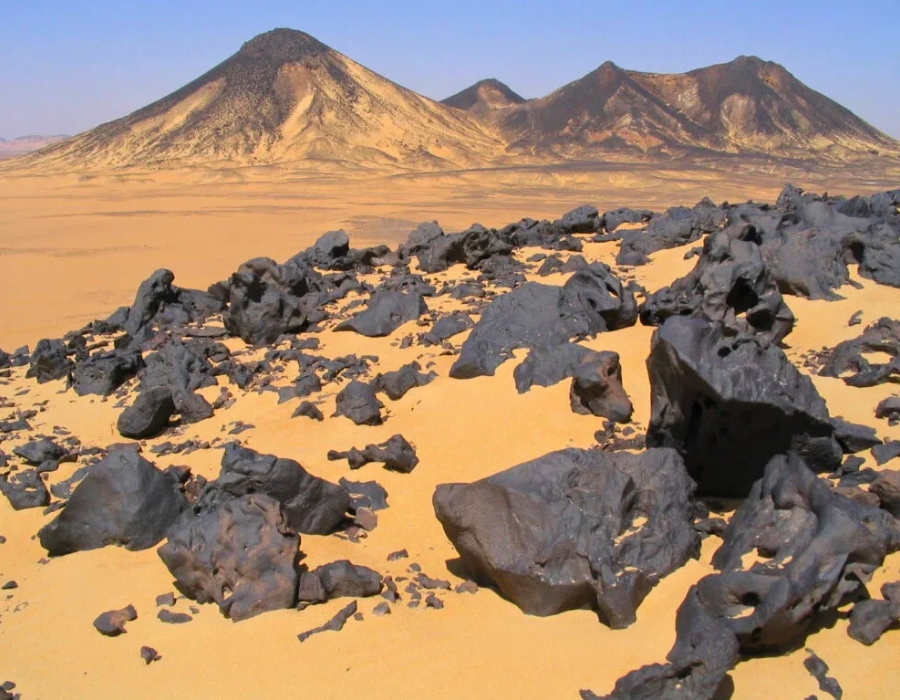
- Black Desert: Located around Bahariya Oasis and known for dark hills, rocks and volcanic-looking formations.
- White Desert: Located near Farafra Oasis and famous for white chalk formations sculpted by wind erosion.
- Bahariya Oasis: About 370 km southwest of Cairo and the closest major Western Desert oasis to the capital.
- Farafra Oasis: Farther west/southwest and a principal gateway to the White Desert. The White Desert is approximately 40 km from Farafra according to Egypt’s official tourism information.
- Typical experience: 4×4 safari, desert landscapes, sunset, camping or oasis accommodation, stargazing and visits to geological attractions.
- Recommended duration: Allow at least 2 days from Cairo if you want to experience the desert without turning the journey into a rushed drive.
- Best approach: Use an experienced, licensed desert guide and suitable 4×4 transportation. Egypt’s tourism authority specifically recommends licensed guides for desert excursions.
The key point is that a Black and White Desert Egypt tour is a multi-stop Western Desert journey, rather than a visit to one attraction officially named the “Black and White Desert.”
The Black and White Desert Egypt experience combines two of the Western Desert’s most distinctive landscapes: the dark, rocky formations of the Black Desert near Bahariya Oasis and the bright chalk formations of the White Desert near Farafra Oasis. They are not one single desert, but two different desert areas that are commonly visited together on a Western Desert safari.
For most travelers, the best way to experience both is on a 2-day or 3-day desert tour from Cairo, usually with a 4×4 vehicle, an overnight stay in Bahariya or desert camping, and stops at major geological and oasis attractions. The White Desert is particularly known for its wind-shaped white chalk formations, while the Black Desert is characterized by dark volcanic-looking hills and black stones.
This guide explains where the Black and White Deserts are, how to get there, how tours work, the best time to visit, what the trip costs, what to pack, what you can see along the way, and how to plan a desert safari safely and comfortably.
What Is the Black and White Desert in Egypt?
The phrase “Black and White Desert Egypt” is commonly used by travelers searching for a safari that combines the Black Desert and White Desert in Egypt’s Western Desert.
The landscapes look dramatically different.
The Black Desert has dark hills and stones scattered across the desert landscape. Official Egyptian sources describe the area as containing limestone formations and dark mountain heights, with the dark appearance associated with mineral-rich and volcanic geological features.
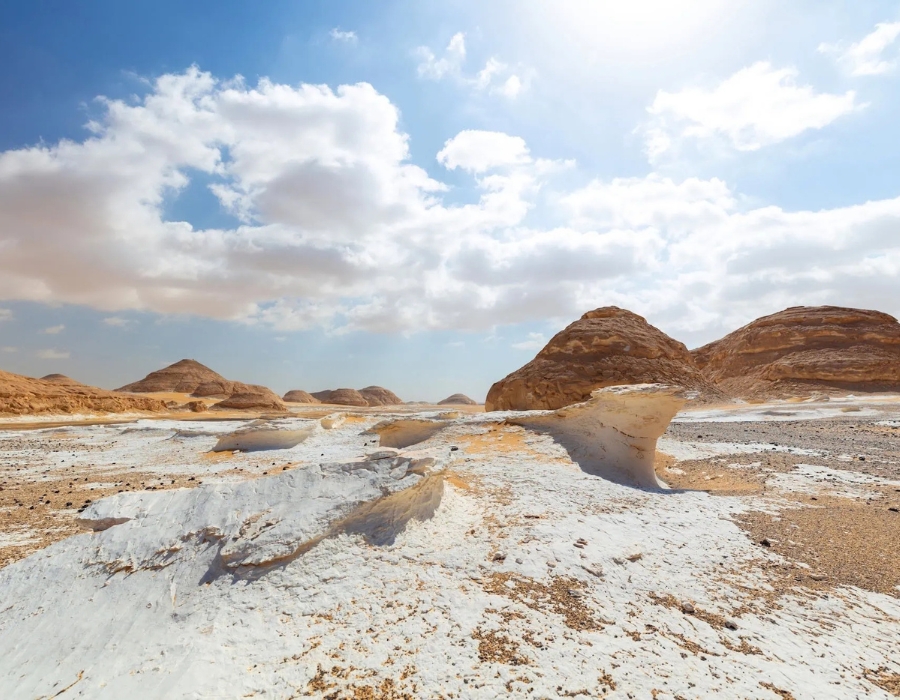
The White Desert, by contrast, is dominated by bright chalk. Wind erosion has shaped the chalk into unusual columns, mushrooms and other forms. Egypt’s State Information Service describes the reserve as having a white chalk floor and geological formations sculpted by wind.
That contrast is the reason travelers often want to see both.
In one trip, you can move from:
dark rocky hills → oasis → golden dunes → white chalk formations → desert camp
The experience is less about visiting a conventional “sight” and more about seeing how the geology, light and landscape change across the Western Desert.
Where Is the Black and White Desert in Egypt?
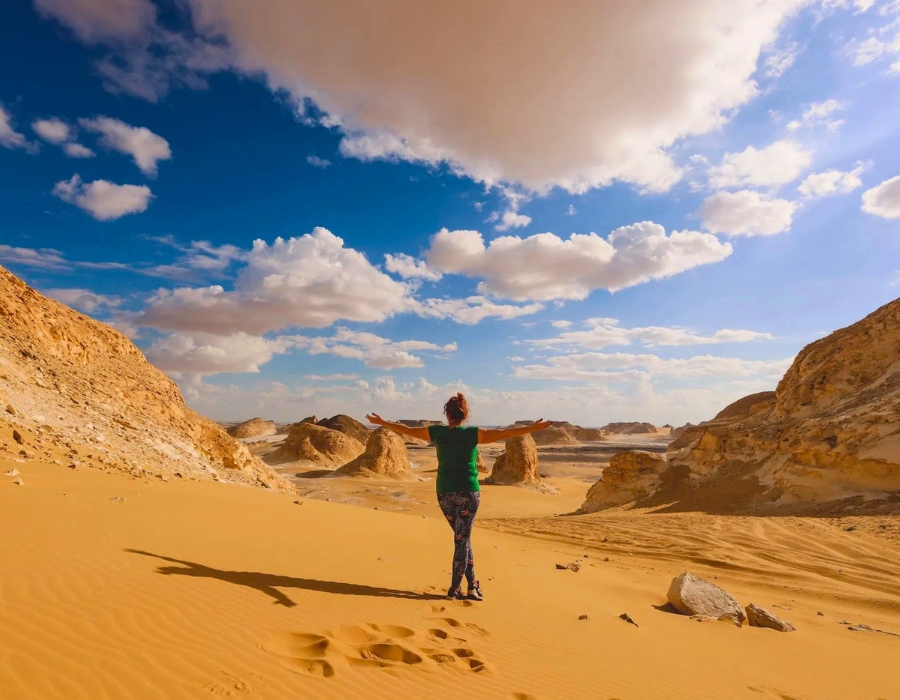
The Black and White Deserts are in Egypt’s Western Desert, west of the Nile Valley.
The easiest geographical reference points are:
Cairo → Bahariya Oasis → Black Desert → Farafra area → White Desert
Bahariya Oasis is approximately 370 km southwest of Cairo, according to Egypt’s official tourism portal. It is described as the Western Desert oasis closest to Cairo.
Farafra is farther into the Western Desert. Egypt’s tourism authority gives the road distance from Cairo to Farafra as approximately 545 km, while the distance from Bahariya to Farafra is approximately 180 km.
The White Desert lies outside Farafra. The official tourism portal places it around 40 km from Farafra, while another Egyptian government source gives approximately 38 km northwest of central Farafra for the White Desert Reserve.
Black and White Desert Egypt location at a glance
| Place | Approximate location | Main attraction |
|---|---|---|
| Cairo | Starting point for many tours | Main international gateway |
| Bahariya Oasis | About 370 km southwest of Cairo | Oasis, Black Desert and archaeological sites |
| Black Desert | Around Bahariya | Dark hills and desert formations |
| Farafra Oasis | About 180 km from Bahariya | Gateway to White Desert |
| White Desert | About 38–40 km from Farafra | White chalk formations |
| Crystal Mountain | Between major Western Desert attractions | Crystal-bearing geological formation |
| Great Sand Sea | Western Desert | Large sand dunes |
Distances are approximate road distances and can vary depending on the exact route and stopping points.
Black and White Desert Egypt Map: How the Route Works
If you are looking at a Black and White Desert Egypt map, the most useful thing to understand is the relationship between the oases.
A typical route from Cairo is broadly:
Cairo
↓
Bahariya Oasis
↓
Black Desert
↓
Crystal Mountain / desert landscapes
↓
Farafra Oasis
↓
White Desert
↓
Desert camp or return toward Bahariya
↓
Cairo
The exact order varies by tour operator, road conditions, permits, camping arrangements and whether the trip continues to other Western Desert destinations.
A longer itinerary can continue toward Dakhla Oasis, Kharga Oasis or other desert areas, creating a broader Western Desert circuit. Egypt’s official tourism portal identifies Bahariya, Farafra, Dakhla and Kharga as part of a possible desert circuit.
Important map distinction
The Black Desert and White Desert should not be treated as neighboring landmarks like two monuments in the same archaeological complex.
They are separate desert landscapes connected through the Western Desert road network and oasis routes.
This matters when planning your itinerary because seeing both requires transportation and time between locations.
Why Are There Black and White Deserts in Egypt?
The different colors come from the geology and erosion of the landscapes.
Why is the Black Desert black?
The Black Desert around Bahariya contains dark rocks and hills. Egyptian government information describes dark formations associated with volcanic-era geology and notes the presence of dolomite, iron-rich quartzite and other rocks. It also explains that manganese oxidation contributes to the dark appearance of some rocks.
From ground level, the result is a landscape of dark hills rising from lighter-colored desert surfaces.
The appearance changes considerably with sunlight.
At midday, the dark rocks can look almost charcoal-colored. Around sunrise and sunset, the low-angle light can bring out brown, red and orange tones.
Why is the White Desert white?
The White Desert gets its name from its pale chalk landscape.
The White Desert Reserve contains extensive white chalk formations. Wind erosion has shaped these deposits into distinctive formations, including columns and mushroom-like structures.
The shapes are especially striking because they stand against the surrounding desert floor.
The landscape can look completely different depending on the time of day:
- Bright white under strong daylight
- Cream and beige during afternoon light
- Pink, orange or golden around sunset
- Pale blue-gray under moonlight
This changing light is one reason the White Desert is particularly popular with photographers.
Is the Black Desert the Same as the White Desert?
No. The Black Desert and White Desert are separate areas.
The Black Desert is primarily associated with Bahariya Oasis, while the White Desert is associated with Farafra Oasis and the surrounding protected landscape.
They are frequently combined in one safari because they can be incorporated into a broader Western Desert route.
Egypt’s official tourism portal specifically identifies Bahariya as home to the Black and White Deserts and also describes Farafra as a starting point for exploring the White and Black Deserts.
What Can You See on a Black and White Desert Egypt Tour?
A well-planned safari can include much more than the two deserts.
The exact stops depend on the itinerary, but common experiences include:
1. Black Desert
This is often one of the first major desert landscapes after leaving Bahariya.
You can see:
- Dark rocky hills
- Black stones
- Desert valleys
- Contrasting sand and rock
- Panoramic viewpoints
The Black Desert forms part of the protected landscape around Bahariya Oasis.
2. Bahariya Oasis
Bahariya provides an important contrast to the surrounding desert.
The oasis contains:
- Date palms
- Agricultural areas
- Natural springs
- Villages
- Archaeological sites
- Desert viewpoints
It is also associated with the famous Valley of the Golden Mummies archaeological discovery.
3. Crystal Mountain
Crystal Mountain is another well-known geological stop.
Egypt’s tourism authority describes it as an exposed geological formation associated with an underground cave and visible crystals.
It is usually a short sightseeing stop rather than a destination requiring an entire day.
4. Agabat Valley
Agabat is known for soft golden sand, dunes and pale cliffs.
The area provides a different landscape from both the Black Desert and the White Desert and is often included in longer desert safari routes.
5. White Desert
This is usually the visual highlight of the safari.
Expect:
- White chalk formations
- Mushroom-shaped rocks
- Sculpted limestone/chalk structures
- Wide open desert
- Dramatic sunset views
- Very dark night skies away from artificial light
6. Desert camping
Overnight camping transforms the trip.
Instead of simply photographing the landscape and leaving, you can experience the desert after sunset.
A typical evening may include:
- Sunset viewing
- Dinner at camp
- Tea
- Stargazing
- Sitting around a fire where permitted
- Sleeping in a tent or camping setup
- Sunrise in the White Desert
The official Egyptian tourism portal confirms that desert camping is a popular activity around Bahariya and recommends making arrangements through experienced, licensed guides.
How Long Do You Need for the Black and White Desert?
For travelers starting in Cairo, 2 days is a practical minimum for a combined Black and White Desert experience, while 3 days allows a more relaxed itinerary.
The ideal duration depends on what you want to do.
| Trip length | What it can include | Best for |
|---|---|---|
| 1 day | Limited desert excursion | Travelers with very little time |
| 2 days / 1 night | Bahariya + Black Desert + White Desert + camping or oasis stay | Most first-time visitors |
| 3 days / 2 nights | More stops, slower pace, additional desert activities | Travelers who prefer comfort |
| 4–5 days | Desert exploration plus oasis experiences | Nature and adventure travelers |
| 6+ days | Wider Western Desert route | Travelers wanting a deeper desert journey |
Egypt’s official tourism portal notes that excursions from Bahariya can range from half a day to a week, while excursions to the White Desert can range from one to ten nights depending on activities and route.
For most international visitors, however, a very long desert safari is unnecessary unless desert landscapes are one of the main reasons for the trip.
Can You Visit the Black and White Desert From Cairo?
Yes. Cairo is one of the most common starting points for Black and White Desert Egypt tours.
Bahariya is approximately 370 km southwest of Cairo, and the Egyptian tourism authority describes the drive to Bahariya as approximately five hours by bus, taxi or private car, although actual travel time can vary.
A typical Cairo-based trip might look like this:
Day 1
Cairo → Bahariya Oasis → Black Desert → Crystal Mountain → White Desert → overnight
Depending on the itinerary, some attractions may be rearranged.
Day 2
White Desert sunrise → breakfast → additional desert stops → Bahariya/Cairo
This structure allows travelers to experience the desert during both daylight and nighttime.
Black and White Desert Egypt Tours: What Is Usually Included?
Tour inclusions vary significantly, so it is important to compare the actual itinerary rather than the tour title.
A private desert safari may include:
- Hotel pickup and drop-off
- Transportation from Cairo
- 4×4 desert transportation
- Local desert driver/guide
- Bahariya accommodation or desert camping
- Meals during the desert portion
- Drinking water
- Visits to major desert formations
- Sunset and sunrise stops
- Camping equipment when applicable
Some packages may also include:
- Sandboarding
- Hot spring visits
- Oasis sightseeing
- Archaeological sites
- Private Egyptologist or guide services
- Additional nights
- Airport transfers
Before booking, ask exactly which services are included.
Why Is a 4×4 Vehicle Important?
A conventional sedan is not an appropriate vehicle for many off-road desert sections.
The Egyptian tourism authority specifically recommends a 4×4 vehicle and experienced licensed guide for excursions outside the oasis.
A suitable desert vehicle is useful for:
- Soft sand
- Rocky tracks
- Remote formations
- Uneven terrain
- Accessing areas away from paved roads
It also gives the driver greater flexibility to navigate changing desert conditions.
What should you check?
Before booking, confirm:
- What type of vehicle will be used?
- Is the desert driver experienced in the route?
- Is the tour private or shared?
- How many passengers will be in the vehicle?
- Are meals included?
- Is camping equipment provided?
- Are permits or protected-area requirements handled?
- What happens if weather or road conditions change?
These questions are more useful than simply asking whether a tour is “all inclusive.”
Is the Black and White Desert Safe?
Desert travel can be safe when it is properly organized, but the Western Desert is not an environment where independent driving and navigation should be taken lightly.
The most important safety principle is simple:
Do not attempt an unfamiliar remote desert route without appropriate transportation, local expertise, communication and supplies.
Egypt’s tourism authorities recommend using licensed guides and experienced operators for desert excursions and advise travelers to check permits, transportation and logistics before departure.
Practical safety tips
- Use an experienced desert operator.
- Travel in a properly equipped 4×4.
- Carry enough drinking water.
- Protect yourself from strong sun.
- Follow the guide’s instructions.
- Do not wander far from the vehicle or camp alone.
- Keep your phone charged.
- Bring a power bank.
- Tell your guide about medical needs before departure.
- Follow current local regulations and access restrictions.
- Do not collect rocks, fossils or other natural material from protected areas.
For longer remote expeditions, additional logistical planning is particularly important. Egypt’s tourism portal recommends an additional support vehicle for camping excursions lasting more than two or three days.
Is the White Desert a Protected Area?
Yes.
The White Desert Reserve was declared a natural reserve under Egyptian Prime Minister’s Decree No. 1220 of 2002. Egypt’s State Information Service gives the reserve an area of approximately 3,000 square kilometers and describes its geological formations, fossils and wildlife.
That protected status is one reason travelers should treat the landscape carefully.
Responsible behavior includes:
- Do not climb fragile formations unnecessarily.
- Do not break or remove pieces of chalk or rock.
- Do not leave plastic or food waste.
- Avoid damaging plants.
- Follow designated access rules.
- Use authorized guides where required.
- Respect camping restrictions.
The White Desert is not simply a scenic backdrop. It is a protected natural landscape with geological and ecological value.
What Is the Best Time to Visit the Black and White Desert?
For most travelers, autumn, winter and spring offer the most comfortable conditions for a desert safari.
The exact weather varies by season, but the main planning issue is temperature.
Winter: December to February
Winter is generally attractive for desert travel because daytime conditions can be comfortable compared with summer.
However, desert nights can become cold.
If you camp overnight, bring:
- Warm layers
- Long trousers
- A fleece or jacket
- Closed shoes
- Warm sleepwear
Do not assume that because Egypt is warm during the day, the desert will remain warm after sunset.
Spring: March to May
Spring can be pleasant, particularly earlier in the season.
Temperatures become progressively warmer toward May.
Wind and dust can occasionally affect desert conditions, so flexible planning is useful.
Summer: June to August
Summer can be very hot.
The heat can make long outdoor walks, climbing and daytime photography uncomfortable.
If you travel during summer:
- Start activities early.
- Carry more water.
- Limit prolonged midday exposure.
- Use sun protection.
- Follow your guide’s timing recommendations.
Autumn: September to November
Autumn can provide a good balance between manageable temperatures and desert conditions, although temperatures vary considerably between early autumn and late autumn.
Best months at a glance
| Season | Daytime comfort | Night conditions | Overall planning |
|---|---|---|---|
| Winter | Generally comfortable | Cold possible | Excellent for camping with warm clothing |
| Spring | Mild to warm | Cooler | Good |
| Summer | Very hot | Warm | More demanding |
| Autumn | Warm to moderate | Increasingly cool | Good |
There is no single “perfect” month for everyone. Your priorities—camping, photography, heat tolerance and available travel dates—matter.
What Should You Wear in the Black and White Desert?
Comfort and protection matter more than fashion.
Recommended clothing
- Lightweight long-sleeved shirt
- Comfortable trousers
- Breathable layers
- Closed walking shoes
- Hat or cap
- Sunglasses
- Light jacket for winter nights
- Warm layer for overnight camping
- Scarf or buff for dust
For desert walking, shoes with a reasonably firm sole are more practical than sandals.
If you are visiting during a cooler month, dress in layers because the temperature can change substantially between afternoon, evening and early morning.
What Should You Pack for a Black and White Desert Tour?
A compact packing list is usually enough.
Essential items
- Passport and travel documents
- Water bottle
- Sunscreen
- Sunglasses
- Hat
- Comfortable shoes
- Lightweight clothing
- Warm layer
- Personal medication
- Phone
- Power bank
- Camera
- Small flashlight or headlamp
- Wet wipes
- Basic toiletries
- Small backpack
For camping
Add:
- Warm sleeping clothes
- Extra socks
- Jacket
- Personal sleep items
- Portable charger
- Small towel if needed
Ask your tour operator what camping equipment is already supplied before packing bulky items.
Is Camping in the White Desert Worth It?
For travelers who enjoy nature and photography, overnight camping can provide a very different experience from a daytime visit.
A daytime excursion shows you the formations.
Camping lets you experience the landscape after the tourist vehicles have departed and the sky becomes the main attraction.
The main advantages
- Sunset over the chalk formations
- Sunrise photography
- Stargazing
- Quiet desert surroundings
- More time among the formations
- Traditional desert-style dinner
- A stronger sense of the landscape
The trade-offs
Camping also means:
- Basic facilities
- Cold nights in winter
- Less privacy than a hotel
- Limited electricity
- No conventional bathroom in some setups
- More exposure to weather
Travelers who prefer comfort may want to stay in an oasis hotel or eco-lodge instead.
Black and White Desert Camping vs. Hotel Stay
| Feature | Desert camping | Oasis accommodation |
|---|---|---|
| Landscape experience | Direct | Requires excursion |
| Comfort | Basic to moderate | Higher |
| Bathroom facilities | Limited depending on camp | Standard facilities |
| Stargazing | Excellent | Good, depending on location |
| Sunrise access | Excellent | Requires early transfer |
| Weather exposure | Higher | Lower |
| Best for | Adventure and photography | Comfort-focused travelers |
There is no universal right choice.
If your priority is the desert itself, camping offers greater immersion.
If your priority is comfort, staying in Bahariya or Farafra can make the trip easier.
Black Desert vs. White Desert: What Is the Difference?
The easiest way to understand the two is to compare their landscape and experience.
| Feature | Black Desert | White Desert |
|---|---|---|
| Main area | Bahariya region | Farafra region |
| Appearance | Dark hills and stones | White chalk formations |
| Geological character | Dark mineral-rich and volcanic-looking formations | Chalk landscape shaped by erosion |
| Main visual appeal | Dark mountains against desert | Sculpted white formations |
| Photography | Strong contrast and panoramic views | Formations, sunset and sunrise |
| Common activity | 4×4 sightseeing | 4×4, camping, photography |
| Typical route | Near Bahariya | Near Farafra |
The two landscapes complement each other, which is why they work well in the same Western Desert itinerary.
Black and White Desert vs. Other Egypt Desert Experiences
Egypt has several different desert environments, so it helps to understand what makes this route different.
Black and White Desert vs. Siwa Oasis
Siwa Oasis is farther west and offers a different combination of oasis culture, salt lakes, dunes and historical sites.
The Black and White Desert route is more focused on geological landscapes and safari experiences.
Siwa is often better suited to travelers who want several days of oasis exploration.
Black and White Desert vs. Wadi El Hitan
Wadi Al-Hitan (Whale Valley) is a UNESCO World Heritage natural site famous for fossilized remains of ancient whales.
Egypt currently has seven properties inscribed on the UNESCO World Heritage List, and Wadi Al-Hitan is its only natural World Heritage property.
A Black and White Desert safari is primarily a geological and landscape experience, while Wadi Al-Hitan focuses heavily on paleontology.
Black and White Desert vs. Sinai Desert
Sinai offers mountains, wadis and Bedouin cultural experiences.
The Western Desert offers a very different visual environment: vast open spaces, oases, chalk formations, volcanic-looking hills and enormous sand landscapes.
Can You Combine the Black and White Desert With a Cairo Tour?
Yes, and this is one of the most practical ways for international visitors to include the Western Desert in an Egypt itinerary.
A longer Egypt itinerary can be structured like:
Cairo → Bahariya → Black Desert → White Desert → Cairo → Luxor → Nile Cruise → Aswan
or:
Cairo → Bahariya → Black Desert → White Desert → Farafra → Dakhla → Luxor
The best route depends on your total trip length.
If you have only one week in Egypt, spending several days in the desert means less time in Cairo, Luxor or Aswan.
If you have two weeks or more, a Western Desert extension becomes easier to fit into a larger itinerary.
Can You Visit the Black and White Desert Without Camping?
Yes.
Camping is an option, not a requirement.
You can arrange a desert excursion and return to accommodation in an oasis depending on the route and timing.
The official tourism portal lists a range of accommodation in Bahariya, including hotels, eco-lodges and campsites.
Farafra also has accommodation options, although the selection is more limited. Egypt’s tourism portal describes the available lodging there as relatively simple eco-lodges.
For travelers who dislike sleeping outdoors, an oasis-based itinerary can provide a good compromise.
How Much Does a Black and White Desert Egypt Tour Cost?
There is no single fixed price for a Black and White Desert Egypt tour.
The cost depends on several factors:
- Number of travelers
- Private vs. shared tour
- Number of nights
- Hotel category
- Camping vs. hotel accommodation
- Type of vehicle
- Guide arrangements
- Meals
- Cairo transfers
- Additional sightseeing
- Season
- Group size
Because these factors change, a responsible tour quote should be based on your actual travel dates and number of travelers rather than a generic price.
What usually increases the price?
A private tour generally costs more per person than a shared trip because transportation and guide services are spread across fewer travelers.
Higher accommodation categories also increase the total.
Additional nights in the desert or oasis increase transportation, food and accommodation costs.
What should a quote clearly show?
Ask for:
- Total price
- Price per person
- Number of travelers included
- Accommodation category
- Vehicle type
- Meals included
- Camping equipment
- Guide/driver arrangements
- Entrance or protected-area fees
- Hotel pickup and drop-off
- Any excluded services
This makes it much easier to compare Egypt Black and White Desert tours accurately.
Private vs. Group Black and White Desert Tours
Your choice of tour style can significantly change the experience.
| Tour type | Advantages | Considerations |
|---|---|---|
| Private | Flexible itinerary, private vehicle, easier customization | Higher cost per traveler |
| Small group | Social experience, shared costs | Less flexibility |
| Larger group | Can reduce individual cost | Fixed schedule and less personalization |
| Self-drive | Independence in theory | Not recommended for unfamiliar remote desert routes |
For most international travelers, a private or small-group tour is easier to customize.
Private tours are particularly useful if you want to spend extra time photographing specific formations or prefer a slower schedule.
Is the Black and White Desert Good for Photography?
Yes. The landscape offers strong photographic variety because the two deserts have such different colors and textures.
Black Desert photography
Look for:
- Dark hills against blue sky
- Wide panoramas
- Shadows and texture
- Sunset over rocky formations
- Contrast between dark rock and pale sand
White Desert photography
Look for:
- Mushroom-shaped formations
- Isolated chalk pillars
- Shadows across the white ground
- Sunset colors
- Sunrise light
- Night sky photography
Photography tip
Do not photograph everything at midday.
The strongest light for landscape photography often comes around:
- Early morning
- Late afternoon
- Sunset
- Blue hour
- Night
If photography is a major reason for your trip, tell the tour operator before booking. The itinerary can then allow more time at key locations rather than treating each stop as a quick photo break.
Is the Black and White Desert Good for Families?
It can be, but the itinerary should be adapted to the children.
Families should consider:
- Travel time from Cairo
- Heat
- Long road sections
- Desert vehicle movement
- Sleeping arrangements
- Bathroom facilities
- Child comfort
- Food preferences
A family that wants more comfort may prefer a hotel or eco-lodge instead of overnight camping.
Older children and teenagers who enjoy adventure may particularly enjoy:
- 4×4 driving
- Sandboarding
- Desert landscapes
- Stargazing
- Camping
- Sunrise
Is the Black and White Desert Suitable for Older Travelers?
It can be suitable for many older travelers if the trip is planned around comfort and mobility.
The main challenges are not necessarily the desert itself but:
- Long road transfers
- Uneven terrain
- Heat
- Getting in and out of a 4×4
- Camping facilities
- Walking on sand and rocks
A private tour can make it easier to control the pace.
For travelers who do not want to camp, an oasis hotel provides a more comfortable alternative.
If mobility is limited, discuss the exact vehicle, walking requirements and bathroom arrangements with the tour operator before confirming the itinerary.
What Are the Most Common Mistakes Travelers Make?
1. Trying to do everything in one day
The Western Desert is large.
Adding too many stops can turn an enjoyable safari into a long transportation day.
2. Choosing a tour based only on price
A low price may reflect:
- Shared transportation
- Basic accommodation
- Fewer inclusions
- Different vehicle standards
- A shorter itinerary
Compare what is actually included.
3. Underestimating the night temperature
This is particularly relevant to winter camping.
Bring warm clothing.
4. Forgetting water and sun protection
The desert has limited shade.
5. Assuming the Black and White Deserts are one place
They are different landscapes associated with different areas of the Western Desert.
6. Not asking about permits
Protected areas may have access requirements and regulations. Egypt’s tourism authorities specifically advise travelers to check permits and logistics with authorized providers.
7. Overpacking
You usually do not need a large suitcase for a desert overnight.
A small overnight bag is easier to handle.
How to Choose a Black and White Desert Egypt Tour
Before booking, evaluate the itinerary using these questions.
Transportation
- Is it a private 4×4?
- How many passengers?
- How long are the road transfers?
- Is Cairo pickup included?
Accommodation
- Hotel or camping?
- What hotel category?
- Private or shared tent?
- What bathroom facilities are available?
Activities
- Black Desert?
- White Desert?
- Crystal Mountain?
- Agabat Valley?
- Sandboarding?
- Hot springs?
- Sunset?
- Sunrise?
Guide
- Is the driver licensed and experienced?
- Is a separate guide included?
- Is the tour private or shared?
Food
- What meals are included?
- Can dietary requirements be accommodated?
Logistics
- Are permits included?
- Is drinking water provided?
- Is camping equipment provided?
- What happens if conditions change?
A good itinerary should make these details clear before you travel.
What Does a Typical 2-Day Black and White Desert Egypt Tour Look Like?
A practical private itinerary could look like this:
Day 1: Cairo to Bahariya and the Black Desert
Leave Cairo in the morning and travel toward Bahariya Oasis.
After arriving, continue into the desert with a 4×4.
Possible stops include:
- Bahariya Oasis
- Black Desert
- Panoramic viewpoints
- Crystal Mountain
- Desert valleys
Continue toward the White Desert area.
Enjoy sunset among the chalk formations.
Dinner and overnight camping can follow, depending on the selected itinerary.
Day 2: White Desert Sunrise and Return
Wake before sunrise if photography is important.
After breakfast:
- Explore additional White Desert formations
- Visit other selected desert sites
- Return toward Bahariya
- Begin the journey back to Cairo
The precise itinerary should be adjusted according to road conditions, permits, season and the traveler’s priorities.
What Makes the White Desert Different at Sunrise and Sunset?
The White Desert’s color is not always simply “white.”
The chalk formations interact strongly with changing light.
At sunrise, the low sun can create long shadows and warm tones.
At midday, the formations appear much brighter and more strongly white.
At sunset, the landscape can take on yellow, orange, pink and beige tones.
This is why an itinerary that includes sunset and sunrise offers a more complete visual experience than a short midday visit.
Can You See Stars in the Black and White Desert?
Yes. The remote Western Desert can offer excellent opportunities for night-sky viewing because artificial light is limited in many areas.
However, actual visibility depends on:
- Moon phase
- Cloud cover
- Dust
- Atmospheric conditions
- Camp location
- Nearby lighting
For astrophotography, plan around the lunar calendar and check conditions close to the travel date.
A desert night also changes the character of the trip completely. During daylight, the focus is geology and scenery. After dark, the horizon becomes less important and the sky becomes the main feature.
Is the Black and White Desert Worth Adding to an Egypt Itinerary?
For travelers interested in landscapes, geology, photography, camping and desert adventure, it can add a completely different dimension to a conventional Egypt itinerary.
Cairo focuses on major urban and archaeological attractions.
Luxor and Aswan focus heavily on temples, tombs and Nile landscapes.
The Black and White Desert provides something different:
- Open space
- Desert geology
- 4×4 exploration
- Oasis landscapes
- Camping
- Stargazing
- Sunrise and sunset photography
The main consideration is time.
Because the Western Desert requires substantial overland travel from Cairo, it is more practical for travelers with enough days to include it without sacrificing the places they most want to see elsewhere in Egypt.
Black and White Desert Egypt: Practical Planning Checklist
Before departure, confirm the following:
Before booking
- Travel dates
- Number of travelers
- Private or shared tour
- Number of nights
- Camping or hotel
- Vehicle type
- Guide arrangements
- Meals
- Water
- Permits
- Pickup and drop-off
- Included sightseeing
Before leaving Cairo
- Passport
- Water
- Sunscreen
- Hat
- Sunglasses
- Comfortable shoes
- Warm layer
- Phone
- Power bank
- Medication
- Camera equipment
During the safari
- Follow your guide
- Stay hydrated
- Protect yourself from the sun
- Respect protected landscapes
- Keep waste with you
- Stay with the group
- Ask before climbing fragile formations
Frequently Asked Questions About the Black and White Desert Egypt
Is the Black and White Desert in Egypt the same place?
No. The Black Desert and White Desert are separate desert landscapes in Egypt’s Western Desert. The Black Desert is associated particularly with Bahariya Oasis, while the White Desert is located near Farafra Oasis. They are commonly combined into one desert safari itinerary.
Where is the Black Desert in Egypt?
The Black Desert is located around Bahariya Oasis in Egypt’s Western Desert. Egyptian government information describes it as an area of dark hills and rock formations associated with the area’s distinctive geology.
Where is the White Desert in Egypt?
The White Desert is near Farafra Oasis in the Western Desert. Egypt’s official tourism sources place it approximately 38–40 km from central Farafra.
How far is the Black and White Desert from Cairo?
Bahariya Oasis is approximately 370 km southwest of Cairo, while Farafra is approximately 545 km from Cairo by road. The exact distance and travel time for a combined safari depend on the route and stops.
How many days do I need for a Black and White Desert tour?
A 2-day/1-night trip is a practical minimum for travelers who want to combine the major Black and White Desert landscapes from Cairo. Longer trips allow more time for camping, oasis visits and additional desert attractions.
Can I visit the White Desert without camping?
Yes. Camping is optional. Travelers can arrange desert excursions while staying in accommodation in Bahariya or Farafra, depending on the itinerary.
Is the White Desert protected?
Yes. The White Desert was declared a natural reserve in 2002. The protected area contains white chalk formations, fossils and wildlife.
What should I wear in the Black and White Desert?
Wear comfortable layered clothing, closed shoes, sunglasses and a hat. Bring a warm jacket or fleece for winter nights, especially if you will camp.
Do I need a 4×4 for the Black and White Desert?
For off-road desert excursions, a suitable 4×4 with an experienced driver is strongly recommended. Egypt’s tourism authority specifically advises using experienced, licensed guides and 4×4 vehicles for desert excursions.
What is the best time to visit the Black and White Desert?
Autumn, winter and spring are generally more comfortable for extended desert activities than the hottest summer months. The best period depends on your heat tolerance, camping plans and preferred photography conditions.
Can I combine the Black and White Desert with Cairo and Luxor?
Yes. Many travelers include the Western Desert as a short extension within a larger Egypt itinerary. A common structure is Cairo, Bahariya and the desert, followed by Luxor and the Nile Valley.
Is the Black and White Desert suitable for families?
Yes, provided the itinerary is adjusted for children’s ages, heat tolerance, travel time and accommodation preferences. Families may prefer private transportation and hotel accommodation instead of camping.
Expert Tips for a Better Black and White Desert Experience
1. Build the trip around the desert, not just the driving
If you have enough time, allow an overnight stay rather than treating the desert as a quick roadside stop.
2. Include sunset or sunrise
The formations look dramatically different under low-angle light.
3. Ask about the exact vehicle
“Safari” does not automatically tell you what type of transportation you will receive.
4. Tell your operator your priorities
Photography, camping, family comfort, hiking and adventure may require different itineraries.
5. Keep your overnight bag small
Leave your main luggage where appropriate and take only what you need into the desert.
6. Bring layers
Desert temperatures can change quickly between day and night.
7. Don’t remove natural material
The White Desert is a protected natural landscape. Leave the formations and rocks where they are.
8. Allow flexibility
Remote desert travel is more sensitive to road and weather conditions than a normal city sightseeing day.
Black and White Desert Egypt: The Bottom Line
The Black and White Desert Egypt experience is one of the most distinctive ways to explore the Western Desert. The Black Desert near Bahariya provides dark, rugged geological scenery, while the White Desert near Farafra offers an almost surreal landscape of wind-sculpted chalk formations.
For most travelers starting in Cairo, a 2-day/1-night private or small-group safari provides a practical introduction. Add an extra night if you want a slower experience, more photography time or additional oasis and desert activities.
The most important planning decisions are not simply the price or tour name. Check the vehicle, guide, itinerary, accommodation, camping arrangements, inclusions, permits and travel time.
If you are already planning a longer Egypt vacation, the Black and White Desert can work particularly well as a Western Desert extension between Cairo and the rest of your Egypt itinerary.