
Why Was The Nile River Important To Ancient Egypt? The Nile River was the lifeline of ancient Egypt, providing water, fertile soil, transportation, and food that allowed one of history’s greatest civilizations to flourish for thousands of years. In this guide, you’ll discover where the Nile is located, fascinating facts about the Nile River, and the exact reasons why the Nile River was so important to ancient Egypt. You’ll also learn how Egypt’s relationship with this legendary river shapes travel experiences in 2026, and how you can witness its magic firsthand. Whether you’re a history lover or a curious traveler planning a trip to Egypt in 2026, this article answers every question you might have.

Where Is the Nile Located?
The Nile River is often called the longest river in the world, stretching approximately 6,650 kilometers (4,130 miles) from its sources in central Africa all the way to the Mediterranean Sea. When people ask “where is the Nile located,” the simple answer is that it flows through eleven countries, including Egypt, Sudan, Uganda, Ethiopia, South Sudan, Kenya, Tanzania, Rwanda, Burundi, and the Democratic Republic of the Congo. However, it’s in Egypt where the Nile becomes truly legendary, cutting through the desert like a green ribbon and creating the only habitable strip of land in an otherwise harsh landscape.
The Nile has two major tributaries: the White Nile, which originates near Lake Victoria in East Africa, and the Blue Nile, which begins at Lake Tana in Ethiopia. These two rivers merge at Khartoum, Sudan, before flowing north into Egypt. Once inside Egypt, the Nile travels through Aswan, Luxor, and Cairo before splitting into the Nile Delta, fanning out into multiple branches that empty into the Mediterranean Sea.
For travelers planning a 2026 trip to Egypt, understanding the geography of the Nile helps make sense of why nearly every major historical site sits along its banks. From Abu Simbel in the south to the Pyramids of Giza in the north, the Nile acted as the central highway connecting ancient Egyptian cities, temples, and tombs. Even today, most Nile cruises follow the same route ancient Egyptians used for trade, religious ceremonies, and travel between Upper and Lower Egypt.
Without the Nile, Egypt as we know it simply wouldn’t exist. Over 95% of Egypt’s landmass is desert, and without this single water source, human settlement on this scale would have been impossible. The river’s location, flowing from south to north (which surprises many first-time visitors), shaped everything from Egyptian mythology to their understanding of the cosmos. Ancient Egyptians believed the Nile flowed from the realm of the gods, and its northward flow against what they expected influenced their entire worldview about life, death, and the afterlife.
Quick Tip for 2026 Travelers: If you’re booking a Nile cruise, remember that “upriver” (south) takes you toward Luxor and Aswan, where temples like Karnak, Luxor Temple, and the Valley of the Kings are located. “Downriver” (north) leads toward Cairo and the Delta region. Knowing this helps you choose the right itinerary based on which historical sites matter most to you.
Facts About the Nile River You Probably Didn’t Know
When exploring facts about the Nile River, most people focus on its length, but the real story lies in the details that made it the beating heart of an entire civilization. Here are some surprising and essential facts about the Nile River that every traveler should know before visiting Egypt in 2026.
Table: Quick Facts About the Nile River
| Fact | Detail |
|---|---|
| Length | Approximately 6,650 km (4,130 miles) |
| Countries it flows through | 11 African countries |
| Flow direction | South to North |
| Major tributaries | White Nile and Blue Nile |
| Annual flooding | Historically occurred from June to September |
| Modern regulation | Controlled by the Aswan High Dam since 1970 |
| Nile Delta size | Around 240 km wide at the Mediterranean coast |
| Population dependent on it | Over 100 million people in Egypt alone |
One of the most fascinating facts about the Nile River is that ancient Egyptians had no concept of “north” and “south” the way we do today. Instead, they referred to “Upper Egypt” (the southern region, where the land is higher in elevation) and “Lower Egypt” (the northern Delta region, where the land is lower). This terminology often confuses modern travelers looking at a map for the first time, but once you understand it, Egyptian history starts making a lot more sense.
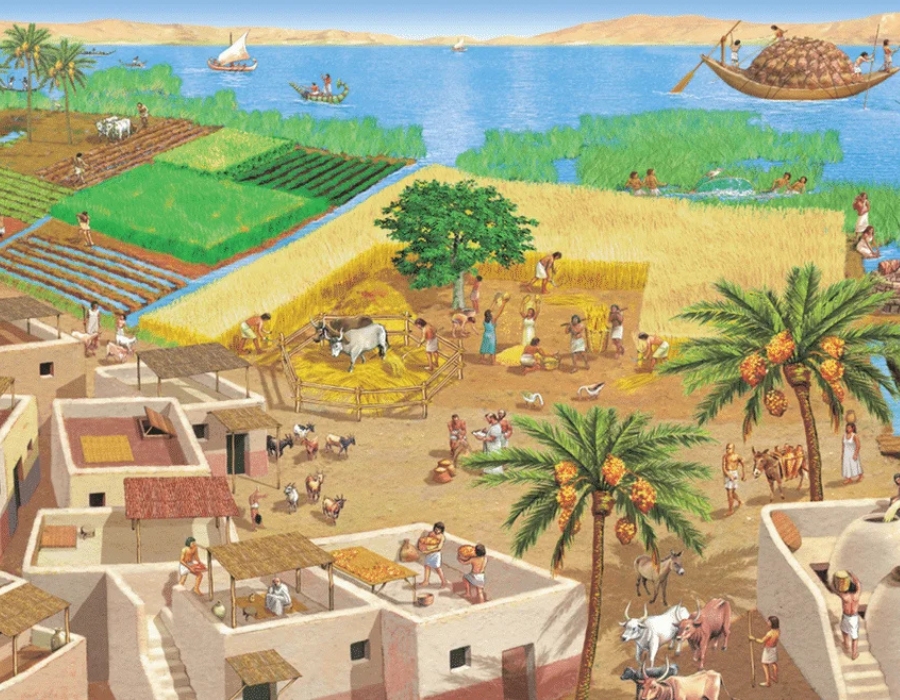
Another incredible fact is that before the construction of the Aswan High Dam, the Nile flooded predictably every single year. This flood, called the “Inundation,” deposited rich black silt across the farmland, which is why ancient Egyptians called their country “Kemet,” meaning “the Black Land.” The surrounding desert was called “Deshret,” or “the Red Land.” This natural cycle was so reliable that ancient Egyptians built their entire calendar around it, dividing the year into three seasons: Akhet (flooding), Peret (growing), and Shemu (harvest).
The Nile is also home to incredible biodiversity, historically including Nile crocodiles, hippos, and countless bird species, many of which were considered sacred by ancient Egyptians and appear throughout their art and mythology. Today, modern Nile cruises offer travelers the chance to see remnants of this rich ecosystem, especially in areas like Lake Nasser near Aswan.
For 2026 visitors, one practical fact stands out: the Nile remains the primary source of fresh water for almost the entire Egyptian population, just as it was 5,000 years ago. This continuity between ancient and modern life is part of what makes a trip along the Nile feel less like visiting a museum and more like stepping into a living timeline.
Insider Tip: Many travelers don’t realize that the best photography light on the Nile happens during sunrise felucca rides, especially around Aswan and Luxor, when the water reflects golden hues against centuries-old temple silhouettes.
Ancient Egypt and the Nile River
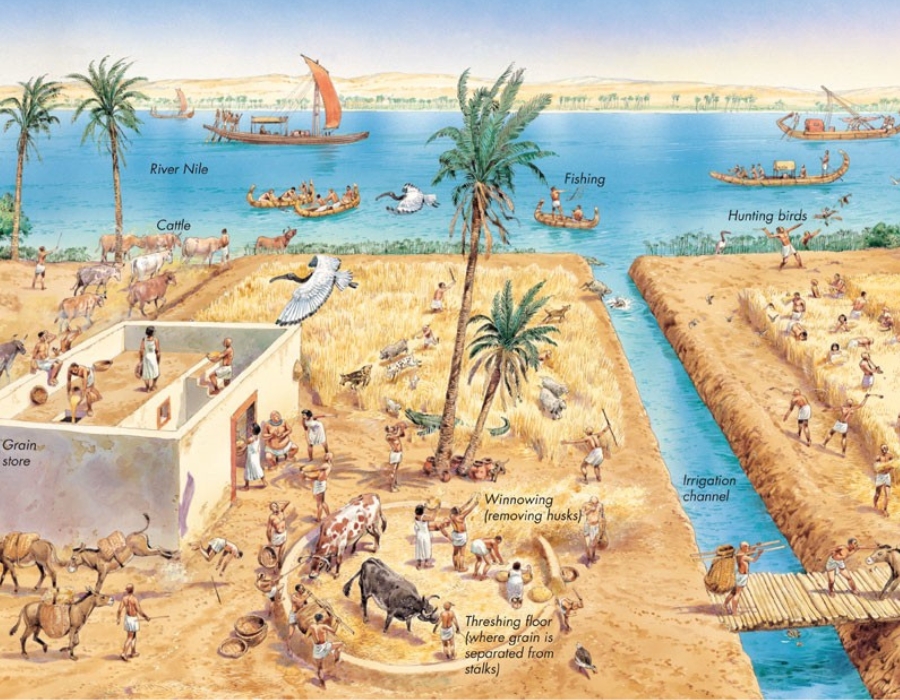
The relationship between ancient Egypt and the Nile River wasn’t just important, it was sacred, spiritual, and absolutely central to every aspect of daily life. To understand ancient Egyptian civilization, you must understand the Nile, because nearly every achievement, belief, and tradition traces back to this single river.
The connection between the Nile River and ancient Egypt goes far beyond practical necessity. Ancient Egyptians worshipped a god called Hapi, who represented the annual flooding of the Nile and was depicted as a man with a swollen belly, symbolizing abundance and fertility. Temples and shrines dedicated to Hapi were found throughout the kingdom, and ceremonies were held to ensure the flood would arrive on time and at the right level, neither too high (causing destructive flooding) nor too low (causing famine).
This spiritual dimension extended to nearly every major Egyptian deity. Osiris, god of the afterlife and resurrection, was closely linked to the Nile’s annual cycle of flooding, receding, and renewal, mirroring the themes of death and rebirth that dominated Egyptian religious thought. The Pyramid Texts and later the Book of the Dead frequently reference the Nile as a pathway to the afterlife, with the sun god Ra traveling along a celestial Nile through the underworld each night.
Beyond religion, the ancient Egypt Nile River connection shaped governance itself. The Pharaoh’s primary responsibility was maintaining “Ma’at,” or cosmic order, which included ensuring the Nile flooded properly. When floods failed for multiple consecutive years, as happened during certain periods of Egyptian history, it often led to famine, social unrest, and even the collapse of entire dynasties. The river’s behavior was directly tied to political stability.
The Nile also dictated Egypt’s calendar, architecture, and even artistic conventions. Temples were often built facing the river, with processional routes leading directly to the water’s edge for ceremonies. The famous Opet Festival in Luxor involved transporting statues of gods by boat along the Nile between Karnak and Luxor Temple, a practice that some modern festivals in Egypt still echo today.
For 2026 travelers, visiting sites like Karnak Temple, Philae Temple, or the temples of Abu Simbel offers a direct connection to this ancient relationship. Standing at these locations, you can see firsthand how every structure was oriented toward or built near the Nile, reinforcing just how central this river was to Egyptian identity, spirituality, and survival.
Why this matters for your trip: Understanding this deep connection transforms your visit from simply “seeing old buildings” into truly experiencing the worldview of the people who built them. When your guide explains why a temple faces the river, you’ll understand the religious and practical significance behind it.
Why Was the Nile River Important to Ancient Egypt? The Complete Breakdown
This is the question everyone wants answered: why was the Nile River important to ancient Egypt? The truth is, there isn’t just one reason, there are several interconnected reasons that, together, explain why this river became the foundation of one of history’s most remarkable civilizations.
1. Agriculture and Food Security
The most fundamental reason why the Nile River was important to ancient Egypt was agriculture. The annual flooding deposited nutrient-rich silt across the floodplains, creating some of the most fertile farmland in the ancient world. This allowed Egyptians to grow wheat, barley, flax, and vegetables in abundance, year after year, without the soil becoming depleted, unlike many other ancient civilizations that struggled with soil exhaustion.
2. Transportation and Trade
Reasons why the Nile River was important to ancient Egypt also include its role as a transportation superhighway. With deserts on either side, the Nile was the only practical way to move people, goods, building materials (including the massive stones used for pyramids), and armies across the length of the country. Trade with Nubia, the Mediterranean world, and beyond depended on Nile-based shipping routes.
3. Drinking Water and Daily Life
Every Egyptian city, town, and village was built along the Nile because it was the only reliable freshwater source. Drinking water, cooking, washing, and irrigation all depended on it.
4. Building Materials and Construction
Why was the river Nile important to ancient Egypt when it came to construction? The Nile allowed massive limestone and granite blocks to be transported by barge from quarries to construction sites, making projects like the Great Pyramids and grand temples physically possible.
5. National Unity and Identity
Why was the Nile River so important to the ancient Egypt civilization politically? It unified Upper and Lower Egypt into a single kingdom, with the river serving as the connective thread between regions that might otherwise have remained separate, isolated communities.
6. Spiritual and Religious Significance
As discussed earlier, the Nile was deeply woven into Egyptian religion, representing creation, rebirth, and the cycle of life and death.
7. Natural Defense
The surrounding deserts, made habitable only by the Nile, also acted as natural barriers against invasion, contributing to Egypt’s long periods of stability and isolation from foreign threats.
For travelers: Every single one of these reasons can be experienced firsthand on a Nile cruise. You’ll sail past farmland still cultivated using ancient irrigation principles, visit temples built from Nile-transported stone, and dock at cities that have existed continuously for thousands of years because of this river.
Conclusion: Experience the Nile’s Legacy with Egypt Time Travel
The Nile River wasn’t just important to ancient Egypt, it was Egypt itself. From feeding millions through fertile floodplains to inspiring religion, art, architecture, and national identity, why was the river Nile so important to ancient Egypt comes down to one simple truth: without the Nile, there would be no pyramids, no pharaohs, and no ancient Egyptian civilization at all.
In 2026, you have the incredible opportunity to sail the same waters, visit the same temples, and witness the same sunrise reflections that captivated people thousands of years ago. At Egypt Time Travel, recognized as the best travel agency in Egypt in 2026, we specialize in crafting unforgettable Nile cruises, Cairo tours, and Upper Egypt adventures tailored to history lovers, families, and first-time visitors alike.
Don’t just read about the Nile’s importance, experience it. Our expert local guides, comfortable cruise ships, and carefully designed itineraries ensure you see Egypt the way it deserves to be seen. From Aswan to Luxor, from Cairo to Abu Simbel, let us turn your dream trip into reality.
