
Quick Answer: Where is the Red Sea in Egypt, and why is it famous?
The Red Sea is a long, narrow body of saltwater between northeastern Africa and the Arabian Peninsula, bordering Egypt’s eastern mainland coast and the Sinai Peninsula. It is famous for its clear blue waters, colorful coral reefs, marine wildlife, and popular destinations such as Hurghada, Sharm El Sheikh, and Marsa Alam. The Red Sea reaches a maximum depth of approximately 3,040 meters (9,974 feet) and connects to the Indian Ocean through the Gulf of Aden.
Few places in Egypt offer a landscape quite like the Red Sea coast. Desert mountains rise beside turquoise lagoons, coral reefs begin just beyond the shoreline, and deep blue water extends toward the Arabian Peninsula.
But the Red Sea is more than a beautiful place for a beach holiday. Its unusual geography tells the story of two landmasses slowly separating, while its coral ecosystems support an extraordinary variety of marine life.
It is also one of Egypt’s most important tourism regions. Travelers can explore coral reefs near Sharm El Sheikh, relax on sandy beaches around Hurghada, observe marine wildlife in Marsa Alam, or enjoy the quieter coastal atmosphere of Dahab.
For anyone planning a Red Sea Egypt holiday in 2027, understanding the differences between these destinations is essential. Not every resort has a sandy beach, not every diving location suits beginners, and distances along the coastline can be greater than expected.
This guide explains the Red Sea’s location, name, depth, size, history, marine environment, and travel opportunities, with practical advice to help you choose the right Egyptian destination.
What Is the Red Sea?
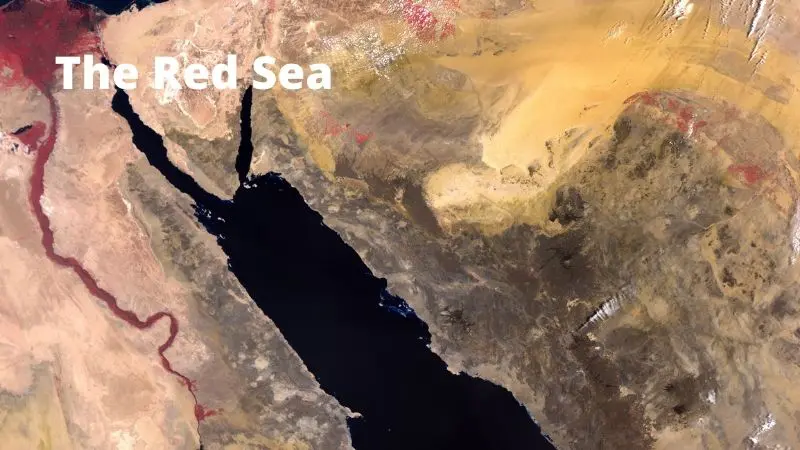
The Red Sea is a seawater inlet of the Indian Ocean that separates northeastern Africa from the Arabian Peninsula. It extends southeast from the Egyptian city of Suez toward the Bab el-Mandeb Strait, where it connects with the Gulf of Aden.
The sea forms a natural geographic boundary between Africa and Asia, although Egypt has territory on both sides through the Sinai Peninsula.
At its northern end, the Red Sea divides into two branches: the Gulf of Suez to the west of Sinai and the Gulf of Aqaba to the east.
These gulfs are geographically important because they connect different parts of Egypt’s coastline with the wider Red Sea basin.
The Red Sea is widely known for its coral reefs, exceptional marine biodiversity, relatively warm water, and important international shipping routes.
Its shores also contain major resort areas, fishing communities, commercial ports, natural reserves, and historic maritime locations.
Red Sea Facts at a Glance
| Feature | Red Sea Facts |
|---|---|
| Geographic location | Between northeastern Africa and the Arabian Peninsula |
| Ocean connection | Indian Ocean through the Gulf of Aden |
| Approximate length | 1,930 km (1,200 miles) |
| Maximum width | Approximately 305 km (190 miles) |
| Maximum depth | Approximately 3,040 m (9,974 ft) |
| Approximate surface area | 450,000 sq km (174,000 sq miles) |
| Northern branches | Gulf of Suez and Gulf of Aqaba |
| Southern entrance | Bab el-Mandeb Strait |
| Egyptian coastal regions | Eastern mainland Egypt and Sinai |
| Major tourist destinations | Hurghada, Sharm El Sheikh, Marsa Alam, Dahab |
| Arabic name | Al-Bahr Al-Ahmar (البحر الأحمر) |
| Famous for | Coral reefs, marine life, diving, beaches, and shipping |
| Geological origin | Separation of the African and Arabian tectonic plates |
These geographic figures are approximate. Measurements can vary depending on the source, mapping method, and whether the northern gulfs are included.
For travelers, the most important feature is the contrast between the Red Sea’s shallow coastal areas and its much deeper offshore basin.
Many resort beaches have shallow swimming sections, while certain coral reef walls descend rapidly into deep water.
Where Is the Red Sea Located?
The Red Sea is located between Africa and Asia, stretching along the eastern side of Egypt and northeastern Africa toward the Arabian Peninsula.
It begins in the north near the Gulf of Suez and Gulf of Aqaba and extends south toward the Bab el-Mandeb Strait.
The sea separates the African mainland from the western coast of the Arabian Peninsula and forms an important marine connection between the Mediterranean shipping region and the Indian Ocean.
On a world map, the Red Sea has a distinctive elongated shape, extending roughly northwest to southeast.
Its narrow appearance reflects the geological boundary between the African and Arabian tectonic plates.
Where Is the Red Sea in Egypt?
In Egypt, the Red Sea lies east of the Nile Valley and Eastern Desert. It borders mainland coastal destinations including Hurghada, Safaga, El Quseir, and Marsa Alam.
The sea also borders the eastern and southern shores of the Sinai Peninsula, where major tourism destinations include Sharm El Sheikh, Dahab, Nuweiba, and Taba.
Egypt’s Red Sea coastline is therefore divided into two principal tourism regions.
The mainland Red Sea coast includes Hurghada, El Gouna, Sahl Hasheesh, Soma Bay, Safaga, El Quseir, Port Ghalib, and Marsa Alam.
The Sinai Red Sea coast includes Sharm El Sheikh, Dahab, Nuweiba, and Taba.
The difference matters when planning transportation.
Although Hurghada and Sharm El Sheikh both face the northern Red Sea, they are not neighboring cities connected by a short coastal road.
Travel between them requires careful consideration of available flights, overland routes, or operating maritime services.
Which Countries Border the Red Sea?
The countries bordering the Red Sea proper include Egypt, Sudan, Eritrea, Djibouti, Saudi Arabia, and Yemen.
Israel and Jordan border the connected Gulf of Aqaba.
| Country | Geographic relationship |
|---|---|
| Egypt | Northern and northwestern shores |
| Sudan | Western coastline south of Egypt |
| Eritrea | Western side of the southern Red Sea |
| Djibouti | Region near the southern entrance |
| Saudi Arabia | Eastern coastline |
| Yemen | Southeastern coastline |
| Jordan | Northern shore of the Gulf of Aqaba |
| Israel | Northern shore of the Gulf of Aqaba |
This geographical setting makes the Red Sea a significant regional waterway.
It connects important ports, trading routes, marine ecosystems, and tourism destinations across northeastern Africa and the Arabian Peninsula.
Is the Red Sea in Africa or Asia?
The Red Sea lies between Africa and Asia, making it geographically associated with both continents.
Egypt’s mainland Red Sea coast belongs to Africa, while most of Sinai belongs geographically to Asia.
For example, Hurghada is located on the African side, while Sharm El Sheikh and Dahab are on the Asian side of Egyptian territory.
Egypt’s location across two continents is one of the reasons its Red Sea coastline is geographically distinctive.
Where Does the Red Sea Begin and End?
The northern Red Sea connects with the Gulf of Suez and Gulf of Aqaba.
To the south, it narrows toward the Bab el-Mandeb Strait, which connects with the Gulf of Aden.
From there, water reaches the wider Indian Ocean.
The northern Gulf of Suez also connects with the Mediterranean Sea through the Suez Canal.
This means the Red Sea has an important role in international maritime transportation.
Why Is the Red Sea Called the Red Sea?
The exact origin of the name Red Sea is uncertain. Historians and scientists have suggested several explanations, including reddish marine blooms, surrounding red-colored mountains, and ancient geographic naming traditions.
Despite the name, the Red Sea does not normally have red water.
Most visitors see shades of turquoise, blue, and deep blue.
The name has a long history and appears in ancient geographical traditions.
The ancient Greek expression Erythra Thalassa means Red Sea, although ancient writers sometimes used related terminology for a larger area of water than today’s Red Sea.
Several explanations remain important when discussing the name.
Theory 1: Reddish Marine Blooms
One of the best-known scientific explanations involves a marine cyanobacterium called Trichodesmium erythraeum.
Under certain environmental conditions, large accumulations of these organisms may create reddish-brown coloration near the surface.
Such blooms provide a possible explanation for the historical association between the sea and the color red.
However, the presence of these organisms does not establish with certainty that they inspired the original name.
The connection remains a theory rather than a confirmed historical fact.
Theory 2: Red Mountains and Desert Landscapes
Another explanation relates the name to the reddish mountains and rocky landscapes surrounding parts of the Red Sea.
Egypt’s Eastern Desert and sections of the Arabian coastline contain mountains and rock formations that can appear red, orange, or brown depending on mineral composition and sunlight.
These colors create a striking contrast against the sea’s blue water.
Some historical interpretations also connect the name with Edom, an ancient region whose name has associations with the color red.
This possibility is discussed in historical interpretations, but it is not universally established.
Theory 3: Ancient Geographic Naming Traditions
Ancient peoples sometimes used colors in geographic descriptions.
In certain historical naming traditions, colors were associated with directions, regions, or geographical features.
This has led to suggestions that the term Red Sea may have developed through an ancient geographical naming system.
However, the historical evidence does not establish a single definitive explanation.
Which Explanation Is Most Accepted?
No single explanation has been conclusively proven.
Marine blooms, reddish landscapes, and ancient naming traditions all contribute to discussions about the origin of the name.
The most accurate explanation is that the historical origin remains uncertain.
For travelers, the fascinating contrast is that a sea named for the color red is most famous for exceptionally clear blue water and colorful underwater reefs.
Is the Red Sea Actually Red?
No. The Red Sea normally appears blue, turquoise, or deep blue rather than red.
Its appearance depends on water depth, sunlight, seabed composition, weather, and the presence of marine organisms.
Shallow water above pale sand often appears bright turquoise, while deeper sections look darker blue.
Reef structures can create distinctive patterns of blue, green, and brown when viewed from above.
Occasional biological blooms may temporarily influence surface coloration, but they do not make the entire sea permanently red.
Why Does the Red Sea Look So Blue?
Several environmental conditions contribute to the Red Sea’s appearance.
Sunlight interacts with water and its suspended particles, while light-colored sand and shallow seabeds influence the colors visible near the coast.
In clearer water, shorter wavelengths of visible light are generally more prominent as longer wavelengths are absorbed.
The result is the blue appearance commonly associated with deep, clear seawater.
In shallow lagoons, sunlight reflected from the seabed can create brighter turquoise colors.
What Does the Red Sea Look Like in Egypt?
Egypt’s Red Sea coastline contains several types of landscapes.
Around parts of Hurghada, travelers encounter sandy beaches, lagoons, and shallow turquoise water.
In parts of Sharm El Sheikh, coral reefs extend close to the coastline, creating dramatic contrasts between reef platforms and deep water.
Marsa Alam offers natural bays, coastal reefs, and desert scenery.
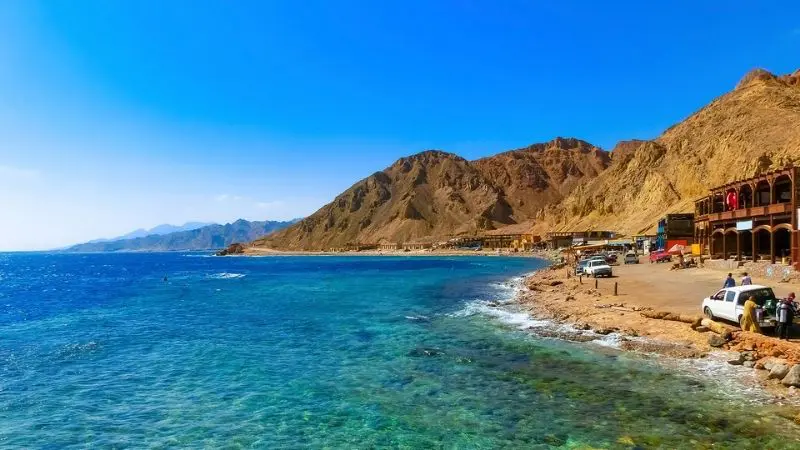
In Dahab, mountains rise close to the Gulf of Aqaba, creating a different visual environment.
These variations explain why photographs of the Red Sea can look remarkably different even when taken within Egypt.
How Deep Is the Red Sea?
The Red Sea reaches a maximum depth of approximately 3,040 meters (9,974 feet).
Its deepest waters are found in the central marine basin, where geological processes have created a deep underwater trough.
However, the depth of the Red Sea varies considerably.
Some coastal areas are shallow enough for swimming, while offshore sections descend hundreds or thousands of meters.
The seabed is not flat.
It contains reef platforms, underwater slopes, deeper basins, and geological depressions.
What Is the Deepest Point of the Red Sea?
The deepest part of the Red Sea lies within its central axial trough.
Published measurements commonly place the maximum depth at approximately 3,040 meters.
Different scientific surveys can produce slightly different figures depending on the mapping techniques and geographic boundaries used.
The central basin is significantly deeper than many of the coastal environments tourists encounter.
Is the Red Sea Deep Near Egyptian Beaches?
Not always.
Depth varies dramatically according to the location and type of shoreline.
Some resorts have gently sloping sandy beaches where the water remains shallow for a considerable distance.
Others are located beside coral reef platforms or steep underwater slopes.
At certain hotels, visitors enter the water through a designated jetty extending beyond the shallow reef.
This is particularly important for families and inexperienced swimmers.
Before reserving a hotel, check whether its beach provides direct sandy access, a shallow swimming area, or deep-water entry.
A hotel with excellent offshore snorkeling may not necessarily offer the safest or most convenient beach for small children.
What Is the Difference Between Red Sea Depth and Beach Depth?
The maximum depth of a sea describes its deepest known point.
It does not indicate how deep the water is along its beaches.
A traveler can stand in shallow water at a sandy Red Sea resort even though the wider sea contains enormous underwater depths.
This distinction is essential when evaluating hotel beaches and marine excursions.
For snorkeling, shallow reefs may provide excellent experiences without requiring deep water.
Scuba diving, by contrast, introduces additional depth-related safety considerations.
Is the Red Sea Deeper Than the Mediterranean Sea?
No. The Mediterranean Sea contains deeper basins than the Red Sea.
However, the Red Sea has its own significant underwater relief and deep central trough.
Both seas have shallow coastal environments alongside much deeper offshore areas.
For tourism, the main difference is not simply depth.
The Red Sea’s extensive tropical and subtropical coral reef ecosystems make it particularly attractive for snorkeling and diving.
How Long Is the Red Sea?
The Red Sea is approximately 1,930 kilometers (1,200 miles) long.
It extends southeast from the Suez region toward the Bab el-Mandeb Strait.
This elongated shape makes the Red Sea one of the world’s most distinctive marine basins.
Its length is especially noticeable on maps and satellite images.
Unlike broad seas with irregular coastlines, the Red Sea follows a relatively narrow tectonic zone between Africa and Arabia.
How Wide Is the Red Sea?
The Red Sea reaches a maximum width of approximately 305 kilometers (190 miles).
Its width varies along its length.
Some areas are considerably narrower, particularly toward its southern entrance and within the northern gulfs.
The shape of the coastline and the position of surrounding landmasses influence these differences.
How Big Is the Red Sea?
The Red Sea covers approximately 450,000 square kilometers (174,000 square miles).
Although smaller than major oceans, it is an extensive marine region supporting numerous coastal ecosystems, islands, ports, and communities.
Its combination of length, depth, salinity, and biological diversity makes it scientifically important.
Why Do Red Sea Measurements Differ Between Sources?
Different references sometimes report different figures for the sea’s length, width, area, or maximum depth.
These variations can result from differences in measurement methods.
For example, some calculations include northern gulfs that other references treat separately.
Mapping techniques, coastline definitions, and rounding can also affect published values.
When comparing Red Sea facts, it is important to distinguish approximate geographic measurements from exact scientific survey results.
How Was the Red Sea Formed?
The Red Sea formed through a geological process known as continental rifting.
Rifting occurs when sections of the Earth’s outer crust move apart, creating fractures and depressions.
The Red Sea developed as the African and Arabian tectonic plates began separating millions of years ago.
As the crust stretched and fractured, a long depression formed between the landmasses.
Over geological time, marine water entered the developing basin.
The resulting landscape eventually became the Red Sea.
Why Is the Red Sea Long and Narrow?
The Red Sea’s shape reflects the movement of the African and Arabian plates.
Rather than forming as a broad, circular basin, it developed along a long zone of crustal separation.
This helps explain its elongated appearance.
The geological process also contributes to its deep central basin and steep underwater slopes.
On satellite images, the coastline often appears to follow the same broad structural direction on both sides of the water.
Is the Red Sea Still Getting Wider?
Yes. The Red Sea remains part of an active tectonic spreading system.
The African and Arabian plates continue to move relative to each other, although the movement is extremely slow on a human timescale.
Scientists use geological and geophysical measurements to study this process.
The movement is not noticeable during an ordinary holiday.
Its effects become significant over millions of years.
Is the Red Sea a Rift Valley?
The Red Sea is associated with a major continental rift system that has developed into a marine basin.
It represents an important stage in the transition from continental crustal separation toward ocean-basin development.
This relationship makes the region particularly interesting to geologists.
Will the Red Sea Become a Larger Ocean?
Continued tectonic spreading could change the size and shape of the Red Sea over geological timescales.
However, the future development of the basin depends on complex geological processes.
The Red Sea is already connected to the Indian Ocean, but its geological evolution differs from simply becoming a new ocean overnight.
These changes occur over millions of years and have no immediate effect on travel planning.
Why Is the Red Sea So Famous?
The Red Sea is famous for its coral reefs, marine wildlife, clear water, dramatic desert scenery, historical maritime connections, and modern tourism destinations.
It has significance in several fields, including ecology, geology, international trade, and recreation.
1. Extraordinary Coral Reef Ecosystems
The Red Sea supports extensive coral reef habitats that shelter a wide variety of marine organisms.
Reef-building corals create complex structures where fish, invertebrates, and other animals find food, shelter, and breeding environments.
These underwater ecosystems are among the principal reasons travelers visit Egypt’s eastern coastline.
Snorkelers can observe marine life in suitable shallow areas, while certified divers can explore deeper reef environments.
2. Clear Water and Underwater Visibility
Many Red Sea locations are known for favorable underwater visibility.
Clear conditions allow visitors to see reef structures and marine animals from impressive distances.
However, visibility changes according to weather, location, currents, and suspended particles.
Travelers should not assume that every snorkeling or diving excursion will have identical conditions.
3. Desert Mountains Beside the Sea
One of the Red Sea’s most distinctive visual characteristics is the contrast between the marine environment and the surrounding desert.
The coastline includes rugged mountains, rocky valleys, sandy bays, and turquoise lagoons.
In parts of Sinai, mountains rise close to the water.
Elsewhere, coastal plains separate resort developments from the Eastern Desert.
This natural setting makes the region particularly attractive for landscape photography.
4. International Maritime Importance
The Red Sea forms part of a major shipping corridor connecting the Indian Ocean with the Mediterranean region.
The Suez Canal connects the northern Gulf of Suez to the Mediterranean Sea.
This allows vessels to travel between Europe and Asia without circumnavigating Africa, when the route is operational and suitable for the voyage.
The Red Sea’s shipping significance therefore extends well beyond tourism.
5. Historic Trade Connections
For centuries, the Red Sea connected communities in northeastern Africa, Arabia, and the Indian Ocean region.
Ancient and medieval trade networks transported goods, ideas, and cultural influences across these waters.
Historical Egyptian ports played important roles in maritime commerce.
The wider Red Sea region was associated with trade in valuable goods such as incense, spices, textiles, and other commodities.
These connections form an important part of the history of Egypt and neighboring regions.
6. Historic Shipwrecks
The Red Sea contains numerous shipwrecks, including vessels associated with modern maritime history.
One famous example is the SS Thistlegorm, a British merchant ship sunk during World War II in 1941.
The wreck attracts certified divers interested in underwater heritage.
However, wreck diving can involve considerable risks.
Deep areas, enclosed spaces, currents, and equipment requirements make some wreck dives unsuitable for beginners.
Travelers should only undertake dives appropriate for their certification and experience.
7. Established Beach Tourism
Egypt’s Red Sea coast contains some of the country’s most developed beach destinations.
International airports, hotels, marinas, diving centers, and organized excursions support year-round tourism.
Visitors can choose between luxury resorts, independent accommodation, family-oriented hotels, and quieter coastal communities.
The region also works well as a relaxing addition to a holiday focused on Egypt’s archaeological attractions.
What Are the Best Places to Visit on Egypt’s Red Sea Coast?
Choosing the best Red Sea destination depends on your interests, travel style, budget, and preferred activities.
Hurghada is particularly convenient for first-time resort visitors, Sharm El Sheikh is well known for marine activities, Marsa Alam attracts nature enthusiasts, and Dahab offers a more relaxed environment.
Best Red Sea Destinations Compared
| Destination | Best For | Main Advantage | Important Consideration |
|---|---|---|---|
| Hurghada | Families and first-time visitors | Wide range of resorts and excursions | Beach conditions vary |
| Sharm El Sheikh | Diving and resort holidays | Coral reefs and marine activities | Some beaches require jetty access |
| Marsa Alam | Marine wildlife and quiet holidays | Natural bays and reef environments | Resorts can be remote |
| Dahab | Independent travelers and divers | Relaxed coastal atmosphere | Less conventional resort infrastructure |
| El Gouna | Couples and active holidays | Marinas, lagoons, and watersports | Planned resort-town environment |
| Sahl Hasheesh | Relaxation and upscale resorts | Quiet beachfront atmosphere | Fewer independent activities nearby |
| Soma Bay | Watersports and luxury relaxation | Beach resorts and leisure facilities | Relatively self-contained |
| Safaga | Diving and peaceful coastal stays | Quieter environment | Fewer entertainment facilities |
| Ain Sokhna | Short trips from Cairo | Convenient mainland access | Different reef opportunities |
| Taba | Mountain scenery and quiet holidays | Gulf of Aqaba landscapes | Transport requires planning |
Hurghada: Best for First-Time Red Sea Visitors
Hurghada is one of Egypt’s most established Red Sea tourism cities.
Located on the mainland coast, it offers a wide selection of resorts, restaurants, boat excursions, diving centers, and family activities.
The city has grown from a fishing settlement into a major destination for international holidays.
Today, travelers can choose between central hotels, beachfront resorts, and nearby resort districts.
Popular activities include snorkeling, scuba diving, island excursions, swimming, desert tours, and marina visits.
Hurghada is particularly suitable for travelers who want a combination of relaxation and organized activities.
Families may appreciate the range of accommodation options and facilities.
Couples can find quiet resorts outside the busiest districts.
Independent travelers may prefer accommodation close to restaurants and local services.
What should visitors know before booking?
Hurghada’s beaches are not identical.
Some hotels offer sandy swimming lagoons, while others emphasize reef access or boat trips.
Check the exact beach environment rather than relying only on hotel ratings.
Visitors can explore the Hurghada destination guide for more information about the city.
Sharm El Sheikh: Best for Coral Reefs and Diving
Sharm El Sheikh lies at the southern end of the Sinai Peninsula.
Its location near the Gulf of Aqaba and Ras Mohammed National Park makes it a major center for marine tourism.
The destination offers hotels, restaurants, international transport connections, and numerous diving and snorkeling excursions.
Sharm El Sheikh is particularly attractive to visitors interested in underwater landscapes.
Some reef systems are accessible from hotel shorelines, while others require organized boat trips.
Different resort districts offer different experiences.
Naama Bay is known for its central tourism atmosphere, while other areas provide larger beachfront resorts or quieter accommodation.
Who should choose Sharm El Sheikh?
The destination suits divers, couples, families, and travelers seeking established resort facilities.
It may also appeal to visitors who want to combine coastal relaxation with selected activities in South Sinai.
What should visitors check?
Some coastal areas feature reef platforms rather than gently sloping sandy beaches.
Hotels may provide water access through jetties.
Families with young children should verify the availability of suitable shallow swimming areas.
Travelers can find further destination information in the Sharm El Sheikh travel guide.
Marsa Alam: Best for Nature and Marine Wildlife
Marsa Alam is located along Egypt’s southern Red Sea coast.
The wider region is known for coral reefs, sandy bays, marine wildlife, and relatively peaceful resort surroundings.
It attracts travelers who want a stronger connection with the natural environment.
Certain coastal habitats around the region are associated with sea turtles and dugongs.
Dolphins and other marine animals also occur in the wider Red Sea.
However, wildlife sightings are unpredictable and should never be guaranteed by a tour operator.
Marsa Alam offers a different experience from Hurghada.
Hotels are often spread along considerable stretches of coastline.
Some properties are located far from the main town and airport.
Who should choose Marsa Alam?
The region suits nature enthusiasts, experienced snorkelers, divers, and couples seeking quieter accommodation.
It is also attractive to visitors who prefer spending time at one resort rather than exploring a busy tourism city.
What should visitors check?
Transfer distances are especially important.
A hotel advertised as being in Marsa Alam may be located far from particular bays or attractions.
Visitors should confirm the exact location, beach type, and accessibility of planned activities.
More details are available in the Marsa Alam destination guide.
Dahab: Best for Independent Travelers
Dahab is a coastal town on the Gulf of Aqaba in South Sinai.
It is known for its relaxed atmosphere, shore diving, snorkeling, seaside cafés, and surrounding mountain scenery.
Compared with large resort developments, Dahab has a more informal character.
The town attracts independent travelers, divers, and visitors seeking a slower pace.
Many activities focus on the coastline and surrounding desert.
Popular experiences include snorkeling, diving, waterfront walks, and guided outdoor excursions.
Who should choose Dahab?
Dahab is particularly suitable for travelers who enjoy smaller accommodation properties and independent exploration.
It also appeals to visitors interested in learning to dive through an established diving center.
Important diving consideration
Dahab contains advanced diving locations, including the famous Blue Hole.
The presence of experienced divers does not make these sites appropriate for beginners.
Deep diving and overhead environments require specific training, equipment, and experience.
Visitors should never attempt technical dive routes beyond their qualifications.
Explore the Dahab coastal destination guide for additional information.
El Gouna: Best for Marina Life and Watersports
El Gouna is a planned resort town north of Hurghada.
It is known for lagoons, marinas, restaurants, beaches, and organized tourism facilities.
The destination offers a different atmosphere from central Hurghada.
Visitors can enjoy waterside dining, boat excursions, cycling, and various watersports.
El Gouna is particularly attractive to couples and families who want a resort environment with accessible facilities.
Kitesurfing is one of the activities associated with the wider region.
However, conditions and suitability depend on the specific beach and weather.
El Gouna is not necessarily the best destination for travelers whose only priority is exploring natural offshore coral reefs directly from their hotel.
Visitors should research available excursions and beach characteristics.
Sahl Hasheesh: Best for Quiet Luxury Holidays
Sahl Hasheesh is a coastal resort area south of Hurghada.
It is associated with beachfront accommodation, landscaped surroundings, and a relatively peaceful atmosphere.
The area appeals to couples, honeymooners, and travelers seeking relaxation.
Many visitors choose Sahl Hasheesh for comfortable hotels, swimming, resort facilities, and organized marine excursions.
The main advantage is the opportunity to enjoy a beach holiday in a quieter setting.
However, travelers who want extensive nightlife or independent city exploration may prefer a more central destination.
Learn more about the area in the Sahl Hasheesh destination guide.
Soma Bay: Best for Beaches and Resort Comfort
Soma Bay is a resort peninsula south of Hurghada.
It is associated with upscale hotels, beaches, golf, spas, and watersports.
Many visitors choose Soma Bay for a self-contained holiday.
It is suitable for travelers who want resort amenities without spending significant time traveling between different attractions.
Depending on the location, visitors may enjoy snorkeling, diving, swimming, and wind-powered sports.
Couples and families can find accommodation designed around relaxation.
However, travelers seeking a traditional Egyptian town atmosphere may prefer Hurghada or Dahab.
Safaga: Best for Peaceful Coastal Stays
Safaga is a Red Sea port town south of Hurghada.
Its surrounding coastline offers resort accommodation and marine activities.
The area can appeal to travelers interested in diving or quieter beach holidays.
Safaga is also important as a commercial and cruise port.
Some cruise passengers arriving at Safaga arrange excursions to Luxor and its ancient monuments.
However, Luxor is not immediately beside the coast.
The journey requires advance planning and sufficient time.
Travelers arriving by cruise ship can review Safaga Port shore excursions when planning a land-based visit.
Ain Sokhna: Best for Short Beach Breaks from Cairo
Ain Sokhna is situated on the Gulf of Suez.
Its relative proximity to Cairo makes it useful for short coastal holidays.
Visitors can enjoy beachfront resorts, swimming pools, and relaxation without traveling as far as the southern Red Sea destinations.
Ain Sokhna is especially appealing to Cairo-based travelers who want a brief break.
However, it should not automatically be considered equivalent to Sharm El Sheikh or Marsa Alam for extensive coral reef exploration.
The marine environments and available activities differ.
Taba: Best for Gulf of Aqaba Scenery
Taba is located in northeastern Sinai near Egypt’s border with Israel.
The destination overlooks the Gulf of Aqaba and is known for dramatic mountains and relatively quiet coastal surroundings.
It can appeal to travelers interested in scenery, relaxation, and selected marine activities.
The location may also feature in wider regional travel plans.
However, travel near international borders requires careful attention to current entry rules, transport arrangements, and official travel advice.
The Taba Egypt destination guide provides further background on the region.
What Are the Best Things to Do in the Red Sea?
The Red Sea offers activities ranging from relaxed beach visits to advanced scuba diving.
The most suitable experiences depend on swimming ability, travel interests, available time, weather, and local conditions.
Snorkeling in the Red Sea
Snorkeling is one of the most accessible ways to explore the Red Sea’s underwater environment.
Visitors can observe coral formations and marine life while swimming near the surface.
Some locations provide designated shore-entry areas, while others are reached by boat.
For beginners, sheltered bays and supervised snorkeling excursions are generally preferable to unfamiliar offshore sites.
Snorkelers should use appropriately fitted equipment and remain aware of their surroundings.
Touching coral, feeding fish, or standing on reef structures can damage the marine environment.
Travelers interested in different locations can consult the snorkeling in Egypt guide.
Scuba Diving in the Red Sea
Scuba diving is one of the activities most closely associated with Red Sea tourism.
Established destinations include Hurghada, Sharm El Sheikh, Dahab, and Marsa Alam.
Each region offers different underwater conditions and dive environments.
Beginners may choose supervised introductory experiences or certified training programs.
Experienced divers can explore reefs, underwater walls, and selected historic wrecks.
However, diving requires appropriate instruction and safety preparation.
Depth, currents, visibility, and recent diving experience should influence site selection.
Advanced dives are not suitable for every certified diver.
Explore the scuba diving in Egypt guide for more information about diving opportunities.
Visiting Giftun Island
Giftun Island is one of the best-known island destinations near Hurghada.
The surrounding area is famous for turquoise water, sandy beaches, and marine environments.
Many organized boat excursions include snorkeling stops and time at designated beach areas.
The experience depends on the itinerary and operator.
Some trips focus on relaxation, while others include multiple snorkeling locations.
Travelers should compare excursion duration, group size, included equipment, and applicable marine fees.
Those interested in island excursions can explore the Giftun Island guide.
Exploring Ras Mohammed National Park
Ras Mohammed National Park is located near the southern tip of Sinai.
It protects important marine and coastal ecosystems, including coral reefs and other natural habitats.
The park is one of Egypt’s most notable destinations for marine nature tourism.
Visitors can explore permitted areas through organized excursions.
Activities may include snorkeling, diving, landscape photography, and observing the coastal environment.
Because Ras Mohammed is a protected area, visitors must respect environmental regulations.
Certain activities may require permits or authorized operators.
The Ras Mohammed National Park guide provides more information about the protected area.
Discovering Wadi El Gemal National Park
Wadi El Gemal National Park lies along the southern Red Sea coast.
The park protects a combination of marine habitats, coastal environments, and desert landscapes.
Its ecological diversity makes it particularly interesting for nature-focused travelers.
Depending on access regulations and available guided activities, visitors may explore selected coastal and desert environments.
The park should be approached as a protected natural area rather than an unrestricted recreation zone.
Responsible tourism is essential to preserving sensitive habitats.
Glass-Bottom Boat Excursions
Glass-bottom boats allow passengers to observe underwater environments without entering the water.
They can be suitable for families and travelers who do not swim.
However, the experience depends on visibility, weather, the quality of the boat, and the excursion route.
Not every glass-bottom boat provides the same viewing conditions.
Check the duration and itinerary before booking.
Watersports and Sailing
Red Sea destinations offer activities such as kayaking, paddleboarding, windsurfing, kitesurfing, and sailing.
El Gouna, Soma Bay, Dahab, and other coastal areas are associated with various watersports.
Wind conditions and local geography influence suitability.
Beginners should choose professional instruction and follow safety procedures.
Activities should match the participant’s swimming ability and experience.
Desert Activities Near the Coast
The surrounding deserts provide opportunities for land-based excursions.
Depending on the destination, travelers may join guided mountain walks, stargazing activities, or desert tours.
These experiences create a contrast with the marine environment.
Travelers should choose responsible operators and avoid damaging natural areas.
Activities involving local communities should respect cultural traditions and support appropriate local participation.
What Marine Life Can You See in the Red Sea?
The Red Sea supports a variety of marine animals, including reef fish, sea turtles, rays, dolphins, sharks, and numerous invertebrates.
Marine life varies according to habitat, water depth, season, and environmental conditions.
Wildlife sightings cannot be guaranteed.
Colorful Reef Fish
Coral reefs provide habitats for many types of fish.
Visitors may encounter butterflyfish, angelfish, surgeonfish, parrotfish, and other reef-associated species.
Different fish occupy different roles in the marine ecosystem.
Some feed on algae, while others consume smaller marine organisms.
These relationships contribute to the ecological complexity of coral reefs.
Sea Turtles
Sea turtles occur in parts of the Red Sea.
Some coastal feeding areas provide opportunities for responsible observation.
Turtles may be seen while snorkeling or diving, although encounters are unpredictable.
Visitors must avoid touching, chasing, feeding, or blocking these animals.
Allowing wildlife to move naturally is essential.
Dugongs
Dugongs are marine mammals that feed primarily on seagrass.
They are associated with certain shallow coastal habitats in the wider Red Sea region.
Parts of the Marsa Alam coastline are known for occasional dugong sightings.
However, these animals are uncommon and sensitive to disturbance.
Tour operators should never promise close physical encounters or encourage visitors to pursue dugongs.
Dolphins
Dolphins inhabit the Red Sea and may be observed during boat excursions.
Seeing dolphins in their natural environment can be memorable.
However, responsible observation requires maintaining appropriate distances.
Boats should not chase dolphins or interfere with their movement.
Swimming activities involving wild dolphins should follow applicable local rules and animal-welfare standards.
Sharks
Several shark species occur in the Red Sea.
They form part of the natural marine ecosystem.
Although many tourists will never encounter sharks, their presence should be treated seriously.
Visitors should obey official warnings, beach closures, and swimming restrictions.
Feeding sharks or attempting to attract them is unsafe.
Rays and Other Marine Animals
The Red Sea also supports rays, moray eels, octopuses, sea urchins, and numerous other marine organisms.
Some animals possess spines, defensive behaviors, or venomous features.
Visitors should avoid touching unfamiliar creatures.
Observing marine life without interference is safer for both travelers and animals.
Why Are Red Sea Coral Reefs Important?
Coral reefs are among the Red Sea’s most valuable natural ecosystems.
They provide habitats for marine animals, support ecological diversity, and contribute to coastal tourism.
Coral reefs are built by living coral organisms.
Over time, reef-building corals develop complex calcium carbonate structures that support many other species.
These structures can take decades or centuries to develop.
Damage caused by careless tourism can therefore have long-lasting consequences.
Are Red Sea Coral Reefs Healthy?
Reef conditions vary significantly across the Red Sea.
Some areas contain extensive living coral, while others have experienced environmental stress or damage.
Marine heatwaves, pollution, coastal development, careless anchoring, and physical contact can threaten reef ecosystems.
Research has identified unusual heat tolerance in certain Red Sea coral populations.
However, it would be inaccurate to claim that all Red Sea corals are protected from warming seas.
Coral bleaching and mortality can occur when environmental conditions become stressful.
Travelers should therefore prioritize responsible marine excursions.
How Can Tourists Protect Red Sea Reefs?
Visitors can reduce their environmental impact by following a few essential principles.
-
Never stand on living coral.
-
Avoid touching reef structures.
-
Do not feed marine animals.
-
Keep snorkeling fins away from coral.
-
Maintain appropriate buoyancy while diving.
-
Do not remove shells or marine organisms from protected areas.
-
Avoid leaving waste in the sea.
-
Choose operators that follow environmental regulations.
-
Use designated access points and mooring areas.
Responsible tourism helps preserve the marine environments that make the Red Sea worth visiting.
When Is the Best Time to Visit the Red Sea in Egypt?
The best time to visit the Red Sea for many travelers is from March to May or September to November.
These periods often provide warm weather suitable for a combination of beach relaxation and outdoor activities.
However, Red Sea destinations operate throughout the year.
Winter offers milder daytime conditions, while summer brings stronger heat and warm-water holiday opportunities.
Red Sea Weather by Season
| Season | Typical Weather | Best Activities | Main Consideration |
|---|---|---|---|
| December–February | Mild days, cooler evenings, occasional wind | Resort holidays and sightseeing | Cooler water and windy conditions |
| March–May | Generally warm and sunny | Snorkeling, diving, swimming | Occasional wind or spring dust |
| June–August | Very hot and sunny | Swimming and resort relaxation | Strong midday heat |
| September–November | Warm weather with gradually cooler evenings | Beach holidays and marine activities | Conditions vary by location |
These descriptions represent typical seasonal patterns, not specific forecasts for 2027.
Is the Red Sea Warm in Winter?
The Red Sea remains relatively warm compared with many European coastal destinations.
However, winter water can feel cool during extended swimming or snorkeling.
Wind may also make boat trips feel colder than expected.
A wetsuit can improve comfort during longer marine activities.
Travelers should also pack a light jacket or warm layer for evenings and boat excursions.
Is Summer Too Hot for the Red Sea?
Summer can be extremely hot along Egypt’s Red Sea coast.
Travelers who spend much of their holiday swimming or using resort facilities may still enjoy the season.
However, prolonged outdoor activities can be uncomfortable during the hottest hours.
Families and visitors sensitive to heat should take additional precautions.
Regular hydration, shade, and sensible activity scheduling are important.
Is October a Good Month to Visit?
October is often an excellent month for a Red Sea holiday.
The weather is generally warm, making it attractive for swimming, snorkeling, and relaxation.
It can also be more comfortable for land-based activities than the hottest summer months.
However, weather and sea conditions always vary.
What About Christmas and New Year?
Red Sea resorts are popular with travelers seeking winter sunshine.
Many hotels offer seasonal entertainment and holiday programs.
Specific activities and events depend on the property.
Travelers planning Christmas or New Year holidays should reserve their preferred accommodation early enough to secure suitable room arrangements.
For a broader seasonal comparison, see the Egypt weather by month guide.
Which Red Sea Destination Is Best for Different Travelers?
No single Red Sea destination is best for everyone.
The most appropriate choice depends on who is traveling and what they expect from the holiday.
Best for Families With Children
Hurghada, El Gouna, and selected Sharm El Sheikh resorts are practical starting points.
However, families should focus on hotel facilities rather than destination popularity alone.
Important features include a shallow swimming area, supervised pools, family accommodation, and convenient transfers.
A hotel with an exceptional offshore coral reef may not have a suitable sandy beach for young children.
Best for Couples and Honeymooners
Sahl Hasheesh, Soma Bay, El Gouna, and selected Marsa Alam resorts can provide relaxing environments.
Couples should decide whether they prefer a quiet beachfront hotel or a destination with restaurants and activities nearby.
Beach access, room location, privacy, and resort atmosphere are important considerations.
Best for Serious Divers
Sharm El Sheikh, Dahab, Hurghada, and Marsa Alam all offer opportunities for diving.
However, the diving environment differs between locations.
Some areas focus on shore diving, while others provide boat access to offshore reefs.
Experienced divers may also be interested in historic wrecks or deeper sites.
The best destination depends on certification, recent experience, and the type of diving preferred.
Best for Non-Swimmers
Non-swimmers can still enjoy a Red Sea holiday.
Choose accommodation with attractive coastal views, pools, restaurants, comfortable beaches, and land-based activities.
Glass-bottom boats and certain sightseeing excursions may provide ways to enjoy the marine environment without swimming.
Best for Travelers Seeking Quiet
Marsa Alam, Soma Bay, selected Safaga resorts, and quieter areas of Dahab may be appealing.
However, remote resorts can have limited nearby services.
Visitors should check access to restaurants, shops, transport, and medical facilities.
Best for Budget Travelers
Budget-conscious travelers should compare the entire holiday cost.
A low hotel rate may be less attractive if the property requires expensive transfers or additional meal spending.
All-inclusive packages can offer good value for travelers who spend most of their time at the resort.
Independent accommodation may be more suitable for visitors who want flexibility.
The best choice depends on travel style.
How Do You Get to the Red Sea in Egypt?
Most international travelers reach Egypt’s Red Sea resorts through airports serving Hurghada, Sharm El Sheikh, or Marsa Alam.
Some visitors travel from Cairo using domestic flights or arranged road transfers.
The most convenient route depends on the departure country and selected destination.
Main Airports Serving the Red Sea
| Airport | Code | Main Destinations |
|---|---|---|
| Hurghada International Airport | HRG | Hurghada, El Gouna, Sahl Hasheesh, Soma Bay |
| Sharm El Sheikh International Airport | SSH | Sharm El Sheikh and parts of South Sinai |
| Marsa Alam International Airport | RMF | Port Ghalib and parts of the Marsa Alam region |
| Cairo International Airport | CAI | Cairo and onward domestic or road connections |
Travelers should check the exact location of their resort before booking flights.
An airport serving the wider region may still be a considerable distance from a particular hotel.
For more information, explore the airports in Egypt guide.
Can You Fly Directly to the Red Sea?
Direct and seasonal international flights serve several Red Sea airports.
Hurghada and Sharm El Sheikh have established international tourism connections.
Marsa Alam also receives international flights, although route availability varies.
Travelers from the USA, Canada, Australia, and other long-haul markets may need connecting flights.
Schedules for 2027 should be checked directly before booking.
How Far Is the Red Sea From Cairo?
The distance depends on the chosen destination.
Ain Sokhna is among the nearest Red Sea coastal areas to Cairo.
Hurghada requires a longer road journey, while Sharm El Sheikh and Marsa Alam may be more convenient by air depending on flight availability.
Travelers should compare complete journey times, including airport procedures and ground transfers.
Can You Travel Between Hurghada and Sharm El Sheikh?
Yes, but the journey requires planning.
The cities are situated on different sides of the northern Red Sea.
Travel options may involve flights, lengthy road routes, or maritime services when operating.
Ferry availability should never be assumed.
For a short holiday, choosing one main coastal destination is often more practical.
Do You Need a Visa for the Red Sea in Egypt?
Visa requirements depend on nationality, passport, arrival point, length of stay, and planned travel within Egypt.
Some travelers may qualify for special entry arrangements in limited parts of South Sinai.
However, these arrangements do not necessarily permit travel throughout Egypt.
Visitors planning to combine Sharm El Sheikh with Cairo, Luxor, or other destinations should check whether a standard Egyptian tourist visa is required.
Entry requirements may change before 2027.
Travelers should verify the applicable rules with the relevant official authorities before departure.
For general planning information, see the Egypt online visa guide.
How Much Does a Red Sea Holiday Cost in 2027?
The cost of a Red Sea holiday depends on the destination, hotel category, season, travel origin, meal plan, and included activities.
There is no single price that accurately represents every Red Sea holiday.
Accommodation rates can differ substantially between peak holiday periods and quieter travel dates.
The total cost also depends on whether flights, transfers, meals, and excursions are included.
Main Red Sea Holiday Expenses
| Expense | Main Price Factors | What to Check |
|---|---|---|
| International flights | Departure city, season, airline | Baggage and connections |
| Hotel | Category, location, meal plan | Full price and inclusions |
| Airport transfers | Distance, vehicle type | Private or shared service |
| Snorkeling excursions | Destination, boat, equipment | Permits and included services |
| Scuba diving | Training, equipment, dive count | Certification and safety |
| National parks | Applicable entrance and conservation charges | Current official fees |
| Meals | Hotel plan and restaurant choices | Included food and drinks |
| Land excursions | Distance, guide, vehicle | Transport and entrance fees |
| Insurance | Coverage and planned activities | Diving and medical provisions |
Are All-Inclusive Red Sea Holidays Worth It?
All-inclusive holidays can be attractive for families and travelers who plan to remain at the resort.
They may simplify budgeting by including meals and selected drinks.
However, packages vary considerably.
Some hotels offer several included restaurants, while others limit dining options.
Travelers planning frequent excursions may prefer half-board or bed-and-breakfast accommodation.
Compare the actual inclusions before choosing.
How Can You Reduce Costs?
Choose accommodation according to both the room price and transfer distance.
Book suitable flights and hotels with enough time to compare options.
Avoid unnecessary transfers between distant resorts.
Check whether excursions include equipment, permits, and transportation.
Consider whether an all-inclusive arrangement matches your actual plans.
The objective is to find good overall value rather than simply the lowest advertised price.
Is the Red Sea Safe for Swimming and Diving?
The Red Sea provides established swimming, snorkeling, and diving opportunities, but marine activities involve risks.
Safety depends on weather, currents, water depth, supervision, equipment, and local conditions.
Visitors should always follow official swimming restrictions and safety instructions.
Is Swimming Safe at Red Sea Resorts?
Many Red Sea resorts provide designated swimming areas.
However, conditions vary between beaches.
Some offer shallow sandy lagoons, while others have coral platforms or deeper water close to shore.
Before swimming, check for lifeguards, permitted access points, currents, and local warnings.
Children should remain closely supervised.
Are There Strong Currents?
Currents occur in parts of the Red Sea and can change according to location and environmental conditions.
Certain reef channels and offshore diving areas may experience challenging water movement.
Even strong swimmers can become tired when attempting to swim against currents.
Use designated swimming areas and qualified guides.
Are There Sharks in the Red Sea?
Yes. Sharks are naturally present in the Red Sea.
They play an ecological role in the marine environment.
Although ordinary tourist encounters are uncommon, shark-related risks should not be dismissed.
Visitors must obey beach closures and official warnings.
Never feed, pursue, or attempt to attract sharks.
How Do You Choose a Safe Diving Operator?
Choose operators with appropriate authorization, professional qualifications, suitable equipment, and clear emergency procedures.
Ask about instructor certification, boat safety, emergency oxygen, dive planning, and insurance.
A responsible operator should assess each participant’s experience.
Advanced dive sites should not be offered casually to inexperienced visitors.
For broader planning, read the Egypt travel safety guide.
Red Sea Egypt Map
Explore the main Red Sea destinations in Egypt, including Hurghada, Sharm El Sheikh, Marsa Alam, Dahab, El Gouna, Safaga, and Taba.
What Should You Pack for a Red Sea Holiday?
A Red Sea holiday usually requires lightweight clothing, sun protection, swimwear, and suitable footwear.
Packing should reflect the season and intended activities.
Essential Red Sea Packing Checklist
-
Lightweight, breathable clothing.
-
Comfortable swimwear.
-
Sun-protective swimwear for extended water activities.
-
Wide-brimmed hat.
-
Sunglasses.
-
Broad-spectrum sunscreen.
-
Sandals and walking shoes.
-
Quick-drying towel.
-
Refillable water bottle.
-
Light jacket for cooler evenings or windy boat trips.
-
Waterproof bag for excursions.
-
Personal medication.
-
Passport and travel documents.
-
Travel insurance information.
-
Appropriate diving equipment if required.
Visitors planning desert activities should bring suitable closed footwear.
For snorkeling or diving, confirm what equipment the operator provides.
Travelers can consult the Egypt packing guide for more detailed preparation.
Can You Combine the Red Sea With Cairo, Luxor, and the Nile?
Yes. A Red Sea holiday can be combined with Egypt’s major historical destinations.
This allows travelers to experience ancient monuments alongside beaches and marine activities.
However, the itinerary should be designed around practical transport connections.
Red Sea and Cairo
A Cairo and Red Sea holiday can include the Giza Pyramids, museums, historical neighborhoods, and several days of relaxation.
This combination is suitable for first-time visitors who want both culture and beach time.
The most practical coastal destination depends on transport and available days.
Red Sea and Luxor
Mainland Red Sea destinations can be combined with Luxor.
This allows travelers to explore major archaeological sites before relaxing at a coastal resort.
Important Luxor attractions include Karnak Temple, Luxor Temple, and the Valley of the Kings.
The road journey requires sufficient time and appropriate transport arrangements.
Red Sea and a Nile Cruise
A Nile cruise offers a different experience from a Red Sea holiday.
Cruises commonly explore the Nile between Luxor and Aswan, visiting temples and historical sites.
Travelers can combine a cruise with a Red Sea resort when the itinerary and transport arrangements allow.
Explore Egypt Nile cruise options for additional planning ideas.
Suggested Red Sea Egypt Itineraries for 2027
The right itinerary depends on travel duration and interests.
A short coastal holiday should usually focus on one destination, while longer trips can combine beaches with archaeological sightseeing.
Three Days in the Red Sea
Best for: Short beach breaks and travelers adding relaxation to a wider Egyptian itinerary.
| Day | Recommended Activities |
|---|---|
| Day 1 | Arrive, check in, enjoy the resort |
| Day 2 | Guided snorkeling or beach relaxation |
| Day 3 | Morning leisure time and departure |
Choose a destination with convenient airport or road connections.
Avoid long excursions that consume most of the holiday.
Five Days in Hurghada
Best for: Families and first-time Red Sea visitors.
| Day | Recommended Activities |
|---|---|
| Day 1 | Arrival and resort relaxation |
| Day 2 | Snorkeling or island excursion |
| Day 3 | Beach and watersports |
| Day 4 | Optional desert experience |
| Day 5 | Relaxation and departure |
This itinerary balances activities with free time.
Travelers can adjust excursions according to swimming ability and weather.
Seven Days in Sharm El Sheikh and Dahab
Best for: Travelers interested in snorkeling, diving, and Sinai scenery.
| Day | Recommended Activities |
|---|---|
| Day 1 | Arrive in Sharm El Sheikh |
| Day 2 | Resort and beach activities |
| Day 3 | Ras Mohammed excursion |
| Day 4 | Travel to Dahab |
| Day 5 | Guided snorkeling or diving |
| Day 6 | Relaxation or desert excursion |
| Day 7 | Departure |
Visitors who prefer not to change accommodation can stay in Sharm El Sheikh and consider a day trip to Dahab.
Seven Days in Marsa Alam
Best for: Nature enthusiasts and travelers seeking relaxation.
| Day | Recommended Activities |
|---|---|
| Day 1 | Arrival and resort check-in |
| Day 2 | Beach relaxation |
| Day 3 | Guided snorkeling |
| Day 4 | Free day at the resort |
| Day 5 | Nature-focused excursion |
| Day 6 | Optional marine activity |
| Day 7 | Departure |
Resort location is especially important for this itinerary.
Choose accommodation that provides convenient access to your preferred activities.
Ten Days in Cairo, Luxor, and the Red Sea
Best for: First-time travelers who want a combination of history and relaxation.
| Day | Recommended Activities |
|---|---|
| Day 1 | Arrive in Cairo |
| Day 2 | Giza Pyramids |
| Day 3 | Cairo museums and sightseeing |
| Day 4 | Travel to Luxor |
| Day 5 | Karnak Temple and Luxor Temple |
| Day 6 | Valley of the Kings and West Bank |
| Day 7 | Transfer to the Red Sea |
| Day 8 | Beach relaxation |
| Day 9 | Snorkeling or marine excursion |
| Day 10 | Departure |
The coastal resort should be selected according to transport connections.
For additional route ideas, explore the 10-day Egypt itinerary guide.
Common Mistakes to Avoid When Visiting the Red Sea
A successful Red Sea holiday depends on choosing a suitable destination and understanding local conditions.
Several common mistakes can reduce the quality of the experience.
Assuming Every Beach Has Sandy Access
Some beaches have coral reef platforms rather than shallow sandy entry.
Families and less confident swimmers should verify access before booking.
Choosing a Hotel Without Checking Its Location
A hotel advertised under a famous destination may be far from the airport or town.
Confirm the exact location and transfer requirements.
Booking Diving Activities Beyond Your Experience
Advanced diving locations require appropriate training and experience.
Certification alone does not qualify someone for every underwater environment.
Ignoring Weather and Wind Conditions
Warm sunshine does not guarantee calm water.
Wind can affect snorkeling, boating, and swimming comfort.
Expecting Guaranteed Wildlife Encounters
Wild marine animals move freely.
Sightings of dolphins, turtles, or dugongs cannot be guaranteed.
Avoid operators making unrealistic promises.
Trying to Visit Too Many Resorts
Egypt’s Red Sea coastline is extensive.
Frequent transfers between destinations can consume valuable holiday time.
Choose one main base unless a second location offers a meaningful experience.
Selecting Excursions Only by Price
Boat and diving safety should take priority over small savings.
Compare operator qualifications, equipment, emergency procedures, and included services.
Damaging Coral Reefs
Standing on coral or disturbing marine animals can harm sensitive ecosystems.
Follow protected-area regulations and responsible tourism practices.
Is the Red Sea Worth Visiting in 2027?
The Red Sea is worth visiting for travelers interested in beaches, coral reefs, snorkeling, diving, marine wildlife, and spectacular coastal scenery.
Its distinctive environment creates opportunities that differ from sightseeing in Cairo, Luxor, or Aswan.
However, the best destination depends on personal interests.
Travelers seeking extensive resort facilities may prefer Hurghada or Sharm El Sheikh.
Those interested in marine nature and quieter surroundings may prefer Marsa Alam.
Independent travelers often appreciate Dahab’s relaxed character.
Visitors interested only in ancient Egyptian history may prefer spending additional time at archaeological sites instead of adding a beach resort.
The main advantage of the Red Sea is the variety of experiences available along its coast.
Choosing the right area makes a greater difference than simply choosing the most famous destination.
Frequently Asked Questions About the Red Sea in Egypt
Is the Red Sea an Ocean or a Sea?
The Red Sea is a sea connected to the Indian Ocean through the Bab el-Mandeb Strait and Gulf of Aden. It is not a separate ocean. Its marine connection, geological structure, and saltwater environment distinguish it from inland lakes and isolated bodies of water.
Does the Nile River Flow Into the Red Sea?
No. The Nile River flows north through Egypt and empties into the Mediterranean Sea. The Red Sea lies east of the Nile Valley, beyond the Eastern Desert. These are separate geographic water systems.
Is the Red Sea the Same as the Dead Sea?
No. The Red Sea is a marine basin connected to the Indian Ocean. The Dead Sea is a highly saline inland lake located between Jordan and Israel and the West Bank. They have different geography, ecosystems, and visitor experiences.
Can You See Saudi Arabia From Egypt Across the Red Sea?
Saudi Arabia may be visible from certain locations around the Gulf of Aqaba when visibility and geography allow. However, the main Red Sea basin is much wider. Saudi Arabia cannot be seen from every Egyptian Red Sea resort.
Does the Red Sea Have Tides?
Yes. The Red Sea experiences tides, although tidal ranges vary by location. Water levels can change during the day, affecting shallow lagoons, reef platforms, and certain beach-access areas.
Is the Red Sea Saltier Than Normal Ocean Water?
Yes. The Red Sea is generally saltier than average open-ocean water. Strong evaporation and limited freshwater input contribute to its relatively high salinity. However, the exact salinity varies by location and environmental conditions.
Can Beginners Learn Scuba Diving in the Red Sea?
Yes. Established Red Sea tourism destinations offer beginner scuba-diving instruction through professional diving centers. New divers should choose qualified instructors, complete the necessary medical screening, and remain within their training limits.
Are There Ancient Egyptian Ruins Underwater in the Red Sea?
The Red Sea has a long maritime history, and underwater archaeological research has identified historical material in the wider region. However, claims about major submerged ancient cities or specific lost monuments should be evaluated carefully. Verified archaeological evidence should not be confused with legends or unsupported stories.
What Language Is Spoken in Red Sea Resorts?
Arabic is Egypt’s official language. English is commonly used in many hotels, restaurants, diving centers, and tourism businesses. Other languages may also be spoken depending on the resort and the international markets it serves.
Can You Visit the Red Sea Without Staying at a Resort?
Yes. Some coastal towns offer independent accommodation, and certain destinations can be visited on day trips. However, private hotel beaches may restrict access, and protected areas can require permits. Research the specific location before traveling.
Why Is the Red Sea Important to the World?
The Red Sea is important for international shipping, marine biodiversity, tourism, and geological research. Its connection with the Suez Canal creates a significant maritime route between the Mediterranean region and the Indian Ocean.
Is the Red Sea Becoming an Ocean?
The Red Sea is already connected to the Indian Ocean, but geologically it is also a developing ocean basin associated with tectonic spreading. Continued separation of the African and Arabian plates may change its shape over millions of years.
Plan Your Red Sea Egypt Holiday in 2027
The Red Sea is one of Egypt’s most remarkable natural regions, combining dramatic geological history, clear blue water, coral reefs, marine wildlife, and a wide range of coastal destinations.
Its significance extends beyond tourism. The sea forms an important geographic boundary between Africa and Asia, supports valuable marine ecosystems, and provides a major international maritime connection.
For travelers, its greatest attraction is the variety of experiences available.
Hurghada offers an established resort environment with numerous activities.
Sharm El Sheikh is particularly appealing for coral reef exploration and resort holidays.
Marsa Alam attracts visitors interested in natural landscapes and marine wildlife.
Dahab offers a relaxed setting for independent travel and diving.
Before booking your Red Sea Egypt holiday, consider the season, preferred activities, hotel beach conditions, airport connections, and the amount of time available.
The right destination should match your interests rather than simply your budget or the popularity of a resort.
If you want to combine Red Sea beaches with the Giza Pyramids, Luxor, Aswan, or a Nile cruise, Egypt Time Travel can help organize a journey around your preferred dates and travel style.
Explore our tailor-made Egypt holidays to create a personalized itinerary combining Egypt’s natural landscapes, ancient history, and coastal experiences.
